
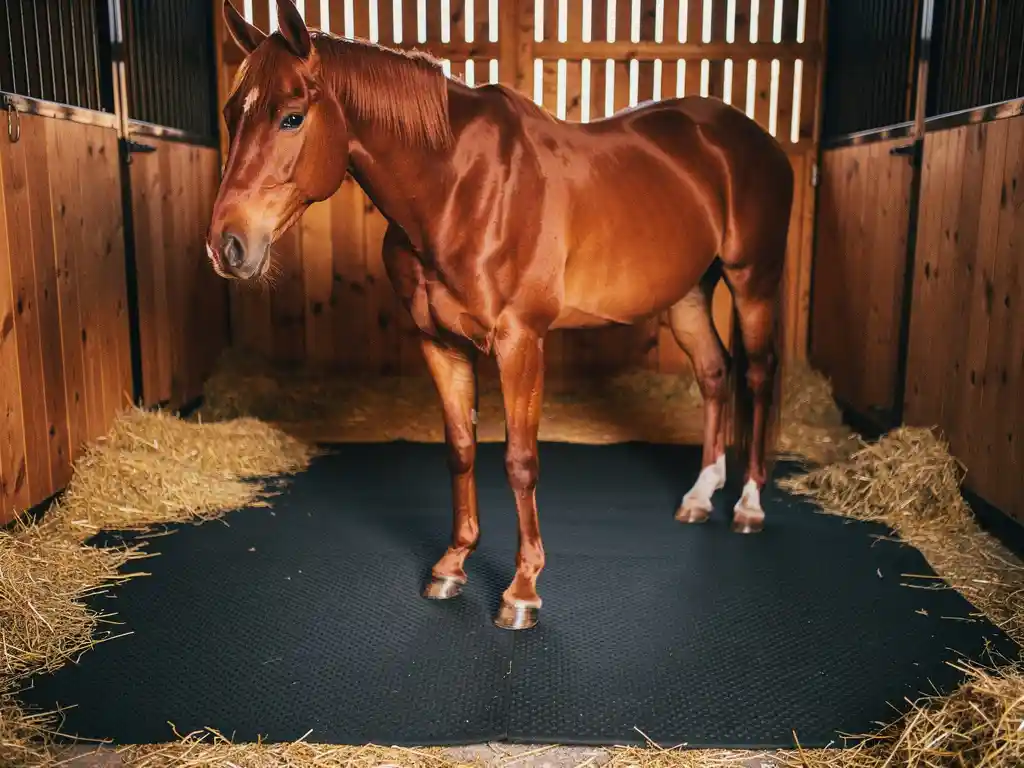
The most comfortable floor surface for a horse to stand on is rubber matting installed over a well-prepared base. Rubber provides the ideal combination of cushioning, grip, and insulation that hard surfaces like concrete simply cannot offer. It reduces joint stress, prevents slipping, and keeps horses warmer in cold conditions. If you are setting up a new stall or upgrading an existing one, rubber mats are the go-to solution most horse owners and equine professionals recommend.
What makes a floor surface comfortable for horses?
A comfortable floor surface for horses needs to provide cushioning to reduce joint and hoof stress, grip to prevent slipping, insulation from cold ground, and drainage to keep the surface dry and hygienic. When these four factors work together, horses stand more willingly, rest more easily, and experience fewer injuries over time.
Horses spend the majority of their lives on their feet. That constant pressure on their hooves, legs, and joints adds up quickly, especially on hard or unforgiving surfaces. A floor that gives slightly underfoot, the way good rubber matting does, mimics the natural give of packed earth and reduces the physical strain of prolonged standing.
Grip is equally important. A slippery surface causes horses to tense their muscles constantly to stay balanced, which leads to fatigue and anxiety. Traction underfoot allows a horse to relax, shift weight naturally, and lie down and get back up without fear of slipping. Drainage matters, too, because a wet floor creates both a slip hazard and a breeding ground for bacteria that can damage hooves and cause infections like thrush.
What are the most common types of horse stall flooring?
The most common types of horse stall flooring are concrete, clay, packed dirt, wood, and rubber matting. Each has different characteristics in terms of comfort, durability, drainage, and maintenance requirements. Rubber matting is increasingly popular as a top layer because it addresses the shortcomings of nearly every other base material.
Concrete
Concrete is widely used because it is durable, easy to clean, and resistant to digging. However, it is hard, cold, and slippery when wet, making it one of the least comfortable options for horses when used on its own.
Clay and Packed Dirt
Clay and packed dirt feel more natural underfoot and offer some cushioning. The downside is that they shift over time, develop uneven patches, retain moisture, and are difficult to keep clean and hygienic.
Wood
Wood flooring provides some warmth and cushioning but deteriorates quickly when exposed to urine and moisture. It can become slippery, harbor bacteria in the grain, and requires frequent replacement.
Rubber Matting
Rubber matting is typically installed over a concrete or compacted base and addresses the weaknesses of all the options above. It adds cushioning, improves grip, insulates against cold, and is easy to clean without absorbing moisture or odors.
Why is concrete flooring bad for horses to stand on?
Concrete flooring is bad for horses because it is extremely hard, cold, and slippery. Standing on concrete for extended periods puts significant stress on a horse’s hooves, joints, and legs. It offers no cushioning, no insulation, and minimal traction, particularly when wet, making it both uncomfortable and physically damaging over time.
The hardness of concrete accelerates wear on hoof walls and can contribute to conditions like laminitis, joint inflammation, and general soreness in the legs and back. Horses standing on concrete are also more likely to develop hoof problems because the surface does not flex or give at all under their weight.
From a safety perspective, concrete becomes dangerously slippery when wet or soiled with urine and manure. A horse that slips during a fall or while trying to stand can suffer serious injuries. Even the act of constantly bracing against a slippery surface causes muscle fatigue and stress over time.
Concrete is also cold, which matters in the winter months. A horse lying directly on cold concrete loses body heat rapidly, which can increase the risk of respiratory illness and general discomfort. For all these reasons, most equine professionals recommend covering concrete stall floors with rubber mats rather than leaving them bare.
Are rubber mats the best flooring option for horse stalls?
Yes, rubber mats are widely considered the best flooring option for horse stalls. They combine cushioning, grip, insulation, and easy maintenance in a way that no other single flooring material can match. When installed correctly over a solid, level base, rubber mats dramatically improve comfort and safety for horses while reducing bedding costs and simplifying daily stall management.
The cushioning rubber provides directly reduces the physical impact on a horse’s legs and joints during standing, moving, and lying down. This is particularly valuable for older horses, horses recovering from injury, or any horse that spends long hours in a stall. The anti-slip surface gives horses the confidence to move, shift weight, and rest without the anxiety of unstable footing.
Rubber mats also have a practical financial benefit. Because they reduce the amount of bedding that gets soiled and compacted against the floor, many horse owners find they need significantly less straw or shavings over time. The mats themselves are durable and long-lasting, meaning the upfront investment pays off over years of use.
From a hygiene standpoint, rubber is non-porous, which means it does not absorb urine or bacteria. A quick clean with water and mild detergent keeps the surface fresh, which supports better hoof health and overall barn cleanliness.
How thick should rubber mats be for horse stalls?
Rubber mats for horse stalls should generally be at least three-quarters of an inch thick to provide adequate cushioning and durability. Thicker mats in the range of three-quarters to one inch offer better shock absorption and are more resistant to shifting or curling under a horse’s weight. Thinner mats may suit lower-traffic areas or budget-conscious installations but provide less long-term comfort.
The right thickness also depends on what surface the mat is being installed over. On bare concrete, a thicker mat makes a noticeable difference in cushioning because there is no give in the base at all. On a packed clay or dirt floor with some natural give, a slightly thinner mat may still provide good results.
Weight is another factor to consider alongside thickness. Heavier mats tend to stay in place better, which reduces shifting and the creation of gaps between mats. For example, a standard 4 by 6 foot stall mat at three-quarters of an inch thick typically weighs around 90 to 115 pounds, which is enough to stay put under normal stall conditions without requiring adhesive.
For horses that are particularly active in their stalls, or for areas like wash bays and trailer ramps where movement and moisture are constant factors, opting for the thicker end of the range is a smart choice.
What’s the difference between solid rubber mats and interlocking rubber mats for horses?
Solid rubber mats are individual, non-connecting pieces that sit independently on the floor, while interlocking rubber mats have edges designed to link together, creating a continuous, seamless surface. Solid mats are simpler to install and replace individually, while interlocking mats are better suited for larger areas where gaps between mats could be a safety concern.
Solid mats work well in standard-sized stalls where a few large pieces can cover the floor with minimal gaps. They are easy to lift, clean underneath, and replace if one section becomes damaged. The main drawback is that over time, especially in active stalls, individual mats can shift slightly and create small gaps where hooves could catch or bedding could collect.
Interlocking mats solve that problem by connecting at the edges, keeping the entire floor surface stable and uniform. This makes them a strong choice for larger spaces like alleyways, wash bays, or milking parlors where coverage needs to be continuous and reliable. The interlocking design also makes long-run installations much more manageable because the mats stay aligned without constant repositioning.
The right choice depends on your specific setup. For a single stall with standard dimensions, solid mats are often perfectly adequate and easier to handle. For barn-wide installations or areas with high traffic and constant moisture, interlocking mats deliver a more secure and polished result.
How do you install and maintain rubber mats in a horse stall?
Installing rubber mats in a horse stall involves preparing a clean, level base, laying the mats in the correct configuration, and ensuring they fit snugly with minimal gaps. Maintenance is straightforward: remove bedding regularly, rinse the surface with water, and clean with mild detergent as needed. Because rubber is non-porous, it does not absorb odors or bacteria, making it one of the easiest stall floors to keep hygienic.
Installation Steps
- Start with a solid, level base. Concrete is the most common choice. Fill any cracks or uneven areas before laying mats to prevent rocking or shifting.
- Measure the stall carefully and plan your mat layout to minimize gaps and avoid placing seams in high-traffic zones like the center of the stall.
- Lay the mats in place and check for stability. Heavy mats typically stay in position without adhesive, but you can use mat tape or adhesive in areas where shifting is a concern.
- For interlocking mats, connect each piece firmly before moving to the next to ensure a tight, gap-free surface.
Maintenance Tips
- Remove soiled bedding daily to prevent moisture from sitting on the mat surface for extended periods.
- Rinse the mats with water when doing a full stall clean-out.
- Use a mild detergent for deeper cleaning, particularly in wash bays or high-moisture areas.
- Inspect mats periodically for any shifting, curling at the edges, or wear that could create a tripping hazard.
One thing worth noting is that mat sizing plays a big role in how easy installation and maintenance actually are. Larger mats mean fewer seams, which means less opportunity for gaps to develop and less time spent repositioning pieces during cleaning. If your stall has non-standard dimensions, custom rubber matting cut to your exact measurements makes the whole process simpler and gives you a cleaner, more professional result.
At LRP Matting, we have been manufacturing high-quality rubber mats for equine applications since 1971. Our horse stall mats are made from genuine rubber using our proprietary Fiber-Reinforced Rubber Compound (FRC®), which gives them superior strength and durability compared to standard rubber flooring. Whether you need a standard stall mat, a trailer ramp mat, or a fully custom solution sized to your exact barn dimensions, we are here to help you find the right fit for your horses and your facility.
Frequently Asked Questions
Can rubber mats be used in outdoor areas like paddocks or wash bays, or are they only suitable for indoor stalls?
Rubber mats work excellently in outdoor and semi-outdoor areas like wash bays, barn alleyways, trailer ramps, and even high-traffic paddock entry points. For outdoor use, look for mats with drainage holes or a textured surface that channels water away, preventing pooling and maintaining traction in wet conditions. The key difference from indoor installation is ensuring the base is properly graded for water runoff so moisture does not sit under the mats and cause deterioration over time.
How do I know if my current stall floor base is level enough to install rubber mats properly?
A simple way to check is to use a long spirit level or a straight piece of lumber laid across the floor — any rocking or visible gaps underneath indicate uneven areas that need to be addressed before laying mats. Low spots on a concrete base can be filled with a concrete patching compound, while a packed dirt or clay base may need additional compaction or a layer of fine gravel to even out. Taking the time to properly level the base is one of the most important steps, because even the best rubber mat will shift, rock, or develop gaps if the surface underneath is uneven.
How long do rubber stall mats typically last, and what signs should I look for that it's time to replace them?
High-quality rubber stall mats made from genuine rubber compounds can last 10 to 20 years or more with proper care, making them a cost-effective long-term investment. Signs that it is time to replace a mat include significant thinning or compression in high-traffic areas, persistent curling or lifting at the edges that cannot be corrected, deep cracking across the surface, or any section that has become noticeably slippery despite cleaning. Catching wear early and replacing individual mats before they become a safety hazard is always the smarter approach than waiting until the entire floor needs an overhaul.
Do rubber mats eliminate the need for bedding in a horse stall?
Rubber mats significantly reduce the amount of bedding required but do not eliminate it entirely. Most horse owners find they can use 30 to 50 percent less straw or shavings compared to an unmatted stall, which adds up to meaningful savings over time. Bedding still serves important purposes even with mats installed — it absorbs urine, provides additional warmth and cushioning for lying down, and gives horses a more natural, comfortable resting environment. A thinner layer of clean bedding on top of rubber mats tends to stay cleaner longer and is much easier to manage than deep bedding on a bare floor.
Are there specific rubber mat options that work better for horses with existing joint problems or conditions like laminitis?
For horses with joint issues, laminitis, or those recovering from injury, prioritizing maximum cushioning is essential — look for mats at the thicker end of the range (one inch or more) and consider pairing them with a slightly deeper layer of soft bedding on top for added comfort. Some facilities use a dual-layer approach, placing a firmer base mat underneath a softer top mat, to create a more forgiving surface for sensitive horses. If your horse has specific medical needs, consulting with your equine vet or farrier about the ideal floor setup is a worthwhile step, as they can recommend configurations based on your horse’s individual condition.
What is the best way to deal with odors or bacteria buildup under rubber mats over time?
The most effective way to prevent odor and bacteria buildup is to lift and clean under the mats on a regular schedule — every few months for most stalls, or more frequently in high-moisture environments. When you do a full clean-out, remove the mats entirely, scrub the base floor with a diluted disinfectant, allow it to dry completely, and then clean the underside of the mats before replacing them. Ensuring good stall ventilation and removing soiled bedding daily are the two habits that make the biggest difference in keeping odors under control between deep cleans.
My stall has non-standard dimensions — can rubber mats still work, and what are my options?
Non-standard stall dimensions are a very common challenge, and the good news is that custom-cut rubber mats are widely available to solve exactly this problem. Rather than trying to piece together standard-sized mats and ending up with awkward gaps or overlapping edges, having mats cut to your exact measurements gives you a cleaner, safer, and more professional result with no wasted material. When ordering custom mats, measure your stall carefully at multiple points since older stalls in particular can have walls that are not perfectly parallel, and providing accurate dimensions ensures a precise fit from the start.
Related Articles
- What are the first signs a commercial floor needs maintenance?
- How do you improve hygiene in animal facilities?
- How do high traffic areas affect floor performance?
- How does flooring affect workplace comfort?
- What affects the lifespan of sports flooring?
- What is the best flooring for a horse stall?
- Can anti-fatigue matting improve worker productivity?
- What floor is best for a horse with arthritis?
- What is the fastest way to muck out a horse stall?
- What flooring works best in an outdoor or covered sports venue?