
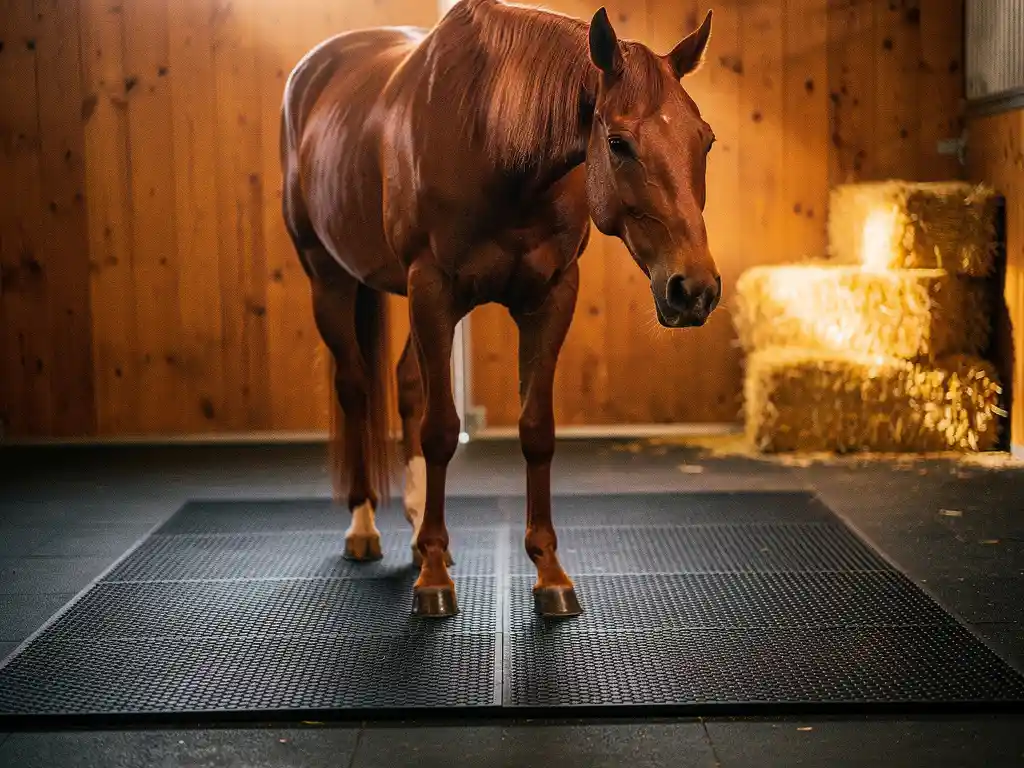
The best flooring for a horse stable grooming area is rubber matting. It gives horses secure footing, cushions their joints during standing and handling, drains well, and is easy to clean. A rubber mat with a thickness of around 3/4 inch works well for most grooming stalls, and you can get custom-cut mats to fit any space precisely. Concrete alone is too hard and too slippery for safe, comfortable grooming.
Whether you are setting up a new barn or upgrading an existing space, choosing the right flooring for your grooming area makes a real difference in both horse comfort and handler safety. This guide walks you through everything you need to know, from the types of flooring available to installation and daily maintenance.
Why does flooring matter in a horse grooming area?
Flooring in a horse grooming area directly affects the safety, comfort, and health of both the horse and the handler. Horses stand still for extended periods during grooming, which puts sustained pressure on their joints and hooves. Slippery or hard surfaces increase the risk of a horse losing its footing, which can cause panic, injury, or accidents for the person working alongside it.
Beyond safety, the right flooring also reduces fatigue. A horse that feels secure and comfortable on a surface is calmer and easier to handle. For handlers, standing on a forgiving surface reduces leg and back strain during long grooming sessions. Good grooming-area flooring also needs to handle water, shampoo, and debris without becoming a slip hazard or a breeding ground for bacteria. That means drainage and ease of cleaning matter just as much as grip and cushioning.
What are the most common types of grooming area flooring?
The most common flooring options for horse grooming areas are concrete, rubber matting, interlocking pavers, and packed stone dust. Each has its own strengths and limitations depending on your budget, barn setup, and how often the space is used.
Concrete
Concrete is the most widely used base in barn environments because it is durable and easy to install. However, bare concrete is hard underfoot, cold in winter, and becomes dangerously slippery when wet. Most horse owners who start with concrete end up covering it with rubber mats to compensate for these drawbacks.
Rubber matting
Rubber matting is the most popular surface choice for grooming areas because it combines grip, cushioning, insulation, and easy cleaning in one product. It can be laid directly over concrete or other existing surfaces, which makes it a practical upgrade without major renovation work.
Interlocking pavers and stone dust
Interlocking pavers provide good drainage but are uneven underfoot, which can be uncomfortable for horses standing still. Packed stone dust offers some cushioning and drains well, but it shifts over time, creates dust, and is difficult to keep clean. Neither option matches rubber matting for overall performance in a grooming stall.
What makes rubber matting a good choice for horse grooming areas?
Rubber matting is a strong choice for horse grooming areas because it provides anti-slip grip, joint-friendly cushioning, thermal insulation, and a non-porous surface that resists moisture and bacteria. These qualities address the main practical challenges of a grooming space in one straightforward solution.
The anti-slip surface is perhaps the most important feature. Horses can become anxious when they feel unsteady, and a secure surface helps them stay calm throughout the grooming process. The cushioning that rubber provides also reduces strain on hooves and legs during prolonged standing, which matters especially for older horses or those recovering from injury.
From a hygiene standpoint, rubber is non-porous, meaning it does not absorb water, urine, or cleaning products. That makes it far easier to keep clean than porous materials like stone or wood. Rubber mats also provide a degree of thermal insulation, keeping the floor warmer in cold weather and reducing the chill that travels up through a horse’s legs when standing on bare concrete in winter.
Durability is another strong point. High-quality rubber mats will not crack, peel, or crumble, even with heavy daily use and exposure to temperature extremes. For a grooming area that sees regular activity, that longevity makes rubber a cost-effective choice over time.
How does rubber matting compare to concrete for horse grooming?
Rubber matting outperforms bare concrete in every category that matters for a grooming area: grip, comfort, insulation, and hygiene. Concrete is hard, cold, and slippery when wet, while rubber provides cushioning, warmth, and a textured surface that horses can stand on safely, even during wet grooming sessions.
Concrete does have one advantage: it is extremely durable as a structural base. That is why the best approach for most grooming areas is to keep the concrete base but cover it with rubber mats. You get the structural integrity of concrete with the performance benefits of rubber on top.
The difference becomes especially clear during bathing or hosing down. Wet concrete is one of the most hazardous surfaces a horse can stand on. A rubber mat with a textured or waffle-back surface maintains its grip even when soaked, which dramatically reduces the risk of slipping during wash sessions.
What thickness of rubber mat is best for a grooming stall?
For a horse grooming area, a rubber mat thickness of 3/4 inch is generally the best choice. It provides enough cushioning to protect joints and reduce fatigue, while remaining stable underfoot and easy to handle during installation. Thinner mats can feel too firm, while very thick mats add weight without proportional benefit in a grooming context.
The 4×6 Stall Mat at 3/4 inch thickness is a practical option for grooming stalls. It offers solid cushioning and insulation against cold and damp, and the 4×6 footprint covers a useful area without requiring too many pieces. For horses that are particularly heavy or that spend long periods standing in one spot, a slightly thicker option at 5/8 inch or more can still deliver good results.
The Hammer Top Mat, also at 3/4 inch, is another option worth considering for grooming areas. Its textured surface provides reliable grip, which is especially useful in spaces where water and shampoo are regularly used. Matching the right thickness to your specific use case is straightforward: grooming and wash areas benefit from the 3/4-inch range, while lighter-use areas might work fine with thinner mats.
How do you install rubber mats in a horse grooming area?
Installing rubber mats in a horse grooming area is a straightforward process that most horse owners can handle without professional help. The key steps are preparing the base, measuring the space accurately, laying the mats, and securing them in place.
- Prepare the base surface. Make sure the concrete or existing floor is clean, dry, and level. Remove any debris or raised edges that could cause the mats to sit unevenly.
- Measure the grooming area carefully. Note any irregular shapes, drains, or fixed fixtures that will require cuts or custom sizing. Accurate measurements make the installation cleaner and reduce waste.
- Lay the mats starting from a corner or fixed edge. Work outward to minimize awkward cuts. Butting the mats tightly together reduces the number of visible seams.
- Trim mats to fit edges and obstacles. A sharp utility knife handles most cuts. For complex shapes, cutting a template from cardboard first saves material.
- Secure the mats if needed. In high-traffic areas or wash bays where mats might shift, use mat tape or interlocking edges to keep everything in place.
One practical tip: larger mats mean fewer seams, which makes the installation look cleaner and reduces the number of edges where dirt and moisture can collect. If your grooming area has an unusual shape or size, custom-cut mats are worth considering because they eliminate awkward gaps entirely.
How do you clean and maintain grooming area rubber mats?
Cleaning rubber mats in a horse grooming area is simple: sweep or rinse off loose debris, scrub with mild detergent and water, and rinse thoroughly. Because rubber is non-porous, it does not absorb liquids or bacteria, which means a basic cleaning routine keeps the surface hygienic without the need for harsh chemicals.
For daily maintenance, a quick sweep or hose-down removes hair, shavings, and dirt before they build up. For a deeper clean after bathing sessions or heavy use, a stiff brush and a mild soap solution work well. Avoid strong solvents or petroleum-based cleaners, as these can degrade rubber over time.
Rubber mats are designed to last for many years with minimal upkeep. They will not crack, peel, or crumble, even with frequent washing and exposure to temperature changes. Periodically lifting the mats to clean underneath is a good habit, as moisture and debris can collect between the mat and the base floor. Letting the underside dry out occasionally also helps prevent buildup beneath the surface.
If you are looking for a flooring solution that handles all of this with ease, we at LRP Matting have been building rubber mats for equine environments since 1971. Our mats are made from high-quality, durable rubber that is genuinely non-porous, easy to clean, and built to last in demanding barn conditions. If your grooming area has an unusual layout or size, our custom rubber matting solutions can be cut to your exact specifications, so you get a perfect fit with minimal seams and no awkward gaps. Get in touch, and we will help you find the right mat for your space.
Frequently Asked Questions
Can I use rubber mats in an outdoor grooming area, or are they only suitable indoors?
Rubber mats work well in both indoor and outdoor grooming areas. High-quality rubber is UV-resistant and designed to handle temperature extremes, rain, and direct sunlight without cracking or degrading. For outdoor use, make sure the base beneath the mats has adequate drainage so water does not pool underneath and cause the mats to shift or lift over time.
How do I stop my rubber mats from sliding or shifting during use?
The weight of quality rubber mats usually keeps them in place under normal conditions, but in active grooming or wash areas, mats can shift. The most effective solutions are using heavy-duty mat tape along the seams, choosing mats with interlocking edges, or laying mats tightly against fixed walls or barriers on at least two sides. Keeping the base floor clean and dry also helps, as debris or moisture underneath is a common cause of mat movement.
What is the best way to deal with the seams between rubber mats in a wash bay?
Seams are the main weak point in any multi-mat installation because water, shampoo, and debris can collect in the gaps. The best approach is to butt mats as tightly together as possible during installation and use mat tape to seal the seams in areas that get heavily wet. Choosing larger mat sizes reduces the total number of seams, and custom-cut mats can eliminate gaps along walls and edges entirely.
Are rubber mats safe for horses with existing hoof or joint problems?
Yes, rubber matting is often specifically recommended for horses with hoof issues, arthritis, or joint sensitivity because it reduces the concussive impact of standing on hard surfaces. The cushioning helps distribute weight more evenly and reduces the fatigue associated with prolonged standing. If your horse has a diagnosed condition, it is always worth consulting your farrier or vet, but rubber matting is widely regarded as one of the most supportive flooring options available.
How long do rubber mats typically last in a horse grooming area?
High-quality rubber mats used in a grooming area can last 10 to 20 years or more with proper care. Unlike softer materials, rubber does not crack, peel, or compress permanently under normal equine use. The lifespan depends on the quality of the rubber, the frequency of use, and how well the mats are maintained — particularly whether they are kept clean and allowed to dry out periodically underneath.
Do new rubber mats have a strong smell, and how long does it take to go away?
New rubber mats often have a noticeable rubber odor when first unpackaged, which is completely normal and not harmful. The smell typically fades within a few days to a couple of weeks, especially in a well-ventilated space. Leaving the mats outside in fresh air before installation, or hosing them down and letting them dry, can help speed up the process. Most horses become accustomed to the smell quickly and it rarely causes behavioral issues.
Can rubber mats be used on top of uneven or slightly damaged concrete?
Rubber mats can tolerate minor surface imperfections, but significant cracks, raised edges, or uneven patches should be addressed before installation. If the base is too uneven, the mats will not sit flat, which creates tripping hazards and causes the rubber to flex and wear unevenly over time. Small cracks can be filled with a concrete patching compound, and any raised edges should be ground down before laying the mats for a stable, long-lasting result.
Related Articles
- How do sustainable materials reduce maintenance?
- What causes leg fatigue at work?
- How can flooring materials be reused or recycled?
- How do you choose flooring for a professional sports locker room?
- How do you choose flooring for a multi-sport facility?
- How do you level a horse stall floor before laying mats?
- How do you reduce fall risk for horses in a veterinary facility?
- How do you make a horse stall more comfortable for an older horse?
- How do you protect a newly installed floor in a busy facility?
- What causes sports facility floors to deteriorate so quickly?