

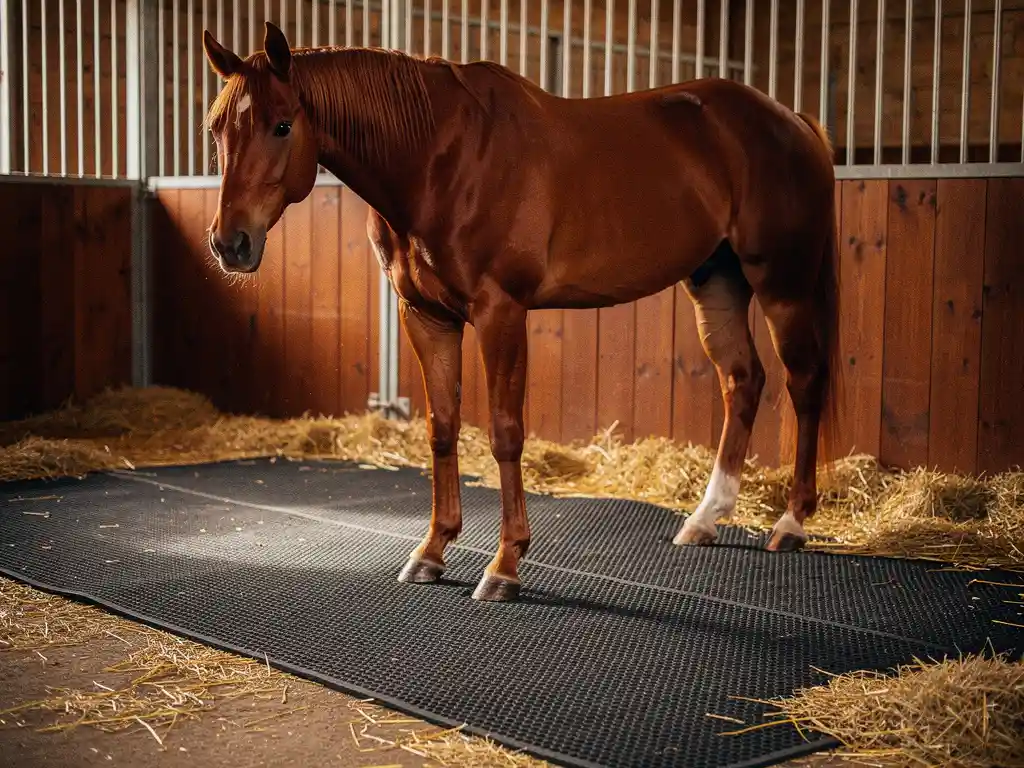
For a horse with arthritis, the best flooring is thick rubber matting installed over a firm, level base. Rubber provides the cushioning and shock absorption that arthritic joints need, reduces the impact of hard concrete or packed dirt, and gives horses a non-slip surface to stand, move, and lie down safely. A mat thickness of at least 3/4 inch is generally recommended, with 5/8 inch to 3/4 inch being the sweet spot for most stall applications.
What causes arthritis in horses, and how does flooring affect it?
Arthritis in horses is a degenerative joint condition in which the cartilage between bones gradually breaks down, causing pain, stiffness, and inflammation. It most commonly affects the lower limbs, including the fetlock, pastern, coffin, and hock joints. Older horses are more susceptible, but hard work, previous injuries, and poor conformation can accelerate the condition in younger animals as well.
Flooring plays a bigger role in managing arthritis than many horse owners realize. Hard, unforgiving surfaces like bare concrete or compacted earth offer little to no shock absorption. Every time an arthritic horse shifts its weight, stands up, or lies down, its joints absorb the full impact. Over time, this wears on already damaged cartilage and can make the horse reluctant to move, rest, or lie down comfortably.
Poor footing also increases the risk of slipping, which causes horses to brace and tense their muscles in ways that put extra strain on inflamed joints. A surface that is both cushioned and grippy addresses two of the biggest day-to-day challenges for horses living with joint pain.
What type of flooring is best for a horse with arthritis?
Rubber matting is the best flooring option for a horse with arthritis. It combines cushioning, traction, and durability in a way that no other common stall material can match. Rubber absorbs concussive forces before they reach the joints, provides a stable, non-slip surface, and stays comfortable whether the horse is standing, moving around the stall, or lying down to rest.
Here is how common flooring types compare for arthritic horses:
- Bare concrete: Extremely hard, offers no shock absorption, and becomes slippery when wet. One of the worst surfaces for horses with joint issues.
- Packed dirt or clay: More forgiving than concrete but becomes uneven over time, retains moisture, and can turn rock-hard or muddy depending on conditions.
- Sand or shavings alone: Soft but unstable. Horses can sink unevenly, which can put extra stress on joints and tendons.
- Rubber matting: Firm enough to provide stable footing, cushioned enough to reduce joint impact, non-porous so it stays clean, and non-slip even when damp.
Rubber matting also works well as a base layer under a thin layer of bedding. You get the cushioning of the rubber plus the warmth and comfort of shavings without needing a deep, expensive bed to compensate for a hard floor underneath.
How does rubber matting help horses with joint pain?
Rubber matting helps horses with joint pain by absorbing and dispersing shock that would otherwise travel directly into the joints. The natural elasticity of rubber acts as a buffer between the horse’s hooves and the hard floor beneath, reducing the repetitive concussive stress that aggravates arthritis over time. It also provides thermal insulation, keeping the floor surface warmer and reducing the stiffness that comes with cold, damp conditions.
One of the less obvious benefits is that rubber matting encourages rest. Arthritic horses often avoid lying down because getting up from a slippery or uncomfortable surface is painful and risky. A rubber mat gives them a surface that is both comfortable to lie on and grippy enough to push off from when rising. More rest means less time on sore joints, which supports recovery and overall well-being.
The non-slip grip of rubber matting also helps horses move with more confidence. When a horse is unsure of its footing, it tends to move stiffly and cautiously, which can increase muscle tension around the joints. Secure footing allows a more natural, relaxed gait that is easier on arthritic limbs.
What should you look for in a rubber mat for arthritic horses?
When choosing a rubber mat for a horse with arthritis, prioritize thickness, surface texture, material quality, and size. A thicker mat provides more cushioning, a textured surface improves grip, high-quality rubber resists compression over time, and larger mats reduce the number of seams where edges can shift or create uneven footing.
Thickness and density
Thicker mats absorb more shock. For arthritic horses, you want a mat that is firm enough to provide stable footing but has enough give to take the edge off hard impacts. Mats that are too thin compress quickly and lose their cushioning properties under the weight of a horse.
Surface texture
Look for a textured top surface that provides grip without being abrasive. A hammer-top or studded pattern is a popular choice because it channels moisture away from the surface while maintaining traction. Smooth rubber becomes slippery when wet, which is a real concern in stall environments.
Material quality and construction
Not all rubber mats are created equal. Mats made from high-quality rubber compounds hold their shape and resilience for years. Cheaper mats can become brittle, crack, or permanently compress under heavy use, losing the very properties that make them useful for joint health.
Seam management
Seams between mats can shift over time, creating ridges or gaps that are uncomfortable and potentially hazardous for an arthritic horse trying to navigate its stall. Larger mats or interlocking designs that stay securely in place are worth the investment.
How thick should horse stall mats be for arthritic horses?
For arthritic horses, horse stall mats should be at least 3/4 inch thick, with 5/8 inch being a reasonable minimum for lighter horses. Thicker mats in the 3/4-inch range offer meaningfully better shock absorption and are more resistant to compression over time, making them a smarter long-term investment for horses with joint conditions.
Thickness matters because a horse can weigh anywhere from 900 to over 1,500 pounds. That weight, concentrated on four hooves, creates significant pressure on any surface. A thin mat compresses under that load and quickly loses its cushioning effect, while a thicker mat maintains its give and continues to protect the joints effectively.
If your horse spends a lot of time standing in one spot, for example, at a hay net or water bucket, consider placing an extra mat in that area for additional cushioning. Arthritic horses often shift their weight unevenly, putting more stress on certain spots, so targeted reinforcement can make a real difference in their comfort.
How do you install rubber mats in a horse stall properly?
To install rubber mats in a horse stall properly, start with a clean, level, dry base. Remove any loose material, fill low spots, and make sure the floor is as even as possible before laying the mats. A flat, stable base prevents the mats from rocking or shifting under the horse’s weight.
Follow these steps for a solid installation:
- Prepare the base: Clean the floor thoroughly and repair any cracks or uneven areas. Concrete is the most common base and works well as long as it is level.
- Measure the stall: Measure accurately so you know exactly how many mats you need and whether any need to be trimmed to fit.
- Lay the mats from a corner: Start in one corner and work outward, fitting mats snugly against the walls and each other to minimize gaps.
- Use interlocking mats or secure edges: Interlocking designs or mats with beveled edges help prevent shifting. In high-traffic areas, you can use rubber-safe adhesive or stall mat clips for extra security.
- Check for gaps: Run your hand along all seams and edges to make sure there are no ridges or gaps that could catch a hoof or cause uneven footing.
For unusually shaped stalls or stalls with fixed fixtures like posts or drains, standard mat sizes may not cover the floor cleanly. In those cases, made-to-measure options are worth considering because a custom-cut mat eliminates awkward gaps and reduces the number of seams in the finished installation.
How do you clean and maintain horse stall mats for long-term use?
Cleaning and maintaining horse stall mats is straightforward. Remove soiled bedding daily, sweep or scrape away any debris, and periodically wash the mats with mild detergent and water. Rubber is non-porous, so it does not absorb urine or moisture, which makes it much more hygienic than bare earth or wood and far easier to keep clean over the long term.
For a deeper clean, lift the mats out of the stall a few times a year, scrub both sides, and allow them to dry fully before replacing them. This prevents moisture from building up underneath, which can cause odor and degrade the floor surface beneath the mat over time.
Here are a few maintenance tips to extend the life of your mats:
- Avoid using harsh chemical cleaners or pressure washers at high heat, as these can degrade rubber over time.
- Check seams and edges regularly for signs of shifting or wear, and reposition mats if needed.
- Inspect the underside of the mats during deep cleans to make sure moisture is not pooling beneath them.
- Replace any mat that has cracked, thinned significantly, or lost its surface texture, as it will no longer provide the grip and cushioning your horse needs.
High-quality rubber mats are built to last for many years with minimal maintenance. For arthritic horses, that consistency matters. Knowing the floor is clean, stable, and comfortable every single day makes a real difference in their quality of life.
At LRP Matting, we have been helping horse owners create safer, more comfortable stall environments since 1971. Our equine rubber mats are made from high-quality rubber and engineered to provide the cushioning, grip, and durability that horses with joint conditions need. If your stall has an unusual layout or non-standard dimensions, our custom rubber matting solutions are cut to your exact specifications, so you get a seamless, secure fit with no awkward gaps or unnecessary seams. Get in touch with us, and we will help you find the right mat for your horse.
Frequently Asked Questions
Can rubber matting alone manage my horse's arthritis, or does it need to be combined with other treatments?
Rubber matting is an important part of managing arthritis comfort, but it works best as one component of a broader care plan. Veterinary treatment such as joint supplements, anti-inflammatory medications, and controlled exercise should be coordinated with your vet alongside environmental improvements like proper flooring. Think of rubber matting as reducing the daily wear and tear on your horse’s joints, while medical and nutritional support addresses the condition itself.
My stall has a drain in the middle of the floor — how do I work around it when laying rubber mats?
Drains are one of the most common installation challenges in stall matting projects. The cleanest solution is to use custom-cut mats that are measured and trimmed to fit precisely around the drain opening, which eliminates awkward gaps and prevents hooves from catching on rough edges. If you are using standard-sized mats, a utility knife can be used to cut around the drain, but a professional or made-to-measure option will give you a much cleaner and safer result.
How do I know when it's time to replace my horse's stall mats?
The key signs to watch for are significant thinning or compression, visible cracking, a smooth or slippery surface where the texture has worn away, and mats that no longer lie flat or stay in place. A mat that has lost its cushioning or grip is no longer doing its job and can actually become a hazard for an arthritic horse. If you notice your horse hesitating to move around the stall or struggling to rise, worn flooring may be a contributing factor worth investigating.
Is it worth adding bedding on top of rubber mats, or is the mat surface enough on its own?
For arthritic horses, a thin layer of bedding on top of rubber mats is generally recommended rather than relying on the mat surface alone. The rubber handles shock absorption and traction, while a light layer of shavings or straw adds warmth, encourages the horse to lie down, and helps absorb moisture from urine. This combination means you need far less bedding than you would on a bare concrete floor, making it both more comfortable for the horse and more cost-effective for you.
Do rubber mats help with arthritis in horses kept in outdoor shelters or run-in sheds, not just indoor stalls?
Yes, rubber matting can be just as beneficial in outdoor shelters and run-in sheds, particularly in the areas where arthritic horses tend to stand or rest for extended periods. The main consideration is drainage — outdoor installations should be laid on a well-draining base to prevent water from pooling underneath the mats, which can cause them to shift and create odor. Mats in outdoor settings may also require more frequent inspection for debris accumulation and UV-related wear.
Are there any flooring mistakes horse owners commonly make when trying to help an arthritic horse?
One of the most common mistakes is using mats that are too thin, assuming any rubber surface will provide adequate cushioning — mats under 5/8 inch compress quickly under a horse’s weight and lose their protective benefit. Another frequent error is leaving gaps or uneven seams between mats, which can cause an arthritic horse to trip or brace awkwardly when navigating the stall. Finally, neglecting to prepare a flat, level base before installation means mats will rock and shift over time, undoing the benefits of the investment.
Can rubber stall mats help younger horses that are at risk of developing arthritis early due to heavy workloads?
Absolutely — rubber matting is a smart preventive measure for performance horses and working horses of any age, not just those already diagnosed with arthritis. Reducing daily concussive stress on joints during rest and recovery time in the stall helps slow the cumulative wear that can lead to early-onset joint degeneration. Providing a cushioned, secure stall surface is one of the lower-cost, higher-impact ways to support long-term joint health in horses with demanding athletic careers.
Related Articles
- How does floor related fatigue impact workplace safety?
- How can flooring materials be reused or recycled?
- How do weather conditions affect outdoor sports surfaces?
- How do entrances create floor safety risks?
- What should be included in a floor safety checklist?
- How do weather conditions affect outdoor floor safety?
- How often should you replace horse stall bedding?
- What floor surface is best for an equine rehabilitation center?
- How do you choose the right floor protection for a construction site?
- What floor protection is needed for indoor crane operations?