
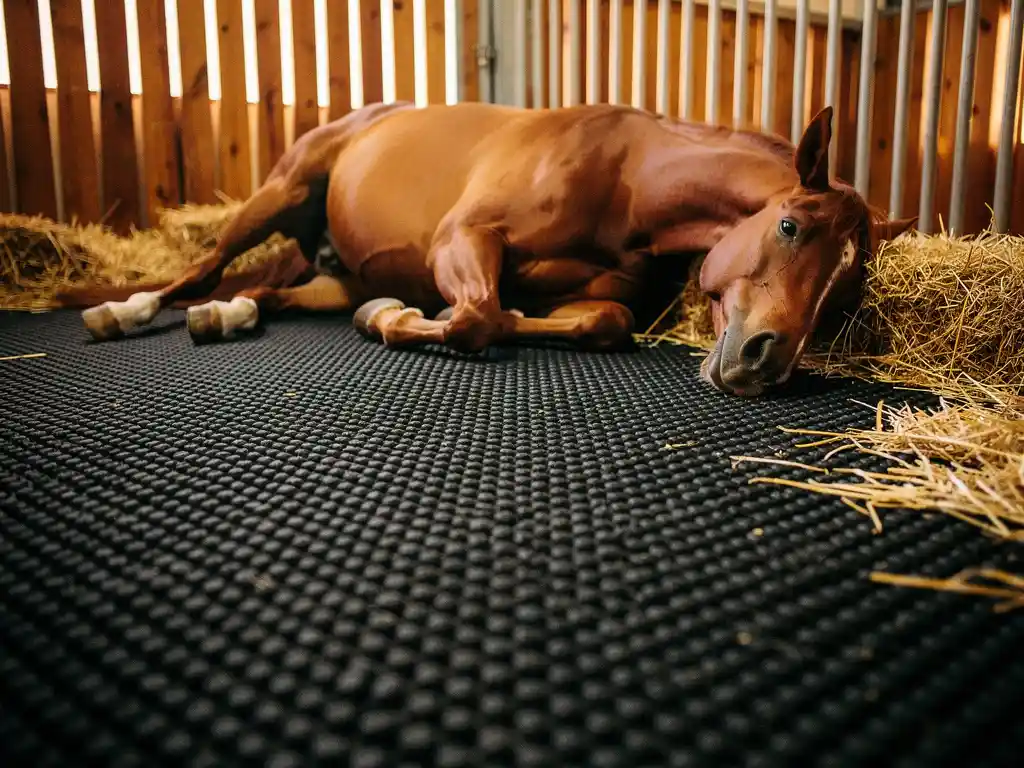
Making a veterinary recovery stall safer for horses comes down to three things: the right flooring, enough cushioning, and a clean, secure environment. Rubber matting is the most practical solution because it reduces the risk of slipping, absorbs impact, and protects a horse during the disoriented, unpredictable moments right after anesthesia. Install thick, non-porous rubber mats across the entire floor area, pad the walls where possible, and make sure every mat is secured so it cannot shift during recovery.
What is a veterinary recovery stall, and why does it matter?
A veterinary recovery stall is a dedicated space in an equine clinic or hospital where a horse wakes up from general anesthesia after surgery or a medical procedure. It is designed to contain the horse safely during the recovery phase, which is one of the most physically dangerous periods in equine veterinary care. The stall needs to minimize the risk of injury while the horse regains coordination and strength.
Horses do not wake up from anesthesia the way humans do. They often thrash, attempt to stand before they are ready, and fall repeatedly. A standard stall with hard concrete flooring and rigid walls offers almost no protection during this window. That is why purpose-built recovery stalls with padded flooring and walls are considered the standard of care in modern equine hospitals. Getting the environment right directly affects patient outcomes.
Beyond the immediate post-surgical period, recovery stalls are also used for horses healing from injuries, foals requiring intensive monitoring, or any animal that needs a controlled, calm space to rest and recuperate. The design principles are the same across all these uses: soft underfoot, secure, hygienic, and easy for veterinary staff to work in safely.
What are the biggest safety hazards in a horse recovery stall?
The biggest safety hazards in a horse recovery stall are slippery flooring, hard impact surfaces, unsecured mats that shift underfoot, and poor drainage that creates wet, slick conditions. Each of these hazards increases the risk of injury to the horse and the veterinary staff managing the recovery. Addressing all four is important for a genuinely safe stall environment.
Slipping and falling
A horse coming out of anesthesia has impaired muscle control and poor coordination. Even a small amount of slipping on a hard floor can cause a fall, and falls in this state can result in serious injuries, including broken bones, lacerations, and head trauma. Smooth concrete is particularly dangerous because it offers almost no grip, especially when wet.
Hard impact surfaces
When a disoriented horse falls or thrashes, the force of impact on a hard floor or wall is significant. Repeated impacts on concrete during recovery can cause bruising, soft-tissue damage, or worse. Padded flooring and wall protection reduce the energy transferred to the horse’s body during these moments.
Unsecured or poorly fitted flooring
Mats that shift, bunch, or curl at the edges create trip hazards for both the horse and the handlers. A mat that moves underfoot during recovery is almost as dangerous as no mat at all. Proper installation and secure fitting are just as important as choosing the right mat in the first place.
Moisture and contamination
Wet surfaces dramatically increase slip risk. Urine, water, and cleaning fluids that pool on the floor create hazardous conditions. Poor drainage and absorbent flooring materials that retain moisture make this problem worse over time and also create hygiene issues that complicate the horse’s recovery.
What type of flooring is best for a veterinary recovery stall?
Rubber matting is the best flooring choice for a veterinary recovery stall. It combines slip resistance, impact absorption, thermal insulation, and ease of cleaning in a single material. Thick rubber mats installed over a concrete subfloor provide the cushioning a horse needs during recovery without creating the hygiene problems associated with softer materials like foam or bedding alone.
Concrete on its own is too hard and too slippery. Straw or shavings can help with cushioning but create significant hygiene challenges and can shift unpredictably underfoot. Rubber flooring gives you the structural stability of a solid floor with a surface that is genuinely safer for the animal. It does not compress permanently over time the way foam does, and it does not harbor bacteria the way porous materials can.
Thickness matters a great deal in this application. Thicker rubber mats provide more impact absorption and more insulation from the cold concrete underneath. For a recovery stall, a mat thickness of at least three-quarters of an inch is a practical starting point, and thicker options offer even greater protection for a horse that may fall repeatedly during the waking process.
How do rubber mats improve safety during equine anesthetic recovery?
Rubber mats improve safety during equine anesthetic recovery by providing grip that prevents slipping, cushioning that absorbs the impact of falls, and a stable, non-shifting surface that supports a horse as it attempts to stand. These three properties directly address the most dangerous moments of the post-anesthesia period, reducing the risk of injury to both the horse and attending veterinary staff.
The grip offered by a textured rubber surface is particularly important. When a horse pushes against the floor to stand, it needs traction. A slip at that moment can cause the horse to panic, thrash more violently, and injure itself or the handlers. A rubber surface with a good tread pattern gives the horse’s hooves something to push against, making the process of standing more controlled and less dangerous.
Rubber also provides thermal insulation, which matters during recovery. A horse lying on cold concrete loses body heat quickly, which can complicate recovery from anesthesia. Rubber mats create a barrier between the animal and the cold subfloor, helping the horse maintain a more stable body temperature during a period when it is already physiologically stressed.
From a handler-safety perspective, rubber flooring also benefits the veterinary team. Staff working in the recovery stall need stable footing themselves, especially when physically supporting or guiding a horse that is trying to stand. A non-slip surface underfoot reduces the risk of handlers falling or losing control of the situation.
What features should you look for in a horse recovery stall mat?
When choosing a mat for a horse recovery stall, look for adequate thickness, a slip-resistant surface texture, non-porous rubber construction, secure fitting or interlocking edges, and a size that minimizes seams across the stall floor. Each of these features contributes directly to safety and hygiene in a demanding clinical environment.
- Thickness: Thicker mats absorb more impact and provide better insulation. For recovery stalls, prioritize mats at the higher end of the thickness range available.
- Surface texture: A textured or studded top surface gives hooves traction during the critical moments when a horse is attempting to stand. Smooth rubber is safer than concrete, but a textured surface is better still.
- Non-porous material: Rubber that does not absorb moisture is far easier to disinfect between patients. This is important in a clinical setting where biosecurity is a real concern.
- Secure edges and fit: Mats that interlock or fit tightly together prevent shifting and eliminate the trip hazards created by curling edges or gaps between mats.
- Size and seam minimization: Fewer seams mean fewer edges that can lift and fewer gaps where debris or moisture can collect. Larger mats or custom-cut options reduce the total number of seams in the stall.
- Durability: Recovery stalls see heavy, repeated use and need flooring that holds up without cracking, peeling, or deteriorating under cleaning chemicals.
Wall protection is worth considering alongside floor matting. Horses thrash against walls during recovery, and padding the lower sections of stall walls reduces the risk of impact injuries. Some facilities use rubber matting on walls as well as floors for this reason.
How do you maintain and clean rubber mats in a recovery stall?
Cleaning rubber mats in a recovery stall is straightforward: remove solid waste, rinse the surface, scrub with a mild detergent solution, rinse thoroughly, and allow it to dry before the next use. Because quality rubber is non-porous, it does not absorb liquids or harbor bacteria the way porous materials do, which makes disinfection between patients practical and effective.
For a veterinary recovery stall specifically, biosecurity between patients is important. After each use, the mats should be cleaned with a veterinary-grade disinfectant appropriate for rubber surfaces. Check that the product you use is compatible with rubber to avoid degrading the material over time. Some disinfectants designed for hard surfaces can dry out or damage rubber with repeated use.
Routine inspection is also part of good maintenance. Check the mats regularly for signs of wear, lifting edges, or surface damage. A mat that has started to curl, crack, or shift needs to be addressed promptly because these are exactly the conditions that create hazards during recovery. Rubber mats from quality manufacturers are built to last for years under heavy use, but regular checks catch small problems before they become serious ones.
If your stall uses interlocking mats, check the connections periodically to make sure they are still seated correctly. Heavy use and repeated cleaning can sometimes cause interlocking sections to loosen slightly. Resetting them takes only a moment and keeps the floor surface stable and secure.
When it comes to finding the right rubber matting for an equine recovery stall, we at LRP Matting are here to help. Our horse mats are made from high-quality, non-porous rubber that is easy to clean, resistant to extreme temperatures, and built to last. We also offer custom-made rubber matting cut to any size or shape, so your recovery stall gets a precise fit with minimal seams and maximum coverage. Reach out to us, and we will help you find the right solution for your facility.
Frequently Asked Questions
How thick should rubber mats be for a horse recovery stall?
For a veterinary recovery stall, a minimum thickness of three-quarters of an inch is a practical baseline, but thicker mats — such as those in the 1 to 1.5-inch range — offer meaningfully better impact absorption for horses that may fall repeatedly during anesthetic recovery. The right thickness also depends on the subfloor condition; an uneven or particularly hard concrete base benefits from additional mat thickness to compensate. When in doubt, err on the side of thicker, since the cost difference is minor compared to the added protection it provides.
Can I use regular stable mats in a veterinary recovery stall, or do I need specialist matting?
Standard stable mats can offer some improvement over bare concrete, but they are generally not optimized for the demands of a veterinary recovery environment. Recovery stalls require mats with a more aggressive slip-resistant texture, greater thickness for impact absorption, and a fully non-porous surface for effective disinfection between patients. If you are fitting out a dedicated recovery stall, it is worth investing in mats specifically suited to the application rather than repurposing general-purpose stable matting.
How do I prevent rubber mats from shifting or lifting during a horse's recovery?
The most effective approach is to use mats that are either interlocking or custom-cut to fit the stall dimensions precisely, leaving no room for movement. Mats should fit snugly against the walls and each other with no gaps or overlapping edges. For additional security, some facilities use heavy-duty adhesive or mat anchors along the perimeter, particularly in corners where lifting is most common. Routine checks after each use will help you catch and correct any shifting before the next patient enters the stall.
Should the walls of a horse recovery stall also be padded, and what materials work best?
Yes, wall padding is strongly recommended for any dedicated equine recovery stall, as horses frequently thrash against walls during the disoriented phase of anesthetic recovery. Rubber matting is an excellent choice for the lower sections of walls — typically up to a height of around five to six feet — because it is durable, easy to clean, and provides meaningful impact absorption. Foam padding covered with a tough, washable outer layer is another option used in some facilities, though it requires more maintenance to keep hygienic than rubber.
How often should rubber mats in a recovery stall be replaced?
High-quality rubber mats in a well-maintained recovery stall can last many years, but the actual lifespan depends on usage frequency, cleaning practices, and the compatibility of disinfectants used. Inspect mats regularly for signs of cracking, permanent compression, surface degradation, or lifting edges — any of these indicate it is time for replacement. Using cleaning products that are confirmed compatible with rubber will significantly extend mat life and prevent premature deterioration.
What is the best way to manage drainage and moisture in a rubber-matted recovery stall?
The concrete subfloor beneath the mats should be laid with a slight gradient to direct liquid toward a drain, preventing pooling under or around the mats. Non-porous rubber mats themselves do not absorb moisture, but liquid can still collect in seams and around edges if drainage is poor. Minimizing seams through the use of larger or custom-cut mats reduces the number of areas where moisture can accumulate, and regular thorough rinsing during cleaning ensures no residue is left behind that could create slippery conditions.
Are there any disinfectants I should avoid using on rubber mats in a veterinary setting?
Yes — some disinfectants formulated for hard clinical surfaces, particularly those with high concentrations of bleach, strong oxidizing agents, or certain solvents, can dry out, discolor, or degrade rubber over time with repeated use. Always check the manufacturer’s guidelines for both the mat and the disinfectant before committing to a cleaning protocol. A veterinary-grade disinfectant that is explicitly listed as safe for rubber surfaces will maintain both biosecurity and mat integrity over the long term.
Related Articles
- How does flooring affect productivity?
- How can you improve traction on existing floors?
- How do you know when a horse trailer floor needs replacing?
- What flooring is best for a large animal veterinary examination room?
- What floor surface is best for an equine rehabilitation center?
- What floor protection is needed for indoor crane operations?
- What floor is best for a horse with arthritis?
- What is the fastest way to muck out a horse stall?
- How do you stop horse stall mats from shifting?
- What flooring works best in an outdoor or covered sports venue?