

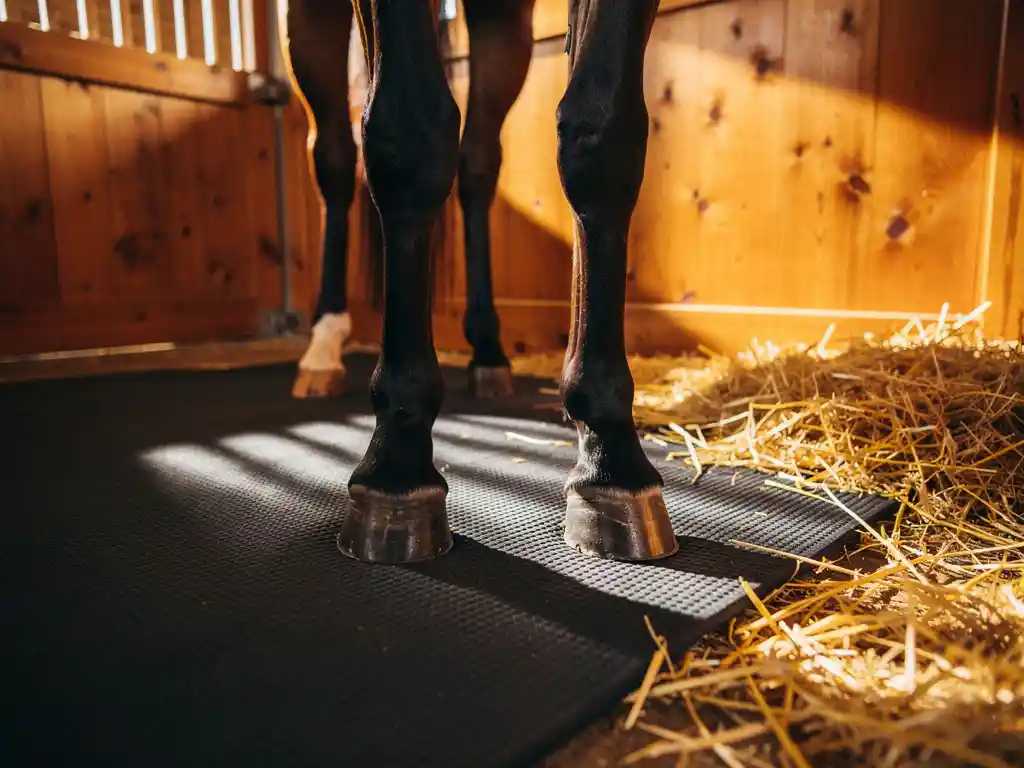
Stall flooring has a direct impact on a horse’s joint health. Hard, unforgiving surfaces like bare concrete or compacted dirt force joints to absorb repeated concussive stress, which can lead to soreness, inflammation, and long-term damage. The best flooring for horse stall joint health cushions impact, provides secure footing, and stays dry and clean. Rubber stall mats are widely regarded as one of the most effective solutions for protecting a horse’s joints while also improving overall comfort and well-being.
What are the signs that poor stall flooring is hurting your horse?
Signs that poor stall flooring is affecting your horse’s joint health include stiffness when rising or moving, reluctance to lie down, uneven weight distribution, and increased sensitivity in the lower limbs. If your horse seems uncomfortable in its stall or takes longer than usual to warm up during exercise, the surface underfoot may be contributing to joint stress.
Horses spend a significant portion of their day standing in their stalls, so the cumulative effect of poor footing adds up quickly. A hard or uneven floor forces the legs to work harder to stabilize the body, placing extra strain on joints, tendons, and ligaments. Over time, this can lead to conditions like arthritis, navicular issues, or chronic soreness in the lower legs.
Another often-overlooked sign is a horse that lies down less frequently than normal. When a surface is too hard or slippery, horses instinctively avoid lying down because getting up becomes risky. Less rest means less recovery, and that affects joint health just as much as the surface itself.
What types of stall flooring are best for joint health?
The best stall flooring for horse joint health combines cushioning, traction, and moisture resistance. Rubber mats are consistently considered the top choice because they absorb impact, provide a non-slip surface, and stay comfortable in both hot and cold conditions. Other options include clay, sand, and wood shavings, but each comes with trade-offs in durability and hygiene.
Rubber mats
Rubber mats offer a practical combination of shock absorption and durability that other materials struggle to match. They sit firmly in place, reduce the amount of bedding needed, and are easy to clean. For horses that spend long hours in their stalls, rubber matting provides consistent support that protects joints day after day.
Clay and dirt floors
Natural clay or compacted dirt can be comfortable when well maintained, but it shifts over time, develops uneven spots, and absorbs moisture. A horse standing on a damp, uneven clay floor is at risk for both slipping and poor joint alignment, which makes regular maintenance important if you go this route.
Concrete and asphalt
Bare concrete or asphalt is the hardest option and the most damaging to joints over time. These surfaces offer no cushioning and can become slippery when wet. If you have concrete floors in your barn, covering them with quality rubber mats is one of the most straightforward improvements you can make for your horse’s comfort and joint health.
How do rubber stall mats protect a horse’s joints?
Rubber stall mats protect a horse’s joints by absorbing and dispersing the impact energy that would otherwise travel directly into the legs and joints. The natural elasticity of rubber acts as a buffer between the horse’s hooves and the hard floor beneath, reducing repetitive concussive stress on fetlocks, knees, hocks, and other vulnerable joints.
Beyond cushioning, rubber mats provide consistent, stable footing. When a horse feels secure underfoot, it moves more naturally and distributes its weight evenly. Slippery or uneven surfaces cause horses to compensate with awkward posture, which places an uneven load on joints and can accelerate wear over time.
Rubber mats also help regulate temperature. Cold, hard floors draw heat away from the body and can cause muscles and soft tissues around the joints to tighten up. A rubber mat with good insulating properties keeps the floor surface warmer, which supports better circulation and muscle relaxation, particularly during cold winter months.
Should horses stand on rubber mats with or without bedding?
Horses can stand on rubber mats with or without bedding, but adding a layer of bedding on top of rubber mats is generally recommended for optimal joint health and hygiene. The rubber mat provides structural cushioning and insulation, while bedding adds an extra layer of softness, absorbs moisture, and encourages the horse to lie down more comfortably.
Using rubber mats as a base also means you need significantly less bedding than you would on a bare floor. The mat handles much of the cushioning work, so a thinner layer of shavings or straw is often sufficient. This can reduce your bedding costs meaningfully over time without compromising your horse’s comfort.
If you choose to use mats without bedding in certain areas, such as wash racks, alleyways, or trailer ramps, the mat still provides important grip and comfort. However, for a horse spending hours at a time in a stall, pairing rubber mats with bedding gives you the best of both worlds: structural support from the mat and surface comfort from the bedding.
What should you look for when choosing horse stall mats?
When choosing horse stall mats for joint health, look for adequate thickness, a non-slip surface texture, good thermal insulation, durability under heavy use, and a fit that minimizes gaps between mats. Gaps and uneven edges can create tripping hazards and allow moisture to accumulate underneath, which causes hygiene problems over time.
Thickness matters more than many people expect. A thicker mat provides better shock absorption and insulation, which translates directly into better joint protection. Mats that are too thin may feel firm underfoot and offer little improvement over the hard floor beneath them.
The surface texture is equally important. A mat with a textured or studded top surface gives horses reliable traction whether they are standing still or shifting their weight, reducing the risk of slipping and the compensatory postures that come with it.
Finally, consider the size and fit of the mats in your stall. Larger mats mean fewer seams, which reduces the chances of edges curling up or moisture getting trapped underneath. For stalls with unusual dimensions, custom-made rubber mats cut to your exact specifications are a practical way to get a clean, seamless fit that works for your specific space. We offer made-to-measure options so you can get the right coverage without awkward gaps or overlapping edges.
Frequently Asked Questions
How often should I replace rubber stall mats?
High-quality rubber stall mats can last 10 to 20 years with proper care, but you should inspect them regularly for signs of wear such as cracking, thinning, curling edges, or a surface that has become smooth and slippery. If a mat no longer bounces back under pressure or has developed significant depressions where your horse typically stands, it is time to replace it. Replacing worn mats promptly is a straightforward way to ensure your horse continues to receive the joint protection and traction the flooring is meant to provide.
Can rubber stall mats help a horse that already has joint issues like arthritis?
Yes, rubber stall mats can make a meaningful difference for horses already dealing with joint conditions like arthritis or navicular disease by reducing the concussive stress placed on sensitive joints during long periods of standing. While mats are not a substitute for veterinary treatment, they are widely recommended as a supportive management tool that complements medical care. Pairing rubber mats with an appropriate bedding layer can further improve comfort and encourage the horse to rest and lie down, which is essential for recovery and pain management.
What is the best way to clean and maintain rubber stall mats?
To maintain rubber stall mats properly, remove soiled bedding daily, then sweep or rinse the mat surface to prevent ammonia buildup from urine, which can degrade rubber over time. Periodically lift the mats to clean and dry the floor underneath, as moisture trapped beneath mats can cause bacterial growth and unpleasant odors. Allowing the mats to dry fully before replacing them helps extend their lifespan and keeps your horse’s stall environment hygienic and healthy.
How do I prevent rubber stall mats from shifting or moving around?
The most effective way to keep rubber stall mats in place is to use interlocking mats or fit them tightly against the stall walls so there is no room for movement. Heavier mats tend to stay in place better than lighter ones, and using mats cut to the exact dimensions of your stall eliminates the gaps that allow shifting to occur. If your mats still move despite a snug fit, a thin layer of bedding on top can help hold them in position while also adding surface comfort for your horse.
Are there any situations where rubber mats alone are not enough for joint protection?
For horses with severe joint conditions, advanced age, or those recovering from injury, rubber mats alone may not provide sufficient support, and additional measures such as deep bedding, supportive leg wraps, or orthopedic shoeing may be recommended by your veterinarian. The size and weight of the horse also matter — heavier horses exert more downward force, so thicker, denser mats are especially important in those cases. Always work with your vet and farrier to develop a comprehensive stall management plan tailored to your horse’s specific health needs.
Can I use rubber stall mats in outdoor or partially covered areas?
Yes, rubber mats are well suited for outdoor and semi-exposed areas such as run-in sheds, wash racks, trailer ramps, and barn alleyways, as quality rubber is naturally resistant to UV exposure, moisture, and temperature fluctuations. However, in fully outdoor settings, it is important to ensure proper drainage beneath and around the mats so water does not pool underneath and create slippery or unsanitary conditions. Choosing mats with a textured surface is especially important in wet outdoor environments where traction is critical for safety.
How thick should rubber stall mats be for adequate joint protection?
For stall use, rubber mats that are at least 3/4 inch (approximately 19mm) thick are generally recommended as a minimum for meaningful shock absorption, with mats in the 3/4 to 1 inch range considered the industry standard for joint health benefits. Thicker mats in the 1 to 1.5 inch range offer superior cushioning and insulation, which can be particularly beneficial for older horses or those with existing joint issues. Keep in mind that thickness should be paired with density — a dense, thick mat will outperform a soft, thin one every time when it comes to long-term joint protection.
Related Articles
- What should be included in a sports surface safety inspection?
- What role does floor maintenance play in safety?
- How do you clean and maintain a horse trailer floor?
- How do you prevent cross-contamination through flooring in an animal clinic?
- What is the best way to cover an uneven barn floor?
- What floor surface is best for an equine rehabilitation center?
- How do you reduce fatigue for workers who stand all day on a concrete floor?
- What causes back pain in workers who stand on hard floors all day?
- Can anti-fatigue matting improve worker productivity?
- How do you maintain rubber flooring in a high-traffic sports venue?