
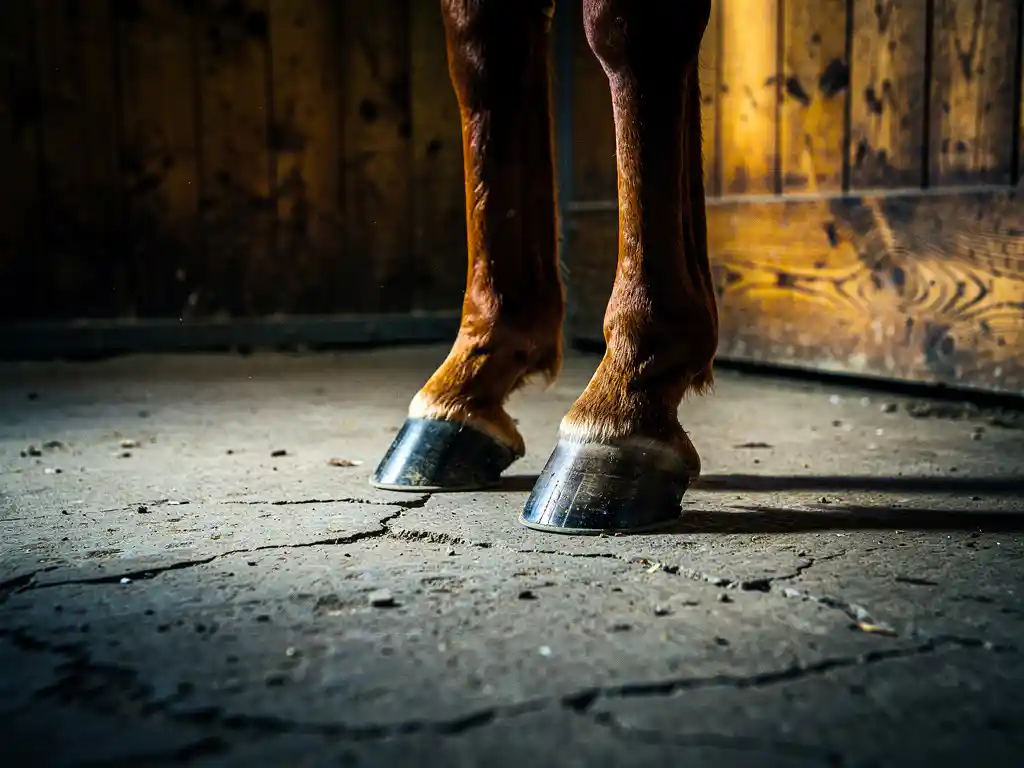
Yes, a hard barn floor can absolutely cause tendon damage in horses. Concrete and compacted-earth surfaces offer no shock absorption, which means every step a horse takes sends concussive force directly up through the hooves, joints, and tendons. Over time, this repeated stress leads to inflammation, strain, and, in serious cases, lasting tendon injury. The good news is that the right flooring can make a real difference in your horse’s long-term leg health.
What are the signs of tendon strain in stabled horses?
The most common signs of tendon strain in stabled horses include heat and swelling along the lower leg, sensitivity to touch around the flexor tendons, and a shortened stride or subtle lameness. You might also notice your horse shifting its weight frequently, being reluctant to bear weight on one leg, or showing stiffness when first brought out of the stall.
In the early stages, tendon strain can be easy to miss because the signs are often mild. A horse may simply seem a little “off” or less willing to move forward freely. As the problem progresses, swelling along the back of the cannon bone becomes more obvious, and the horse may start to show a bowed-tendon appearance in more advanced cases. Catching these signs early is important because tendon injuries in horses are notoriously slow to heal and can become chronic if the underlying cause is not addressed.
It is worth paying attention to your horse’s behavior inside the stall, too. Horses that paw, pace, or consistently stand with one leg rested may be trying to relieve discomfort. Regular hands-on checks of your horse’s legs after stabling—especially feeling for warmth or filling—are one of the simplest ways to catch problems before they become serious.
Why do horses develop leg problems from standing on concrete?
Horses develop leg problems from standing on concrete because the surface is completely rigid and provides zero shock absorption. Every time a horse shifts its weight, moves in the stall, or even just stands still, the impact travels straight up through the hoof and into the tendons, ligaments, and joints without being dampened at all. This constant, low-level stress accumulates over time and causes inflammation and injury.
Concrete is also extremely unforgiving when it comes to hoof balance. On a natural surface like packed earth or grass, the ground gives slightly, allowing the hoof to settle into a position that distributes weight more evenly. On concrete, the hoof sits on a perfectly flat, immovable surface, which can place uneven load on specific structures within the leg. This is particularly problematic for horses with existing hoof imbalances or conformation quirks.
The role of prolonged standing in tendon stress
Horses in stalls spend a significant portion of each day standing still, and on hard flooring, this becomes a real problem for joint health. Unlike movement, which encourages circulation and keeps soft tissues supple, prolonged static standing on concrete restricts blood flow to the lower limb and keeps tendons under continuous, low-grade tension. Over weeks and months, this contributes to chronic strain that can be difficult to reverse.
Bedding helps to a degree, but it compresses and shifts over time, leaving patches of bare concrete exposed. A solid rubber mat underneath provides consistent, reliable cushioning that bedding alone cannot guarantee.
What type of flooring is best for horse barn stalls?
Rubber matting over a stable sub-base is widely regarded as the best flooring option for horse barn stalls. Rubber provides cushioning to absorb concussive impact, traction to prevent slipping, and insulation against cold and damp. It supports joint health far better than bare concrete, compacted stone, or even wood, which can become slippery and splinter over time.
The ideal stall floor combines a level, well-drained sub-base with a thick rubber mat on top. This pairing addresses both the structural and comfort requirements of a horse’s living space. The sub-base keeps moisture from pooling underneath, while the rubber mat provides the cushioning and grip that protect the horse’s legs and reduce the risk of injury from slipping.
Packed clay or dirt floors were the traditional choice for many barns, and they do offer more natural give than concrete. However, they are difficult to keep clean, can become uneven and pitted, and are prone to becoming muddy or frozen, depending on the season. Rubber matting over a solid base gives you the best of both worlds: the cushioning of a natural surface with the hygiene and durability of a manufactured product.
How do rubber mats protect horses from tendon injuries?
Rubber mats protect horses from tendon injuries by absorbing and dispersing the concussive forces that would otherwise travel directly up the leg on a hard surface. The natural elasticity of rubber acts as a buffer between the hoof and the floor, reducing the repetitive stress that accumulates in tendons and ligaments over time. This cushioning effect is one of the most direct ways to support joint health in the stall.
Beyond shock absorption, rubber mats provide consistent traction that helps prevent slipping. A horse that slips, even slightly, instinctively braces and overcorrects, and that sudden reactive force is one of the most common causes of acute tendon injury in stabled horses. A non-slip surface reduces that risk dramatically.
Rubber mats also provide thermal insulation. Cold floors draw heat away from the hooves and lower legs, which reduces circulation and makes tendons and ligaments stiffer and more vulnerable to injury. A rubber mat creates a barrier between the horse and the cold concrete, helping to keep the lower limbs at a more consistent temperature and reducing the risk of stiffness.
How thick should rubber mats be for horse stalls?
For horse stalls, rubber mats should generally be at least three-quarters of an inch thick, with three-quarters to one inch being the most widely recommended range for everyday use. Thicker mats provide better shock absorption and insulation, which is especially important for horses that spend long hours in the stall or have existing leg or joint issues.
Thinner mats, while more affordable and easier to handle, offer less cushioning and may not provide adequate protection on a hard concrete base. If your barn floor is particularly uneven or your horse is older and more prone to joint discomfort, choosing a thicker option is a worthwhile investment in your horse’s comfort and long-term soundness.
Weight is also worth considering when choosing thickness. Heavier mats tend to stay in place better without shifting, which keeps the surface stable and safe. A mat that slides around underfoot creates its own hazards, so the added weight of a thicker mat often works in your favor from a safety standpoint as well.
What should you look for when buying horse stall mats?
When buying horse stall mats, look for genuine rubber construction, adequate thickness, a non-slip surface texture, and a size that minimizes gaps and seams in your stall. Mats made from high-quality rubber will not crack, peel, or absorb moisture, making them far easier to clean and far more durable over time than cheaper foam or composite alternatives.
Here are the key factors to evaluate before you buy:
- Material quality: Genuine rubber is non-porous, easy to clean, and resistant to extreme temperatures. Avoid mats that feel brittle or smell strongly of chemical fillers.
- Thickness: Aim for at least three-quarters of an inch for adequate cushioning and insulation on a concrete base.
- Surface texture: Look for a textured or studded surface that provides reliable grip even when wet or covered with a thin layer of bedding.
- Size and fit: Larger mats mean fewer seams, which reduces the chance of edges curling up and creating trip hazards. Made-to-measure options are ideal for stalls with unusual dimensions.
- Weight and stability: Heavier mats stay in place better and are less likely to shift under the horse’s movement.
- Ease of cleaning: A non-porous surface that can be cleaned with mild detergent and water saves you time and keeps the stall more hygienic.
It is also worth thinking about the long-term cost rather than just the upfront price. A quality rubber mat that lasts for many years without cracking or deforming will cost you less over time than a cheaper option you need to replace every couple of seasons. For stalls with non-standard dimensions, our custom rubber matting solutions are cut to your exact measurements, which means a seamless, secure fit without the gaps and curling edges that come with ill-fitting standard sizes. At LRP Matting, we offer a range of horse stall mats built from high-quality rubber, including options like our 4×6 Stall Mat and Econo Mat, designed specifically to support your horse’s comfort, safety, and joint health for the long haul.
Frequently Asked Questions
Can rubber mats alone prevent tendon injuries, or do horses also need regular exercise?
Rubber mats are a critical part of injury prevention, but they work best as part of a broader management approach. Regular turnout and exercise keep tendons supple, promote healthy circulation in the lower limbs, and prevent the stiffness that builds up from prolonged stall rest. Think of quality flooring as reducing the baseline stress on your horse’s legs, while consistent movement and proper conditioning do the work of keeping those structures strong and resilient.
How do I know if my horse's current stall flooring is already causing damage?
Start with a hands-on leg check after your horse has been stabled overnight — feel along the back of the cannon bone for any warmth, puffiness, or sensitivity that wasn’t there before. If you notice subtle lameness, reluctance to move freely out of the stall, or a horse that consistently shifts weight or rests one leg, these are early warning signs worth investigating. It’s always a good idea to have your vet or farrier assess the legs if you suspect the flooring may be contributing to discomfort, as catching issues early dramatically improves recovery outcomes.
Do I still need bedding if I install rubber mats in my stalls?
Yes, bedding is still recommended even with rubber mats in place. While mats handle the shock absorption and insulation, a layer of bedding on top adds extra cushioning, absorbs urine and moisture, and encourages horses to lie down and rest properly. A thinner layer of bedding is typically sufficient over rubber mats compared to bare concrete, which can reduce your overall bedding costs while still keeping the stall clean, dry, and comfortable.
How do I properly install horse stall mats to avoid gaps or shifting?
Start with a clean, level, and well-drained sub-base — any unevenness underneath will cause mats to rock and shift over time. Fit mats as tightly together as possible, pushing them snugly against the stall walls to minimise gaps where edges can curl up. For stalls with non-standard dimensions, custom-cut mats are the most reliable solution since they eliminate the awkward trimming and mismatched seams that come with forcing standard sizes to fit. Heavier mats will naturally stay in place better, but in high-movement areas, some barn owners also use mat adhesive or interlocking designs for added stability.
How often should horse stall mats be cleaned, and what's the best way to do it?
Ideally, mats should be spot-cleaned daily as part of your regular mucking-out routine, removing soiled bedding and any waste sitting directly on the surface. A deeper clean — lifting the mats, scrubbing both sides with a mild detergent, and allowing them to dry fully before replacing — should be done every few months or whenever you notice odour building up underneath. Non-porous rubber mats make this process straightforward, as they don’t harbour bacteria the way bare concrete cracks or porous materials can, keeping your stall more hygienic overall.
Are rubber mats suitable for horses that are already recovering from a tendon injury?
Rubber mats are highly beneficial for horses in tendon rehabilitation and are often recommended as part of a controlled recovery environment. The cushioning reduces ongoing concussive stress during the rest phase, while the non-slip surface lowers the risk of a sudden slip that could re-injure a healing tendon. Always work closely with your vet during any tendon recovery programme, as flooring improvements should complement — not replace — the prescribed rest, physiotherapy, or controlled exercise plan your horse needs.
Can poor stall flooring affect a horse's hooves as well as its tendons?
Absolutely — the impact of hard flooring extends well beyond the tendons. Prolonged standing on concrete can contribute to bruised soles, white line disease, and hoof wall deterioration, particularly if moisture is also present. Conversely, excessively wet or muddy floors can soften the hoof wall and make it more susceptible to bacterial infections like thrush. Quality rubber matting, combined with good drainage and regular farriery, creates a stall environment that supports overall hoof health alongside joint and tendon wellbeing.
Related Articles
- What should you consider when designing an animal facility?
- What factors increase floor wear in manufacturing environments?
- What makes a floor safe?
- Why do wet floors become dangerous?
- How do you prevent bacteria buildup in a veterinary stall floor?
- What is the safest floor surface for a food processing facility?
- How do you cover an irregularly shaped horse stall floor?
- What floor is best for a horse with arthritis?
- What is the fastest way to muck out a horse stall?
- How do you stop horse stall mats from shifting?