
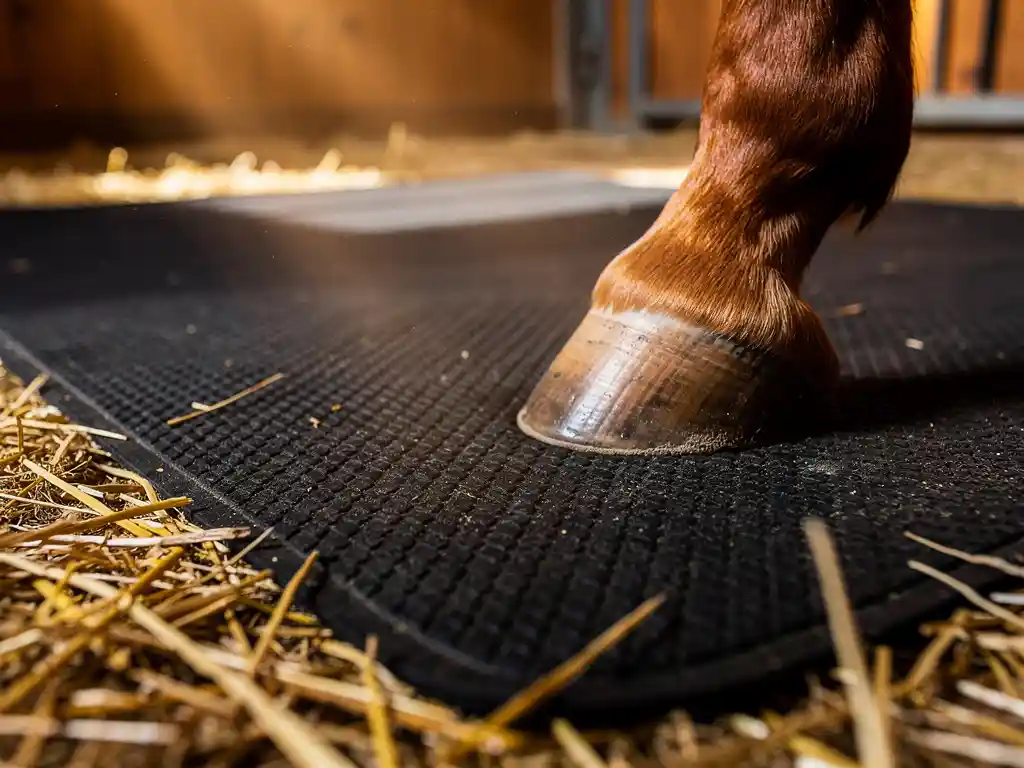
If you want a horse barn floor that’s genuinely easy to keep clean, rubber matting over a compacted gravel or concrete base is your best bet. Rubber is non-porous, so urine and moisture stay on the surface rather than soaking in. A quick scrape, rinse, and wash with a mild detergent is all it takes to keep stalls hygienic. Pair rubber mats with good drainage underneath, and daily mucking out becomes a much faster, less frustrating job.
What are the most common types of horse barn flooring?
The most common types of horse barn flooring are dirt, clay, concrete, asphalt, rubber matting, and wood. Each material handles moisture, traction, and maintenance differently, so the right choice depends on your priorities—whether that’s budget, horse comfort, or how much time you want to spend cleaning.
Dirt and clay floors are the most traditional options. They’re inexpensive and relatively forgiving on horses’ legs, but they absorb urine and can become a breeding ground for bacteria if not managed carefully. Concrete is durable and easy to hose down, but it’s hard on hooves and joints without some cushioning on top. Asphalt sits somewhere in between—firmer than dirt, slightly warmer than concrete, but still quite hard for horses to stand on for long periods.
Rubber matting has become increasingly popular in modern barns because it combines the practical benefits of a hard floor with the comfort of a softer surface. It’s often installed over concrete or compacted gravel to get the best of both worlds: a stable, well-draining base with a cushioned, easy-to-clean top layer. Wood was once common in older barns but has largely fallen out of favor due to its tendency to rot, splinter, and absorb moisture.
Why does barn floor cleanliness matter for horse health?
A dirty barn floor directly threatens your horse’s health. Ammonia from urine buildup damages the respiratory system over time, while wet, contaminated bedding creates the perfect conditions for thrush—a bacterial infection of the hoof. Keeping barn floors clean reduces these risks significantly and supports your horse’s long-term well-being.
Horses spend a large portion of their day standing and lying in their stalls. When flooring absorbs and retains waste, harmful bacteria multiply quickly, even when fresh bedding is added on top. The result is a stall that looks clean but still harbors pathogens that affect hoof health, skin, and airways.
Beyond infection risk, ammonia fumes from urine-soaked flooring are a real concern in enclosed barns, especially during colder months when ventilation is reduced. Prolonged exposure irritates the eyes and respiratory tract of both horses and the people who work with them. A floor that resists absorption and cleans easily is one of the most effective tools you have for maintaining a genuinely healthy barn environment.
Which barn floor material is the hardest to keep clean?
Dirt and clay floors are the hardest barn floor materials to keep clean. Because they are porous and absorbent by nature, they soak up urine and moisture rather than allowing it to drain away. Over time, waste accumulates deep within the material, making thorough cleaning almost impossible without excavating and replacing the top layer.
Even with diligent daily mucking, dirt floors develop pockets of compacted, contaminated material that standard cleaning can’t reach. The ammonia odor tends to linger because the source is embedded in the ground itself, not just sitting on the surface. This makes it difficult to achieve the level of hygiene that supports good horse health over the long term.
Wood floors present similar challenges in a different way. Wood is porous and prone to absorbing moisture, which leads to rot, warping, and bacterial growth within the material itself. Once wood starts to break down, it becomes nearly impossible to sanitize properly. Concrete, while far easier to clean on the surface, can develop pits and cracks over time where waste collects and bacteria thrive if the surface isn’t maintained.
What type of floor is easiest to keep clean in a horse barn?
Rubber matting is the easiest type of horse barn floor to keep clean. Rubber is non-porous, meaning it does not absorb urine, moisture, or waste. Cleaning is straightforward: remove soiled bedding, scrape the surface, rinse with water, and wash with a mild detergent. Because nothing soaks into the material, odors and bacteria have nowhere to hide.
The non-porous nature of rubber is what sets it apart from every other horse stall flooring option. With dirt, clay, or wood, you’re always fighting against absorption. With rubber, waste stays on the surface where you can actually remove it. This makes daily stall cleaning quicker and more effective, which matters when you’re managing multiple horses.
Rubber mats also work well with the drainage systems already built into most barn floors. When installed over a concrete or compacted gravel base with a slight slope, liquids drain away naturally rather than pooling under the mats. The result is a drier, cleaner surface that requires less bedding and less time to maintain. For horse owners who want to reduce both the labor and the cost of daily barn management, rubber matting over a well-prepared base is the most practical solution available.
How do rubber mats make horse stall cleaning easier?
Rubber mats make horse stall cleaning easier by providing a smooth, non-absorbent surface that prevents waste from soaking into the floor. Urine and moisture stay on top of the mat rather than seeping into a porous base, so you can remove waste completely with a scraper and a rinse rather than digging into contaminated ground.
One of the biggest practical benefits is the reduction in bedding required. Because the floor itself stays drier and cleaner, you don’t need to pile on as much straw or shavings to manage moisture. Less bedding means less material to remove during daily mucking, which saves both time and money over the course of a year.
Rubber mats also protect the base floor underneath. Without mats, horses’ hooves gradually break down concrete or compact dirt unevenly, creating dips and hollows where waste collects and cleaning becomes harder. A well-fitted rubber mat keeps the base floor intact and level, which makes the entire cleaning process more consistent and efficient over the long term. Fewer seams in the installation also help—large mats with minimal gaps leave fewer places for waste to accumulate between sections.
What should you look for in a horse barn rubber mat?
When choosing a rubber mat for a horse barn, prioritize thickness, surface texture, size, and material quality. A mat that’s too thin won’t provide adequate cushioning or insulation. A surface without texture will become slippery when wet. And mats with too many seams create gaps where waste and bacteria accumulate, defeating the purpose of easy cleaning.
Thickness and cushioning
For horse stalls, a thickness of at least three-quarters of an inch is generally recommended. Thicker mats provide better insulation against cold concrete or hard ground, which reduces stress on horses’ joints and legs during long periods of standing. Mats in the three-quarter- to five-eighths-inch range offer a good balance of durability and comfort for most stall applications.
Surface texture and grip
An anti-slip surface is important for both horse safety and ease of cleaning. Textured surfaces like hammer-top or stud patterns provide traction for horses while still being smooth enough to scrape and rinse effectively. Avoid surfaces with very deep grooves or complex patterns—they can trap waste and make cleaning harder rather than easier.
Size and seam management
Larger mats mean fewer seams, and fewer seams mean fewer gaps where urine and debris can collect. If you’re fitting a stall of a non-standard size, made-to-measure options are worth considering. A mat cut precisely to your stall dimensions eliminates the need for awkward cuts and filler pieces that can shift over time and create cleaning problems.
Material quality
Genuine rubber that won’t crack, peel, or crumble under temperature extremes is what you want in a barn environment. Barns experience wide temperature swings between seasons, and a mat that degrades in cold or heat will need replacing far sooner than a high-quality rubber product. Look for mats made from durable rubber compounds designed specifically for agricultural use.
How do you clean and maintain rubber mats in a horse barn?
Cleaning rubber mats in a horse barn is straightforward. Remove soiled bedding daily, scrape off any remaining waste, rinse the surface with water, and wash with a mild detergent when needed. Allow the mats to dry before replacing bedding. For a deeper clean, mats can be lifted, scrubbed on both sides, and left to air-dry periodically.
Daily maintenance is the foundation of a clean stall. A quick scrape and rinse after removing bedding prevents waste from building up and keeps ammonia levels low. Because rubber is non-porous, you’re always cleaning the surface rather than trying to extract contamination from within the material itself. This makes the daily routine genuinely quick once you have a system in place.
Periodic deep cleaning is also useful, especially when changing bedding types or after illness in the barn. Lifting the mats and cleaning the base floor underneath prevents moisture from accumulating in that hidden layer. Check the underside of mats during these cleans for any signs of moisture buildup or mold, and ensure the base floor is draining properly before replacing the mats.
For long-term maintenance, inspect mats regularly for any lifting at the edges or shifting between sections. Mats that move around create gaps and uneven surfaces that are harder to clean and can be a trip hazard. Properly secured mats with a snug fit stay in place and maintain the clean, gap-free surface that makes rubber so effective for barn hygiene.
If you’re looking for rubber mats built specifically for horses and designed to make stall maintenance easier, we at LRP Matting have been producing high-quality equine rubber flooring since 1971. Our horse stall mats are made from genuine, non-porous rubber that won’t crack, peel, or absorb moisture, and we offer made-to-measure rubber mats cut to your exact stall dimensions, so you get a precise fit with minimal seams. Whether you’re outfitting a single stall or an entire barn, we’re here to help you find the right solution.
Frequently Asked Questions
Can I install rubber mats myself, or do I need a professional?
Most rubber stall mats are designed for straightforward DIY installation—no specialist tools or adhesives are typically required. You’ll need to ensure your base floor is level, clean, and properly graded for drainage before laying the mats down. That said, if you’re ordering made-to-measure mats for an irregularly shaped stall, getting the measurements right beforehand is critical, so it’s worth taking your time with that step or consulting the supplier.
Do rubber mats work on top of dirt or clay floors, or do they need a hard base?
Rubber mats can be laid over compacted gravel or dirt, but a hard base—concrete or compacted hardcore—gives you the best results. Without a firm, level base, mats can shift, sink unevenly, and create gaps where waste collects, which undermines the whole point of easy cleaning. If you’re working with an existing dirt floor, compacting it thoroughly and adding a gravel drainage layer before installing mats will significantly improve performance and longevity.
How often should I do a deep clean of my rubber stall mats?
A thorough deep clean—lifting the mats, scrubbing both sides, and cleaning the base floor underneath—is generally recommended every one to three months, depending on how many horses use the stall and how intensive your daily cleaning routine is. If you notice ammonia smells persisting despite regular mucking, or if a horse in your barn has been ill, that’s a clear signal to do an unscheduled deep clean. Checking the underside of mats during these sessions for moisture or mold is just as important as cleaning the top surface.
Will rubber mats make my barn warmer in winter?
Yes, rubber mats provide meaningful insulation compared to bare concrete or compacted dirt, which draw heat away from a horse’s body when they lie down. Thicker mats—three-quarters of an inch or more—offer noticeably better thermal insulation and help horses conserve body heat during cold months. While mats alone won’t heat a barn, they reduce the cold-floor effect significantly and can decrease the amount of bedding you need to add for warmth in winter.
What's the biggest mistake horse owners make when switching to rubber stall mats?
The most common mistake is neglecting the base floor preparation before laying the mats. Placing rubber mats over an uneven, poorly draining, or contaminated base means moisture and waste will still accumulate underneath—just hidden from view. Before installing mats, clean and level the base thoroughly, ensure drainage is functioning correctly, and address any existing cracks or hollows in concrete. Getting the foundation right from the start saves a lot of problems down the line.
Can rubber mats help reduce how much bedding I need to buy?
Absolutely—this is one of the most practical cost benefits of rubber matting. Because the mat surface stays drier and doesn’t absorb urine the way dirt or wood does, you need significantly less straw or shavings to manage moisture in the stall. Many horse owners report cutting their bedding use by a third or more after switching to rubber mats, which adds up to meaningful savings over the course of a year, especially when managing multiple horses.
Are there any disinfectants I should avoid using on rubber stall mats?
Harsh chemical disinfectants—particularly those containing solvents, bleach in high concentrations, or petroleum-based ingredients—can degrade rubber over time, causing it to dry out, crack, or lose its surface texture. For routine cleaning, a mild detergent and water is all you need, and it’s genuinely effective on a non-porous rubber surface. If you need to disinfect after illness, choose a veterinary-approved disinfectant that is confirmed safe for rubber, and rinse thoroughly afterward to remove any residue before horses return to the stall.
Related Articles
- How does floor design affect physical strain in the workplace?
- What creates a safe recovery environment for animals?
- What factors have the biggest impact on floor maintenance?
- What causes sports facility floors to wear out?
- What should be included in a floor safety checklist?
- How do you design a safe flooring layout for an equine hospital?
- How do you protect a sports facility floor during the off-season?
- How do large equestrian facilities keep stall maintenance costs down?
- How do you reduce fall risk for horses in a veterinary facility?
- What floor protection is needed for indoor crane operations?