
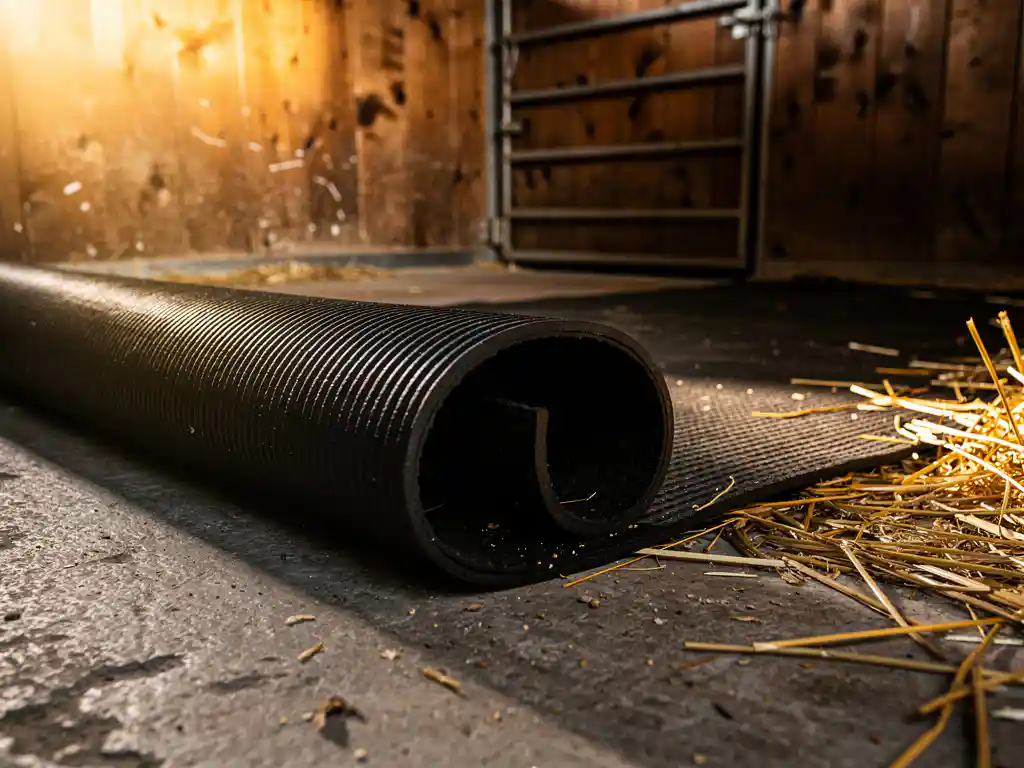
Concrete is not a good floor for a horse stall on its own. It is hard, cold, slippery when wet, and offers zero cushioning for your horse’s joints and hooves. That said, concrete is one of the most popular base materials for horse stalls because it is durable, easy to clean, and resistant to digging. The real answer is this: concrete works well as a base, but it should always be covered with proper rubber matting to protect your horse’s health and comfort.
What are the risks of keeping horses on concrete floors?
Bare concrete floors in horse stalls pose serious risks to your horse’s health and well-being. Concrete is extremely hard and unforgiving, which puts constant stress on hooves, joints, and legs. It becomes dangerously slippery when wet with water or urine, and it conducts cold directly from the ground, making it uncomfortable and even harmful during the winter months.
Over time, standing on bare concrete can contribute to joint problems, lameness, and general fatigue. Horses that cannot rest comfortably tend to spend less time lying down, which affects their recovery, muscle condition, and overall welfare. Concrete also provides no drainage on its own, meaning urine and moisture pool on the surface, creating unhygienic conditions and increasing the risk of hoof diseases such as thrush. The combination of hardness, slipperiness, and poor insulation makes unprotected concrete one of the least suitable surfaces for horses to live on long term.
What flooring options are best for horse stalls?
The best horse stall flooring balances comfort, drainage, traction, and durability. The most common options are rubber matting, packed clay, crushed limestone, and wood. Each has pros and cons, but rubber matting over a concrete base is widely considered the most practical and effective solution for modern horse stalls.
Rubber matting
Rubber mats provide cushioning, grip, and insulation all in one. They sit directly on top of concrete and transform it into a comfortable, safe surface. They are non-porous, so they do not absorb urine, and they are easy to clean. Most horse owners find that rubber mats significantly reduce the amount of bedding needed, which lowers ongoing costs.
Packed clay
Clay is a traditional option that offers natural cushioning and drainage. However, it requires regular maintenance, compacts unevenly over time, and can become slippery or muddy. It is also difficult to keep hygienic compared to rubber.
Wood and other materials
Wood provides some cushioning and insulation but is prone to absorbing moisture, rotting, and harboring bacteria. Crushed limestone and sand are sometimes used as base materials but need frequent topping up and can be difficult to manage under bedding. For most horse owners, rubber matting over a solid concrete base offers the best combination of practicality and animal welfare.
How do rubber mats improve a concrete horse stall floor?
Rubber mats improve a concrete horse stall floor by adding cushioning, traction, insulation, and hygiene in one straightforward installation. They act as a protective layer between your horse and the hard concrete beneath, absorbing the impact of standing and moving and reducing stress on hooves and joints.
The grip provided by rubber matting dramatically reduces the risk of slipping, which is especially important when floors get wet. Horses feel more secure on a rubber surface, which means they move more naturally and are less prone to anxiety or injury. The insulating properties of rubber also help keep the stall warmer in cold weather, which contributes to your horse’s overall comfort and willingness to lie down and rest.
From a hygiene perspective, rubber mats are non-porous, meaning urine and moisture sit on the surface rather than soaking in. This makes cleaning faster and more effective. Many horse owners also report a noticeable reduction in bedding usage once rubber mats are installed because the mats themselves provide so much of the comfort that bedding was previously needed to supply. The result is a cleaner, warmer, safer stall that is easier to manage day to day.
What thickness of rubber mat is best for horse stalls?
For horse stalls, rubber mats with a thickness of at least three-quarters of an inch are recommended. This thickness provides enough cushioning to protect joints and hooves from the hardness of the concrete beneath while remaining stable and flat underfoot. Thicker mats in the range of three-quarters to five-eighths of an inch offer the best balance of comfort and durability for most horses.
Thinner mats may be more affordable upfront, but they offer less protection and tend to shift or curl at the edges over time. For larger or heavier horses, or for stalls where horses spend extended periods standing, a thicker mat is worth the investment. It is also worth considering the weight of the mat, since heavier mats tend to stay in place better without requiring adhesive or fasteners.
For example, a standard 4-foot by 6-foot stall mat at three-quarters of an inch thick weighs around 100 pounds, which is enough to hold it firmly in position under normal use. If you are covering a large stall area, choosing larger mat sizes reduces the number of seams, which improves both safety and aesthetics.
How do you install rubber mats over a concrete stall floor?
Installing rubber mats over a concrete stall floor is straightforward and does not require specialist tools or adhesives in most cases. The process involves cleaning the concrete base, measuring the stall, cutting mats to fit if needed, and laying them tightly together to minimize gaps and movement.
- Clean the concrete base thoroughly before installation. Remove all bedding, debris, and moisture. A clean, dry surface ensures the mats sit flat and do not trap contaminants underneath.
- Measure the stall carefully, including any irregular edges or corners. Accurate measurements help you plan how many mats you need and where cuts will be required.
- Lay the mats starting from one corner, working across the floor in a consistent direction. Push each mat tightly against the previous one to close any gaps.
- Cut mats to fit around walls, posts, or irregular shapes using a utility knife and a straight edge. Rubber cuts cleanly with the right blade.
- Check for movement once all mats are in place. In most stalls, the weight of the mats and the pressure of the walls keep everything in position. If mats shift, interlocking edges or a small amount of rubber adhesive can help.
One practical tip is to choose the largest mat sizes available for your stall dimensions. Fewer seams mean fewer edges where mats can lift or where dirt and urine can collect. If your stall has unusual dimensions, made-to-measure options are available that eliminate the need for on-site cutting altogether.
How do you clean and maintain horse stall rubber mats?
Cleaning and maintaining horse stall rubber mats is simple. Remove soiled bedding and manure daily, then rinse the mat surface with water. For a deeper clean, use a mild detergent and a stiff brush, then rinse thoroughly and allow the mats to dry before adding fresh bedding. Rubber is non-porous, so it does not absorb urine or bacteria the way wood or clay would.
For routine maintenance, it helps to lift the mats periodically—perhaps once a month or every few weeks, depending on your stall management routine—to clean the concrete beneath. Moisture can sometimes collect under mats if drainage is not ideal, and allowing the concrete to dry out prevents the buildup of ammonia and bacteria. When you lift the mats, check the underside for any signs of wear, cracking, or deterioration.
Rubber mats are built to last for many years with minimal care. Unlike wood or clay, they will not rot, crack, or absorb odors over time. A quick daily removal of waste, combined with periodic deeper cleans, is genuinely all that is needed to keep them in good condition. The low maintenance requirement is one of the reasons horse owners consistently rate rubber matting as the most practical horse stall flooring solution available.
If you are ready to upgrade your horse stall flooring, we at LRP Matting have been helping horse owners do exactly that since 1971. Our rubber horse stall mats are made from high-quality, genuine rubber and are available in standard sizes as well as custom made-to-measure options cut to your exact stall dimensions. With over five decades of experience and a commitment to animal welfare, we are here to help you find the right solution for your horses.
Frequently Asked Questions
Can I use rubber mats in an outdoor horse stall or field shelter?
Yes, rubber mats can be used in outdoor stalls and field shelters, but you need to ensure the base beneath them is stable, level, and well-drained. A compacted hardcore or concrete base works best outdoors to prevent the mats from sinking or shifting. Look for mats with a textured or grooved underside, as these allow better water drainage and airflow beneath the mat surface, reducing the risk of moisture buildup in exposed environments.
How many rubber mats do I need for a standard horse stall?
A typical horse stall measures around 12 by 12 feet, which means you will need approximately 6 standard 4-by-6-foot rubber mats to cover the floor. However, it is always a good idea to measure your stall precisely before ordering, accounting for any irregular corners, posts, or doorways. If your stall dimensions do not divide evenly into standard mat sizes, opting for made-to-measure mats eliminates waste and reduces the number of seams on the floor.
Will rubber mats completely eliminate the need for bedding in a horse stall?
Rubber mats significantly reduce the amount of bedding required, but most horse owners and welfare experts still recommend using some bedding on top of the mats. A thin layer of shavings or straw provides additional warmth, encourages horses to lie down, absorbs urine from the mat surface, and gives horses a more natural, comfortable environment. The key benefit is that you will need far less bedding than on bare concrete or clay, which lowers your ongoing costs considerably.
What should I do if my rubber mats keep sliding or shifting around the stall?
If your mats are moving, the most common causes are an uneven concrete base, mats that are too thin and light, or insufficient friction between the mat and the floor. Start by checking that the concrete surface is clean, dry, and level, as debris or moisture can reduce grip. Heavier mats (three-quarters of an inch or thicker) tend to stay in place on their own, but if shifting persists, interlocking edge designs or a rubber-specific adhesive applied at the perimeter can secure the mats without damaging the concrete beneath.
Are there any horse health conditions that make rubber matting especially important?
Yes, rubber matting is particularly beneficial for horses with joint conditions such as arthritis, horses recovering from injury or surgery, older horses, and those with hoof issues like laminitis. The cushioning provided by rubber mats reduces concussive stress on sensitive joints and hooves, which can meaningfully improve comfort and mobility for horses that are already vulnerable. If your horse has a specific health condition, speak with your vet about flooring recommendations, as they may advise thicker or specialist orthopedic matting for additional support.
How long do horse stall rubber mats typically last, and when should they be replaced?
High-quality rubber horse stall mats made from genuine rubber typically last 10 to 20 years or more with proper care. Signs that it is time to replace your mats include visible cracking, significant thinning in high-traffic areas, persistent odors that do not clear after cleaning, or edges that have become brittle and no longer lay flat. Regularly lifting and inspecting the mats during routine cleaning will help you catch early signs of wear before they become a safety issue for your horse.
Can rubber mats be used over other base materials besides concrete, such as clay or compacted stone?
Yes, rubber mats can be laid over a variety of stable base materials, including compacted clay, crushed limestone, and packed stone dust. The key requirement is that the base is firm, level, and stable so the mats do not sink, rock, or create uneven surfaces underfoot. Concrete remains the preferred base because it is the most consistent and easiest to clean, but well-compacted alternative bases can work effectively, especially in older stables where replacing the floor entirely is not practical.
Related Articles
- How do you evaluate environmentally friendly flooring?
- What role does flooring play in preventing musculoskeletal strain?
- What should be included in a commercial floor inspection?
- How does dirt affect slip resistance?
- How do you prevent seasonal floor hazards?
- What flooring is best for a large animal veterinary examination room?
- How often should you replace horse stall bedding?
- How do you protect a concrete floor from heavy machinery?
- How do you make a paddock safer for horses in wet weather?
- What is the best flooring for a horse barn aisle?