
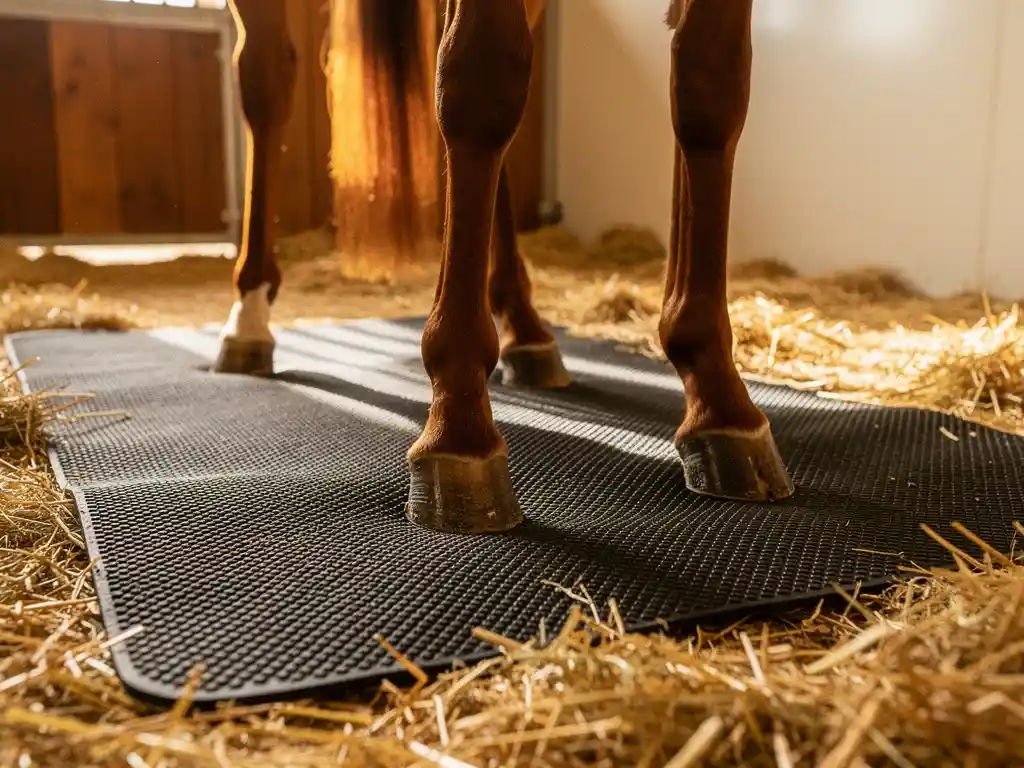
For an equine rehabilitation center, rubber matting is the best flooring surface. It provides the traction, cushioning, and joint support that recovering horses need while remaining easy to clean and maintain. Rubber mats work over almost any existing subfloor, hold up under heavy daily use, and reduce the risk of slips and secondary injuries during recovery.
Whether you are setting up a new rehab facility or upgrading an existing one, flooring is one of the most important decisions you will make. The right surface protects horses when they are most vulnerable, keeps handlers safe, and makes your team’s day-to-day work easier. Here is everything you need to know to make the right choice.
Why does flooring matter so much in an equine rehabilitation center?
Flooring in an equine rehabilitation center directly affects a horse’s safety, comfort, and recovery speed. A poor surface increases the risk of slips, puts unnecessary stress on healing joints and soft tissue, and can undo weeks of careful veterinary work with a single misstep. The right floor actively supports recovery rather than simply sitting beneath the horse.
Horses in rehab are often dealing with reduced mobility, altered weight distribution, or post-surgical sensitivity. That means they are more likely to lose their footing on a slick surface and less able to recover from a stumble. Flooring that provides consistent grip, shock absorption, and thermal comfort removes those risks from the equation.
There is also a practical dimension for your staff. Handlers, veterinarians, and physiotherapists spend long hours on their feet in these environments. A floor that is uncomfortable to stand on, difficult to clean, or quick to deteriorate adds cost and fatigue to an already demanding job. Good veterinary clinic flooring solves problems for everyone in the building, not just the horses.
What are the most common floor surfaces used in equine rehab facilities?
The most common floor surfaces in equine rehabilitation facilities are bare concrete, packed dirt, wood, and rubber matting. Each has its place, but they vary significantly in how well they support a recovering horse’s specific needs.
Bare concrete
Concrete is durable and easy to hose down, which makes it popular in barns and clinical settings. The problem is that it is hard, cold, and unforgiving. It offers very little grip when wet and no cushioning at all, which puts direct impact stress on hooves and joints. For horses in active recovery, bare concrete is one of the least suitable surfaces available.
Packed dirt and sand
Natural surfaces like packed dirt or sand feel familiar to horses and provide some natural give. However, they are difficult to keep clean and consistent. They shift over time, create uneven footing, and can harbor bacteria and moisture. In a clinical rehab setting, hygiene and surface predictability are too important to compromise.
Wood and rubber-topped wood
Wooden flooring appears in older stabling and some specialist rehab setups. It offers moderate cushioning but can become slippery when wet and is vulnerable to rot, urine absorption, and structural damage over time. Many facilities use wood as a base layer with rubber matting installed on top, which gives you the best of both worlds.
Rubber matting
Rubber matting has become the surface of choice in modern equine rehab centers. It combines grip, cushioning, insulation, and hygiene in a single product that installs over virtually any existing floor. It is the standard against which other surfaces are measured in professional equine healthcare environments.
What makes rubber matting a top choice for horse rehabilitation?
Rubber matting is a top choice for horse rehabilitation because it delivers consistent traction, joint-protective cushioning, thermal insulation, and easy hygiene in one durable surface. Unlike hard floors, rubber absorbs impact. Unlike soft or natural surfaces, it stays stable, predictable, and clean over time.
Traction is the first priority in a rehab setting. A horse that slips during a treatment session or while standing in a stall risks a setback that could extend recovery by weeks. Quality rubber mats feature anti-slip surfaces that maintain grip even when wet, giving horses the confidence to bear weight and move without hesitation.
Cushioning matters just as much. Horses recovering from joint injuries, tendon damage, or surgery need a surface that absorbs the shock of each step rather than transmitting it directly to healing tissue. Rubber’s natural elasticity acts as a buffer, reducing the cumulative stress that hard floors place on hooves and limbs throughout the day.
From a hygiene perspective, rubber is non-porous. It does not absorb urine, moisture, or bacteria the way dirt, wood, or porous concrete does. A simple cleaning with mild detergent and water is all it takes to maintain a sanitary surface, which is exactly what a clinical environment demands. Rubber mats also provide thermal insulation, keeping stall floors warmer and reducing the energy horses expend just to stay comfortable.
How does flooring affect a horse’s recovery from injury or surgery?
Flooring affects a horse’s recovery by influencing joint stress, muscle activation, confidence of movement, and the risk of re-injury. A surface that is too hard amplifies impact forces on healing structures. A surface that is too slippery causes compensatory muscle tension and guarded movement, both of which slow rehabilitation progress.
After surgery or a significant soft tissue injury, a horse’s movement patterns often change. They may shift weight, move more cautiously, or favor certain limbs. On a forgiving, grippy surface, these compensations are manageable. On a hard or slick floor, they become dangerous. The horse may brace against the surface, creating secondary tension in muscles and joints that are not even the primary site of injury.
Flooring also affects rest quality. Horses lie down to achieve deep rest, and they are more likely to do so comfortably on a cushioned, insulated surface than on cold, hard concrete. Adequate rest directly contributes to tissue repair and recovery speed. A floor that encourages a horse to lie down is doing genuine therapeutic work.
For horses undergoing physiotherapy or hydrotherapy as part of their rehab program, the transition surfaces between treatment areas and stalls are equally important. Consistent footing throughout the facility, from the stall to the treatment corridor to the wash bay, reduces anxiety and prevents the kind of sudden movements that can compromise healing.
What should you look for when choosing equine rehab center flooring?
When choosing flooring for an equine rehabilitation center, look for anti-slip performance, cushioning and shock absorption, ease of cleaning, thermal insulation, durability under heavy use, and the ability to fit your specific space without excessive seams or gaps.
Anti-slip performance should be your first filter. Test how the surface performs when wet, because rehab environments involve water constantly, from wash bays to sweating horses to cleaning routines. A mat that grips in dry conditions but becomes hazardous when wet is not suitable for clinical use.
Cushioning and durability need to work together, not trade off against each other. Some softer surfaces compress well initially but break down quickly under the weight of horses and the frequency of use in a busy facility. Look for materials that maintain their shock-absorbing properties over years, not just months.
Hygiene is non-negotiable in a veterinary or rehabilitation setting. Choose a non-porous material that resists moisture absorption and can withstand regular cleaning with standard disinfectants. Surfaces with complex textures or seams that trap debris require more maintenance effort and carry a higher risk of infection.
Finally, consider fit. Flooring with fewer seams is cleaner, safer, and more professional-looking. Large-format mats or made-to-measure options reduce the number of joints where debris collects and horses can catch a hoof. If your facility has unusual dimensions or specific treatment areas, custom-sized flooring is worth the investment.
Which areas of an equine rehab facility need specialized flooring?
Every area of an equine rehabilitation facility benefits from purpose-matched flooring. The highest-priority zones are stalls, treatment corridors, wash bays, therapy areas, and trailer loading ramps, each of which places different demands on the surface underfoot.
Stalls and recovery boxes
Stalls are where horses spend the majority of their time during recovery. Thick, cushioned rubber matting here reduces bedding costs, insulates against cold floors, and provides a comfortable surface for lying down. A well-matted stall actively contributes to rest quality and recovery.
Treatment corridors and walkways
Horses moving between stalls and treatment areas need consistent, grippy footing the entire way. Corridors are often wet and high-traffic, making anti-slip rubber matting particularly important here. Interlocking mat systems work well in these areas, covering long runs quickly and cleanly.
Wash bays
Wash bays combine water, soap, and a horse that may already be anxious or uncomfortable. This is one of the highest-risk areas in any equine facility for slips and falls. Rubber matting with strong drainage properties and a deeply textured anti-slip surface is the right choice here.
Therapy and hydrotherapy areas
Treatment areas used for physiotherapy, cold-water therapy, or laser treatment need surfaces that are easy to sanitize, resistant to repeated wetting, and comfortable for both the horse and the handler standing alongside them for extended periods.
Trailer loading ramps
The journey to and from a rehab facility is part of the recovery process. Trailer ramp mats provide grip and cushioning during loading and unloading, which is a stressful moment for any horse, particularly one that is in pain or has limited mobility.
How do you maintain rubber mats in a horse rehabilitation facility?
Maintaining rubber mats in a horse rehabilitation facility is straightforward. Regular sweeping or hosing removes surface debris, and periodic cleaning with mild detergent and water keeps the mats hygienic. Rubber is non-porous, so it does not absorb bacteria or moisture, which makes it significantly easier to maintain than most alternative surfaces.
For daily upkeep, remove solid waste promptly and hose down the surface as part of your regular stall and corridor cleaning routine. In high-use areas like wash bays or treatment corridors, a more thorough scrub with a diluted disinfectant solution a few times a week keeps bacterial load low without damaging the rubber.
Inspect your mats periodically for signs of shifting, curling at the edges, or wear in high-traffic zones. Large-format mats with minimal seams stay flatter and move less than smaller tiles, reducing the frequency of adjustments. Interlocking designs add another layer of stability, keeping individual mats in position even under the weight and movement of large animals.
One of the practical advantages of rubber matting is that it does not crack, peel, or crumble under temperature extremes. Whether your facility runs hot in summer or drops below freezing in winter, the surface stays intact and functional without any special seasonal treatment.
If you are ready to find the right surface for your equine rehab facility, we at LRP Matting are here to help. We manufacture high-quality rubber mats specifically designed for equine environments, including the 4×6 Stall Mat, the Hammer Top Mat, and the Trailer Ramp Mat. We also offer made-to-measure rubber mats cut to any size or shape, so every area of your facility gets a precise, seamless fit. Get in touch with us, and we will help you find the right matting solution for your horses.
Frequently Asked Questions
How thick should rubber mats be for an equine rehabilitation center?
For equine rehab environments, rubber mats should ideally be at least 3/4 inch (18–19mm) thick, with stall and recovery box mats often performing best at 3/4 to 1 inch thick. Thicker mats provide greater shock absorption and insulation, which is especially important for horses recovering from joint injuries or surgery. High-traffic areas like corridors and wash bays also benefit from thicker mats since they endure more wear over time. Always cross-reference thickness with density — a denser, thicker mat will outperform a lighter one of the same thickness.
Can rubber mats be installed directly over existing concrete floors without any special preparation?
In most cases, yes — rubber mats can be laid directly over existing concrete, which is one of their biggest practical advantages. However, the concrete surface should be reasonably level, clean, and free of large cracks or raised edges that could cause mats to sit unevenly or shift under load. If the subfloor has significant dips or damage, a quick leveling compound application before laying the mats will extend their lifespan and improve surface stability. For rehab facilities, a flat, stable base is especially important to prevent uneven footing that could compromise a horse’s recovery.
What is the best way to prevent rubber mats from shifting or lifting in high-traffic areas?
The most effective strategies are using large-format mats with fewer seams, choosing interlocking designs that connect neighboring mats together, and ensuring the subfloor is level before installation. In particularly active areas like treatment corridors, you can also use mat adhesive or double-sided tape along edges to anchor mats against the wall perimeter. Avoid placing mats in configurations where a horse’s hoof is likely to catch a corner or seam — staggering joints similarly to brickwork can help distribute movement forces more evenly across the floor.
Are there any cleaning products I should avoid using on rubber mats in a veterinary or rehab setting?
Yes — avoid harsh solvents, petroleum-based cleaners, bleach at high concentrations, and any disinfectant that contains strong oxidizing agents, as these can degrade the rubber compound over time, causing the surface to dry out, crack, or lose its anti-slip texture. Mild detergents, diluted quaternary ammonium disinfectants, and purpose-formulated equine facility cleaners are all safe and effective choices. Always check the disinfectant manufacturer’s guidelines for compatibility with rubber surfaces, and rinse thoroughly after each cleaning session to prevent residue buildup.
How soon after a horse's surgery or injury should rubber matting be in place before they return to the stall?
Ideally, the correct flooring should be in place before the horse arrives — not after. Post-surgical horses are at their most vulnerable immediately upon return, when sedation may still be wearing off and their coordination and weight-bearing are compromised. If you are retrofitting an existing stall, prioritize getting mats installed at least 24–48 hours before the horse’s return so there is time to confirm the surface is secure, flat, and properly cleaned. Planning flooring as part of pre-admission preparation, rather than a reactive upgrade, is considered best practice in professional equine rehabilitation settings.
Is rubber matting suitable for horses with hoof conditions such as laminitis or navicular disease?
Yes, rubber matting is widely recommended for horses with hoof-related conditions like laminitis and navicular disease precisely because of its shock-absorbing properties and consistent, forgiving surface. For laminitic horses in particular, a thick rubber mat combined with appropriate deep bedding can significantly reduce the pressure and pain associated with standing on hard ground. Always consult with your veterinarian or farrier about any specific surface recommendations for individual cases, as some conditions may call for additional therapeutic bedding layered on top of the rubber base rather than rubber alone.
How do I calculate how many rubber mats I need for my equine rehab facility?
Start by measuring the total square footage of each area you plan to mat — stalls, corridors, wash bays, and treatment zones — and account for any irregular shapes or fixed fixtures like drains and pillars. Standard rubber stall mats typically come in 4×6 ft sheets, so divide your total area by the mat size to get a baseline quantity, then add 5–10% to account for trimming and waste around edges. For irregularly shaped spaces or areas with complex layouts, a made-to-measure option eliminates waste entirely and ensures a precise, seamless fit — which is both safer and more hygienic in a clinical rehabilitation environment.
Related Articles
- What factors have the biggest impact on floor maintenance?
- What causes sports facility floors to wear out?
- How do you identify floor safety hazards?
- How do you choose flooring for a professional sports locker room?
- What is the best way to protect a sports facility floor from heavy equipment?
- How do you level a horse stall floor before laying mats?
- How do rubber mats extend the life of a warehouse floor?
- How do you reduce fall risk for horses in a veterinary facility?
- How does stall flooring affect a horse's hooves long term?
- What is the best flooring for a high-traffic horse barn?