

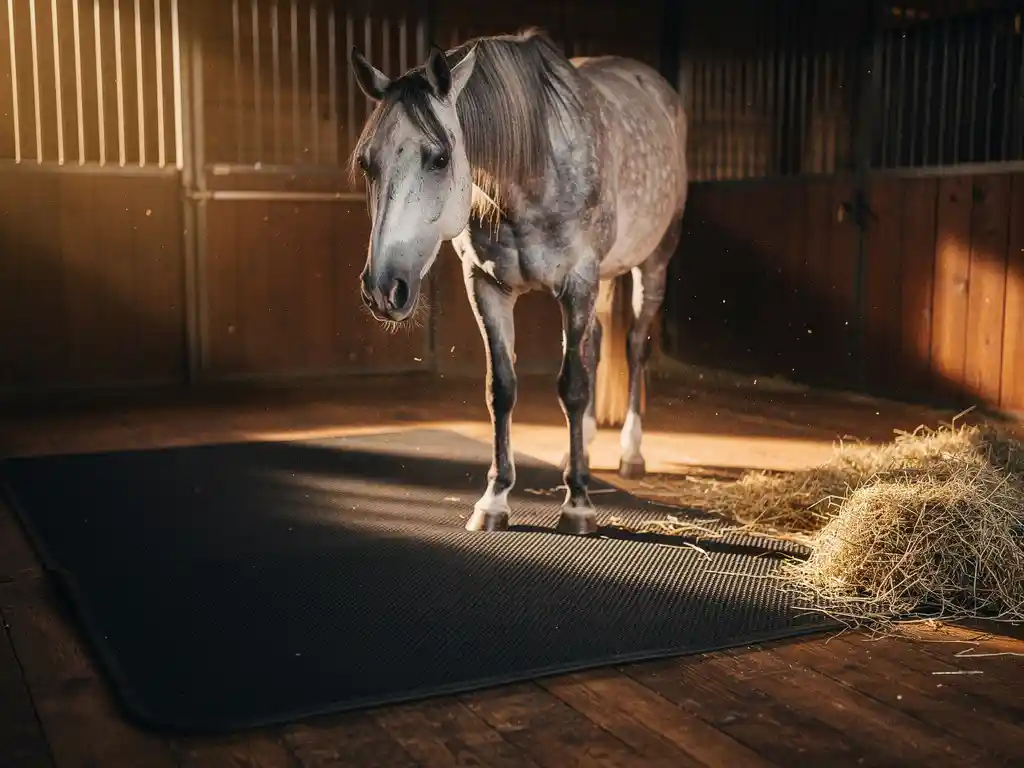
Making a horse stall more comfortable for an older horse comes down to a few key changes: better flooring, deeper bedding, and attention to warmth and joint support. Senior horses feel hard surfaces, cold drafts, and damp conditions more acutely than younger horses, so small upgrades to the stall environment can make a real difference in their daily comfort and long-term health. Focus on cushioning underfoot, keeping the space clean and dry, and watching for signs that your horse is struggling to rest or move freely.
What makes an older horse’s stall needs different from a younger horse’s?
An older horse needs more cushioning, warmth, and joint support than a younger horse because aging brings physical changes that make hard, cold, or damp environments genuinely uncomfortable. Stiff joints, a thinner body condition, reduced circulation, and a less efficient immune system all mean that the stall environment plays a bigger role in a senior horse’s overall well-being.
Younger horses can bounce back from a night on thin bedding or in a cold stall without much consequence. For a senior horse, the same conditions can trigger stiffness that lasts well into the morning, discourage lying down for proper rest, or even contribute to respiratory issues if the stall stays damp. An older horse’s body simply has less resilience to compensate for an uncomfortable environment, so the stall needs to do more of the work.
Beyond physical comfort, older horses are often lower in the herd hierarchy, which means they may spend more time in their stalls than younger, more active horses. That makes the quality of their stall space even more relevant to their day-to-day quality of life.
What type of flooring is best for an older horse’s stall?
Rubber matting is widely considered the best flooring option for an older horse’s stall because it provides cushioning for sore joints, insulates against cold and damp from the ground, and offers stable, slip-resistant footing. A good rubber mat reduces the pressure on hocks, knees, and fetlocks that builds up when a horse stands or lies on hard concrete or compacted dirt for hours at a time.
Why hard flooring is a problem for senior horses
Concrete and hard-packed dirt are unforgiving surfaces. They transmit cold directly upward, offer no shock absorption, and can become slippery when wet. For a horse already managing arthritis or reduced muscle mass, getting up and down on a slick or hard surface is not just uncomfortable; it is a real injury risk.
What to look for in a stall mat for older horses
Thickness matters. A thicker mat provides more cushioning and better insulation from the ground. Look for mats that are at least 3/4 inch thick, with a textured or studded surface for grip. The mat should cover the full stall floor with as few seams as possible, since gaps between mats can trap moisture and create uneven surfaces that are awkward for a horse to navigate.
Large-format mats are particularly useful here. Fewer seams mean fewer places for urine and moisture to pool underneath, which keeps the floor cleaner and reduces ammonia buildup. A well-fitted rubber mat also absorbs shock from movement and lying down, which directly supports joint health over time.
How much bedding does an older horse need in its stall?
An older horse generally needs deeper bedding than a younger horse, typically a minimum of 6 to 8 inches of straw or shavings over the stall floor. This extra depth provides additional cushioning for lying down, helps retain warmth, and encourages the horse to rest more comfortably for longer periods.
When rubber matting is already in place, the bedding layer works alongside the mat rather than compensating for a hard floor. The mat provides insulation and shock absorption, while the bedding stays cleaner and drier on top of the non-porous rubber surface. This combination can actually reduce how much bedding you need overall, since urine drains away more efficiently and the mat keeps the base layer from becoming sodden.
Pay attention to how your horse uses the bedding. If you notice the horse banking it all to one side or consistently lying in the same corner, that is a signal to build up depth in that area. Senior horses often have preferred lying spots, and making sure those areas are well padded is a simple, practical step.
How do you reduce joint pain and stiffness in a stalled senior horse?
Reducing joint pain and stiffness in a stalled senior horse involves a combination of proper flooring, regular gentle movement, and a warm, dry environment. No single change solves the problem on its own, but addressing the stall floor is one of the most impactful places to start because it affects the horse every hour it spends standing or resting.
Flooring and cushioning
Hard surfaces force joints to absorb impact with every step and create pressure points when the horse lies down. A thick rubber mat reduces that impact load significantly. For horses with diagnosed arthritis or degenerative joint conditions, this is not a luxury; it is a practical support tool that works around the clock.
Movement and turnout
Stiffness worsens with prolonged stillness. Daily turnout—even short periods of gentle movement in a paddock—helps keep joints mobile and circulation active. If turnout is limited due to weather or health reasons, hand-walking for 10 to 15 minutes can help loosen a stiff senior horse before it returns to the stall.
Warmth and nutrition
Cold temperatures make joint stiffness noticeably worse. Keeping the stall warm and draft-free, using a rug if appropriate, and ensuring the horse has access to warm water in winter all contribute to better joint comfort. Your vet may also recommend joint supplements or anti-inflammatory support as part of a broader management plan to support joint health.
What are the signs that a horse stall is not comfortable enough?
The clearest signs that a horse stall is not comfortable enough include reluctance to lie down, difficulty getting up, excessive pawing or shifting weight, standing at the back or front of the stall rather than resting, and visible wear patterns in the bedding that suggest restless movement during the night.
Senior horses that are not sleeping properly will show it in their behavior and condition. Watch for a horse that looks tired or dull during the day, has rub marks on its hocks or hips from lying on a hard surface, or seems reluctant to enter the stall at all. These are behavioral signals that something about the environment is causing discomfort.
Damp or ammonia-heavy air is another warning sign. If you notice a strong smell when you enter the stall, or if the bedding is consistently wet near the center of the floor, moisture is not draining properly. For a senior horse with a sensitive respiratory system, poor air quality in the stall can lead to coughing, nasal discharge, and general lethargy.
How do you keep an older horse warm and dry in its stall?
Keeping an older horse warm and dry in its stall requires good insulation underfoot, adequate ventilation without drafts, dry bedding that is changed regularly, and a well-fitted rug when temperatures drop significantly. Senior horses lose body heat more quickly than younger horses and are more vulnerable to the effects of damp conditions.
Rubber matting contributes directly to warmth by insulating the floor from the cold ground beneath. Concrete, in particular, draws heat away from the horse’s body when it lies down. A rubber mat with good thermal properties breaks that contact, keeping the floor surface noticeably warmer.
Ventilation is a balance. The stall needs fresh air to prevent moisture and ammonia buildup, but direct drafts at floor level are uncomfortable and can worsen joint stiffness. Check for gaps in walls or doors that send cold air directly across the bedding area, and block them without sealing the stall completely. A horse that is dry, out of the wind, and standing on an insulated surface will stay warmer with far less effort than one on a cold, damp concrete floor.
How often should you clean and maintain a senior horse’s stall?
A senior horse’s stall should be fully mucked out at least once daily, with wet patches and droppings removed promptly throughout the day if possible. Older horses are more susceptible to respiratory issues from ammonia and more prone to skin conditions from prolonged contact with damp bedding, so cleanliness directly supports their health.
Daily cleaning also gives you a regular opportunity to check on the horse’s habits. Changes in how much a horse is urinating, where it is lying, or how much bedding it is disturbing overnight can all be early indicators of health issues that are worth discussing with your vet.
Rubber mats make stall maintenance noticeably easier. Because genuine rubber is non-porous, it does not absorb urine or moisture. You can lift the mats periodically for a thorough clean underneath, and the surface itself can be washed down with mild detergent and water. This reduces the buildup of bacteria and odor that can accumulate under bedding over time, keeping the stall environment healthier for a horse that spends a lot of time in it.
When it comes to giving your senior horse the best possible stall setup, the floor is where we would start. At LRP Matting, we make high-quality rubber stall mats from durable, non-porous rubber that insulates against cold, absorbs shock, and stays easy to clean. If your stall is an unusual size or shape, our custom rubber matting solutions are cut to your exact dimensions, so you get full floor coverage with minimal seams and a clean, professional fit. A comfortable stall is one of the simplest things you can do for an older horse’s quality of life, and the right matting makes that easier to achieve.
Frequently Asked Questions
Can I use rubber stall mats alongside an existing concrete floor, or do I need to remove the concrete first?
You can lay rubber stall mats directly on top of an existing concrete floor without any removal or major preparation work. The key is to make sure the concrete surface is level, clean, and free of debris before laying the mats down so they sit flat and stable. If there are significant cracks or uneven areas, filling those first will help the mats lie flush and prevent rocking, which could create tripping hazards for an older horse.
My senior horse is reluctant to lie down even after I've improved the bedding. What else could be causing this?
Reluctance to lie down despite improved bedding can point to pain-related concerns beyond the stall environment itself, such as arthritis, laminitis, or muscle soreness that makes lowering and rising too uncomfortable to attempt regularly. It is worth having your vet assess the horse for underlying musculoskeletal issues, as stall improvements work best as part of a broader management plan that includes appropriate veterinary care. In some cases, adjusting the horse’s pain management protocol or adding joint supplements under veterinary guidance can make a meaningful difference alongside the physical stall upgrades.
How do I know if my senior horse is getting enough sleep and proper rest in its stall?
Horses need to lie down to achieve REM sleep, so a well-rested horse should show signs of having done so, such as shavings or straw pressed into its coat, slight rub marks on the side it favors, or a relaxed, alert demeanor during the day. If your horse consistently looks dull, yawns excessively, or shows signs of sleep deprivation like buckling at the knees while standing, it is likely not achieving proper lying-down rest. Checking the bedding each morning for disturbance patterns is a simple daily habit that tells you a lot about how comfortably your horse is resting overnight.
What type of bedding works best on top of rubber stall mats for an older horse — straw or shavings?
Both straw and shavings work well on rubber mats, but each has trade-offs worth considering for a senior horse specifically. Straw provides excellent cushioning and insulation and is generally easier on horses with respiratory sensitivities when it is good quality and dust-free, though it can become damp and heavy if not managed carefully. Shavings tend to be more absorbent, easier to muck out, and quicker to dry, making them a practical choice if your priority is keeping moisture levels low and stall cleaning efficient. Some owners use a combination — a base layer of shavings for absorbency topped with straw for cushioning — which can give you the benefits of both.
Are there any stall layout changes that can help a senior horse move around more safely?
Yes — removing or padding any sharp corners, ensuring the stall door opens wide enough for the horse to enter and exit without twisting awkwardly, and keeping the floor free of trip hazards like uneven mat edges or deep ruts are all practical layout adjustments. A slightly larger stall is beneficial for senior horses because it gives them more room to position themselves for lying down and getting up without feeling cramped or restricted. If a full stall enlargement is not possible, even removing unnecessary fixtures or equipment stored in the stall can free up meaningful space for a horse that moves more slowly and carefully than it once did.
How often should I replace rubber stall mats, and what are the signs that they need replacing?
High-quality rubber stall mats are extremely durable and can last 10 to 20 years or more with proper care, so replacement is rarely a frequent concern. Signs that a mat needs replacing include significant cracking or splitting that creates uneven surfaces, loss of surface texture that reduces grip, permanent deformation or thinning in high-traffic areas, or persistent odor that does not resolve after thorough cleaning. Regularly lifting and inspecting the mats underneath — especially along seams and edges — helps you catch deterioration early before it becomes a comfort or safety issue for your horse.
Is there anything I should do to prepare the stall before winter to make it more suitable for a senior horse?
Before winter arrives, it is worth doing a thorough stall audit: check for drafts at floor level and seal any gaps in walls or doors, inspect rubber mats for wear and ensure full floor coverage with no cold spots, and stock up on extra bedding so you can maintain greater depth during the coldest months. This is also a good time to review your horse’s rug situation and ensure you have appropriate weights available for varying temperatures. Consulting your vet in early autumn about any adjustments to your senior horse’s joint support, nutrition, or feeding routine — such as increasing forage to help with heat generation — can set your horse up for a much more comfortable winter season overall.
Related Articles
- How does flooring affect productivity?
- What should you consider when designing an animal facility?
- How do you identify floor safety hazards?
- How do uneven floors increase accident risk?
- What is the best flooring for an indoor training facility?
- How does the type of stall floor affect how much bedding you need?
- What are the hidden costs of poor horse stall flooring?
- What is the best way to cover an uneven barn floor?
- What do you put under heavy equipment to protect a floor?
- What is the most durable flooring for a professional athletic facility?