
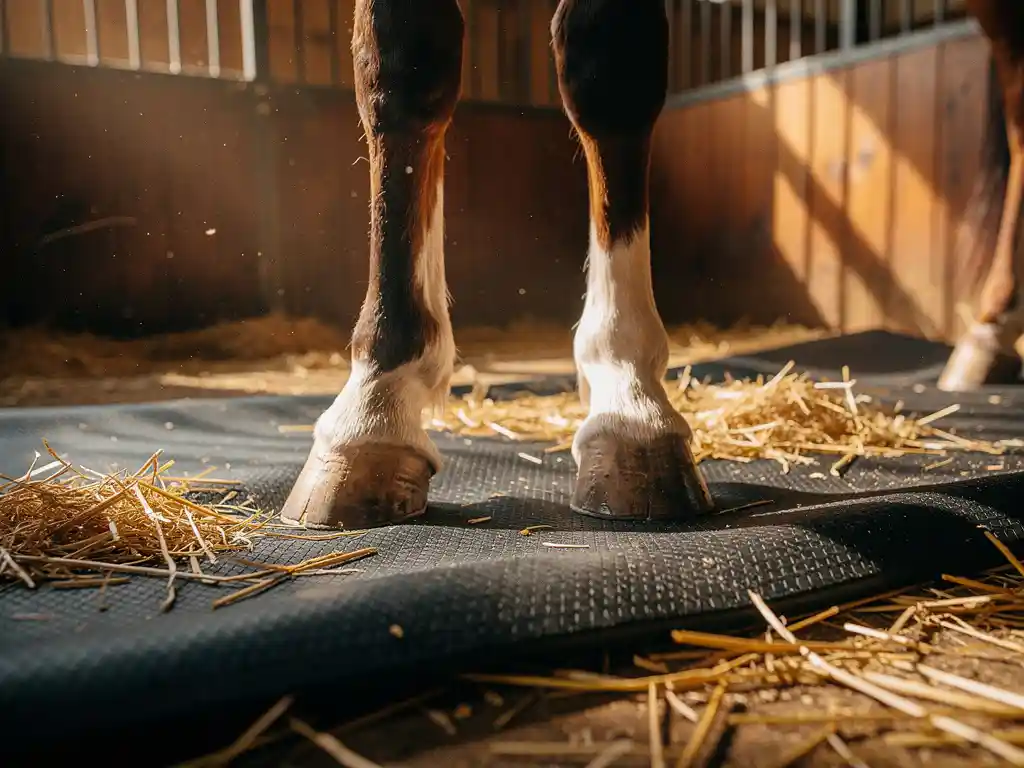
When a horse is recovering from surgery, injury, or illness, the flooring in its stall plays a bigger role than most people expect. The best flooring for a horse recovery stall is thick rubber matting—ideally 3/4 inch or more—laid over a firm, level base. Rubber provides the cushioning a recovering horse needs, reduces the risk of slipping, and helps keep the stall clean and hygienic. It is also comfortable enough for long periods of rest without causing pressure sores or added joint stress.
What is a horse recovery stall, and why does flooring matter?
A horse recovery stall is a dedicated space where a horse rests and heals after surgery, injury, lameness, or illness. Unlike a standard stall, a recovery stall needs to support restricted movement, extended periods of lying down, and often veterinary access—which makes the flooring one of the most important decisions you will make for your horse’s recovery environment.
When a horse is healing, it spends far more time lying down than usual. That means the floor takes on a completely different role—it needs to cushion joints, prevent pressure sores, and provide enough grip for a horse to rise safely without slipping. A hard or slippery floor can undo weeks of veterinary work in a single bad moment. The right flooring also makes it easier to maintain the hygiene standards that veterinary clinics and recovery environments demand, reducing the risk of infection at wound sites.
Beyond the horse’s comfort, flooring affects the safety of everyone in the stall. Handlers, vets, and farriers working in close quarters with a recovering animal need a surface that gives them solid footing, too. The floor you choose sets the foundation for the entire recovery process.
What are the best flooring options for a horse recovery stall?
The best flooring options for a horse recovery stall are thick rubber matting, rubber matting over a packed clay or concrete base, and, in some cases, deep-bedding systems layered on top of rubber mats. Each option has its place depending on your setup, budget, and the nature of the horse’s condition.
Rubber matting
Rubber matting is widely regarded as the top choice for recovery stalls. It provides cushioning, grip, insulation, and durability in one practical solution. Rubber mats can be laid directly over concrete or compacted surfaces, and they are easy to clean and disinfect—which matters a great deal in any recovery or veterinary clinic flooring setup. They also reduce the amount of bedding needed, which lowers ongoing costs.
Clay or packed dirt floors
Traditional clay or packed dirt floors offer some natural give, but they are difficult to keep clean, can harbor bacteria, and can shift and pit over time. They are rarely recommended for a dedicated recovery stall without a rubber mat layer on top.
Concrete alone
Bare concrete is hard, cold, and unforgiving. It offers no cushioning, increases the risk of slipping, and can cause pressure sores in horses that are lying down for extended periods. Concrete works well as a base layer beneath rubber mats, but it should never be the finished surface in a recovery stall.
Why is rubber matting recommended for equine recovery stalls?
Rubber matting is recommended for equine recovery stalls because it combines cushioning, slip resistance, thermal insulation, and hygiene in a single durable surface. These qualities directly address the most common risks a recovering horse faces: joint stress, falls when rising, cold exposure, and infection from unhygienic conditions.
The anti-slip surface of rubber matting gives horses the grip they need to rise and shift position safely, even when they are weak or unsteady. This is particularly important after orthopedic surgery or neurological episodes, where a fall while rising can cause serious setbacks. Rubber also acts as a natural insulator, keeping the floor warmer than bare concrete and reducing the chilling effect that can slow recovery.
From a hygiene standpoint, rubber is non-porous, which means it does not absorb urine, moisture, or bacteria into the surface. You can clean and disinfect it thoroughly between uses, which is exactly what veterinary clinic flooring standards call for. Rubber mats also reduce the impact on a horse’s hooves and joints during the limited movement that does occur in a recovery stall, helping to prevent secondary soreness from standing on a hard surface.
What thickness of rubber mat is best for a horse recovery stall?
For a horse recovery stall, a rubber mat thickness of at least 3/4 inch is recommended. This provides enough cushioning to protect joints and prevent pressure sores during extended rest periods. For horses recovering from serious orthopedic conditions or surgery, thicker options in the 3/4-inch to 1-inch range offer even greater comfort and protection.
Thinner mats—around 1/2 inch—can work in standard stalls where horses are active and moving regularly, but they do not provide the level of support a recovering horse needs during long periods of lying down. The difference in cushioning between a 1/2-inch and 3/4-inch mat is noticeable under the sustained pressure of a horse’s body weight.
It is also worth considering the weight of the mat. Thicker mats are heavier, which helps keep them in place without shifting during use. A mat that moves underfoot creates an uneven surface and a slip hazard—the opposite of what you want in a recovery environment. Look for mats that stay firmly in position, either through their weight, an interlocking design, or a combination of both.
How do you install rubber mats in a horse stall?
Installing rubber mats in a horse stall is straightforward. Start with a clean, level base—concrete is ideal, but compacted gravel or packed clay also works. Sweep or hose down the surface, let it dry, and then lay the mats starting from one corner, fitting them edge to edge with as few seams as possible.
Here is a simple step-by-step approach:
- Prepare the base by cleaning it thoroughly and checking for any uneven spots or debris.
- Measure the stall dimensions accurately before ordering mats to minimize cutting and seams.
- Start laying mats from the back corner of the stall, working toward the door.
- Fit mats tightly together—seams are where moisture and bacteria can accumulate.
- For interlocking mats, connect the edges securely before moving to the next mat.
- Trim any mats that need to fit around door frames or irregular edges using a utility knife.
Fewer seams always mean a better installation. Larger mats cover more ground with fewer joints, which simplifies the process and gives you a cleaner, safer surface. If your stall has an unusual shape or size, made-to-measure mats are worth considering—they fit the exact dimensions of your space and eliminate the need for awkward cuts.
How do you clean and maintain horse stall rubber mats?
Cleaning rubber horse stall mats is simple. Remove soiled bedding daily, then rinse the mat surface with water and scrub with a mild detergent when needed. For deeper cleaning between horses or after illness, use an appropriate equine-safe disinfectant and allow the surface to dry fully before adding fresh bedding.
Because rubber is non-porous, it does not absorb urine or moisture into the material itself. This makes it far easier to maintain hygiene compared to clay or wood-based surfaces. A good daily routine of picking out soiled bedding and spot-cleaning goes a long way toward keeping the stall fresh and reducing ammonia buildup, which can irritate a recovering horse’s respiratory system.
For maintenance over time, inspect the mats periodically for any signs of shifting, curling at the edges, or wear in high-traffic areas near the door. Rubber mats are highly durable and resistant to cracking or crumbling, even under temperature extremes, but keeping an eye on seams and edges ensures the surface stays safe and even. Occasional repositioning of mats that have shifted slightly will keep the installation looking and performing at its best.
What should you look for when buying horse stall mats?
When buying horse stall mats for a recovery stall, look for a thickness of at least 3/4 inch, a non-slip surface texture, non-porous rubber construction, and large mat sizes to minimize seams. These four factors directly influence how safe, comfortable, and hygienic the stall will be for a recovering horse.
Here are the key things to evaluate before you buy:
- Thickness: At least 3/4 inch for recovery use, providing meaningful cushioning for joints and pressure points.
- Surface texture: A textured or studded top surface gives horses the grip they need to rise and move safely.
- Material quality: Genuine rubber—not rubber-crumb composites—holds up better over time and is easier to disinfect thoroughly.
- Mat size: Larger mats mean fewer seams, which means fewer places for moisture and bacteria to collect.
- Weight and stability: Heavier mats stay in place better without needing adhesive, which simplifies cleaning and repositioning.
- Custom sizing availability: If your stall has non-standard dimensions, made-to-measure options save time and give a cleaner result.
It is also worth thinking about the long-term picture. A quality rubber mat is a one-time investment that will outlast cheaper alternatives many times over. In a recovery or veterinary clinic flooring context, the cost of a poor-quality mat—in terms of hygiene risks, replacement frequency, and potential harm to an animal—far outweighs the upfront savings.
At LRP Matting, we offer a range of horse stall mats built for exactly these demands, including our 4×6 Stall Mat in 3/4-inch and 5/8-inch thicknesses and our Hammer Top Mat designed for safety and comfort. We also offer made-to-measure rubber mats cut to your exact stall dimensions, so you get a precise fit with minimal seams and a surface that works from day one.
Frequently Asked Questions
Can I use rubber mats in a temporary recovery stall, or are they only practical for permanent setups?
Rubber mats work just as well in temporary recovery stalls as they do in permanent ones. Because they are simply laid over an existing base without adhesive, they can be installed quickly, moved when no longer needed, and reused in other areas of your facility. This flexibility makes them a practical investment even for short-term recovery situations.
How much bedding should I use on top of rubber mats in a recovery stall?
A layer of 4–6 inches of clean straw or shavings on top of rubber mats is generally recommended for a recovery stall. The bedding adds an extra layer of warmth and comfort, helps absorb urine to keep the surface drier, and provides additional cushioning for horses spending long periods lying down. The rubber mat beneath does the heavy lifting in terms of grip and joint protection, so you don’t need excessive bedding depth—just enough to keep the horse comfortable and the surface absorbent.
What if my horse is recovering from a hoof or leg injury specifically—does the flooring recommendation change?
For horses recovering from hoof or leg injuries, the flooring recommendation actually becomes even more critical. Thick rubber matting of at least 3/4 inch remains the top choice, but you should pay extra attention to ensuring there are no raised seams or uneven edges that could catch a hoof or cause the horse to stumble. In some cases, your vet may also recommend adding a deep bedding layer on top of the mats to further reduce concussive forces on the affected limb—always follow your veterinarian’s specific guidance for orthopedic cases.
How do I prevent rubber mats from developing unpleasant odors over time in a recovery stall?
The key to preventing odors is a consistent daily cleaning routine—remove soiled bedding promptly, rinse the mat surface regularly, and allow it to dry before adding fresh bedding. Because rubber is non-porous, odors come from residue sitting on the surface rather than being absorbed into the material, which means thorough rinsing and scrubbing with a mild detergent is highly effective. For deeper odor control, especially after extended use, an equine-safe disinfectant used weekly will neutralize bacteria and ammonia buildup at the source.
Is there anything I should do to the stall floor before laying rubber mats for the first time?
Yes—proper base preparation makes a significant difference in how well the mats perform and how long they last. Before laying mats, sweep or hose the base clean, fill any cracks or low spots in concrete, and ensure the surface is completely level. Even small dips or ridges beneath the mat can create uneven pressure points and cause the mat to rock or shift, which undermines both safety and comfort in a recovery environment.
How do I know when it's time to replace my horse stall rubber mats?
Quality rubber mats are extremely durable and can last 10–20 years with proper care, but there are a few signs that replacement is warranted: visible cracking or crumbling of the rubber, persistent curling or lifting at the edges that cannot be corrected by repositioning, significant thinning in high-traffic areas, or a surface that has become smooth and lost its grip texture. In a recovery stall context, grip and cushioning are non-negotiable, so if the mat can no longer reliably provide both, it is time to replace it rather than risk your horse’s safety.
Can rubber stall mats be used in a veterinary clinic or professional equine facility, or are they just for private stables?
Rubber mats are actually the flooring of choice in many professional equine veterinary clinics and rehabilitation facilities, precisely because they meet the hygiene, safety, and durability standards those environments demand. Their non-porous surface can be thoroughly disinfected between patients, their anti-slip texture supports horses that may be sedated or unsteady, and their durability holds up to the heavy use of a professional setting. Made-to-measure options are particularly useful in clinic environments where stall dimensions vary and a precise, seam-minimized fit is important for infection control.
Related Articles
- What are the first signs a commercial floor needs maintenance?
- What should be included in a sports surface safety inspection?
- How do weather conditions affect outdoor sports surfaces?
- How do uneven floors increase accident risk?
- What is the best rubber mat thickness for a horse stall?
- How do you support a horse's joints during long periods of stabling?
- How do you choose flooring for a professional sports locker room?
- What type of floor is easiest to keep clean in a horse barn?
- Can anti-fatigue matting improve worker productivity?
- What floor is best for a horse with arthritis?