

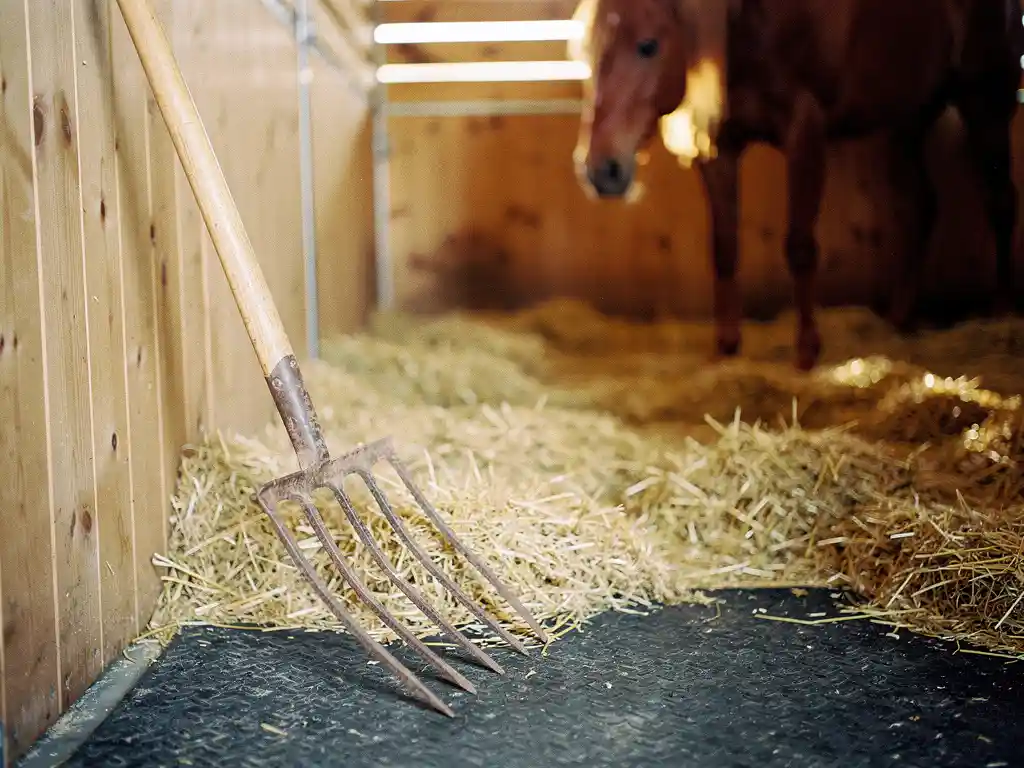
The fastest way to muck out a horse stall is to remove the horse first, then work systematically from one corner to the other—separating wet bedding and manure from clean, reusable material before removing the waste in one go. With the right tools, a good routine, and quality rubber stall mats underneath your bedding, you can clean an average stall in 10 to 15 minutes. Keep reading for a full breakdown of every step, tool, and trick that will make the job quicker and easier.
What does it mean to muck out a horse stall?
Mucking out a horse stall means removing manure, soiled bedding, and wet material from the stall floor and replacing it with fresh, clean bedding. It is one of the most important daily stable management tasks, directly affecting your horse’s health, hoof condition, and overall comfort.
A properly mucked-out stall removes ammonia-producing waste that can damage a horse’s respiratory system and hooves over time. It also gives you a daily opportunity to check your horse’s droppings, which can be an early indicator of digestive issues like colic. Think of it as a quick health check combined with a deep clean—both happening at the same time.
How often should you muck out a horse stall?
You should muck out a horse stall at least once a day, ideally in the morning. Horses kept in overnight produce a significant amount of waste, and leaving it to sit creates an unhygienic environment that affects hoof health, air quality, and overall well-being. High-traffic stalls, or horses prone to digestive issues, may benefit from a second quick pick-through in the afternoon.
If your horse spends most of the day outside, a full daily muck-out combined with a quick tidy in the evening is usually enough. The key is consistency. Letting waste build up even for a day or two makes the job significantly harder and increases ammonia levels in the stall—which is bad news for both the horse and the person doing the cleaning.
What tools do you need to muck out a stall quickly?
The right tools make a genuine difference to how fast you can muck out a stall. The core toolkit you need includes a manure fork, a stiff-bristle broom, a wheelbarrow or muck bucket, and a shavings fork if you use loose bedding. Having everything within arm’s reach before you start saves time and keeps you moving.
- Manure fork: The workhorse of the job. Choose one with tines spaced for your bedding type—wider tines for straw, closer tines for shavings or pellets.
- Shavings fork or sieve fork: Useful for separating clean shavings from soiled material, reducing how much bedding you throw away.
- Stiff broom: Helps sweep up finer debris, especially useful if you use rubber mats underneath your bedding.
- Wheelbarrow: A large, stable wheelbarrow lets you move more waste in fewer trips. A smaller muck tub works well in tight spaces.
- Rubber gloves: Practical and hygienic—especially if you are also doing a deeper scrub of the floor.
Keeping your tools clean and in good repair also matters more than people think. A bent fork or a leaky wheelbarrow will slow you down every single day, so it is worth maintaining your equipment regularly.
What is the fastest way to muck out a horse stall?
The fastest way to muck out a horse stall is to work in a systematic pattern, separating clean bedding from soiled material as you go rather than removing everything at once. Start at one corner, push clean bedding to the sides, remove all manure and wet patches, then spread the saved bedding back and top up with fresh material.
Step-by-step for a fast muck-out
- Remove the horse. You cannot work efficiently around a horse, and it is safer for both of you.
- Start in one corner and work across. Push clean, dry bedding toward the walls or into a pile at the back of the stall.
- Remove visible manure first. Pick out the obvious piles quickly before going back for the wet patches.
- Identify and remove wet spots. These are usually near the water bucket or in the corners. Wet bedding is heavier and takes longer to handle, so getting it out early helps you keep your momentum.
- Let the floor breathe. If time allows, leave the floor exposed for a few minutes before adding fresh bedding. This helps dry the surface and reduce ammonia buildup.
- Spread saved bedding and top up. Pull the clean bedding back across the floor and add fresh material where needed.
Tips that genuinely save time
Having a consistent spot for your muck heap close to the stable saves multiple trips. Doing the job at the same time each day also builds muscle memory—you stop thinking about the process and just do it. Some experienced stable managers report that a well-practiced routine with good tools can cut stall-cleaning time nearly in half compared to an ad hoc approach.
What type of bedding is easiest to muck out?
Wood pellets and rubber mat systems with minimal bedding are generally the easiest to muck out. Wood pellets absorb moisture efficiently and clump around wet areas, making soiled patches easy to identify and remove without disturbing clean material. Straw takes the most time because it is harder to separate from manure. Shavings sit in the middle—easier than straw but less efficient than pellets.
The bedding type that works best for you also depends on your horse’s habits and your stable setup. Deep-litter systems using straw can work well for horses that move around a lot, but they require more management over time. Rubber matting underneath any bedding type reduces the amount of bedding you need overall, which directly affects how much you have to handle during each muck-out.
If you are trying to reduce horse bedding costs, switching to a thinner layer of high-absorbency bedding over rubber mats is one of the most practical changes you can make. Less bedding means less waste to remove, less time spent cleaning, and lower ongoing costs.
Do rubber stall mats make cleaning a horse stall easier?
Yes, rubber stall mats make cleaning a horse stall significantly easier. They create a smooth, non-porous surface that does not absorb urine, which means wet patches sit on top and are simple to identify and remove. Mats also reduce the amount of bedding needed because the floor itself provides cushioning and insulation, so you are not relying on thick bedding layers to keep your horse comfortable.
Without mats, urine soaks into compacted dirt or concrete, creating persistent ammonia odors and making it harder to fully clean the floor. With mats in place, a stiff broom and a quick sweep can clear the surface after removing waste, and the floor dries faster between cleanings. Over time, this translates into a real reduction in both bedding use and cleaning time.
Rubber mats also protect your horse’s legs and hooves from the hard floor underneath, reduce slipping, and provide thermal insulation against cold ground in winter. For horses that spend long periods stabled, the difference in comfort is noticeable. The combination of easier cleaning and lower bedding use means rubber stall mats typically pay for themselves within a couple of years.
What mistakes slow down the stall mucking process?
The most common mistakes that slow down stall mucking are removing all bedding rather than sorting it, starting without tools ready, and working without a clear pattern across the stall. These habits turn a 15-minute job into a 30-minute one and make the process feel harder than it needs to be.
- Throwing out clean bedding: Separating reusable bedding from soiled material is the single biggest time and money saver in the whole process. Removing everything and starting fresh wastes both bedding and effort.
- Working without a system: Moving randomly around the stall means you cover the same ground multiple times. A corner-to-corner or side-to-side pattern keeps you moving forward.
- Leaving tools in another location: Walking back and forth to fetch equipment breaks your rhythm and adds up across a week of daily cleaning.
- Skipping the floor dry time: Adding fresh bedding directly onto a damp floor traps moisture underneath, creating more wet patches tomorrow and increasing ammonia buildup over time.
- Neglecting the corners: Urine and manure collect in corners first. Missing them during a quick clean means they become harder to deal with later.
Building a consistent routine and investing in the right setup from the start will save you real time every single day. If you are looking for ways to reduce horse bedding costs and make stall maintenance more manageable, the right flooring foundation makes everything downstream faster and simpler. Our custom rubber stall mats are made to measure, cut to fit your exact stall dimensions, and built from high-quality rubber that is non-porous, easy to clean, and genuinely long-lasting. We have been helping horse owners and stable managers simplify their routines since 1971—and the right mat really does change the whole experience.
Frequently Asked Questions
How do I deal with a horse that won't leave the stall during mucking?
The safest approach is to tie your horse outside the stall or turn them out to a paddock or small pen before you start. If turnout isn’t possible, tying them to a ring just outside the stall door works well and keeps them close enough to return quickly. Working around a loose horse in the stall is both slower and genuinely dangerous—a horse can shift its weight or move suddenly, putting you and your tools at risk.
How do I get rid of the ammonia smell in a horse stall?
The most effective way to reduce ammonia odor is to remove wet bedding thoroughly every single day and allow the floor to air dry before adding fresh material. Agricultural lime sprinkled lightly on the bare floor before re-bedding is a well-established method for neutralizing ammonia at the source. If you have rubber mats, lifting and cleaning underneath them periodically—every few weeks or months depending on your setup—prevents ammonia from building up in the gaps. Consistent daily mucking is ultimately the best long-term odor control strategy.
What's the best way to dispose of horse manure from stall cleaning?
The most practical options are composting, spreading on pasture land, or arranging collection with a local muck-away service. Composting is the most sustainable route—horse manure breaks down relatively quickly and produces excellent garden or pasture fertilizer within a few months when managed properly. Positioning your muck heap downwind of the stable and away from water sources is important for both hygiene and neighbor relations. Some local farmers will collect muck for free if you have a consistent supply, which can eliminate disposal costs entirely.
How much bedding should I put down after mucking out?
As a general guide, you want enough bedding to cushion the floor and absorb moisture without being so deep that it becomes difficult to sort during the next clean. Over rubber mats, a layer of around 2–4 inches of shavings or pellets is typically sufficient, whereas on a bare concrete or compacted floor you may need 4–6 inches for adequate comfort and insulation. Your horse’s individual habits matter too—a horse that urinates heavily or digs at bedding will need more depth to stay comfortable. Starting slightly deeper and adjusting based on how much soiled material you remove each day is a practical way to find the right balance.
Can I muck out less frequently if I use a deep litter system?
A deep litter system does reduce the frequency of full muck-outs, but it still requires daily removal of visible manure and careful management to prevent ammonia buildup in the lower layers. The system works by allowing the base layer of straw to compact and partially compost over time, with fresh bedding added on top regularly. It suits horses that move around a lot and helps retain warmth in winter, but it is not a low-effort alternative—poorly managed deep litter becomes a significant ammonia and hygiene problem. Full strip-outs every few weeks are still essential to keep the system working properly.
How do I muck out efficiently if I have multiple stalls to clean?
The key is to work in a production-line rhythm rather than fully completing one stall before moving to the next. Many experienced stable managers remove all horses first, then move systematically from stall to stall with a single loaded wheelbarrow run at the end. Keeping one set of tools per aisle or grouping stalls by proximity to the muck heap also cuts down on travel time significantly. Batching similar tasks—such as picking out all manure across stalls before going back to sweep and re-bed—builds speed through repetition and reduces the mental load of switching between steps.
How do I clean rubber stall mats properly during a deep clean?
For a thorough clean, remove all bedding, lift the mats if possible, and scrub both the mat surface and the floor underneath with a stiff brush and a diluted disinfectant solution safe for use around horses. Rinse well and allow everything to dry completely before replacing the mats and re-bedding—this is critical, as laying mats back onto a damp floor defeats the purpose of cleaning underneath. A full mat lift and scrub every four to six weeks is a reasonable schedule for most stables, though heavily used stalls may benefit from doing it more frequently. Regular sweeping and spot-cleaning during daily muck-outs will keep the surface hygienic between deep cleans.
Related Articles
- What role does flooring play in preventing musculoskeletal strain?
- What factors influence animal comfort in housing facilities?
- What factors have the biggest impact on floor maintenance?
- How do chemicals affect floor durability?
- What causes sports facility floors to wear out?
- What is the best flooring for a horse stall?
- What is the best way to protect a sports facility floor from heavy equipment?
- What flooring is best for a large animal veterinary examination room?
- What flooring is used in equine surgery facilities?
- What floor is best for a horse with arthritis?