
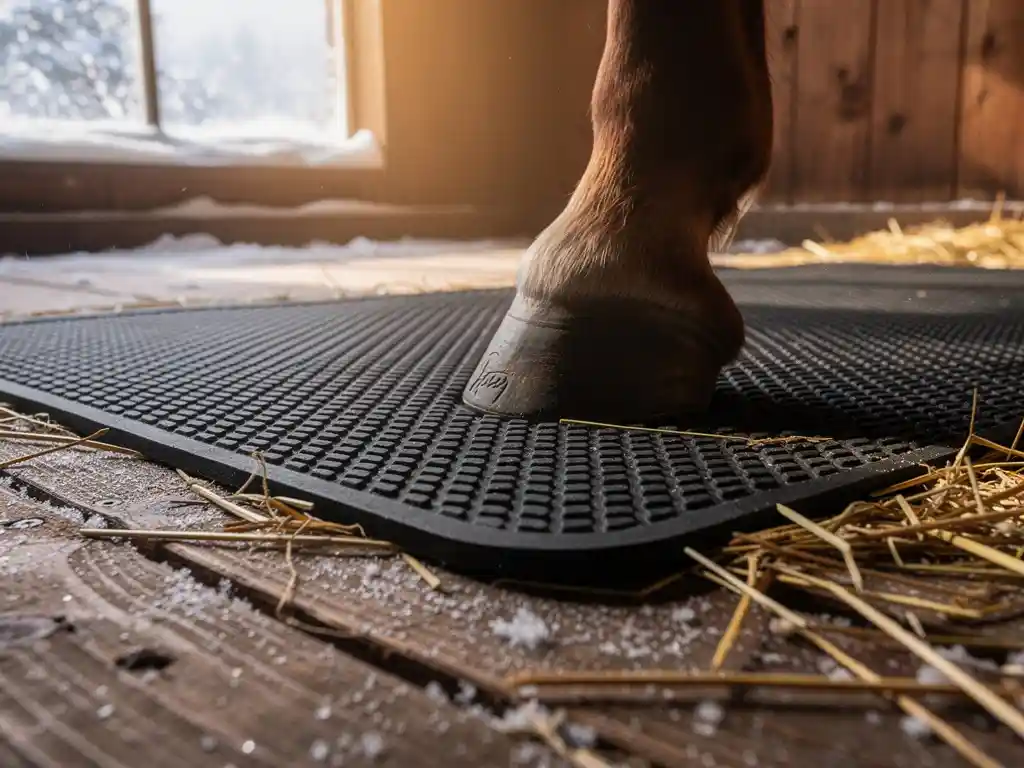
To insulate a horse stall floor in winter, the most effective approach is to install thick rubber mats directly over your existing concrete or dirt floor. Rubber naturally resists heat transfer, which means it helps prevent cold from rising through the ground and reaching your horse. A mat that is at least 3/4 inch thick provides a meaningful thermal barrier, and adding bedding on top improves insulation even further. Together, rubber mats and bedding create a warm, dry, and comfortable surface that protects your horse through even the coldest months.
Why does horse stall floor insulation matter in winter?
Poor horse stall floor insulation in winter forces your horse to stand and lie on surfaces that constantly pull body heat away. Cold floors increase the energy a horse burns just to stay warm, which can affect weight maintenance, immune health, and overall comfort. For older horses or those with joint issues, cold, hard floors make the problem noticeably worse.
Concrete is one of the most common stall floor materials, and it is also one of the worst insulators. It conducts cold efficiently, which means a horse lying on bare concrete loses body heat quickly. Even a thick layer of bedding on top of unprotected concrete can compress over time, reducing its insulating value. Addressing the floor itself, rather than relying on bedding alone, gives your horse a more reliable layer of warmth throughout the season.
Beyond comfort, there are real practical benefits to proper insulation. Warmer floors mean drier stalls, since cold surfaces encourage condensation and moisture buildup. That moisture contributes to bacterial growth, hoof problems like thrush, and general hygiene issues. Properly insulating the floor helps you manage all of these challenges at once.
What are the best materials for insulating a horse stall floor?
The best materials for insulating a horse stall floor are rubber mats, quality bedding such as straw or shavings, and, in some cases, a combination of both layered strategically. Rubber mats are the most durable and practical base layer, while bedding adds an additional thermal cushion on top. Together, they address both insulation and comfort effectively.
Rubber mats
Rubber is a natural insulator. It does not conduct cold the way concrete or stone does, so it acts as a buffer between the frozen ground and your horse’s body. Rubber mats are also non-porous, which means they do not absorb moisture or harbor bacteria the way softer materials can. They are easy to clean, long-lasting, and require very little maintenance over time.
Bedding materials
Straw is one of the most effective bedding options for winter because it traps air within its structure, which adds insulating value. Wood shavings and pellets also work well and are easier to manage from a hygiene standpoint. The key is to maintain adequate depth, since thin bedding compresses quickly and loses much of its thermal benefit.
What to avoid
Bare concrete without any covering is the worst option in winter. Sand and dirt floors offer slightly more insulation than concrete, but they are difficult to keep dry and sanitary. Foam-based products can seem appealing, but they lack the durability needed in a horse environment and break down quickly under the weight and movement of a large animal.
How do rubber mats help insulate a horse stall floor?
Rubber mats insulate a horse stall floor by creating a thermal barrier between the cold ground surface and your horse. Rubber has low thermal conductivity, meaning it does not transfer cold easily. This keeps the surface your horse stands and lies on noticeably warmer than the raw floor beneath, reducing heat loss from the animal’s body throughout the day and night.
Beyond insulation, rubber mats provide cushioning that relieves pressure on joints, which is especially valuable during winter when horses spend more time indoors. A horse that is comfortable lying down will rest more, and rest supports immune function and overall health during colder months.
Rubber is also non-porous, so it does not absorb urine or moisture. This keeps the stall drier, which in turn helps keep it warmer. A wet floor loses its insulating properties quickly, regardless of the material, so the moisture resistance of rubber is directly connected to how well it performs as an insulator in winter conditions.
How do you properly install rubber mats in a horse stall for winter?
To properly install rubber mats in a horse stall for winter, start with a clean, level base, lay the mats tightly edge to edge to eliminate gaps, and secure them so they do not shift under the horse’s movement. Gaps between mats allow cold air and moisture to penetrate from below, which significantly reduces the insulating effect.
- Prepare the base floor. Sweep or scrape the existing floor clean and check for any uneven areas. A level surface helps mats sit flat and prevents edges from lifting.
- Measure the stall accurately. Take precise measurements of the stall dimensions before ordering mats. Mats that are cut to size eliminate the gaps that standard sizes sometimes leave near walls and corners.
- Lay mats tightly together. Begin in one corner and work outward, fitting mats snugly against each other and against the walls. Even small gaps allow cold and moisture to work their way through.
- Secure the mats. In high-movement areas, mats can shift over time. Interlocking designs help prevent this, and purpose-built fasteners keep mats firmly in place without using anything that could harm the animal.
- Add bedding on top. Once the mats are installed and stable, add your chosen bedding layer to complete the insulation system.
Taking the time to get the installation right at the start saves you from having to reposition mats mid-winter, when conditions are less comfortable to work in.
What thickness of rubber mat is best for cold stall floors?
For cold stall floors, a rubber mat that is at least 3/4 inch thick is the recommended minimum. Thicker mats provide a more substantial thermal barrier and better cushioning for horses standing or lying down for extended periods. In particularly cold climates, or for horses that spend most of their time indoors during winter, a mat in the 5/8- to 3/4-inch range offers a strong balance of insulation and durability.
Thinner mats, while lighter and easier to handle, compress more under a horse’s weight and provide less consistent insulation over time. A horse weighing 1,000 pounds or more exerts significant pressure on the mat surface, and a thinner mat may bottom out in high-contact areas, reducing its effectiveness as both a cushion and a thermal barrier.
A 4×6 stall mat in 3/4-inch and 5/8-inch thicknesses is a practical example of what works well for this application. The heavier 3/4-inch version provides more insulation and cushioning, while the 5/8-inch version is slightly lighter and easier to maneuver during installation, making it a reasonable choice when handling is a consideration.
Should you use bedding on top of rubber mats in winter?
Yes, using bedding on top of rubber mats in winter is strongly recommended. Rubber mats provide the primary insulation layer by blocking cold from below, but bedding adds an additional layer of warmth and absorbs moisture from above. The combination of rubber mats and bedding creates a more complete insulation system than either material can provide on its own.
Bedding also serves a practical hygiene function. Urine and manure collect in the bedding layer rather than sitting on the mat surface, which makes daily cleaning easier and keeps the stall drier overall. A drier stall is a warmer stall, so good bedding management directly supports your winter insulation goals.
Straw tends to perform particularly well in winter because its hollow structure traps warm air effectively. Wood shavings are a popular alternative that offers good moisture absorption and is easy to muck out. Whichever bedding you choose, maintain a depth of at least four to six inches to ensure it stays effective as it compresses through regular use. Topping up bedding frequently throughout the winter months keeps the insulation layer consistent.
What mistakes should you avoid when insulating a horse stall floor?
The most common mistakes when insulating a horse stall floor include leaving gaps between mats, using mats that are too thin, neglecting the base floor condition before installation, and failing to maintain bedding depth throughout the season. Each of these mistakes reduces the effectiveness of your insulation and can leave your horse exposed to cold and damp conditions despite your efforts.
Leaving gaps between mats
Even small gaps allow cold air and moisture to rise from the floor below. Cold air pooling under your horse at ground level defeats the purpose of installing mats in the first place. Fitting mats precisely to the stall dimensions eliminates this problem. If standard mat sizes leave awkward gaps near walls or corners, made-to-measure options are worth considering. Our custom rubber matting solutions are cut to your exact stall dimensions, which removes the guesswork and ensures a seamless fit from wall to wall.
Choosing the wrong mat thickness
A mat that is too thin compresses under a horse’s weight and quickly loses much of its insulating and cushioning value. Always choose a mat with a thickness of at least 3/4 inch for stall use, and consider your horse’s weight when making that decision.
Skipping base floor preparation
Installing mats over an uneven or dirty floor causes them to sit unevenly, which creates pressure points that wear the mat down faster and allows movement that can open gaps over time. A few minutes spent leveling and cleaning the base floor before installation makes a real difference in how well the mats perform long term.
Letting bedding depth drop
Bedding compresses quickly under a horse’s movement, especially in the spots where the horse stands and lies most often. Thin bedding loses its insulating value and also becomes less comfortable. Check bedding depth regularly throughout the winter and top it up as needed to keep the full insulation system working as intended.
Frequently Asked Questions
How do I know if my horse is suffering from a cold stall floor?
Common signs include reluctance to lie down, stiffness when rising, weight loss during winter months, and increased time standing in one spot. Older horses or those with arthritis may show more obvious discomfort, such as shifting weight frequently or appearing restless. If you notice any of these behaviors alongside a poorly insulated floor, addressing the floor should be one of your first steps.
Can I insulate a stall floor that already has existing rubber mats installed?
Yes, but first assess the condition and thickness of the mats already in place. If they are worn thin, compressed, or have developed gaps, it is worth replacing them rather than layering over them, since a deteriorated mat beneath a new one will still allow cold and moisture to work through. If the existing mats are in good condition but thin, adding a fresh layer of quality bedding on top is the most practical way to improve insulation without a full reinstall.
How often should I replace rubber stall mats to maintain good insulation?
High-quality rubber stall mats typically last 10 to 20 years with proper care, but you should inspect them at the start of each winter season for signs of cracking, significant compression, or warping at the edges. Mats that no longer lie flat or that have developed hard, compressed zones under high-traffic areas are no longer providing reliable insulation and should be replaced. Regular cleaning and proper installation extend mat lifespan considerably.
Is there anything I can do to improve floor insulation in a stall that I cannot permanently modify, such as in a rented facility?
Absolutely. Rubber mats require no permanent modification to the existing floor and can be laid down and removed as needed, making them ideal for rented or temporary stall situations. Focus on full coverage with tightly fitted mats and maintain a deep bedding layer on top to maximize the insulation effect. This combination is highly effective even without any structural changes to the stall.
Does insulating the stall floor make a difference if the barn itself is not well insulated?
Yes, floor insulation still provides meaningful benefit even in a drafty or poorly insulated barn, because a significant portion of a horse’s heat loss occurs through direct contact with cold ground surfaces. That said, floor insulation works best as part of a broader approach that also addresses drafts, ventilation, and adequate blanketing when temperatures drop severely. Think of floor insulation as a critical foundation rather than a complete solution on its own.
What is the best way to clean rubber stall mats during winter without compromising their insulating performance?
Remove bedding and muck out daily as usual, then scrub the mat surface with a stiff brush and a mild, horse-safe disinfectant solution when doing a deeper clean. Allow the mats to dry thoroughly before replacing bedding, since moisture trapped beneath wet bedding on the mat surface reduces insulation effectiveness and promotes bacterial growth. In winter, choose cleaning days with good ventilation and, if possible, slightly warmer temperatures to speed drying time.
Are there any specific rubber mat products designed for particularly cold or northern climates?
While most high-quality rubber stall mats perform well across a wide temperature range, look for mats made from vulcanized rubber, which maintains flexibility and structural integrity in freezing conditions rather than becoming brittle. Mats in the 3/4-inch thickness range are generally the best choice for cold climates, and interlocking designs are especially useful because they maintain a tight, gap-free fit even as materials contract slightly in very low temperatures. Consulting with a specialist supplier about your specific climate conditions can help you select the most appropriate product.
Related Articles
- How do high traffic logistics environments affect floor performance?
- What makes a flooring material sustainable?
- What is the best flooring for an outdoor athletic facility?
- How do large boarding facilities manage bedding costs across many stalls?
- What causes back pain in workers who stand on hard floors all day?
- What is the most durable flooring for a professional athletic facility?
- What are the pros of rubber mats in a horse stall?
- How do you protect a sports facility floor from cleats and spikes?
- How do you keep a sports facility floor safe in wet conditions?
- How do you stop horse stall mats from shifting?