
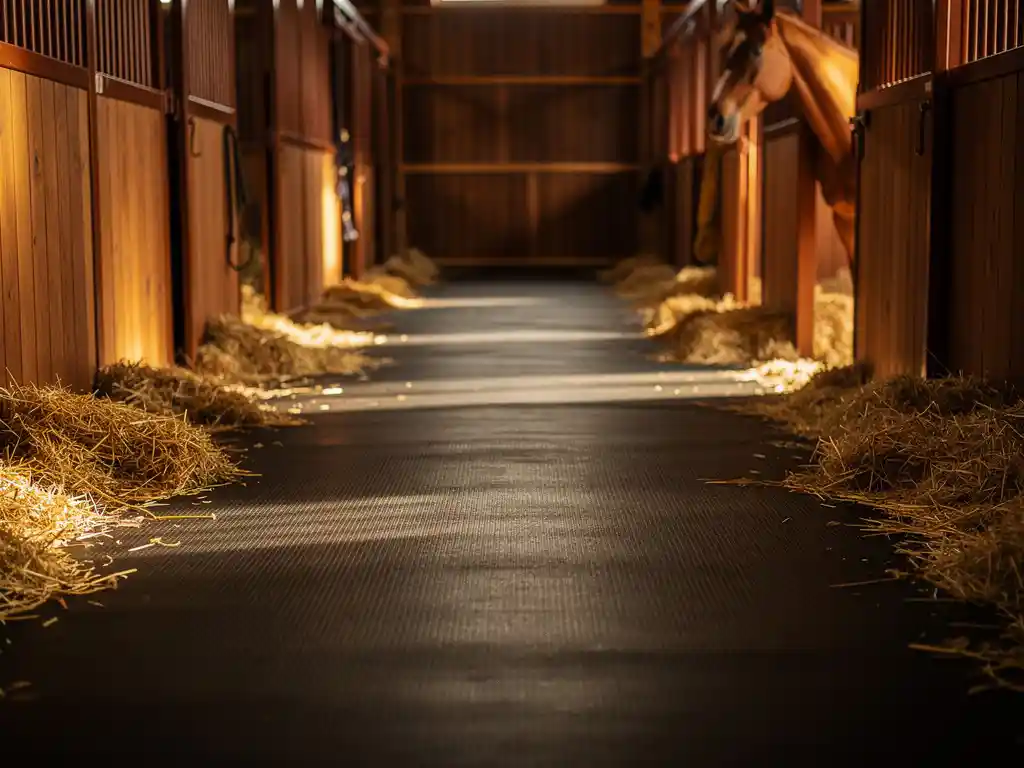
The best flooring for a horse barn aisle is rubber matting installed over a compacted base, such as concrete, gravel, or packed stone dust. Rubber mats give horses reliable traction, cushion hard surfaces underfoot, and hold up well against daily traffic, water, and heavy loads. Concrete alone is too hard and slippery, while dirt or gravel shifts over time and becomes difficult to keep clean. A combination of a solid, level base with quality rubber matting on top gives you the safest, most practical, and lowest-maintenance barn aisle floor available.
What are the most common types of horse barn aisle flooring?
The most common types of horse barn aisle flooring are concrete, asphalt, compacted gravel or stone dust, rubber matting, and interlocking pavers. Each material has its own trade-offs in terms of cost, comfort, traction, and maintenance. Most horse owners end up combining materials, using a firm base layer with rubber mats on top for the best of both worlds.
Concrete is probably the most widely used base material because it is durable, easy to hose down, and holds up under heavy equipment and foot traffic. The downside is that it is hard on horses’ legs and hooves over time, and it becomes dangerously slippery when wet. Asphalt behaves similarly but can soften in extreme heat, which can be a problem in the summer months.
Compacted gravel or stone dust provides a more forgiving surface and drains well, but it can shift underfoot, create uneven spots, and be difficult to sweep clean. Interlocking pavers look attractive and drain well, but the gaps between them can trap debris and become uneven if the base settles. That is why rubber matting has become the go-to surface layer for barn aisles—it sits on top of any of these bases and solves most of the problems each one creates on its own.
What’s the difference between rubber mats and concrete for barn aisles?
The key difference between rubber mats and concrete for barn aisles is comfort and traction. Concrete is rigid and unforgiving, which puts stress on horses’ joints and hooves during long periods of standing or walking. Rubber mats absorb impact, reduce vibration, and provide a non-slip surface that stays safe even when wet. Concrete is cheaper upfront, but rubber mats reduce long-term wear on your animals and your facility.
Traction and safety
Bare concrete becomes slick the moment it gets wet, which is practically unavoidable in a barn aisle. A horse slipping on concrete can seriously injure itself, and even a small stumble creates stress and anxiety. Rubber mats have a textured surface that grips hooves reliably, even during grooming, washing, or when a horse is being led through quickly.
Comfort and joint health
Horses spend a lot of time standing in barn aisles during grooming, tacking up, and veterinary visits. Standing on hard concrete for extended periods puts real strain on legs and joints. Rubber mats cushion that impact and reduce fatigue, which matters especially for older horses or those recovering from injury. The difference in how a horse stands and moves on rubber versus bare concrete is noticeable almost immediately.
Maintenance and cost over time
Concrete is easy to hose down, but it stains, cracks over time, and can become rough and uneven. Rubber mats are also simple to clean and non-porous, so they do not absorb moisture or odors, and they protect the concrete underneath from wear and damage. While rubber mats involve an upfront cost, they extend the life of your base flooring and reduce the need for repairs down the line.
Are rubber mats good for horse barn aisles?
Yes, rubber mats are an excellent choice for horse barn aisles. They provide non-slip traction, cushion hard surfaces, insulate against cold from the ground, and are easy to clean with just water and mild detergent. They are durable enough to handle daily horse traffic, wheeled equipment, and the general wear of a working barn environment without cracking, peeling, or breaking down.
Beyond safety and comfort, rubber mats protect your underlying floor. Whether your base is concrete, compacted gravel, or packed stone dust, rubber mats take the daily impact so the base material does not have to. That means fewer cracks, less erosion, and lower repair costs over the years.
Rubber mats also make a barn aisle significantly more hygienic. Because genuine rubber is non-porous, it does not absorb urine, water, or bacteria the way dirt or worn concrete can. A quick rinse keeps the surface clean and odor-free. For anyone spending time in the barn every day, that makes a real, practical difference to the overall environment for both horses and people.
How thick should rubber mats be for a barn aisle?
For a horse barn aisle, rubber mats should generally be at least three-quarters of an inch thick. This thickness provides enough cushioning to protect hooves and joints, enough weight to stay flat without shifting, and enough durability to handle the repeated impact of horses, wheelbarrows, and barn equipment over years of daily use.
Thinner mats, such as those around half an inch thick, can work in lower-traffic areas or where budget is a consideration. They are lighter and easier to handle during installation, but they offer less cushioning and may shift more easily under heavy or repeated loads. For a busy barn aisle where horses are led through multiple times a day and equipment rolls regularly, the extra thickness is worth it.
Thicker mats in the range of five-eighths to three-quarters of an inch strike a practical balance for most barn aisle applications. They are substantial enough to stay in place, provide real comfort underfoot, and resist wear over the long term without being so heavy that handling and installation become difficult. If your aisle sees unusually heavy traffic or you want maximum longevity, choosing the thicker option is a straightforward decision.
How do you install rubber mats in a horse barn aisle?
Installing rubber mats in a horse barn aisle starts with preparing a clean, level, and stable base. The mats should be laid directly onto compacted concrete, gravel, or stone dust, with each mat placed tightly against the next to minimize gaps. For long aisles, interlocking mats or made-to-measure cuts reduce seams and keep the surface neat and secure.
Step 1: Prepare the base
Before laying any mats, make sure the base is level and solid. Uneven spots will cause mats to rock or flex, which creates trip hazards and accelerates wear. Sweep or hose down the base to remove debris, and fill any cracks or low spots before you begin.
Step 2: Plan your layout
Measure your aisle and plan how the mats will fit. Starting from the center or from one fixed wall helps you keep the layout symmetrical and minimizes awkward cuts at the edges. If your aisle has an unusual width or length, made-to-measure mats cut to your exact dimensions will give you a cleaner finish with fewer seams.
Step 3: Lay and fit the mats
Place each mat firmly against the previous one, working your way down the aisle. Rubber mats are heavy, so having a second person helps with positioning. For interlocking designs, press the tabs together firmly to create a stable, connected surface. Avoid leaving gaps between mats, as these can catch hooves or collect debris.
Step 4: Trim edges as needed
Where mats meet walls, doorways, or drainage channels, you may need to trim the edges for a clean fit. A sharp utility knife or a circular saw with a rubber-cutting blade handles most cuts cleanly. Take your time with edge cuts, as a well-fitted edge looks better and prevents the mat from curling over time.
How do you clean and maintain horse barn aisle flooring?
Cleaning rubber mats in a horse barn aisle is straightforward: sweep or scrape off loose debris, then rinse with water and scrub with a mild detergent if needed. Because rubber is non-porous, it does not absorb moisture, urine, or bacteria, which makes it far easier to keep hygienic than dirt, wood, or worn concrete. Regular sweeping and a periodic rinse keep the surface in good condition.
For daily maintenance, a stiff broom or a rubber-tipped scraper removes manure, shavings, and dirt quickly. A weekly rinse with a hose is usually enough for most barns. If the aisle sees heavy use or gets particularly dirty, a scrub with warm water and a mild detergent restores the surface without damaging the rubber. Avoid harsh solvents or bleach-based cleaners, as these can degrade rubber over time.
One of the practical advantages of rubber barn aisle flooring is that it does not crack, peel, or crumble, even with repeated washing or exposure to temperature extremes. This makes long-term maintenance genuinely low-effort compared to concrete, which can develop cracks that trap bacteria and become harder to clean over the years. Rubber mats also handle freeze-thaw cycles well, so barns in colder climates do not need to worry about seasonal damage to the floor surface.
If you are ready to upgrade your barn aisle with flooring that is safe, durable, and easy to maintain, we at LRP Matting are here to help. We have been manufacturing high-quality rubber mats since 1971, and all our products are made from genuine rubber using our proprietary Fiber-Reinforced Rubber Compound (FRC®) for extra strength and longevity. If your barn aisle has an unusual shape or size, take a look at our custom rubber matting solutions—we cut mats to your exact specifications so you get a clean, seamless fit with no awkward gaps or wasted material.
Frequently Asked Questions
Can I install rubber mats over an existing cracked or uneven concrete base?
Minor cracks and small imperfections can be filled and leveled before laying rubber mats, making it possible to install over an existing concrete floor without a full replacement. However, if the base has significant heaving, large cracks, or areas that flex underfoot, those issues should be properly repaired first—rubber mats will conform to the surface beneath them, so a badly uneven base will still cause mats to rock or wear unevenly over time. For most older barn aisles, patching low spots and filling cracks with a concrete filler is enough to get a stable, mat-ready surface.
How do I stop rubber mats from sliding or shifting in the barn aisle?
The best way to keep rubber mats in place is to start with a flat, level base and use mats that are heavy enough to resist movement—three-quarter-inch mats stay put far better than thinner, lighter options. Fitting mats tightly against each other and against the walls eliminates the gaps that allow individual mats to shift under hoof traffic. For aisles with persistent movement issues, interlocking mats or made-to-measure cuts that fill the aisle edge to edge remove the free space that lets mats migrate.
What type of rubber mat is best for a barn aisle—solid, interlocking, or made-to-measure?
For most standard barn aisles, large solid rubber mats (typically 4×6 feet) are the most popular choice because they cover ground quickly, have minimal seams, and are straightforward to lay. Interlocking mats work well in irregular spaces or where you want a more connected surface that resists shifting. Made-to-measure mats are the best option when your aisle has an unusual width, length, or obstacles like posts and drains, since a custom cut eliminates gaps and gives a clean, professional finish with no wasted material.
Will rubber mats hold up in a barn aisle that also gets heavy equipment traffic, like tractors or skid steers?
Quality rubber mats made from genuine rubber with reinforced compounds are designed to handle heavy wheeled and tracked equipment, not just horse and foot traffic. The key factors are mat thickness—three-quarter inch or above—and the integrity of the base underneath, since heavy equipment will expose any soft spots or voids beneath the mats. For aisles that regularly see machinery, it is worth investing in thicker, fiber-reinforced mats and ensuring the base is fully compacted and solid before installation.
How long do rubber barn aisle mats typically last before they need to be replaced?
High-quality rubber barn aisle mats can last 10 to 20 years or more with normal use and basic maintenance, making them one of the most cost-effective flooring investments for a working barn. Longevity depends on mat quality, base stability, traffic volume, and how well the mats are maintained—avoiding harsh chemical cleaners and keeping the base level underneath are the two biggest factors in extending mat life. Signs that mats need replacing include significant thinning, deep surface cracking, or areas that have become permanently compressed and no longer provide adequate cushioning.
Is there anything I should avoid putting on rubber barn aisle mats that could damage them?
Avoid using bleach-based disinfectants, petroleum-based solvents, or harsh chemical degreasers on rubber mats, as these break down the rubber compound over time and cause the surface to dry out, crack, or become brittle. For disinfecting, diluted white vinegar or equine-safe enzymatic cleaners are gentler alternatives that won’t degrade the material. Also avoid dragging sharp metal objects like pitchfork tines directly across the surface, as repeated scoring can damage the mat’s texture and reduce its effective lifespan.
Do rubber barn aisle mats work well in cold climates where the barn floor freezes in winter?
Yes, rubber is naturally resistant to freeze-thaw cycles, which is one of its practical advantages over concrete in colder climates—it does not absorb water, so it won’t crack or heave as temperatures fluctuate. Rubber also provides a degree of thermal insulation from the cold ground beneath it, which makes the aisle floor noticeably warmer underfoot for horses during winter months. Just ensure drainage is adequate so water doesn’t pool and freeze underneath or between mat seams, as trapped ice can cause mats to lift temporarily until it thaws.
Related Articles
- How does floor related fatigue impact workplace safety?
- How can preventative maintenance reduce unexpected floor repairs?
- Why is regular floor maintenance important for long term performance?
- How do entrances create floor safety risks?
- What is the best flooring solution for a temporary work site?
- What is the best flooring for a horse wash rack?
- What is the best way to protect a loading dock floor?
- How often should you replace horse stall bedding?
- What is the best way to cover an uneven barn floor?
- Why is my horse stiff after being in the stall overnight?