
Rubber mats are one of the best upgrades you can make to a horse stall. They cushion your horse’s joints, reduce bedding costs, improve traction on hard floors, and make daily cleaning much faster. If you’re wondering whether horse stall mats are worth it, the short answer is yes. Read on for everything you need to know before you buy.
What are rubber mats for horse stalls?
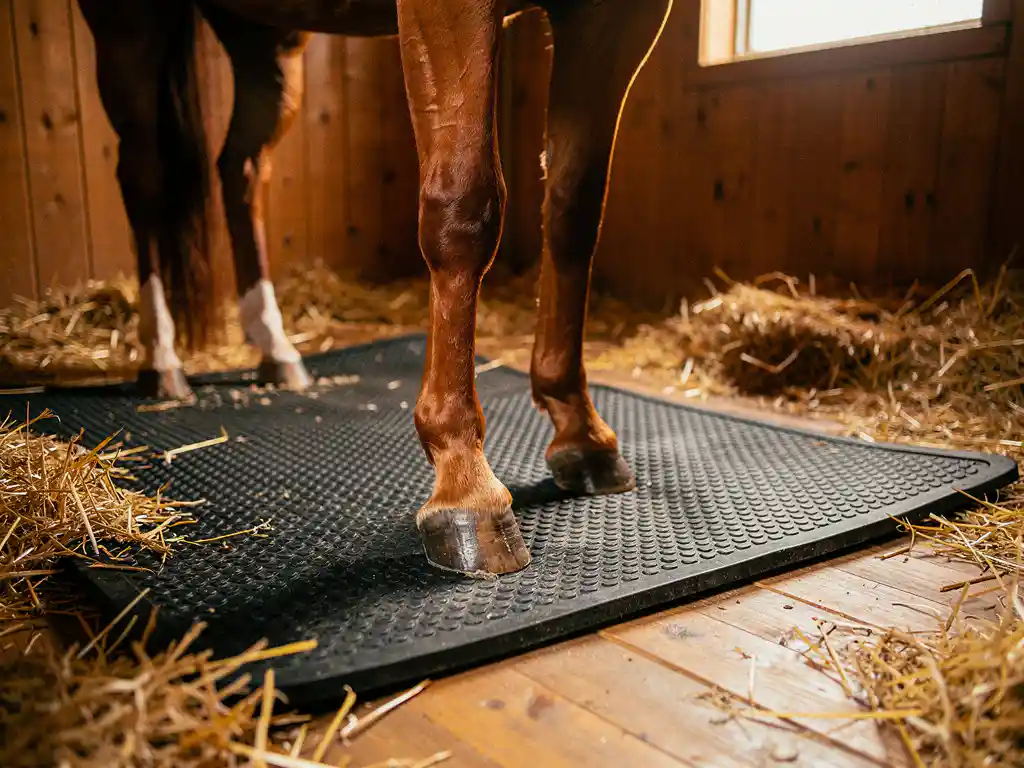
Rubber mats for horse stalls are thick, durable floor coverings placed directly on concrete or compacted surfaces inside a stall. They create a softer, safer, and more insulated surface for horses to stand, move, and rest on. Most stall mats are made from solid rubber and are designed to handle the constant weight and movement of a horse without shifting, cracking, or breaking down.
Horse stall mats typically come in standard sizes like 4×6 feet, though larger and custom-cut options are available for barns with unusual dimensions. Thickness matters here: a mat around 3/4 inch thick offers solid cushioning and shock absorption, while thicker options provide extra insulation against cold, damp concrete floors. Some mats have a studded or textured surface on top for grip, and a flat or waffle-patterned back to help them stay in place.
Why is horse stall flooring so important?
Horse stall flooring directly affects your horse’s health, comfort, and safety every single day. Horses spend a large portion of their lives standing in their stalls, and the surface beneath them has a real impact on their joints, hooves, and overall well-being. Poor flooring can lead to slipping, joint stress, hoof problems, and reluctance to lie down and rest properly.
Bare concrete is hard, cold, and unforgiving. It offers no cushioning, drains poorly, and becomes dangerously slippery when wet. Compacted dirt floors can work, but they shift over time, hold moisture, and are difficult to keep clean. Rubber mats solve both problems by adding a stable, cushioned layer that stays in place and holds up under heavy use. Good horse stall flooring is not just a comfort upgrade; it is a practical investment in your horse’s long-term health.
What are the main benefits of rubber mats in a horse stall?
The main benefits of rubber mats in a horse stall include improved comfort and joint support, better traction to prevent slipping, easier cleaning, reduced bedding costs, and better insulation from cold floors. Together, these advantages make daily stall management simpler while keeping your horse healthier and more comfortable year-round.
Here is a quick breakdown of the key benefits:
- Cushioning and joint support: Rubber absorbs shock and reduces the strain on your horse’s legs and hooves from standing on hard surfaces.
- Slip resistance: A textured rubber surface gives horses confident footing, which is especially important when they shift their weight, lie down, or get back up.
- Reduced bedding use: With a padded rubber base, you need less shavings or straw to achieve the same level of comfort. Many horse owners report noticeably lower bedding costs after switching to rubber mats.
- Easier cleaning: Rubber is non-porous, so urine and moisture sit on the surface rather than soaking into the floor. Mucking out becomes faster and more thorough.
- Insulation: Rubber acts as a thermal barrier between your horse and cold concrete, helping to keep the stall warmer in winter.
How do rubber mats improve horse health and comfort?
Rubber mats improve horse health and comfort by reducing the physical stress that hard flooring places on joints, tendons, and hooves. When horses stand for long periods on cushioned rubber rather than concrete, there is less repetitive impact on their legs. This can reduce the risk of conditions like joint soreness, hoof bruising, and fatigue-related injuries over time.
Comfort also plays a direct role in rest. Horses are more likely to lie down and sleep properly when the floor feels safe and comfortable beneath them. A horse that rests well recovers better, maintains a healthier weight, and tends to be calmer and easier to handle. Rubber mats also reduce the risk of slipping during moments when a horse gets up, turns around, or reacts suddenly—all of which can cause serious injuries on a slick surface.
For older horses or those recovering from injury, the difference that good stall flooring makes is even more pronounced. The extra cushioning takes pressure off sore joints and encourages the horse to shift its weight and move more naturally, which supports circulation and overall recovery.
Are rubber mats easy to clean and maintain in a stall?
Yes, rubber mats are easy to clean and maintain in a horse stall. Because rubber is non-porous, it does not absorb urine or moisture. Waste sits on the surface and can be removed quickly during daily mucking out. A rinse with water and a mild detergent is all you need for a thorough clean, and the mats will not crack, peel, or degrade from regular washing.
The key to keeping stall mats in good condition is lifting and cleaning underneath them regularly. Moisture can collect between the mat and the floor if the area is not dried out occasionally, which can lead to odor or bacteria buildup. Moving the mats every week or two, rinsing both the mat and the floor beneath it, and allowing everything to dry before replacing them keeps the stall hygienic and fresh.
Compared to bare concrete or dirt floors, rubber mats make stall hygiene much more manageable. The surface is easier to scrape clean, and because you use less bedding on top, there is less material to shift during daily cleaning. Over time, this saves both time and effort.
How long do rubber mats last in a horse stall?
High-quality rubber mats can last 10 to 20 years or more in a horse stall when properly maintained. Rubber is naturally resistant to cracking, peeling, and temperature extremes, which means a well-made mat holds up reliably through years of daily use. The lifespan depends on the quality of the rubber, the thickness of the mat, and how well the mats are cared for.
Thicker mats generally last longer because they have more material to withstand wear from hooves and daily activity. Mats made from solid, high-quality rubber without fillers or weak binders maintain their structure and cushioning properties far longer than cheaper alternatives. Keeping the mats clean, dry, and properly fitted also extends their life significantly.
It is worth thinking of rubber stall mats as a long-term investment rather than a recurring expense. The upfront cost is higher than simply adding more bedding, but the combination of lower bedding use, reduced vet bills through injury prevention, and years of reliable performance makes them cost-effective over time.
What should you look for when choosing horse stall mats?
When choosing horse stall mats, focus on thickness, surface texture, mat size, material quality, and fit for your specific stall dimensions. The right combination of these factors determines how well the mats perform, how long they last, and how easy they are to manage day to day.
Thickness and cushioning
For most horse stalls, a mat thickness of at least 3/4 inch is recommended. This provides enough cushioning for joint support without being so thick that the mat becomes difficult to lift and clean. For horses that spend a lot of time standing, or older horses with joint issues, thicker options offer even more support.
Surface texture and grip
Look for a mat with a non-slip surface pattern on top, such as a studded or hammer-top design. This gives your horse confident footing in all conditions, including when the floor gets wet. The underside of the mat should also have a grip pattern or waffle texture to prevent the mat from sliding on the stall floor.
Size and coverage
Standard 4×6 foot mats work well in many stalls, but fitting a full stall neatly with standard sizes often leaves gaps or requires awkward cuts. Larger mats reduce the number of seams, which means fewer gaps where bedding and waste can collect. If your stall has an unusual shape or size, custom-cut rubber matting is a smart option that eliminates the guesswork and gives you a clean, seamless fit from the start.
Material quality
Always choose mats made from genuine, solid rubber rather than recycled crumb rubber with low-quality binders. Solid rubber mats hold their shape, resist odor absorption, and do not break apart under heavy use. The difference in performance between a quality mat and a cheap one becomes obvious within the first year of use.
At LRP Matting, we offer a full range of horse stall mats made from high-quality rubber, including options like the 4×6 Stall Mat and the Hammer Top Mat, as well as custom solutions for stalls that need a precise fit. We have been manufacturing agricultural rubber mats since 1971, and we know what it takes to build a mat that holds up in a real barn environment.
Frequently Asked Questions
How many rubber mats do I need to cover a standard horse stall?
The number of mats you need depends on your stall size and the mat dimensions you choose. A typical 12×12 foot stall requires six standard 4×6 foot mats to achieve full coverage. However, because standard sizes rarely align perfectly with stall dimensions, you may need to trim some mats or opt for custom-cut matting to avoid gaps along the edges and corners where waste and moisture tend to collect.
Do I need to use bedding on top of rubber mats, or can I skip it entirely?
While rubber mats significantly reduce how much bedding you need, most horse owners still recommend using a thin layer of shavings or straw on top. Bedding helps absorb urine, adds a bit of extra warmth, and gives horses a more natural surface to paw and rest on. The good news is that you can typically cut your bedding use by 30–50% compared to an unmatted stall, which adds up to real savings over time.
Can rubber stall mats be used on dirt floors, or are they only suitable for concrete?
Rubber mats can be used on both concrete and compacted dirt floors. When installing on dirt, it is important to ensure the base is as level and firm as possible before laying the mats, since uneven ground can cause mats to shift, rock, or create pressure points that accelerate wear. Adding a compacted gravel or stone dust base layer before the mats is a common approach that improves stability and drainage significantly.
How do I stop rubber stall mats from sliding around or shifting over time?
Mats shift most often when they are not fitted tightly together or when the floor underneath is uneven. To minimize movement, make sure mats are butted firmly against each other and against the stall walls with no gaps between them — a snug, wall-to-wall fit is the most effective way to keep everything in place. Choosing mats with a waffle or grip-patterned underside also helps, and on particularly smooth concrete floors, some barn owners use mat adhesive or interlocking edge strips for added security.
Are rubber mats safe for horses with existing joint or hoof conditions?
Yes, rubber mats are generally considered beneficial for horses dealing with joint issues, arthritis, laminitis, or hoof soreness. The cushioning reduces the concussive impact of standing on hard surfaces, which can ease discomfort and encourage the horse to bear weight more evenly and move more freely. That said, always consult your vet or farrier about your specific horse’s needs, as they may recommend a particular mat thickness or additional padding for horses with more serious conditions.
What is the best way to handle the smell that can develop under rubber stall mats?
Odor under mats is almost always caused by trapped moisture and ammonia from urine that has seeped beneath the mat over time. The most effective solution is to lift and clean the mats every one to two weeks — rinse both the mat and the floor beneath it, scrub with a mild disinfectant if needed, and allow everything to dry completely before replacing the mats. Ensuring your stall has adequate drainage and ventilation also goes a long way toward preventing odor from building up in the first place.
Are there any common mistakes to avoid when installing rubber horse stall mats for the first time?
The most common mistakes include installing mats on an uneven or poorly drained floor, leaving gaps between mats or along walls, and choosing mats that are too thin to provide adequate cushioning. Another frequent oversight is skipping the step of cleaning and drying the floor thoroughly before laying the mats, which can trap moisture underneath from day one. Taking the time to properly prepare the base, measure your stall accurately, and invest in quality mats from the start will save you significant hassle and expense down the road.
Related Articles
- Which types of floor damage should be repaired first?
- How does floor design affect physical strain in the workplace?
- How does flooring lifespan affect total cost of ownership?
- How do chemicals affect floor durability?
- How can you improve traction on existing floors?
- How can you reduce fall risk in busy facilities?
- What is the most low-maintenance horse stall setup?
- What causes concrete floors to crack and chip in industrial facilities?
- How do you know if your factory floor is causing worker fatigue?
- How do you reduce leg strain in a horse that spends a lot of time in a stall?