
Professional equine facilities improve horse welfare by combining thoughtful stable design, appropriate flooring, proper ventilation, and consistent management practices that reduce injury, stress, and disease risk. The environment a horse lives in directly affects its physical health, mental well-being, and long-term soundness. Below, we break down the specific questions facility managers and horse owners most often ask about equine facility design and animal welfare.
What does horse welfare actually mean in a stable environment?
Horse welfare in a stable environment means meeting the physical, behavioral, and psychological needs of horses kept in human care. This includes providing adequate space, clean air, appropriate nutrition, social interaction, freedom from pain, and surfaces that support natural movement and rest without causing injury or discomfort.
Welfare is not just about preventing suffering. It also means actively promoting positive states, such as comfort during rest, freedom to express natural behaviors, and low stress during daily routines like feeding, grooming, and veterinary care. A well-designed stable environment addresses all of these dimensions at once.
For equine facility managers, welfare starts with understanding how horses behave naturally. Horses are herd animals that spend many hours a day standing, moving, and lying down. When a stable environment restricts or discourages these behaviors, welfare suffers. When the design supports them, horses are healthier, calmer, and easier to manage.
How does flooring affect the health and comfort of horses?
Flooring directly affects horse health and comfort by influencing joint stress, slip risk, hygiene, and the quality of rest. Hard, unforgiving floors put excessive pressure on legs and hooves during standing and movement. Slippery surfaces increase the risk of falls and soft tissue injuries. Poor drainage traps moisture and promotes bacterial growth, leading to conditions like thrush and hoof rot.
Horses spend a significant portion of each day either standing in their stalls or lying down to rest. If the floor is too hard, horses may avoid lying down altogether, which disrupts sleep and increases fatigue. If it is too slippery, horses become anxious and reluctant to move freely, which affects both their physical condition and mental state.
Good stable flooring needs to balance several properties at once: it should cushion impact, provide grip, resist moisture absorption, and be easy to clean. No single material does all of this perfectly, which is why most professional equine facilities combine a base layer with a surface layer designed specifically for animal welfare.
What are the key design features of a professional horse facility?
A professional horse facility is designed around the physical and behavioral needs of horses, with features that reduce injury risk, support hygiene, and allow efficient daily management. The most important design elements include stall size, ventilation, drainage, lighting, aisle width, and surface materials throughout the facility.
Stall size and layout
Stalls should be large enough to allow a horse to turn around, lie down fully, and stand up without risk of getting cast against a wall. The minimum recommended size varies by breed and use, but most professional facilities aim for at least 12 by 12 feet for average-sized horses. Larger breeds or horses in heavy work benefit from more space.
Ventilation and drainage
Good airflow removes ammonia, dust, and moisture from the stable environment, all of which contribute to respiratory problems in horses. Passive ventilation through ridge vents, open eaves, and well-placed windows is often more effective and lower maintenance than mechanical systems. Drainage is equally important. Floors should slope slightly to allow urine and wash water to drain away from the stall rather than pooling beneath bedding.
What type of flooring is best for horse stalls and aisles?
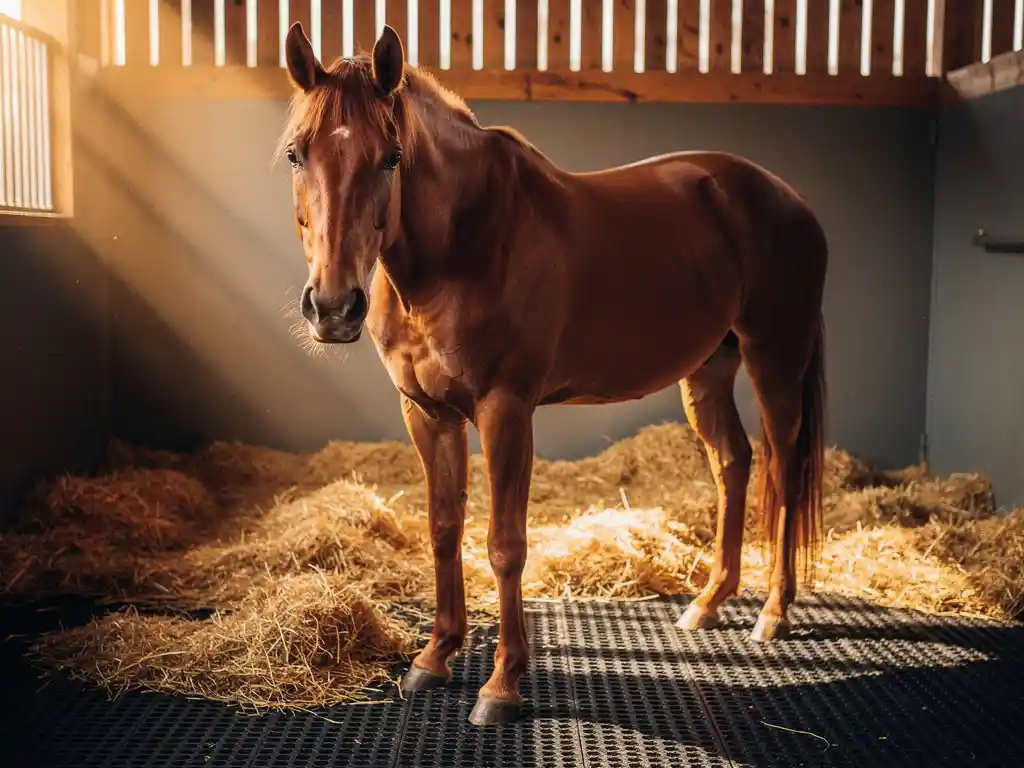
Rubber matting is widely regarded as the best flooring option for horse stalls and aisles because it combines cushioning, grip, and hygiene in a durable, low-maintenance surface. Concrete and compacted stone dust are common base materials, but both are hard and slippery on their own. A rubber mat layer on top addresses these shortcomings directly.
In stalls, thick rubber mats reduce the amount of bedding needed while still protecting joints and encouraging horses to lie down. In aisles, rubber mats provide traction during grooming, tacking up, and veterinary procedures, reducing the risk of slipping on wet or polished concrete.
Interlocking mat systems work well in aisles because they can be removed and cleaned individually. Solid, large-format mats are often preferred in stalls because they limit the gaps where urine and bacteria can accumulate. The best choice depends on the specific use area, the horses using it, and how the facility is managed day to day.
How do rubber mats reduce injury risk for horses?
Rubber mats reduce injury risk for horses by providing a non-slip surface with enough cushioning to absorb impact and reduce joint stress. Hard concrete floors offer no shock absorption, which increases wear on hooves, fetlocks, and knees over time. Rubber adds a layer of give that more closely mimics natural ground conditions.
The grip that rubber provides is particularly important during transitions, when horses shift weight, turn, or are led by handlers. Slipping during these moments can cause muscle strains, tendon injuries, or falls that result in serious harm to both horse and handler. A textured rubber surface dramatically reduces this risk without requiring the horse to adjust its movement unnaturally.
Rubber mats also help reduce the risk of injury during rest. When a horse can lie down comfortably and rise without struggling on a slippery or hard surface, the risk of injuries caused by thrashing or casting is lower. This matters especially for older horses, horses recovering from injury, and mares with foals.
What should equine facility managers look for when choosing mats?
Equine facility managers should look for mats that are thick enough to provide real cushioning, made from genuine rubber for durability and grip, easy to clean, and sized to minimize gaps where waste can accumulate. The material, thickness, surface texture, and size all affect how well a mat performs in a real stable environment.
Thickness matters more than many buyers expect. Mats that are too thin compress quickly under the weight of a horse and lose their cushioning benefit. Most equine applications benefit from mats that are at least three-quarters of an inch thick, with heavier use areas or larger breeds often requiring more.
Surface texture is another practical consideration. A smooth mat may look clean but offers poor traction when wet. A textured or patterned surface maintains grip even with moisture present, which is the normal condition in most stalls and wash areas.
Finally, consider the size of the mats. Larger mats mean fewer seams, and fewer seams mean fewer places for urine, bacteria, and debris to collect. This makes cleaning easier and reduces the hygiene risks associated with gaps in the floor covering.
At LRP Matting, our equine rubber mats are built specifically with these priorities in mind. We offer large-format mats made from genuine rubber and fiber-reinforced rubber compound (FRC®), giving you a surface that holds up under daily use, stays cleaner between cleans, and genuinely supports the health and comfort of your horses. If you are planning or upgrading an equine facility, we are happy to help you find the right matting solution for your specific setup.
Frequently Asked Questions
How often should rubber mats in horse stalls be cleaned and inspected?
Rubber mats in horse stalls should be lifted and thoroughly cleaned at least once a week to remove urine, bacteria, and debris that accumulate beneath them, even with daily surface cleaning. During routine daily mucking out, the mat surface should be cleared of waste and checked for any shifting or curling edges that could create trip hazards. Regular inspection also helps you catch early signs of mat degradation, such as cracking or compression, before they compromise the safety and cushioning the mat provides.
Can rubber matting replace bedding entirely, or does it still need to be used alongside straw or shavings?
While high-quality rubber mats significantly reduce the amount of bedding required, they are generally not a complete replacement for bedding in most stable environments. A thin layer of straw, shavings, or another absorbent material on top of the mats helps manage moisture, provides additional warmth, and encourages horses to lie down comfortably. The good news is that using mats as a base layer can reduce bedding costs and waste by 30–50%, making the combination both welfare-friendly and cost-effective over time.
What are the most common mistakes facility managers make when setting up stable flooring?
One of the most common mistakes is choosing mats based on price alone, which often leads to selecting thin or low-grade materials that compress quickly and lose their cushioning benefit within months. Another frequent error is neglecting the base layer — even the best rubber mat will shift, buckle, or underperform if laid on an uneven or poorly draining concrete or stone dust base. Finally, many managers underestimate the importance of mat size, opting for smaller tiles that create numerous seams where urine and bacteria can accumulate and become difficult to clean.
How does stable ventilation affect horse respiratory health, and what are the warning signs of poor airflow?
Poor stable ventilation allows ammonia from urine, dust from bedding, and airborne pathogens to build up to levels that irritate and damage the horse’s respiratory tract over time, contributing to conditions like Inflammatory Airway Disease (IAD) and Recurrent Airway Obstruction (RAO). Warning signs of inadequate airflow include a strong ammonia smell upon entering the stable, horses showing frequent nasal discharge, coughing at rest, or watery eyes. If you notice these signs, start by assessing whether ridge vents, eave openings, and windows are unobstructed, and consider consulting a facility design specialist before respiratory issues become chronic.
Is rubber matting suitable for outdoor areas like paddocks, horse walkers, or wash bays?
Yes, rubber matting is highly suitable for outdoor and semi-outdoor equine areas, and in many cases it is the safest available surface option for these high-risk zones. Wash bays in particular benefit enormously from textured rubber mats, as wet concrete is one of the most slip-prone surfaces a horse encounters during routine care. For horse walkers and high-traffic outdoor areas, look for mats specifically rated for outdoor use that can withstand UV exposure, temperature fluctuations, and heavy repetitive loading without degrading.
How do I calculate how many mats I need for a stable renovation or new build?
Start by measuring the total square footage of each area you plan to mat — stalls, aisles, wash bays, and any other zones — and then account for the mat format you intend to use, as larger mats mean fewer cuts and less waste at edges and corners. It is good practice to add approximately 5–10% to your total area calculation to cover trimming, irregular shapes, and any future replacements. For a more accurate estimate tailored to your specific facility layout, most reputable matting suppliers, including LRP Matting, can assist you with a detailed quote based on your floor plans or measurements.
At what point should existing stable mats be replaced rather than just cleaned or repaired?
Mats should be replaced when they show visible cracking, significant permanent compression, or have lost their surface texture to the point where grip is noticeably reduced — all signs that the material is no longer performing its core safety and welfare functions. A simple test for compression is to press firmly on the mat surface: if it feels little different from the hard base beneath it, the cushioning benefit has been lost. Delaying replacement beyond this point is a false economy, as the welfare risks and potential veterinary costs associated with hard or slippery flooring far outweigh the cost of new matting.
Related Articles
- What causes leg fatigue at work?
- How do durable materials reduce waste?
- How can you reduce fall risk in busy facilities?
- How do you keep a horse stall dry without using excessive bedding?
- What flooring is best for a large animal veterinary examination room?
- What type of flooring holds up best in a high-traffic athletic venue?
- What causes concrete floors to crack and chip in industrial facilities?
- How do you choose the right floor protection for a construction site?
- Is concrete a good floor for a horse stall?
- What causes sports facility floors to deteriorate so quickly?