
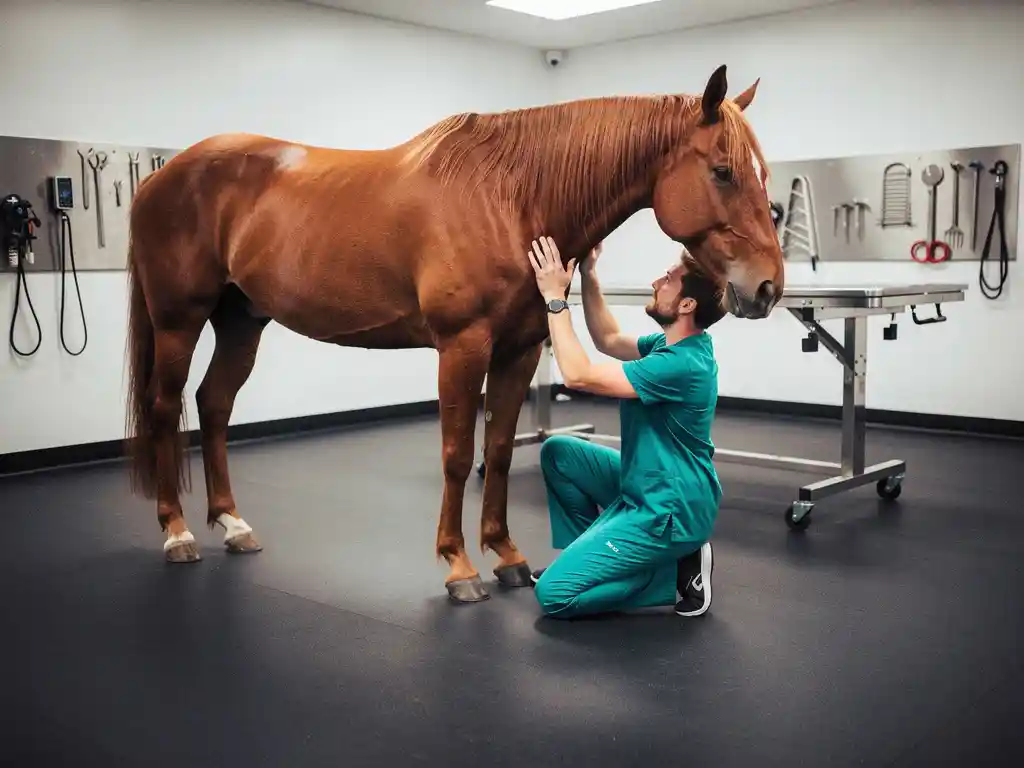
For large animal veterinary exam rooms, rubber matting is the best flooring choice. It combines slip resistance, cushioning, durability, and easy cleaning in a way no other material can match. Concrete alone is too hard and slippery, epoxy coatings wear down under heavy use, and rubber provides the grip and comfort that both animals and veterinary staff genuinely need. Look for mats that are thick enough to cushion large animals, non-porous for hygiene, and sized to minimize seams across the exam floor.
What flooring challenges are unique to large animal exam rooms?
Large animal exam rooms face flooring demands that are simply in a different league from those of small animal clinics. You are dealing with horses, cattle, and other livestock that can weigh anywhere from 500 to over 1,500 pounds, move unpredictably, and generate enormous lateral forces when they shift their weight or become anxious. The flooring has to handle all of that without cracking, shifting, or becoming a hazard.
Slipping is the most immediate danger. A large animal that loses its footing can injure itself seriously and put veterinary staff at real risk of being struck or crushed. Concrete floors, which are common in agricultural and veterinary settings, become dangerously slick when wet from water, urine, or cleaning agents. The flooring surface needs to maintain grip even in those conditions.
Beyond traction, there is the challenge of impact and stress on the animal’s joints. Hard floors increase discomfort during examinations and can cause animals to resist or become more agitated, making procedures more difficult and riskier. Acoustic stress is also a factor—the sound of hooves striking a hard surface amplifies anxiety in already nervous animals. Good flooring absorbs both physical impact and sound, helping to keep animals calmer throughout the exam.
Finally, hygiene is a constant challenge. Large animals produce significant volumes of waste, and the flooring must be easy to clean thoroughly without harboring bacteria in cracks, seams, or porous surfaces.
What are the most important flooring properties for a vet exam room?
The most important flooring properties for a large animal veterinary exam room are slip resistance, cushioning, durability, non-porosity, and ease of cleaning. These five qualities work together to protect animals, keep staff safe, and maintain a hygienic clinical environment. No single property is enough on its own—the floor needs to deliver all of them simultaneously.
Slip resistance and grip
Slip resistance is non-negotiable. A textured or patterned surface gives hooves something to grip, reducing the chance of a large animal losing its footing during examination or treatment. This protects the animal from injury and gives veterinary staff more control over the situation. Look for surfaces with a consistent anti-slip profile that holds up even when wet.
Cushioning and joint support
Cushioning matters more than many facilities realize. A floor that absorbs impact reduces stress on an animal’s joints, which makes examinations more comfortable and the animal more cooperative. For horses and cattle that may already be in pain or distress, a softer surface can genuinely change how smoothly a procedure goes. Adequate thickness is key here—a thin mat over hard concrete provides far less benefit than a properly specified rubber surface.
Durability and hygiene
Veterinary clinic flooring takes a beating. Heavy animals, metal shoes, equipment, and constant cleaning cycles all wear down surfaces over time. The flooring needs to resist cracking, crumbling, and surface degradation under that kind of stress. Non-porous materials are also important from a hygiene standpoint—surfaces that absorb moisture become breeding grounds for bacteria and are nearly impossible to sanitize properly.
What types of flooring are used in large animal veterinary facilities?
The most commonly used flooring types in large animal veterinary facilities are concrete, rubber matting, epoxy-coated concrete, and rubber-over-concrete systems. Each has different performance characteristics, and the right choice depends on the specific demands of the space.
Bare concrete
Bare concrete is the most basic option and the most common in older facilities. It is durable and inexpensive, but it has real limitations in a veterinary setting. Smooth concrete becomes slippery when wet, which is a serious safety risk. It is also hard on animal joints, acoustically loud, and difficult to keep truly hygienic once it develops cracks or surface wear. Textured or grooved concrete performs better for grip, but it remains a hard, unforgiving surface.
Epoxy-coated concrete
Epoxy coatings improve concrete floors by adding a sealed, non-porous surface that is easier to clean and can incorporate anti-slip additives. They work reasonably well in low-traffic areas, but in high-use large animal exam rooms, epoxy coatings can chip and peel under the weight and movement of large livestock. Once the coating starts to degrade, the floor becomes harder to maintain, and the anti-slip properties diminish.
Rubber matting over concrete
Rubber matting installed over concrete is widely regarded as the most practical solution for active large animal exam rooms. It adds cushioning, grip, and sound absorption while keeping the structural benefits of the concrete base underneath. Rubber mats can be replaced or repositioned without major renovation work, and they provide consistent performance across the lifespan of the mat.
Is rubber matting the best flooring choice for large animal exam rooms?
Yes, rubber matting is widely considered the best flooring choice for large animal exam rooms. It delivers the combination of slip resistance, cushioning, durability, and hygienic, non-porous surfaces that this environment demands. No other commonly available flooring material provides all of these properties at the same time without significant trade-offs.
Rubber’s natural grip and textured surface profiles give large animals reliable footing even on wet or soiled floors. The material absorbs impact and reduces the noise of hooves on hard surfaces, both of which contribute to calmer animals during examinations. For veterinary staff, a rubber floor reduces fatigue during long procedures—standing on rubber for extended periods is noticeably less taxing than standing on concrete.
From a maintenance perspective, rubber is practical and cost-effective. It does not crack or peel under extreme temperatures, resists moisture absorption, and cleans easily with mild detergent and water. In a clinical environment where thorough sanitation between patients is important, a non-porous surface that can be cleaned quickly and completely is a real operational advantage.
Rubber also holds up well under the specific stresses of a large animal exam room—heavy static loads, lateral movement, metal shoes, and the mechanical stress of equipment being moved across the floor. A quality rubber mat in this environment will provide reliable performance for years without needing replacement.
How do you choose the right rubber mat thickness and size for a vet exam room?
For large animal veterinary exam rooms, choose rubber mats that are at least three-quarters of an inch thick, with heavier-use areas benefiting from mats up to one inch thick. Thickness directly affects cushioning and joint support for large animals. For sizing, prioritize large-format mats that minimize the number of seams in the room, since seams can catch hooves and create hygiene challenges.
Getting the thickness right
Thicker mats absorb more impact and provide better insulation from cold concrete floors. For horses and cattle, a thinner mat simply does not provide enough cushioning to make a meaningful difference in comfort or behavior. The specific thickness you need also depends on what is underneath—if the base is smooth, hard concrete with no give, you will want to be toward the higher end of the thickness range.
Sizing for the space
Seams are a practical problem in large animal spaces. A hoof can catch on a seam edge, creating a trip hazard. Seams also trap dirt, moisture, and organic material, making them harder to clean and a potential hygiene weak point. Choosing the largest mats available for your space reduces the total number of seams and simplifies both installation and maintenance. For rooms with non-standard dimensions, made-to-measure options cut to your exact floor plan eliminate the seam problem almost entirely.
Weight and installation
Heavier, thicker mats stay in place better under the movement of large animals. Mats that shift or bunch up during use are a safety hazard. Consider whether the mats need to be secured to the floor and whether interlocking edges are appropriate for your layout. In high-traffic or high-stress areas, a more permanent installation may be worth the additional setup effort.
How do you keep large animal exam room flooring clean and hygienic?
Keeping large animal exam room flooring clean requires a routine of prompt waste removal, regular washing with mild detergent and water, and periodic deep cleaning between patients. Non-porous rubber flooring makes this process significantly more straightforward than porous or cracked surfaces, since bacteria and organic material cannot penetrate the surface.
After each patient, remove solid waste immediately and rinse the floor to prevent organic material from drying and bonding to the surface. A mild detergent wash followed by a thorough rinse is effective for routine cleaning. Avoid harsh chemical disinfectants that can degrade rubber surfaces over time—most rubber mats clean well with standard veterinary-grade cleaning products that are pH-neutral or mildly alkaline.
Pay attention to seams and edges, as these are the areas most likely to accumulate debris. Fewer seams mean less time spent on detail cleaning, which is one of the practical arguments for large-format or custom-cut mats. Mats with a smooth or lightly textured surface profile are easier to clean than deeply grooved patterns, which can trap material in hard-to-reach areas.
For deep cleaning, mats that can be lifted and cleaned on both sides are a real advantage. This is also an opportunity to inspect the floor underneath for moisture buildup, which can cause odors and surface degradation over time. A well-maintained rubber floor in a large animal exam room should stay hygienic and functional for many years with relatively modest ongoing effort.
What flooring mistakes should veterinary facilities avoid?
The most common flooring mistakes in large animal veterinary facilities are choosing surfaces based on upfront cost rather than total performance, underestimating the importance of slip resistance, and creating flooring layouts with too many seams. These mistakes create safety risks, higher long-term maintenance costs, and environments that are harder to keep hygienic.
Relying on bare concrete without any surface treatment or matting is a common cost-cutting decision that creates ongoing problems. Smooth concrete is a slip hazard, hard on animal joints, and acoustically harsh in a way that increases animal stress. The short-term savings rarely justify the long-term risk and difficulty.
Choosing mats that are too thin is another frequent mistake. Mats that look like rubber flooring but lack sufficient thickness provide little real cushioning and wear out faster under the weight of large animals. It is worth investing in the right specification from the start rather than replacing inadequate mats after a short service life.
Ignoring the seam layout is a planning mistake that causes problems after installation. Facilities sometimes purchase standard-sized mats without thinking through how they will fit the actual dimensions of the room, resulting in awkward gaps, overlaps, or excessive seams. Taking the time to plan the layout properly, or opting for custom-made rubber mats cut to your exact floor dimensions, saves significant headaches during installation and ongoing maintenance.
Finally, choosing flooring that is difficult to clean is a mistake that compounds over time. Porous surfaces, deep grooves that trap organic material, and surfaces that degrade under standard cleaning products all create hygiene challenges that become harder to manage as the floor ages. In a clinical environment, sanitation is a priority from day one, and the flooring choice should support that rather than work against it.
At LRP Matting, we have been helping facilities such as large animal veterinary clinics get their flooring right since 1971. Our rubber mats are non-porous, easy to clean, and available in large formats that minimize seams across your exam floor. We also offer made-to-measure solutions cut to the exact dimensions of your space, so you get a clean, professional fit without compromise. If you are specifying flooring for a new facility or upgrading an existing one, we are happy to help you find the right solution.
Frequently Asked Questions
How long do rubber mats typically last in a large animal exam room?
A quality rubber mat in a large animal exam room can last anywhere from 10 to 20 years with proper care, depending on the thickness, material quality, and intensity of use. Thicker, denser mats naturally withstand the stress of heavy animals and frequent cleaning cycles better than thinner alternatives. Regular inspection for surface wear, edge lifting, or compression loss will help you catch any issues early and get the most out of your investment.
Can rubber matting be installed over existing concrete without professional help?
In many cases, yes — rubber mats can be laid directly over existing concrete without specialist installation, especially if the mats are heavy enough to stay in place under normal use. However, if you are using adhesive, interlocking systems, or custom-cut mats fitted to irregular room dimensions, professional installation ensures a safe, gap-free result. It is also worth having the concrete base inspected first, since uneven or damaged concrete can affect how the mats sit and perform over time.
Are there rubber mat options that work for both the exam room and adjacent areas like wash bays or corridors?
Yes, rubber matting is versatile enough to be used across multiple zones in a large animal facility, including wash bays, corridors, loading areas, and recovery stalls. The key is matching the mat specification to each area’s specific demands — for example, wash bays may benefit from drainage-friendly designs, while corridors need mats that handle directional hoof traffic without shifting. Working with a supplier who offers a range of formats and thicknesses makes it easier to create a consistent, high-performance flooring solution throughout the facility.
What should I do if an animal urinates or defecates on the rubber mat during an exam?
Remove solid waste immediately and rinse the affected area with water as soon as possible to prevent organic material from drying and bonding to the surface. Follow up with a mild, pH-neutral or mildly alkaline veterinary-grade detergent, scrub if needed, and rinse thoroughly. Avoid leaving waste to sit, as prolonged contact with urine in particular can degrade rubber over time and contribute to persistent odors — prompt cleaning is both a hygiene and a mat-longevity best practice.
Is rubber matting suitable for facilities in regions with extreme cold or heat?
Yes, quality rubber matting is well-suited to temperature extremes and is commonly used in outdoor-adjacent or unheated large animal facilities. Unlike epoxy coatings, rubber does not crack or delaminate in freezing temperatures, and it does not become brittle with age in the way some synthetic materials do. In very cold environments, rubber also provides a degree of thermal insulation between the animal and the cold concrete base, which is an added comfort benefit during examinations.
How do I know if my current flooring is creating stress or discomfort for the animals I treat?
Common signs include animals that are unusually resistant to entering the exam room, excessive shifting or stamping of hooves during procedures, difficulty maintaining a steady stance, or heightened anxiety that seems disproportionate to the procedure being performed. Hard, slippery, or acoustically harsh floors are frequent contributors to this kind of stress, even when the flooring appears visually adequate. If you are noticing these behavioral patterns regularly, upgrading to rubber matting is one of the most impactful and cost-effective changes you can make to the exam environment.
What is the difference between recycled rubber mats and virgin rubber mats, and does it matter for a veterinary setting?
Recycled rubber mats are made from repurposed materials such as crumb rubber from used tires, while virgin rubber mats are produced from new, unprocessed rubber compounds. For large animal veterinary use, virgin rubber mats are generally preferred because they offer more consistent density, a smoother non-porous surface, and better resistance to odor absorption — all important factors in a clinical hygiene environment. Recycled rubber can be a cost-effective option in lower-stakes areas, but for the primary exam room where sanitation standards are highest, the performance advantages of virgin rubber are worth the additional investment.
Related Articles
- What causes a floor surface to become slippery over time?
- How do uneven floors increase accident risk?
- How do you choose flooring for a multi-sport facility?
- What is the best way to protect a sports facility floor from heavy equipment?
- What is the most low-maintenance horse stall setup?
- What is the best way to cover an uneven barn floor?
- What causes hock sores in stabled horses?
- How do you insulate a horse stall floor in winter?
- How do you fit flooring in an irregularly shaped sports facility area?
- What flooring works best in an outdoor or covered sports venue?