
The best way to prevent floor damage in a high-traffic shipping and receiving area is to lay down heavy-duty rubber matting in the zones that take the most punishment: dock edges, forklift paths, pallet staging areas, and anywhere workers stand for long periods. Rubber mats absorb impact, protect the concrete underneath, and provide both equipment and people with a safer, more stable surface to work on. The right mat thickness, size, and placement make a real difference—and getting those details right is what this guide is all about.
What causes floor damage in shipping and receiving areas?
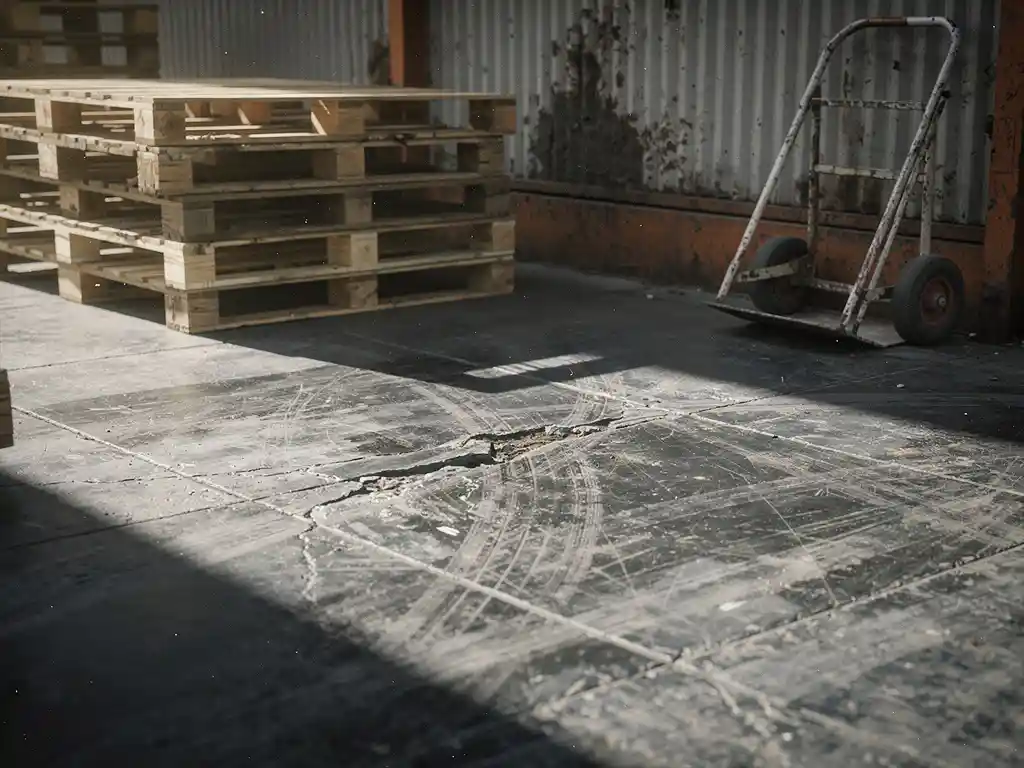
Floor damage in shipping and receiving areas is caused by a combination of heavy loads, repeated rolling traffic, dropped materials, and moisture. Forklifts and pallet jacks concentrate enormous weight onto small contact points, which grinds and chips concrete over time. Add frequent foot traffic, spills, and the constant movement of goods, and the floor takes a beating from multiple directions at once.
Concrete is strong, but it was not designed to handle that kind of abuse indefinitely without protection. Hard wheels on forklifts are especially damaging because they do not cushion impact the way pneumatic tires do. Every pass scores the surface a little more. Dropped pallets, dragged equipment, and pooling liquids accelerate deterioration further. Once the surface starts to crack or pit, debris collects in those gaps, creating trip hazards and causing the damage to spread faster.
Moisture is another underappreciated factor. Dock doors open and close constantly, letting in rain, snowmelt, and humidity. That moisture works its way into microcracks in the concrete and, in cold climates, freezes and expands. Over time, what started as surface wear becomes structural damage that is expensive to repair and disruptive to operations.
What types of matting work best for high-traffic dock areas?
The best matting for high-traffic dock areas combines high load-bearing capacity, slip resistance, and durability against rolling equipment. Heavy-duty rubber mats—particularly those made from fiber-reinforced rubber compounds—are the top choice because they handle forklift traffic without compressing, cracking, or shifting underfoot. Anti-fatigue mats work well in fixed worker stations, while interlocking rubber tiles suit areas that need flexible coverage.
Mats for vehicle and equipment traffic
In zones where forklifts and pallet jacks move constantly, you want mats with a flat, firm surface that does not flex or buckle under load. A mat that compresses too much under a forklift wheel creates an unstable surface and can quickly damage the mat itself. Thick, dense rubber is the right material here—it absorbs vibration and impact without deforming.
Mats made from fiber-reinforced rubber compound (FRC®) are particularly well suited to these conditions. The fiber reinforcement adds structural strength that standard rubber does not have, which means the mat holds its shape under repeated heavy loads and lasts significantly longer.
Mats for worker standing areas
At packing stations, check-in desks, and dock doors where workers stand for extended shifts, anti-fatigue rubber mats are the right fit. These mats are designed with ergonomic support in mind, reducing the physical strain of standing on hard concrete for hours. They typically feature a waffle-back or textured surface that grips the floor and resists sliding, keeping the mat in place even in busy areas.
How does rubber matting protect floors from heavy equipment?
Rubber matting protects floors from heavy equipment by acting as a buffer layer between the hard wheels of forklifts and pallet jacks and the concrete beneath. The rubber absorbs and distributes the load across a wider surface area, reducing the point pressure that chips and cracks concrete. It also prevents the abrasive grinding action that wears down unprotected floors over time.
Think of it this way: every time a forklift wheel rolls over bare concrete, it concentrates the full weight of the machine and its load onto a contact patch roughly the size of your hand. Multiply that by hundreds of passes a day, and the damage adds up fast. A rubber mat spreads that load more evenly, so the concrete underneath never experiences the same concentrated stress.
Beyond load distribution, rubber mats also protect against impact damage from dropped pallets and goods. The mat absorbs the energy of the impact rather than letting it transfer directly into the concrete. This is especially useful near dock levelers and staging areas where loads are frequently set down hard. Over time, this kind of protection adds up to real savings on floor repair and maintenance costs.
What’s the difference between standard mats and custom-sized matting for warehouses?
Standard mats come in fixed sizes and are ready to ship quickly, making them a practical choice for straightforward applications. Custom-sized matting is cut to exact dimensions for a specific space, which means fewer seams, better coverage, and a cleaner installation. For warehouses with irregular floor plans, dock cutouts, or unusually large areas to cover, custom sizing is the more effective solution.
The number of seams in a matting installation matters more than most people realize. Every seam is a potential catch point for pallet jacks, forklift wheels, and foot traffic. Seams can lift over time, creating trip hazards and allowing moisture and debris to get underneath the mat. Fewer seams mean a safer, more hygienic floor that also looks more professional.
Standard mats work perfectly well in many situations, especially for defined zones like individual workstations or specific equipment pads. But when you are covering a long dock run, an irregularly shaped receiving bay, or a large staging area, piecing together multiple standard mats creates more seams and more potential problems than a made-to-measure solution would. Custom matting also means the mat fits flush against walls and around obstacles, leaving no uncovered gaps where the floor is still exposed to damage.
How do you choose the right mat thickness for a shipping floor?
The right mat thickness for a shipping floor depends on the type of traffic it will handle. For forklift and heavy equipment zones, thicker mats in the range of three-quarters of an inch to one inch provide the load capacity and durability needed. For worker standing areas, half-inch anti-fatigue mats offer the right balance of cushioning and stability. Thinner mats work only for light foot traffic.
Thicker is not always better in every situation. A mat that is too thick in a forklift lane can create a raised edge that catches wheels and becomes a hazard rather than a help. The goal is to match the mat thickness to the specific demands of each zone within the facility. A dock with multiple distinct use areas often benefits from different mat specifications in different zones rather than a one-size-fits-all approach.
You should also factor in any height transitions between matted and unmatted areas. If forklifts need to cross from bare concrete onto a matted surface, a beveled edge on the mat reduces the bump and prevents the edge from peeling up over time. This is a detail worth thinking through before you order, because it affects both safety and how long the mat lasts in heavy-use conditions.
How do you maintain rubber mats in a busy receiving area?
Maintaining rubber mats in a busy receiving area is straightforward: sweep or vacuum regularly to remove debris, clean with mild detergent and water when needed, and inspect periodically for signs of wear or lifting edges. Rubber is non-porous, so it does not absorb spills or harbor bacteria the way porous materials do, which makes cleaning quick and effective even in a demanding environment.
The most important maintenance habit is keeping debris off the surface. Grit and small stones trapped under a forklift wheel act like sandpaper against the mat and the floor beneath it. A quick daily sweep in high-traffic zones prevents this kind of abrasive wear and extends the life of the mat considerably.
For spills involving oil, fuel, or chemicals, clean up promptly and use a degreaser appropriate for rubber surfaces. Leaving chemical spills to sit can degrade the rubber over time, particularly if the mat is not specifically rated for chemical resistance. If your receiving area handles goods that frequently leak or spill, it is worth choosing a mat with oil and grease resistance built into the material, such as a nitrile rubber option.
Inspect the edges and seams of your matting every few weeks. Edges that start to curl or lift are a trip hazard and a sign that the mat needs to be repositioned, secured, or replaced. Catching this early prevents accidents and avoids the situation where a damaged mat causes more floor damage than it prevents. Good rubber mats from quality manufacturers are built to last for years with this kind of basic care, making them a genuinely low-maintenance investment for warehouse floor protection.
If you want a matting solution that covers all of these bases without the guesswork, our custom rubber matting is designed exactly for facilities like yours. At LRP Matting—the natural solution—we cut mats to any size or shape, so you get full coverage with minimal seams and a fit that works with your specific floor plan. Whether you need a single heavy-duty dock mat or a complete made-to-measure system for your entire receiving area, we are here to help you find the right solution.
Frequently Asked Questions
How do I know when it's time to replace rubber mats rather than just clean or reposition them?
Replace your rubber mats when you notice permanent compression or flattening in high-traffic zones, deep surface cracking, or edges that keep lifting even after being secured. A mat that has lost its structural integrity no longer distributes load effectively, meaning the floor underneath is taking more damage than you might realize. As a general rule, if cleaning and repositioning no longer resolve the issue, replacement is the more cost-effective choice compared to ongoing floor repairs.
Can rubber mats be used on top of epoxy-coated or painted concrete floors without causing damage?
Yes, rubber mats are generally safe to use on epoxy-coated or painted concrete, but there are a couple of details worth checking first. Some rubber compounds contain plasticizers that can react with certain coatings over time, causing discoloration or surface softening—so confirm material compatibility with your coating supplier before installing. Using mats with a waffle or textured back rather than a solid flat back also allows for some airflow underneath, which helps prevent moisture from getting trapped and compromising the coating.
What's the best way to keep rubber mats from shifting or moving in a busy forklift lane?
The most effective way to keep mats stable in forklift lanes is to choose mats with a high-grip backing texture and, where possible, use custom-sized mats that fit snugly against walls or fixed structures with no room to migrate. For open areas, double-sided carpet tape or rubber adhesive applied around the perimeter edges can anchor the mat without permanent installation. Keeping the floor surface clean and dry before laying the mat also makes a significant difference, since even a thin film of dust or moisture reduces the friction that holds the mat in place.
Is there a matting solution that works well in both indoor receiving areas and outdoor dock aprons?
Yes—rubber mats made from weather-resistant compounds, such as those using natural rubber or EPDM blends, are suitable for both indoor and outdoor use. For outdoor dock aprons, look for mats with drainage channels or perforated surfaces that allow rainwater to pass through rather than pool on top, which reduces slip risk and prevents water from being tracked inside. UV resistance is another factor to prioritize for outdoor applications, as prolonged sun exposure can cause standard rubber to dry out and crack over time.
How much of the floor area in a receiving dock should actually be covered with matting?
A good starting point is to map out your highest-impact zones first: the dock edge itself, forklift travel paths, pallet staging areas, and any fixed worker stations. These areas account for the majority of floor wear and worker fatigue, so prioritizing them gives you the most protection per dollar spent. Full coverage of every square foot is not always necessary or practical, but leaving gaps in active forklift lanes or high-standing zones defeats the purpose—think of matting as targeted protection rather than wall-to-wall carpeting.
Can the same rubber mat handle both forklift traffic and worker standing areas, or do I need different mats for each?
While a heavy-duty rubber mat can technically support both uses, using the same mat for both zones is a compromise that doesn’t fully serve either purpose. Anti-fatigue mats designed for standing are engineered with ergonomic cushioning that benefits workers but is too soft to handle repeated forklift loads without compressing permanently. The better approach is to use dense, firm rubber matting in vehicle traffic zones and reserve anti-fatigue matting specifically for stationary worker positions—this way each area gets the right tool for the job.
What should I look for when requesting a quote for custom-sized dock matting to make sure I get an accurate fit?
Before reaching out for a custom quote, measure your target areas carefully and note any irregular shapes, cutouts around dock levelers, drains, or columns, and the locations of any transitions between matted and unmatted surfaces. Photographs of the space are extremely helpful and reduce back-and-forth significantly. Also specify the type of equipment that will use the matting and the expected daily traffic volume, as these details directly affect the recommended thickness, rubber compound, and edge profile for your application.
Related Articles
- How do chemicals affect floor durability?
- Why is regular floor maintenance important for long term performance?
- How do you perform a floor safety assessment?
- What type of flooring is used in professional sports training facilities?
- What flooring works best under heavy sports equipment?
- What flooring works best in a high-moisture veterinary environment?
- What do you put on a horse trailer ramp to prevent slipping?
- How do you keep a large animal veterinary floor hygienic?
- Can anti-fatigue matting improve worker productivity?
- What is the fastest way to muck out a horse stall?