
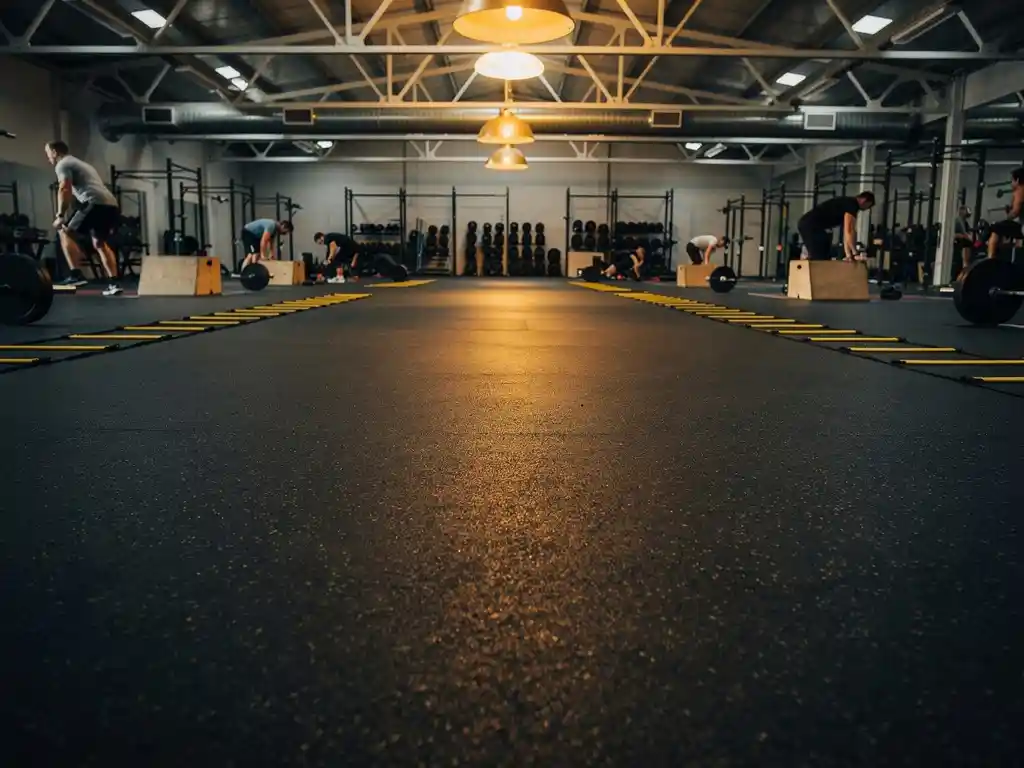
The best flooring for an indoor training facility is rubber. It absorbs impact, protects subfloors, supports heavy equipment, and keeps athletes safe without requiring constant maintenance. Whether you are outfitting a commercial gym, a school sports hall, or a private training space, rubber flooring handles the demands of daily use better than any other material. Here is everything you need to know to make the right choice for your facility.
What types of flooring are used in indoor training facilities?
Indoor training facilities typically use rubber flooring, foam tiles, vinyl, hardwood, or artificial turf, depending on the sport and training type. Rubber is the most widely used option because it works in nearly every training environment, from weightlifting platforms to functional fitness zones. Foam is softer but wears out faster. Hardwood suits court sports but struggles under free weights. Turf works well for speed and agility drills but is not ideal for all-purpose use.
Each material has a specific sweet spot. Hardwood floors are great for basketball, volleyball, and dance because they provide the right amount of bounce and grip for lateral movement. Artificial turf gives athletes a surface that mimics outdoor conditions, making it popular for football, soccer drills, and sled pushes. Foam tiles are common in martial arts studios and gymnastics spaces where cushioning is the top priority.
That said, rubber flooring is the go-to choice for most sports facility flooring setups because it combines durability, safety, and versatility in one material. It does not crack under heavy loads, resists moisture, and stays in place under intense movement. For facilities that need to serve multiple training purposes, rubber is almost always the practical answer.
What’s the difference between rubber rolls, rubber tiles, and rubber mats?
Rubber rolls, tiles, and mats are all rubber flooring formats, but they differ in size, installation method, and best use case. Rolls cover large areas with minimal seams and suit open gym floors. Tiles are modular and easy to replace section by section. Mats are portable, purpose-specific, and ideal for designated zones or areas that need targeted protection.
Rubber Rolls
Rubber rolls are long, continuous sheets of rubber that you cut to fit your space. They are popular for large open areas because fewer seams mean a cleaner look and less chance of edges lifting over time. They work well for weightlifting areas, cardio zones, and hallways. Installation requires more planning, but the result is a smooth, professional surface.
Rubber Tiles
Rubber tiles are pre-cut squares that interlock or butt up against each other. They are flexible in terms of layout and easy to replace if one section gets damaged. This makes them a smart choice for facilities that evolve over time or want to mix colors and zones. The trade-off is that more seams exist, which can collect dirt if not cleaned regularly.
Rubber Mats
Rubber mats are standalone pieces designed for specific spots or purposes. A mat under a squat rack protects the floor from dropped weights. A mat at an entrance traps dirt and moisture. A multipurpose sports mat creates a protective barrier that absorbs impact in high-traffic stadium and gym areas. Mats are portable, easy to clean, and do not require permanent installation, which makes them useful for facilities that need flexibility.
How thick should flooring be for a training facility?
Training facility flooring should generally be at least half an inch thick for most gym applications. Lighter cardio and stretching areas can work with thinner options, while heavy weightlifting platforms and impact zones benefit from three-quarters of an inch or more. The right thickness depends on the intensity of use and the type of equipment in each zone.
Thicker rubber absorbs more impact energy, which protects both the subfloor underneath and the joints of the athletes training on it. If you regularly drop barbells or run heavy sleds, thinner flooring will compress over time and lose its protective qualities. It can also transmit vibration and noise to the floor below, which matters in multi-story buildings.
For reference, a half-inch thickness handles most functional fitness and group training scenarios well. A three-quarter-inch option provides meaningful added protection for Olympic lifting or any area where equipment is dropped with force. Going even thicker is sometimes appropriate for dedicated powerlifting platforms, though in many cases, layering mats achieves the same result with more flexibility.
What flooring is best for heavy weights and gym equipment?
Thick rubber flooring is the best option for heavy weights and gym equipment. It absorbs the impact of dropped weights, prevents floor damage, reduces noise, and provides a stable surface for racks, benches, and machines. Rubber does not crack, dent, or deform under sustained loads the way foam or vinyl can.
For dedicated lifting platforms, a layered approach works well. A base layer of dense rubber provides structural support, while a top layer adds grip and impact absorption. This protects the subfloor from repeated drops and gives lifters a firm, non-slip surface to push off from. Stability underfoot is important when you are moving serious weight.
Equipment placement also matters. Heavy racks and cable machines concentrate a lot of weight on small contact points. Rubber flooring distributes that load and prevents the legs of equipment from sinking into or scratching softer surfaces. Look for rubber that is oil-resistant and easy to clean, since equipment areas tend to accumulate chalk, sweat, and lubricants over time.
How do you choose the right flooring for different training zones?
Choosing the right sports facility flooring for different training zones means matching the material and thickness to the specific demands of each area. A single flooring type rarely serves every zone equally well, so most facilities benefit from a zoned approach in which each area gets the surface that fits its function.
Cardio and Functional Training Zones
These areas see constant foot traffic, lateral movement, and dynamic exercises. A half-inch rubber floor provides enough cushioning and grip without feeling too soft underfoot. You want a surface that supports quick direction changes and absorbs repetitive impact without fatiguing the legs.
Weightlifting and Strength Zones
As covered above, thickness and density are the priorities here. Rubber mats or thick rubber rolls protect the floor and equipment while giving lifters a stable, grippy surface. Platforms for Olympic lifting can be built up with layered rubber for extra impact absorption.
Court and Speed Zones
If your facility includes areas for agility drills, sprinting, or court sports, the surface needs to be firm and consistent. Rubber works here too, though some facilities opt for hardwood or sport court tiles in dedicated court areas. For turf-based speed zones, artificial grass over rubber underlayment gives athletes the right surface feel.
Entrance and Transition Areas
Entrances and hallways take a different kind of wear. Dirt, moisture, and constant foot traffic are the main challenges. Anti-fatigue mats with drainage properties and dirt-trapping surfaces keep these areas safe and clean without requiring heavy-duty gym flooring throughout.
What are the most common mistakes when choosing training facility flooring?
The most common mistakes when choosing training facility flooring are underestimating thickness needs, ignoring zone-specific requirements, choosing price over durability, and failing to plan for seams and installation. These decisions affect daily usability, maintenance costs, and how long the flooring lasts under real training conditions.
One of the biggest errors is buying flooring that looks good in a showroom but cannot handle the actual load and movement of a busy training environment. Thin or low-density rubber compresses and cracks under heavy equipment. Foam tiles tear at the seams. Vinyl shifts and bubbles in high-moisture areas. Choosing the right material for the right use is more important than going for the cheapest option upfront.
Another frequent mistake is not accounting for seams. More seams mean more edges that can lift, collect dirt, and become trip hazards. This is especially relevant in large open spaces where rolls or large-format mats reduce seam count significantly. Facilities that use many small tiles in open areas often end up with uneven surfaces over time.
Poor planning around zone transitions is also a common issue. When different flooring types meet at the edge of a zone, the transition needs to be smooth and secure. Abrupt height differences between surfaces create trip hazards and make it harder to move equipment around the facility. Planning your layout before purchasing means you can account for these transitions from the start.
Finally, many facility owners overlook the importance of maintenance requirements. Some flooring types need regular sealing or refinishing. Rubber, by contrast, is non-porous and cleans easily with mild detergent and water. Choosing a surface that fits your cleaning routine keeps the facility safe and looking professional without adding operational burden. If you want a flooring solution tailored to the exact dimensions and demands of your training space, our custom rubber matting solutions at LRP Matting are cut to any size or shape, reducing seams and simplifying installation so your facility gets exactly what it needs.
Frequently Asked Questions
How long does rubber flooring typically last in a high-traffic training facility?
High-quality rubber flooring in a commercial training facility can last anywhere from 10 to 20 years with proper care, depending on density, thickness, and usage intensity. Thicker, denser rubber holds up longer under heavy equipment and constant foot traffic. Regular cleaning with mild detergent and water — avoiding harsh solvents that degrade the rubber — is the single most effective way to extend its lifespan. Investing in a higher-grade product upfront almost always costs less over time than replacing cheaper flooring every few years.
Can rubber flooring be installed over existing concrete or tile floors?
Yes, rubber flooring can be installed directly over concrete, and in most cases, concrete is actually the ideal subfloor because it is flat, stable, and moisture-resistant when properly sealed. Existing tile can also work as a base, provided the tiles are firmly adhered and the surface is level with no cracked or raised sections. Any unevenness in the subfloor will telegraph through the rubber over time, causing premature wear and potential trip hazards. Before installation, fill any cracks, grind down high spots, and ensure the surface is clean and dry.
What is the best way to clean and maintain rubber gym flooring?
Rubber flooring is one of the easiest gym surfaces to maintain — regular sweeping or vacuuming to remove chalk, dust, and debris, followed by mopping with a diluted neutral pH cleaner, is all that is needed for routine upkeep. Avoid bleach, ammonia-based products, or oil-based cleaners, as these can break down the rubber compound and cause discoloration or cracking over time. For high-traffic areas, a daily dry sweep and weekly wet mop is a practical schedule that keeps surfaces hygienic and safe. Addressing spills promptly — especially oils and lubricants from equipment — prevents staining and surface degradation.
Is rubber flooring safe and non-toxic for athletes training on it daily?
Most commercial-grade rubber flooring is manufactured from recycled rubber — often repurposed vehicle tires — and is safe for everyday use in training environments. New rubber flooring can emit a noticeable odor initially, which is a normal off-gassing process that typically fades within a few days to a few weeks, especially with good ventilation. For facilities with strict indoor air quality standards, look for products that carry low-VOC certifications or have been third-party tested for harmful emissions. If you are outfitting a space for children or athletes with sensitivities, asking your supplier for safety data sheets is a straightforward way to verify compliance.
How do I calculate how much flooring I need for my training facility?
Start by measuring the total square footage of each training zone you plan to cover, then add 5–10% to your total to account for cuts, waste, and any irregularly shaped areas. If you are using rubber rolls, factor in the roll width so you can plan cuts efficiently and minimize seams. For tiled layouts, dividing the room dimensions by the tile size gives you a rough unit count, but always round up rather than down. Working with a supplier that offers custom-cut solutions can eliminate much of this guesswork, since the flooring arrives pre-sized to your exact dimensions.
Can rubber flooring handle outdoor or semi-outdoor training environments?
Rubber flooring is highly moisture-resistant and can handle humidity, sweat, and incidental water exposure well, but not all rubber products are rated for true outdoor use with prolonged UV and weather exposure. For covered outdoor training areas — such as shaded turf zones, covered patios, or semi-enclosed facilities — rubber performs reliably as long as it is not in direct, sustained sunlight, which can cause fading and surface degradation over time. If your space is fully exposed to the elements, look specifically for UV-stabilized rubber products designed for outdoor installation. Indoor-rated rubber used in a covered or semi-outdoor setting will generally perform well with minimal additional precautions.
What should I look for in a rubber flooring supplier or manufacturer?
Look for suppliers that offer product samples so you can assess density, texture, and odor before committing to a large order. Transparency around material composition, thickness tolerances, and warranty terms is a strong indicator of a reputable manufacturer. Custom cutting capabilities are a significant advantage for commercial facilities, as they reduce seams and simplify installation. It is also worth asking about lead times, minimum order quantities, and whether the supplier has experience working with commercial training facilities specifically, since their guidance on product selection and layout planning can save you costly mistakes.
Related Articles
- How do you reduce stress through facility design?
- Why is regular floor maintenance important for long term performance?
- What are the warning signs of floor deterioration?
- What type of flooring is used in professional sports training facilities?
- What is the best flooring for a sports facility?
- What makes a floor surface safe for a horse coming out of anesthesia?
- What are the pros of rubber mats in a horse stall?
- What should you put on a concrete barn floor to protect your horse?
- What floor is best for a horse with arthritis?
- What is the best flooring for a horse barn aisle?