
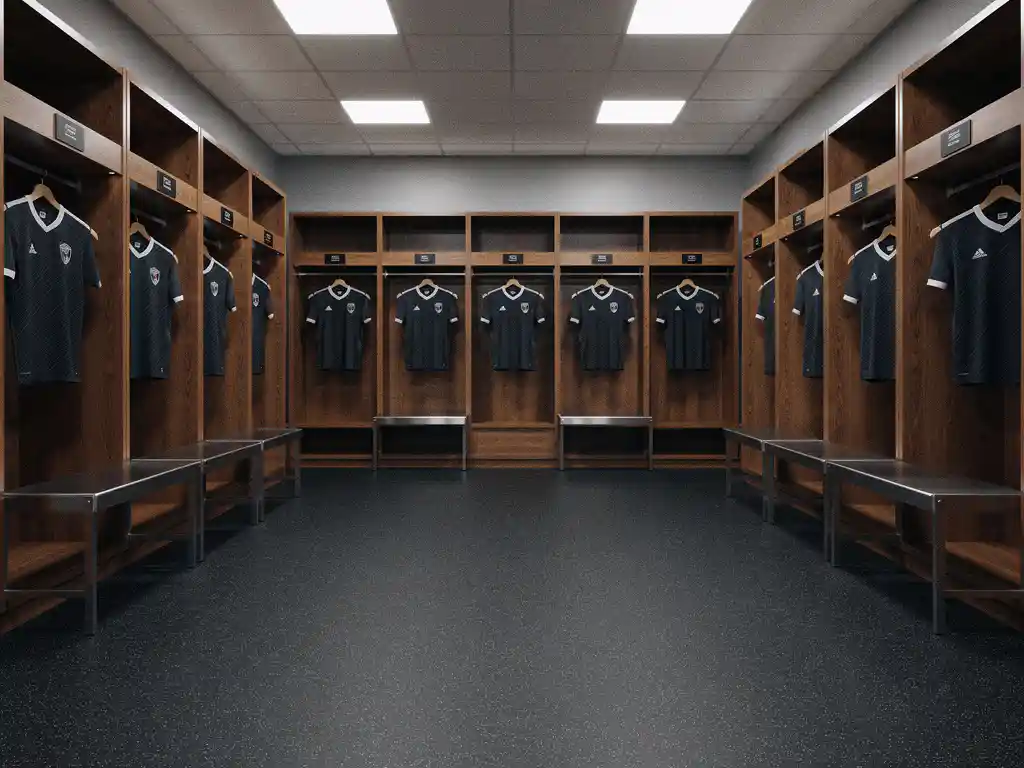
Choosing flooring for a professional sports locker room comes down to four priorities: safety, durability, hygiene, and comfort. You need a surface that can handle constant moisture, heavy foot traffic, and daily cleaning without deteriorating. Rubber matting is the most widely used solution because it ticks all four boxes, resists water, and provides reliable traction underfoot. The sections below walk you through every decision you need to make, from material selection to sizing and common mistakes to avoid.
Why does locker room flooring matter for professional sports facilities?
Locker room flooring directly affects athlete safety, facility hygiene, and the long-term cost of maintaining the space. A poorly chosen floor becomes a slip hazard the moment a wet athlete steps out of the shower. If the surface is porous, it can also absorb bacteria, odors, and moisture, turning routine cleaning into a constant uphill battle.
Professional sports facilities face some of the most demanding conditions of any indoor environment. Floors are repeatedly exposed to water, sweat, cleaning chemicals, and the weight of heavy equipment such as benches, weight racks, and treatment tables. In this context, sports facility flooring is not just a cosmetic choice; it is a functional infrastructure decision that affects athlete well-being and operational efficiency every single day.
There is also a liability dimension. Slip-and-fall injuries in locker rooms are entirely preventable with the right surface. Facilities that invest in proper flooring reduce injury risk and protect themselves from the reputational and financial consequences that come with preventable accidents.
What are the key features to look for in locker room flooring?
The most important features for locker room flooring are slip resistance, water resistance, durability, ease of cleaning, and comfort underfoot. Every other consideration is secondary to these five. A floor that looks great but becomes slippery when wet is a liability, not an asset.
Slip resistance
Wet feet and hard floors are a dangerous combination. Look for surfaces with a textured or raised pattern that maintains grip even when soaked. This is non-negotiable in shower areas, around pools, and anywhere athletes transition between wet and dry zones.
Water and moisture resistance
Locker rooms are humid environments by nature. Your flooring needs to be non-porous so it does not absorb water, harbor mold, or develop odors over time. A porous surface will degrade faster, smell worse, and require more aggressive cleaning to stay hygienic.
Durability and impact resistance
Heavy equipment, cleats, and constant foot traffic put real stress on floors. You want a material that resists cracking, peeling, and compression over time. Thin or low-density flooring will show wear quickly in a professional environment.
Comfort and anti-fatigue properties
Athletes spend significant time standing in locker rooms before and after training or competition. A surface with some cushioning reduces fatigue and is noticeably more comfortable than bare concrete or tile, particularly in recovery-focused facilities.
Ease of maintenance
Daily cleaning is a reality in any shared athletic space. Choose a surface that you can clean quickly with standard detergents and water, without needing specialist products or lengthy drying times.
What types of flooring are best suited for professional locker rooms?
The flooring types best suited for professional locker rooms are rubber matting, vinyl sheet flooring, and ceramic or porcelain tile. Each has its place depending on the specific zone within the locker room, but rubber matting consistently performs best across the widest range of conditions.
Rubber is the go-to choice for wet zones, high-traffic corridors, and areas where comfort matters most. It is naturally slip-resistant, non-porous, and absorbs impact without cracking. Vinyl sheet flooring is a cost-effective option for dry areas but can struggle in consistently wet environments over time. Ceramic tile is durable and hygienic but becomes dangerously slippery when wet unless it has a textured finish, and it offers zero cushioning underfoot.
Many professional facilities use a layered approach: rubber matting in shower areas and transition zones, with tile or vinyl in drier sections such as the main changing area. This gives you the right material in the right place without compromising on safety or budget.
How do rubber mats compare to other locker room flooring options?
Rubber mats outperform most other locker room flooring options when it comes to the combination of safety, durability, and hygiene. Compared to tile, rubber is warmer, softer underfoot, and far less slippery when wet. Compared to vinyl, rubber is tougher, more resistant to heavy loads, and holds up better under long-term moisture exposure.
Foam flooring is sometimes used in gym and locker room settings for its cushioning, but it absorbs moisture and bacteria far more readily than rubber. It also compresses and degrades faster under repeated heavy use. Rubber, particularly high-density or fiber-reinforced rubber, maintains its structure and surface integrity for years longer.
One practical advantage of rubber matting is the ease of installation and replacement. Individual mats can be lifted, cleaned underneath, or swapped out without disrupting the entire floor. This makes maintenance far more manageable than glued-down vinyl or grouted tile, both of which require significant effort and downtime to repair or replace.
How do you maintain and clean professional sports locker room floors?
Maintaining professional sports locker room floors involves daily sweeping or vacuuming, regular mopping with a mild detergent and water, and periodic deep cleaning to address any buildup in textured surfaces. The specific routine depends on your flooring material, but rubber matting is among the easiest surfaces to keep clean and hygienic.
For rubber floors, avoid harsh solvents or abrasive cleaners. A neutral-pH detergent mixed with warm water is all you need for routine cleaning. Because rubber is non-porous, bacteria and moisture sit on the surface rather than soaking in, which means a thorough mop is genuinely effective rather than merely cosmetic.
Pay extra attention to grout lines if you have tile, as these areas are most likely to harbor mold and bacteria in a humid locker room. With rubber matting, this problem largely disappears because there are fewer seams and no grout to maintain. Larger mat sizes reduce the number of seams in an installation, which directly reduces the number of places where dirt and moisture can accumulate.
Establish a cleaning schedule that includes a quick daily clean after peak use and a deeper clean at least once a week. In high-traffic professional facilities, a mid-day refresh during the off-peak window is also worth building into the routine.
Should you choose standard or custom-sized mats for a locker room?
For most professional locker rooms, custom-sized mats are the better choice. Standard sizes rarely align perfectly with the dimensions of a real locker room, which means gaps, awkward cuts, and more seams. More seams mean more places for water and bacteria to collect, and a less polished finish overall.
Custom mats are cut to your exact floor plan, which simplifies installation and produces a cleaner result. In a professional sports facility where presentation matters alongside performance, this makes a real practical difference. A seamless or near-seamless floor is also faster to clean because there are fewer edges and joints to work around.
That said, standard sizes work well for smaller zones or temporary setups where a precise fit is less of a priority. If you are covering a straightforward rectangular shower area, a standard-size mat may do the job without the need for customization. The decision comes down to the complexity of your floor plan and how much you value a tight, professional finish.
What mistakes should you avoid when choosing locker room flooring?
The most common mistakes when choosing locker room flooring are prioritizing appearance over function, underestimating moisture exposure, choosing flooring that is too thin for the traffic volume, and ignoring the long-term maintenance requirements of the material. Each of these errors leads to either a safety problem or premature replacement costs.
Choosing a floor purely based on aesthetics is a mistake that many facilities regret. A beautiful tile that becomes a slip hazard when wet, or a stylish vinyl that degrades after six months of heavy use, will cost more in the long run than a practical, durable rubber surface chosen for performance first.
Another frequent error is choosing flooring that is too thin. In a high-traffic professional environment, thin mats compress under load, lose their surface texture, and start to curl at the edges. This creates trip hazards and reduces the slip resistance the mat was chosen to provide in the first place. Always match the thickness and density of the material to the actual demands of the space.
Finally, do not overlook the seam count. Every seam in a locker room floor is a potential point of failure: a place where water gets underneath, bacteria accumulate, and edges start to lift. Choosing larger mats or made-to-measure rubber matting that fits your exact dimensions reduces seams, simplifies cleaning, and gives your floor a longer, more reliable service life. At LRP Matting, we offer custom-cut rubber mats tailored to your specific floor plan, so you get the right fit from day one without unnecessary compromises.
Frequently Asked Questions
How thick should rubber matting be for a professional sports locker room?
For professional sports locker rooms, rubber matting should typically be at least 8–10mm thick in standard traffic areas, and 12–15mm or more in zones where athletes stand for extended periods or where heavy equipment is present. Thinner mats under 6mm compress quickly under repeated load, lose their surface texture, and can start to curl at the edges — creating the exact trip hazards you are trying to prevent. Always match thickness to the specific demands of each zone rather than applying a single specification across the entire floor.
How long should professional-grade rubber locker room flooring last?
High-density rubber matting in a well-maintained professional locker room typically lasts 10–20 years, depending on traffic volume, cleaning practices, and the quality of the original material. Lower-density or thin rubber will show significant wear within 2–5 years in a demanding facility. Investing in commercial-grade rubber from the outset and following a consistent cleaning routine are the two biggest factors in maximising the lifespan of your floor.
Can rubber locker room flooring be installed over existing tile or concrete without removing the old floor?
Yes, rubber matting can generally be laid directly over existing concrete or tile, provided the substrate is clean, level, and structurally sound. Any significant cracks, uneven joints, or raised grout lines should be addressed first, as they can telegraph through the mat over time and create uneven surfaces. For a permanent installation, some facilities use adhesive or interlocking systems to secure the mats and prevent movement, while in other cases the weight and fit of the mats alone is sufficient to keep them in place.
What is the best way to handle the transition between wet and dry zones in a locker room?
The safest approach is to use slip-resistant rubber matting throughout both wet and dry zones, or at minimum to ensure there is a dedicated transition mat at every point where athletes move from a wet surface to a drier area. Sudden changes in surface texture or friction are where most slip-and-fall incidents occur. If you are using different flooring materials in different zones, make sure the transition strips are flush, secure, and do not create a raised edge that could catch a foot.
Are there any flooring options I should completely avoid in a professional locker room?
Foam tiles and standard carpet should be avoided entirely in professional locker room environments. Foam absorbs moisture and bacteria rapidly, degrades quickly under heavy use, and is nearly impossible to keep hygienically clean in a shared athletic space. Carpet presents similar hygiene problems and becomes a breeding ground for mold and odor in humid conditions. Smooth, untextured ceramic tile without a slip-resistant finish is also a poor choice for wet zones, as it becomes dangerously slippery when wet regardless of how attractive it looks.
How do I calculate how much rubber matting I need for my locker room?
Start by creating an accurate floor plan of each zone you intend to cover, noting any fixed obstacles such as benches, lockers, drains, or columns. Calculate the total square footage of each area, then add 5–10% as a contingency for cuts and fitting adjustments. For irregularly shaped rooms or spaces with multiple recesses and protrusions, working with a supplier who offers made-to-measure cutting will save you significant time and material waste, since standard sizes rarely align cleanly with real-world floor plans.
Does rubber locker room flooring require any special treatment or sealing before use?
Most commercial rubber matting does not require sealing before use and can be installed and put into service almost immediately. However, new rubber mats can sometimes have a light surface residue from the manufacturing process, so a thorough clean with a neutral-pH detergent and warm water before first use is recommended. Some facilities also apply a rubber-safe conditioner periodically to maintain surface flexibility and appearance, though this is optional rather than essential for standard locker room applications.
Related Articles
- What should be included in a sports surface safety inspection?
- How do high traffic logistics environments affect floor performance?
- How do modern animal facilities improve safety?
- How do you design a safe flooring layout for an equine hospital?
- What is the best flooring for an equine breeding facility?
- What is the best flooring for a factory assembly line?
- Why is my horse stiff after being in the stall overnight?
- What flooring do professional equestrian facilities use in their stalls?
- How do you make a veterinary recovery stall safer for horses?
- What is the most comfortable floor surface for a horse to stand on?