
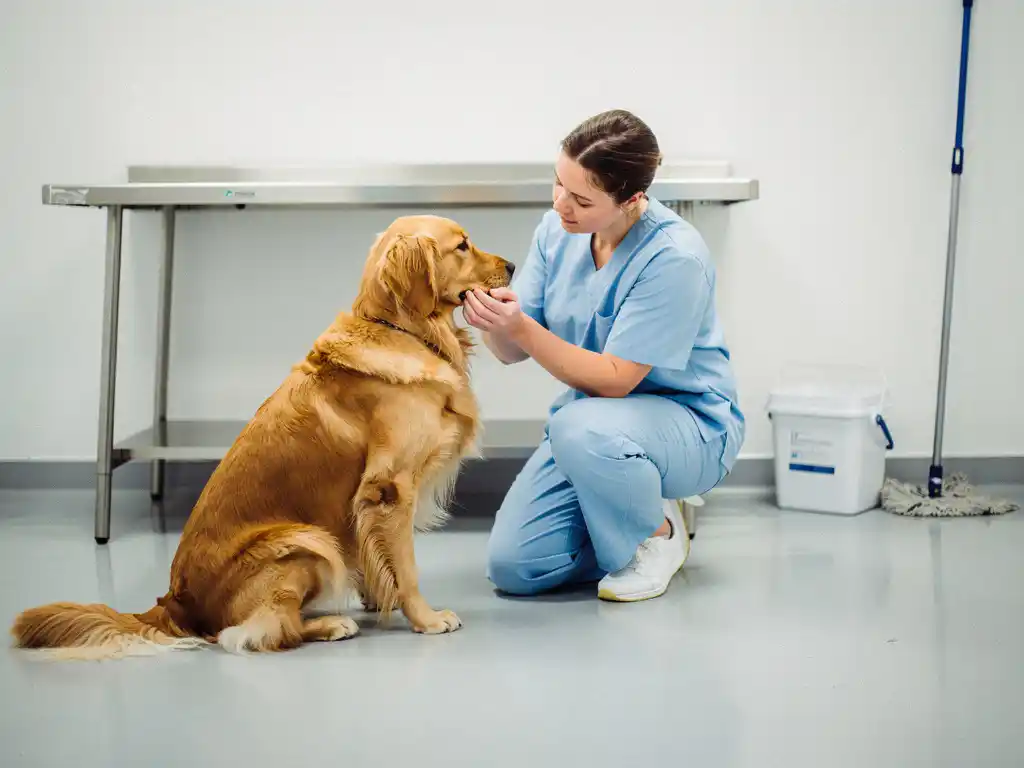
The easiest floors to disinfect in an animal clinic are sealed concrete and rubber flooring. Both are non-porous, which means liquids, bacteria, and contaminants stay on the surface rather than soaking in. Rubber flooring, in particular, combines easy cleaning with slip resistance, safety, and comfort for animals and staff. A quick wipe-down with mild detergent and water is usually all it takes to keep rubber floors hygienically clean.
Why does flooring matter so much in an animal clinic?
Flooring in an animal clinic directly affects hygiene, animal safety, and staff well-being. Clinics deal with bodily fluids, heavy foot traffic, nervous animals, and frequent disinfection routines every single day. The wrong floor can make all of that harder, more expensive, and even dangerous.
Think about what your floor has to handle: a dog slipping on a wet surface, a cat scratching at a seam, or a disinfectant solution that slowly degrades the flooring material over time. A floor that absorbs moisture becomes a breeding ground for bacteria and odors that are genuinely difficult to eliminate. On the other hand, a floor that is too slippery puts both animals and staff at risk of falls and injuries.
There is also a comfort factor that is easy to overlook. Staff in veterinary clinics stand for long periods, and flooring that provides some cushioning reduces physical fatigue over the course of a shift. Animals that feel unstable on a surface become more stressed, which makes examinations and procedures harder for everyone involved.
What makes a floor easy to disinfect?
A floor is easy to disinfect when it is non-porous, seamless or low-seam, smooth enough to wipe clean, and resistant to the disinfectants used in clinical environments. These four qualities determine how effectively you can eliminate pathogens between patients and how much time and effort that process takes.
Porosity is the most important factor. Porous surfaces absorb liquids, which means bacteria, viruses, and organic matter can penetrate the floor and survive even after surface cleaning. Non-porous materials keep everything on top, where your disinfectant can actually reach it.
Seams are the second major consideration. Every joint, gap, or crack in a floor is a place where fluids can pool and microorganisms can hide. Fewer seams mean fewer problem areas. This is why large-format flooring options are popular in clinical settings: they cover more area with fewer joints.
Chemical compatibility also matters. Some flooring materials degrade when exposed to the strong disinfectants used in veterinary settings. A floor that warps, cracks, or becomes pitted over time from regular cleaning is not a practical long-term solution, no matter how easy it is to clean when new.
What are the most common flooring types used in animal clinics?
The most common flooring types in animal clinics are sealed concrete, epoxy coatings, vinyl or luxury vinyl tile (LVT), ceramic or porcelain tile, and rubber flooring. Each has a different profile when it comes to hygiene, durability, comfort, and cost.
Sealed concrete and epoxy
Sealed concrete and epoxy-coated floors are popular in treatment rooms and kennel areas because they are highly durable and non-porous when properly applied. Epoxy creates a smooth, seamless surface that is easy to mop and disinfect. The main downside is hardness: there is no cushioning for animals or staff, and the surface can become slippery when wet unless a non-slip additive is included in the coating.
Vinyl and LVT
Vinyl flooring is widely used in reception areas and examination rooms. It is softer underfoot than concrete, relatively affordable, and comes in large sheet formats that minimize seams. However, vinyl can be vulnerable to tears from animal claws, and the seams in tile formats can trap moisture over time if not properly sealed.
Ceramic and porcelain tile
Tile is easy to clean and very durable, but the grout lines between tiles are a real hygiene challenge. Grout is porous and stains easily, requiring more intensive scrubbing to keep it clean. Tile is also hard and cold, which can stress animals during examinations or recovery.
Rubber flooring
Rubber flooring offers a strong combination of hygiene, safety, and comfort. It is non-porous, resistant to most clinical disinfectants, and provides natural grip even when wet. The cushioning it offers reduces stress on animals and fatigue for staff. It is also quieter underfoot, which helps keep the environment calmer for anxious patients.
Which flooring is the hardest to keep clean in a clinic?
Grouted tile is the hardest flooring to keep clean in an animal clinic. The grout lines are porous, absorb biological fluids and disinfectants, and harbor bacteria that are difficult to remove with standard mopping. Over time, grout darkens, stains, and becomes a persistent source of odor even in well-maintained clinics.
Carpet is another problematic choice, though it is rarely used in clinical areas. Any fabric-based surface in a high-fluid environment is simply impractical from a hygiene standpoint. Even with regular deep cleaning, carpet retains odors, allergens, and microbial contamination far more than hard surfaces do.
Damaged or aging vinyl is also worth mentioning. Vinyl that has developed cracks, lifted edges, or exposed seams loses its non-porous advantage. Once moisture gets under a vinyl floor, the subfloor beneath can become contaminated, and the problem becomes much harder to address than the surface itself.
Is rubber flooring good for animal clinics?
Yes, rubber flooring is a strong choice for animal clinics. It is non-porous, so it does not absorb fluids or harbor bacteria beneath the surface. It provides natural grip that reduces slipping for both animals and staff. It cushions impact, which lowers stress for animals and reduces fatigue for veterinary teams who stand all day.
Rubber is also resistant to the kinds of disinfectants commonly used in clinical settings, which means it holds up well under frequent cleaning without degrading. Unlike tile or grout, a well-installed rubber floor does not develop hidden pockets where pathogens can survive between cleanings.
One thing to consider is installation quality. A rubber floor with many small tiles and lots of seams loses some of its hygiene advantage. Large-format rubber mats or rolls that cover a wide area with minimal joints are the most practical option for clinical environments. The fewer the seams, the easier the floor is to maintain.
Rubber flooring also has a practical benefit for animal welfare. Animals, particularly dogs and cats, often feel more secure on a surface that offers grip and some give. A surface that feels stable underfoot reduces anxiety during examinations, which makes the experience better for the animal and easier for your team.
How do you properly disinfect rubber floors in a clinic?
To properly disinfect rubber floors in a clinic, remove loose debris first, then clean the surface with a mild detergent and water, rinse thoroughly, apply a compatible disinfectant solution, allow adequate contact time, and rinse again if required by the product. This process removes organic matter and then eliminates pathogens effectively.
The order of steps matters. Applying disinfectant to a dirty surface reduces its effectiveness because organic material like blood, urine, or feces can neutralize the active ingredients before they reach the pathogens underneath. Cleaning first and disinfecting second is the correct sequence in any clinical setting.
Check that the disinfectant you use is compatible with rubber. Most quaternary ammonium compounds, accelerated hydrogen peroxide products, and diluted bleach solutions are safe for rubber flooring when used at the recommended concentrations. Highly concentrated bleach or strong solvents used repeatedly can cause rubber to stiffen or discolor over time, so always follow the manufacturer’s guidance on dilution.
For high-traffic or high-risk areas, a daily cleaning and disinfection routine is reasonable. In lower-traffic zones, a thorough clean between patients combined with a full disinfection at the end of the day is usually sufficient. The key is consistency: a routine you can actually maintain every day is more effective than an intensive process done irregularly.
What should you look for when choosing clinic flooring?
When choosing veterinary clinic flooring, look for these qualities: a non-porous surface, a low seam count, slip resistance when wet, chemical compatibility with clinical disinfectants, cushioning for animal and staff comfort, and durability under heavy use. The best clinic floor balances all of these without requiring excessive maintenance.
- Non-porous material: Prevents fluids and bacteria from penetrating below the surface, making disinfection genuinely effective.
- Minimal seams: Reduces the number of gaps where contaminants can collect and hide.
- Slip resistance: Protects animals and staff, especially in areas that get wet frequently, such as wash stations or around examination tables.
- Disinfectant compatibility: Ensures the floor holds up under the cleaning products your clinic uses regularly.
- Comfort and cushioning: Reduces animal stress and staff fatigue, both of which affect the quality of care your clinic can provide.
- Durability: A floor that chips, cracks, or degrades quickly becomes a hygiene risk and an ongoing cost.
It is also worth thinking about installation. A floor that requires complex installation with many small pieces will have more seams and more opportunities for moisture to find its way into gaps. Large-format options that cover more area with fewer joints are easier to keep clean and look more professional.
If your clinic has areas with unusual dimensions or specific layout requirements, a made-to-measure approach is worth considering. At LRP Matting, our custom rubber matting solutions are cut to your exact specifications, which means fewer seams, a cleaner finish, and a floor that fits your space properly from day one. Rubber is non-porous, easy to clean with mild detergent and water, and built to last under the daily disinfection routines that animal clinics rely on.
Frequently Asked Questions
Can rubber flooring handle the weight of heavy veterinary equipment like examination tables and cages?
Yes, high-quality rubber flooring is designed to withstand significant static and dynamic loads, including heavy examination tables, kennels, and trolleys. However, it is worth checking the load rating of the specific product you choose, as thicker rubber mats generally offer better resistance to permanent compression or indentation under heavy equipment. For areas with very heavy fixed equipment, large-format rubber rolls tend to distribute weight more evenly than smaller tiles.
How do I know if a disinfectant is damaging my rubber floors over time?
Early signs of disinfectant damage on rubber floors include surface discoloration, a sticky or tacky feel, stiffening, or visible cracking and pitting. If you notice any of these changes, review the concentration and frequency with which you are applying the product and compare it against the flooring manufacturer’s recommendations. Switching to a milder compatible disinfectant, such as an accelerated hydrogen peroxide product at the correct dilution, is often enough to stop further degradation without compromising hygiene standards.
What is the best flooring option for a clinic on a tight budget that still needs to meet hygiene standards?
Sheet vinyl is generally the most budget-friendly option that still meets basic hygiene requirements, as it is non-porous, easy to install, and available in wide formats that minimize seams. However, if budget allows even a modest upgrade, rubber flooring delivers significantly better long-term value because it is more durable, more resistant to disinfectants, and less likely to need replacement due to tears or seam failure. Factor in the total cost of ownership — including maintenance, repairs, and replacement — rather than just the upfront installation cost.
Are there specific areas in an animal clinic where different flooring types make more sense?
Yes, a zoned approach to flooring is a practical strategy for most clinics. High-fluid areas like surgical suites, kennels, and wash stations benefit most from seamless rubber rolls or epoxy-coated concrete due to their superior moisture resistance. Reception and waiting areas can accommodate vinyl or LVT, where aesthetics and comfort are priorities alongside hygiene. Examination rooms sit somewhere in between and are well-served by rubber flooring, which balances grip, cushioning, and easy disinfection in a space that sees constant patient turnover.
How often should clinic flooring be replaced or inspected for hygiene integrity?
Flooring should be visually inspected at least monthly for cracks, lifted edges, worn seams, or surface damage that could compromise its non-porous properties. A formal condition assessment every one to two years is a good practice, particularly for high-traffic areas. Replacement timelines vary by material: vinyl may need replacing every five to ten years in a clinical setting, while quality rubber flooring can last significantly longer when properly maintained and cleaned with compatible products.
Does rubber flooring help reduce noise levels in a veterinary clinic?
Yes, rubber flooring has natural sound-absorbing properties that dampen the noise of footsteps, equipment movement, and the general activity of a busy clinic. This is a meaningful benefit in veterinary settings because excessive noise is a known stressor for animals, particularly dogs and cats waiting in unfamiliar environments. Reducing ambient noise through flooring choice is a simple, passive way to create a calmer atmosphere that benefits both patients and staff without any additional effort or cost.
Can rubber flooring be installed over an existing floor, or does the old flooring need to be removed first?
In many cases, rubber flooring can be installed directly over a clean, flat, structurally sound existing floor, which saves time and reduces installation costs. The key requirement is that the subfloor or existing surface is level, dry, and free of raised edges or debris that could create pressure points or uneven wear. If the existing floor is damaged, lifting, or has significant height variation, removal or leveling is recommended first to ensure the rubber lies flat and seams stay tight — both of which are important for maintaining hygiene over time.
Related Articles
- How do different facility environments affect floor performance?
- How can preventative maintenance reduce unexpected floor repairs?
- How does flooring lifespan affect total cost of ownership?
- How do you perform a floor safety assessment?
- How do you reduce impact on a horse's legs during stabling?
- How do you choose flooring for a professional sports locker room?
- How do you prevent cross-contamination through flooring in an animal clinic?
- What flooring is best for a large animal veterinary examination room?
- How does stall flooring affect a horse's overall well-being?
- What is the best way to protect a loading dock floor?