
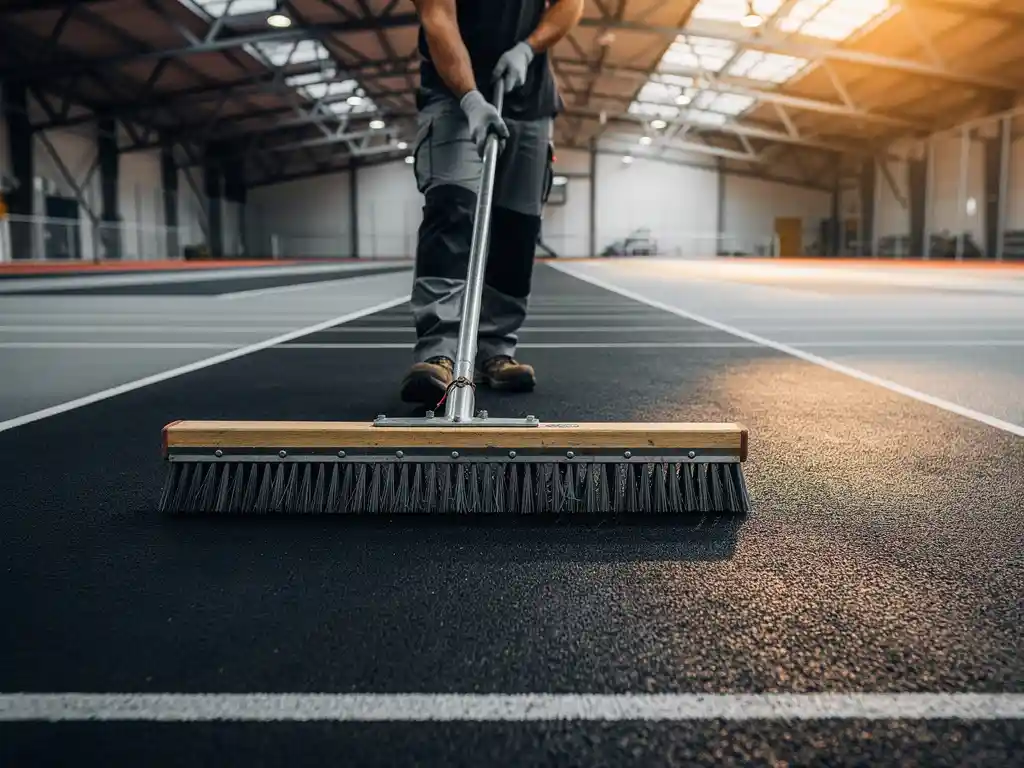
Maintaining a safe surface in a professional athletic facility year-round comes down to three things: choosing the right flooring material, keeping up a consistent cleaning routine, and knowing when it’s time to replace worn sections. Rubber matting is one of the most reliable options available because it absorbs impact, resists moisture, and holds up under heavy daily use. Pair the right material with regular inspections and proper cleaning, and your facility floor will stay safe and functional in every season.
Why does surface safety matter in professional athletic facilities?
Surface safety in a professional athletic facility directly affects the risk of injury for athletes, staff, and visitors. A floor that is slippery, uneven, or worn down creates real hazards—rolled ankles, falls, and joint stress—that could sideline athletes or expose facility operators to liability. The surface is the one thing every person in your facility interacts with every single session.
Beyond injury prevention, the right surface also supports athletic performance. A floor that absorbs impact reduces cumulative stress on joints during training, which means athletes can train harder and recover faster. For facilities that run programming year-round, that kind of surface reliability is not a nice-to-have; it is a practical necessity. Wet weather, heavy foot traffic, and changing temperatures all put pressure on your flooring, and a surface that cannot handle those conditions quickly becomes a liability.
What types of flooring are best for professional athletic facilities?
The best flooring for professional athletic facilities depends on the activity, but rubber, hardwood, and synthetic turf are the most widely used options. Rubber flooring stands out for multi-use spaces because it combines impact absorption, slip resistance, and durability in one material. Hardwood is preferred for court sports, while synthetic turf suits indoor field-training areas.
Rubber flooring
Rubber is the go-to choice for weight rooms, gym floors, locker rooms, and high-traffic corridors. It absorbs shock, resists moisture, and stays grippy even when wet. It also handles heavy equipment without cracking or deforming, which makes it a smart long-term investment for any serious training environment.
Hardwood and sport court surfaces
Hardwood floors are standard for basketball and volleyball courts because they offer a consistent, responsive bounce and are designed for lateral movement. However, they require more maintenance than rubber and are vulnerable to moisture damage. Many facilities use rubber matting in surrounding areas and corridors to protect hardwood floors from foot traffic and debris tracked in.
Synthetic turf and foam
Indoor turf is popular for speed and agility training, while foam tiles are sometimes used in martial arts or gymnastics spaces. Both have specific use cases but lack the all-around durability and ease of maintenance that rubber offers in mixed-use environments.
How does rubber matting improve safety on athletic facility floors?
Rubber matting improves safety on athletic facility floors by providing a slip-resistant surface, absorbing impact from falls and heavy equipment, and creating a stable, even base that reduces tripping hazards. Its non-porous surface also prevents moisture from soaking in, which helps keep the floor from becoming slippery or developing mold over time.
The impact-absorption qualities of rubber are particularly important in weight rooms and training areas where dropped equipment is common. A thick rubber mat cushions the blow to the floor, protects the subfloor, and reduces the noise and vibration that would otherwise travel through the building. For athletes, that same cushioning reduces joint stress during high-repetition movements such as jumping, sprinting, or lifting.
Rubber mats designed for athletic use, such as multipurpose sports mats, are built to handle high-traffic zones in stadiums and gym facilities. They create a protective barrier that absorbs both impact and stress, which is exactly what you need in areas where large numbers of athletes are moving at speed or under load. Wall and fence padding products such as FenceGuard add another layer of protection by absorbing high-speed contact with facility boundaries, helping keep athletes safer during drills and competitive play.
What are the most common athletic facility floor maintenance mistakes?
The most common athletic facility floor maintenance mistakes are using the wrong cleaning products, ignoring small areas of damage, skipping regular inspections, and failing to manage moisture properly. Each of these mistakes shortens the life of your flooring and increases the risk of accidents.
- Using harsh chemicals: Bleach and solvent-based cleaners can break down rubber over time, causing it to dry out, crack, or lose its grip. Stick to mild detergent and water for routine cleaning.
- Ignoring curling edges or lifted seams: Even small raised edges quickly become trip hazards in a busy facility. Check mat edges regularly and address any movement before it becomes a problem.
- Skipping inspections after heavy use: Post-event or post-season inspections are often overlooked, but that is exactly when wear and damage are most likely to show up.
- Letting moisture sit: Standing water under or around mats encourages bacterial growth and can cause subfloor damage. Dry spills quickly and make sure drainage is working properly in wet areas.
- Putting off small repairs: A small tear or compressed section of mat does not fix itself. Catching issues early saves money and prevents bigger problems down the line.
How do you clean and maintain rubber mats in a gym year-round?
To clean and maintain rubber mats in a gym year-round, sweep or vacuum daily to remove loose debris, mop weekly with a mild detergent-and-water solution, and inspect the mats monthly for signs of wear or damage. Avoid harsh chemicals, and allow mats to dry fully before heavy use resumes.
Daily sweeping prevents grit and dirt from grinding into the surface and degrading the texture over time. A weekly damp mop with a pH-neutral cleaner handles sweat, tracked-in dirt, and surface bacteria without damaging the rubber. For high-traffic zones or areas exposed to food or beverages, you may want to increase the frequency of wet cleaning.
Seasonally, it is worth doing a deeper clean and a full inspection. Check for compressed areas where heavy equipment sits permanently, look at seams and edges for lifting, and test the surface grip in areas that see the most foot traffic. Rotating heavy equipment periodically can help prevent permanent compression in one spot. Rubber is naturally non-porous, so it does not absorb or retain moisture, which makes it one of the easiest flooring materials to keep hygienic with minimal effort.
When should you replace rubber flooring in an athletic facility?
You should replace rubber flooring in an athletic facility when it shows visible cracking, permanent compression, significant surface wear that reduces grip, or lifted edges that cannot be re-secured. If the mat no longer absorbs impact effectively or creates an uneven surface underfoot, it is past its useful life and poses a safety risk.
High-quality rubber matting made from durable compounds can last many years under normal athletic facility conditions, but the timeline varies based on traffic volume, the types of activities taking place, and how well the mats have been maintained. Weight rooms and areas with heavy, dropped equipment will see faster wear than lightly trafficked corridors.
A useful rule of thumb is to replace mats when maintenance becomes more frequent than the cleaning schedule warrants, or when athletes or staff start commenting on how the surface feels. Trust those observations. If the surface feels unstable, compresses unevenly, or no longer provides adequate grip, replacement is the right call. Waiting too long costs more in the long run, both in potential injuries and in subfloor damage caused by degraded matting.
What’s the best rubber matting solution for a large athletic facility?
The best rubber matting solution for a large athletic facility is a combination of high-performance, large-format mats for open training areas, impact-protection mats for walls and barriers, and sport-specific surface solutions for specialized zones. Choosing mats that come in large sizes reduces seams, simplifies installation, and creates a more consistent surface across the entire space.
For large facilities, seam management is one of the biggest practical concerns. Every seam is a potential trip hazard and a place where dirt and moisture can accumulate. Opting for the largest available mat sizes reduces the total number of seams in any given area, which improves both safety and aesthetics.
Custom sizing is often the smartest move for professional facilities because standard dimensions rarely match the exact footprint of a training floor, corridor, or court surround. Custom rubber matting solutions cut to your exact specifications eliminate the guesswork, reduce waste, and produce a cleaner, more professional finish. At LRP Matting, we offer made-to-measure options alongside our full range of sport facility flooring products, including the Multipurpose Sports Mat for high-traffic gym and stadium areas, FenceGuard for wall and fence protection, and Disc Golf Mats for outdoor course installations. Whatever your facility looks like, we can help you find the right fit.
Frequently Asked Questions
How thick should rubber matting be for a professional athletic facility?
The right thickness depends on the activity taking place in each zone. For weight rooms where heavy equipment is dropped, mats between 3/4 inch and 1.5 inches thick provide the best impact absorption and subfloor protection. For general training corridors or multi-use areas, 3/8 to 1/2 inch is typically sufficient. When in doubt, go thicker in high-impact zones — the added cushioning protects both athletes and your subfloor investment.
Can rubber matting be installed over existing flooring, or does the subfloor need to be replaced first?
Rubber matting can be installed directly over most existing hard floors — including concrete and tile — as long as the subfloor is clean, dry, level, and structurally sound. Uneven or damaged subfloors should be repaired first, since rubber matting will conform to the surface beneath it and any dips or raised spots will transfer through to the top. If the existing flooring is soft, damaged, or prone to moisture, removing it before installation will give you a more stable and longer-lasting result.
What's the best way to prevent rubber mats from shifting or sliding during heavy use?
For most athletic facilities, the weight and friction of quality rubber matting is enough to keep mats in place under normal training conditions. In high-movement zones or areas where mats are frequently repositioned, double-sided tape, rubber adhesive, or interlocking mat edges can provide extra stability. For permanent installations, full adhesive bonding to the subfloor is the most secure option and eliminates any risk of edge lifting or shifting entirely.
Is rubber flooring a good option for outdoor athletic areas, or is it strictly an indoor material?
Many rubber matting products are engineered for outdoor use and can handle UV exposure, rain, and temperature fluctuations without cracking or degrading. Outdoor-rated rubber flooring is commonly used on stadium concourses, outdoor training areas, and disc golf course installations. The key is selecting a product specifically designed for outdoor conditions — not all indoor rubber mats are UV-stabilized or built to handle freeze-thaw cycles, so always confirm the product’s intended application before installing it outside.
How do you handle rubber mat maintenance in a facility that runs programming seven days a week with no real downtime?
In a facility with no scheduled downtime, the key is breaking maintenance into small, consistent tasks rather than relying on periodic deep cleans. Daily dry sweeping takes only minutes and prevents the grit buildup that degrades surface texture over time. Section off areas for wet mopping on a rotating basis so no part of the floor goes more than a week without cleaning, and conduct quick visual inspections at the start or end of each day so small issues — a lifted edge, a new scuff or tear — are caught before they become safety hazards.
Are there specific rubber matting products better suited for areas where athletes wear cleats or spikes?
Yes — areas where athletes wear cleats, spikes, or aggressive-soled footwear require rubber mats with a higher durometer (hardness rating) to resist surface puncturing and premature wear. Softer mats designed for barefoot or standard athletic shoe use will degrade quickly under cleat pressure. Look for heavy-duty rubber matting with a dense, tight-grain compound and a minimum thickness of 1/2 inch for cleat-traffic zones, and inspect these areas more frequently since the wear pattern will be more concentrated and aggressive.
What should I look for when sourcing rubber matting for a large facility to make sure I'm getting a quality product?
Focus on three things: material composition, product certifications, and supplier customization capability. High-quality athletic rubber matting is typically made from vulcanized rubber or recycled rubber with a consistent density throughout — avoid products that feel hollow or vary in thickness across the surface. Look for certifications related to slip resistance, impact absorption, or low VOC emissions, especially if the facility is enclosed. Finally, work with a supplier who offers custom sizing and can provide product specifications in writing, so you know exactly what you are installing and can hold the product to a measurable standard.
Related Articles
- What role does flooring play in preventing musculoskeletal strain?
- How do uneven floors increase accident risk?
- How do you protect a sports facility floor during the off-season?
- What flooring works best in a high-moisture veterinary environment?
- What is the best way to protect a sports facility floor from heavy equipment?
- How does stall flooring affect a horse's overall well-being?
- What type of flooring holds up best in a high-traffic athletic venue?
- How do you fit stall mats to a non-standard stall size?
- What type of floor is easiest to keep clean in a horse barn?
- How do you stop horse stall mats from shifting?