
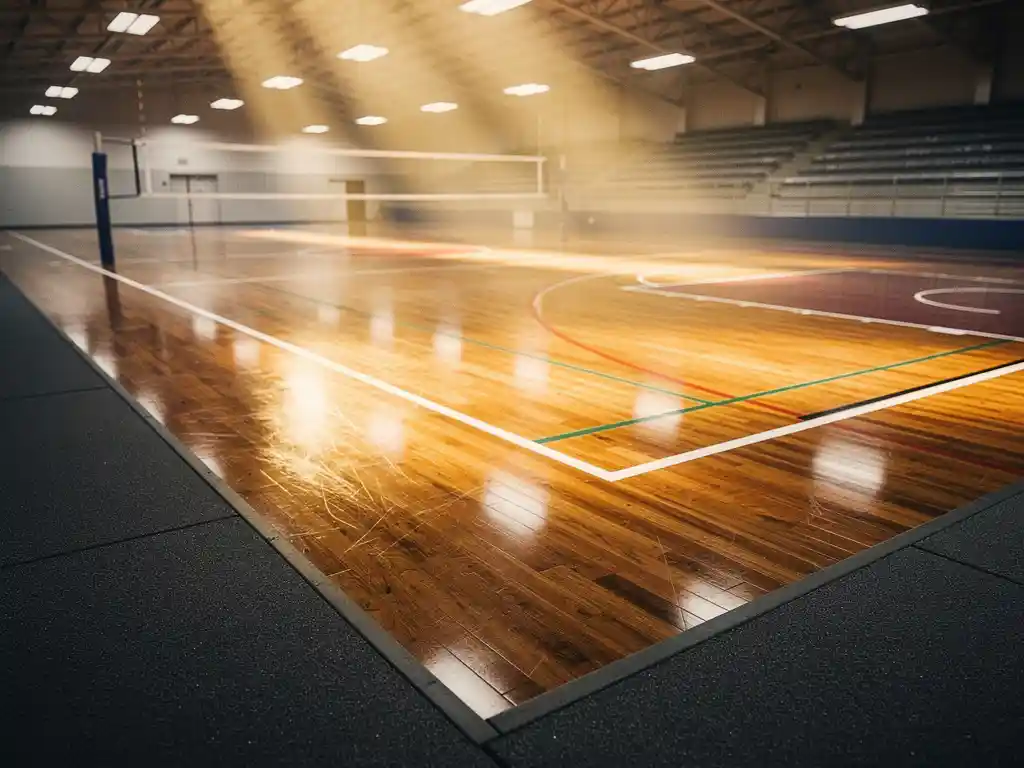
Choosing flooring for a multi-sport facility comes down to matching the surface to the activities you’re running, the safety standards you need to meet, and the maintenance realities of a busy, high-traffic space. The short answer: rubber flooring is the most versatile and practical choice for most multi-sport environments. It absorbs impact, resists moisture, handles heavy use, and works across a wide range of sports and fitness activities. Choose the right thickness and surface texture for your specific mix of sports, and you’ll have a floor that performs well for years.
What makes multi-sport facility flooring different from regular gym flooring?
Multi-sport facility flooring has to perform across multiple activities, which means it needs to handle a wider range of impact levels, movement patterns, and equipment types than a single-purpose gym floor. A standard gym might need one consistent surface optimized for a single sport. A multi-sport facility needs a floor that can handle sprinting, jumping, lateral cuts, heavy weights, and court sports without compromising safety or performance for any of them.
Regular gym flooring is often designed with a specific use in mind. Hardwood courts work beautifully for basketball but are vulnerable to moisture and heavy equipment. Foam tiles suit yoga and stretching but can buckle under heavy foot traffic. Multi-sport flooring, by contrast, needs to be durable enough for the roughest activity in the building while still providing enough cushioning and traction for the most technical ones. That combination is what makes the selection process genuinely different—and more demanding.
What types of flooring are used in multi-sport facilities?
The most common flooring types used in multi-sport facilities are rubber, hardwood, synthetic turf, vinyl, and foam. Each serves a different purpose, and many facilities use a combination depending on the zones within the space.
- Rubber flooring is the most widely used option because it handles high impact, resists moisture, and works across almost every sport and fitness activity.
- Hardwood is preferred for court sports like basketball and volleyball but requires significant maintenance and is sensitive to humidity.
- Synthetic turf works well for indoor soccer, football training, and agility drills, but it is not suited for weightlifting or court sports.
- Vinyl or PVC sports flooring offers a smooth, consistent surface that’s good for multi-use courts but typically provides less impact absorption than rubber.
- Foam tiles are common in martial arts and gymnastics areas but are not durable enough for general multi-sport use.
In practice, most well-designed multi-sport facilities use rubber as their foundation material across the majority of the floor, with specialized zones using hardwood or synthetic turf where specific sports demand it. Rubber’s combination of durability, slip resistance, and impact absorption makes it the practical backbone of most sports facility flooring plans.
What sports activities is rubber flooring best suited for?
Rubber flooring performs best for weightlifting, fitness training, aerobics, martial arts, gymnastics warm-up areas, indoor athletics, and general multi-sport conditioning. It is the go-to surface for any activity that involves heavy equipment, repeated impact, or the need for reliable traction on a surface that gets used intensively every day.
For strength and conditioning areas, rubber is practically unmatched. It absorbs the shock of dropped weights, protects the subfloor, and significantly reduces noise. For group fitness classes, its slip-resistant surface gives participants confidence during dynamic movements. For indoor running tracks and agility zones, rubber provides the right mix of grip and cushioning to reduce joint stress over time.
Rubber is less ideal for sports that require a very specific ball bounce, such as professional basketball or tennis, where a hardwood or synthetic surface is the standard. But for the conditioning, training, and general athletic use that makes up the bulk of activity in most multi-sport facilities, rubber is consistently the right call.
How do you choose the right rubber mat thickness for a sports facility?
The right rubber mat thickness for a sports facility depends on the intensity of the activity and the type of impact the floor needs to absorb. As a general guide, thinner mats of around a quarter inch work for wall and barrier protection, half-inch mats suit general multipurpose sports areas and high-traffic zones, and thicker options are needed for heavy weightlifting areas where equipment is regularly dropped.
Matching thickness to activity type
For multipurpose sports areas in stadiums and gym facilities, a half-inch thickness strikes the right balance between impact absorption and a stable, firm surface underfoot. It cushions impact without creating an unstable feel during lateral movements or running. For wall and fence protection, a quarter-inch rubber mat, such as a FenceGuard-style panel, is sufficient because its role is to absorb player impact against a hard surface rather than to cushion floor contact.
Considering the subfloor
The subfloor underneath your rubber matting also affects how much thickness you need. A concrete subfloor transfers more impact back up through the mat, which means you benefit from a slightly thicker mat to compensate. A wooden subfloor has more natural give, so you can sometimes use a thinner mat and still achieve good impact absorption. Always consider what’s underneath before committing to a thickness.
What safety features should sports facility flooring have?
Sports facility flooring should provide slip resistance, impact absorption, a stable and even surface, and protection at wall and boundary edges. These four features work together to reduce the risk of falls, joint injuries, and collision-related injuries during athletic activity.
Slip resistance is the most immediate safety concern. A surface that loses traction when wet or under heavy foot traffic creates a serious injury risk in any sports environment. Rubber naturally provides a high level of grip, and a textured or grid surface increases that traction further during dynamic movement.
Impact absorption matters most in areas where athletes fall, jump, or drop equipment. A floor that transmits shock directly to joints increases the risk of long-term injury, particularly in high-repetition training environments. Rubber’s natural elasticity disperses that energy rather than reflecting it back upward.
Wall and boundary protection is an often overlooked safety element. In training environments where athletes move at speed and may contact walls or fencing, rubber wall panels absorb that impact and protect both the athlete and the facility infrastructure. This is especially relevant in high-performance training spaces where contact with boundaries is a regular part of the activity.
Should you use custom-cut mats or standard sizes for a multi-sport facility?
For most multi-sport facilities, a combination of standard and custom-cut mats is the most practical approach. Standard sizes work well for open, regular floor areas, while custom-cut mats are the better choice for unusual room dimensions, doorways, columns, equipment platforms, and any space where a poor fit would create a tripping hazard or expose the subfloor.
The real advantage of custom-cut mats in a large facility is the reduction in seams. Every seam in a floor is a potential tripping point and a place where dirt, moisture, and bacteria can accumulate. Fewer seams mean a safer, cleaner, easier-to-maintain floor. In a multi-sport facility where the floor takes heavy use from multiple directions, minimizing seams is a practical safety decision, not just an aesthetic one.
Standard-size mats are faster to install and easier to replace in sections if a specific area is damaged. They work well in rectangular, open areas where the geometry is straightforward. The decision comes down to the complexity of your space: the more irregular the layout, the stronger the case for custom sizing.
How do you maintain rubber flooring in a high-traffic sports facility?
Maintaining rubber flooring in a high-traffic sports facility is straightforward: sweep or vacuum regularly to remove grit and debris, mop with mild detergent and water as needed, and inspect periodically for any areas showing unusual wear. Rubber is non-porous, so it does not absorb moisture, bacteria, or odors the way softer flooring materials do, which makes it significantly easier to keep clean and hygienic.
Daily sweeping prevents abrasive particles from grinding into the surface under foot traffic, which is the most common cause of premature wear in sports flooring. A weekly damp mop with a mild detergent is usually sufficient for general hygiene maintenance. Avoid harsh solvents or oil-based cleaners, as these can degrade the rubber surface over time.
For high-use areas like weight rooms or court entry points, a more frequent cleaning schedule makes sense. The non-porous nature of rubber means that even heavy sweat and moisture sit on the surface rather than soaking in, so a quick clean after intensive sessions keeps the floor in good condition without requiring specialist products or equipment.
If you are planning a new installation or upgrading an existing space, it’s worth thinking ahead about maintenance access. Fewer seams and a well-fitted floor make cleaning faster and more thorough. That is where working with a supplier who offers made-to-measure rubber matting solutions pays off in the long run, because a floor that fits properly is a floor that stays cleaner and lasts longer. At LRP Matting, we help you get that fit right from the start, with custom-cut options, large-format mats that minimize seams, and sports facility flooring built to handle whatever your facility throws at it.
Frequently Asked Questions
How long does rubber flooring typically last in a multi-sport facility?
High-quality rubber flooring in a multi-sport facility can last anywhere from 10 to 20 years with proper maintenance, depending on traffic volume, activity intensity, and installation quality. Thicker mats used in heavy-use zones like weight rooms tend to show wear more slowly because they have more material to work through before performance is compromised. The key longevity factors are consistent cleaning to prevent grit abrasion, avoiding harsh chemicals, and ensuring the floor was correctly fitted from the start to prevent edge lifting or seam separation.
Can rubber flooring be installed over existing flooring, or does the old surface need to be removed first?
Rubber flooring can often be installed directly over an existing hard, flat surface such as concrete or old vinyl, provided that surface is clean, dry, level, and structurally sound. Any significant cracks, dips, or moisture issues in the subfloor should be addressed before installation, as rubber matting will conform to surface irregularities over time and an uneven base will create tripping hazards and accelerate wear. If the existing flooring is soft, spongy, or already damaged, removal is strongly recommended before laying new rubber matting.
What is the best way to handle flooring transitions between different zones in a multi-sport facility?
Transition strips or bevelled edge ramps are the safest and most practical solution for managing height differences between flooring zones, such as where rubber matting meets a hardwood court or synthetic turf area. The goal is to eliminate any abrupt height change that could catch a foot during fast movement, so a gradual, low-profile transition is always preferable to a sharp edge. Where possible, designing zones so that flooring types meet at natural activity boundaries — such as walls, court lines, or equipment areas — minimizes the number of transitions needed and reduces both safety risk and maintenance complexity.
Is rubber flooring suitable for facilities that also host events, exhibitions, or non-sport activities?
Yes, rubber flooring handles multi-purpose use well, including events, exhibitions, and community gatherings, because it is durable enough to withstand foot traffic, chair legs, and light equipment without denting or scuffing. For temporary events, placing protective covering over high-use rubber zones can extend the surface life and maintain a cleaner appearance for non-sport occasions. The non-porous surface also makes post-event cleanup quick and straightforward, which is a practical advantage for facilities that regularly switch between sport and non-sport programming.
How do I know if my facility needs to replace rubber flooring versus just repair or resurface it?
Replacement is typically the right call when you notice widespread surface cracking, significant compression loss where the mat no longer springs back underfoot, persistent lifting or separation at seams, or areas where the mat has thinned enough to compromise impact absorption. Localised damage — such as a single mat that has been cut, stained, or heavily worn in one spot — can usually be addressed by replacing just that section, which is one of the practical advantages of modular rubber tile or mat systems. If you are unsure, a supplier or flooring specialist can assess whether the existing material still meets the safety and performance standards your facility requires.
What are the most common mistakes facility managers make when choosing sports flooring?
The most common mistakes are underestimating the thickness needed for the heaviest activity in the facility, choosing a single flooring type for the entire space without accounting for zone-specific requirements, and prioritising upfront cost over long-term durability and maintenance savings. Another frequent oversight is ignoring the subfloor condition before installation, which can lead to premature wear, uneven surfaces, and safety issues that are expensive to fix after the fact. Taking time to map out your activity zones, expected traffic levels, and subfloor conditions before specifying flooring will prevent the majority of these problems.
Are there any certifications or standards I should look for when sourcing rubber flooring for a sports facility?
Yes — look for flooring that meets relevant sports safety and performance standards such as EN 14904 for indoor sports surfaces, which covers shock absorption, ball bounce, and slip resistance requirements. For facilities that may host competitive events, checking whether the flooring meets the specifications required by the relevant governing body for each sport is important, as some organisations mandate specific surface standards for sanctioned competitions. Additionally, look for products that carry certifications for low VOC emissions and environmental safety, particularly if the facility is used by young athletes or operates in an enclosed space with limited ventilation.
Related Articles
- How do different facility environments affect floor performance?
- What makes a flooring material sustainable?
- How can flooring materials be reused or recycled?
- What areas of a facility have the highest slip risk?
- What flooring works best under heavy sports equipment?
- What is the best way to protect a sports facility floor from heavy equipment?
- How do you protect a concrete floor from heavy machinery?
- What floor surface is best for an equine rehabilitation center?
- How do you make a horse stall more comfortable for an older horse?
- What causes sports facility floors to deteriorate so quickly?