
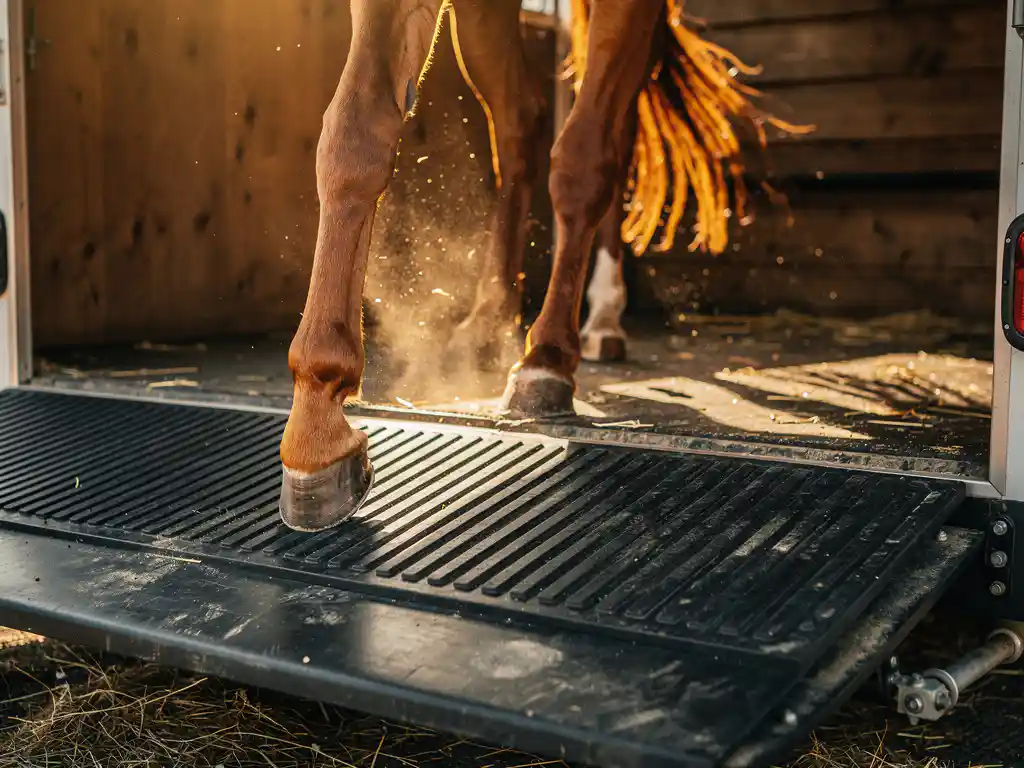
Making a horse trailer safer for loading and unloading comes down to a few key things: the right flooring, good technique, and a calm environment. Non-slip horse trailer flooring is one of the most important upgrades you can make because it gives your horse solid footing at every step of the journey. Pair that with patience, proper training, and a well-maintained trailer, and you significantly reduce the risk of slips, falls, and injuries for both horse and handler.
Why is horse trailer safety important during loading and unloading?
Loading and unloading are the two most dangerous moments of any trailer journey for horses. Your horse is moving from a familiar environment into a confined, unfamiliar space, often on a surface that feels and sounds different underfoot. That combination of stress and physical risk makes these moments the most likely time for accidents to happen.
Horses are prey animals, which means their instinct is to flee from anything that feels unsafe. A slippery ramp or a hollow-sounding floor can trigger that flight response in an instant. When a horse scrambles, panics, or loses its footing, the consequences can be serious, including leg injuries, lacerations, or falls that affect both the animal and the handler nearby. Good trailer safety practices protect everyone involved.
What are the most common causes of trailer loading accidents?
The most common causes of horse trailer loading accidents are slippery surfaces, poor lighting, confined spaces that feel threatening to the horse, and handler errors such as rushing or using too much force. Worn or inadequate flooring is a leading physical factor, while a horse’s anxiety and lack of trailer training are the most common behavioral factors.
Here is a closer look at the main culprits:
- Slippery flooring or ramps: Smooth or worn surfaces give horses no grip, causing them to scramble and panic.
- Loud, hollow sounds: Bare metal floors amplify hoof noise, which can startle a horse mid-step.
- Poor lighting inside the trailer: Horses are reluctant to walk into dark spaces. A dimly lit trailer looks like a trap.
- Rushing the process: Hurrying a nervous horse increases stress and the likelihood of sudden, unpredictable movement.
- Unfamiliar or infrequent loading: Horses that rarely travel are more likely to resist and react unpredictably.
- Ramp instability: A ramp that wobbles, flexes, or makes noise underfoot will make even a calm horse hesitate.
Addressing the physical factors, especially the flooring, is the fastest and most practical way to reduce accident risk right away.
What type of flooring is safest for a horse trailer?
Rubber matting is widely considered the safest flooring option for horse trailers. It provides the grip, cushioning, and noise reduction that bare metal or wood simply cannot offer. A good rubber trailer mat gives your horse confident footing on the ramp and inside the trailer, reducing the risk of slipping and lowering the stress of the whole experience.
When choosing horse trailer flooring, look for these qualities:
- Slip resistance: A textured or studded surface grips hooves even when wet.
- Thickness: Thicker mats absorb more vibration and provide better cushioning during transit.
- Non-porous material: Rubber does not absorb moisture, urine, or bacteria, making it far more hygienic than wood.
- Durability: Trailer flooring takes a beating. You need a material that holds up under repeated hoof impact without cracking or deforming.
- Easy cleaning: Mats that can be wiped down or hosed off save you time and keep the trailer sanitary.
Wood floors, while traditional, absorb moisture and can rot over time, creating hidden weak spots that are genuinely dangerous. Bare metal is even worse for traction. Rubber matting solves both problems at once.
How do rubber mats improve horse trailer safety?
Rubber mats improve horse trailer safety by providing a non-slip surface that gives horses secure footing, reducing the risk of scrambling or falling. They also cushion the impact of hoof strikes, dampen noise, and insulate against cold metal floors, all of which help keep horses calmer and more comfortable throughout the journey.
Grip and traction
The textured surface of a rubber trailer mat grips the hoof even when the floor is wet or dirty. This is especially important on the ramp, where a horse is walking at an angle and carrying its full weight on a potentially unfamiliar surface. Secure footing at this moment can be the difference between a smooth load and a dangerous scramble.
Noise and vibration reduction
Rubber absorbs the sharp sound of hooves on metal, which makes a significant difference to a nervous horse. Less noise means less startling, and less startling means a calmer, more manageable animal. Rubber also dampens the vibrations from road travel, reducing fatigue and stress on joints during longer trips.
Hygiene and maintenance
Because rubber is non-porous, it does not soak up urine or moisture the way wood does. That means the floor stays cleaner, dries faster, and does not develop soft, rotten patches that can literally give way under a horse’s weight. A quick rinse is usually all it takes to keep rubber trailer mats clean and ready for the next trip.
How do you load a nervous horse safely into a trailer?
To load a nervous horse safely, take a slow, pressure-free approach. Let the horse investigate the trailer at its own pace, use positive reinforcement, and never force or rush the process. Consistent practice sessions on days when you are not actually traveling help the horse associate the trailer with calm rather than stress.
A few practical steps that make a real difference:
- Set up in a calm environment: Park the trailer somewhere quiet and familiar. Remove distractions and give yourself plenty of time.
- Let the horse approach freely: Walk toward the trailer at a relaxed pace and let the horse sniff and explore the ramp before asking it to step on.
- Use a lead rope, not pressure: Guide rather than pull. Pulling triggers resistance; a loose lead and a calm handler encourage forward movement.
- Reward small steps: Every time the horse moves toward or onto the trailer, acknowledge it positively. Treats, verbal praise, or simply releasing pressure all work.
- Practice regularly: Load and unload the horse several times without going anywhere. This builds familiarity and removes the anxiety of the unknown.
- Check the footing first: Before asking a nervous horse to step on the ramp, make sure the surface is secure and non-slip. A horse that slips once will remember it.
What other features make a horse trailer safer for transport?
Beyond flooring, several other features contribute to a safer horse trailer experience. Good ventilation, secure partitions, proper lighting, and a stable ramp design all play a role in keeping your horse safe from the moment it steps on until the moment it steps off.
Key features to look for or add to your trailer include:
- Adequate ventilation: Fresh air reduces heat stress and keeps horses calmer during longer journeys.
- Bright interior lighting: Horses are more willing to enter and less likely to panic in a well-lit space.
- Padded dividers and walls: Soft padding on partitions protects horses if they shift or lean during transit.
- A stable, non-slip ramp: The ramp should feel solid underfoot, not flex or wobble. Rubber ramp matting is a straightforward way to add grip and stability.
- Proper tie points: Horses should be tied at the right height to prevent them from getting a leg over the rope, without being tied so short that they cannot balance.
- Smooth interior surfaces: Remove any sharp edges, protruding bolts, or hardware that could cause injury if a horse shifts unexpectedly.
How often should you inspect and maintain your trailer mats?
You should inspect your horse trailer mats before every trip and carry out a thorough maintenance check at least once a month. Look for signs of wear, lifting edges, tears, or any areas where the mat has shifted and is no longer sitting flat. Catching small issues early prevents bigger problems on the road.
Here is a simple maintenance routine to follow:
- Before each trip: Check that all mats are flat, secure, and free of debris. Lift the edges to make sure no moisture has pooled underneath.
- After each trip: Remove mats if possible, hose them down, and allow them to dry completely before replacing them. This prevents mold and bacteria buildup beneath the mat.
- Monthly: Inspect the floor underneath the mats for signs of rot, rust, or damage. The mat protects the floor, but it cannot fix damage that is already there.
- Annually: Consider replacing mats that show significant wear, cracking, or loss of surface texture. A mat that has lost its grip is no longer doing its job.
High-quality rubber mats last for years with basic care, making them a genuinely cost-effective investment. If you are looking for trailer flooring that holds up to heavy use and is easy to maintain, our custom rubber matting solutions at LRP Matting are built exactly for that purpose. We have been making durable, non-slip rubber mats since 1971, and we can cut them to fit your specific trailer dimensions so there are no awkward gaps, no shifting, and no compromise on safety.
Frequently Asked Questions
How thick should rubber mats be for a horse trailer floor?
For horse trailers, rubber mats should ideally be at least 3/4 inch (19mm) thick to provide adequate cushioning and vibration dampening during transit. Thicker mats in the 3/4 to 1 inch range offer the best combination of grip, comfort, and durability, especially for horses that travel frequently or for longer distances. If you are covering a ramp specifically, a slightly thinner mat can work, but prioritize a deeply textured surface for maximum grip on the incline.
Can I use regular stable mats in my horse trailer instead of trailer-specific mats?
While standard stable mats and trailer mats are both made from rubber, they are not always interchangeable. Trailer mats are typically designed to be thinner and lighter to reduce overall trailer weight, while still maintaining the grip and durability needed for transport. Standard stable mats can be too heavy or too thick to fit properly within trailer floor recesses, potentially creating uneven surfaces or gaps that become trip hazards. Always check the weight rating and dimensions of any mat before using it in a trailer context.
What is the best way to get a horse used to trailer loading if it has had a previous bad experience?
Retraining a horse with a negative trailer history requires extra patience and a complete reset of the association it has built with the trailer. Start by simply parking the trailer near the horse’s living area so it can observe it daily without any pressure to load. Gradually introduce approach exercises over multiple sessions before ever asking the horse to step on the ramp, and consider working with a qualified equine trainer if resistance is strong or the horse shows significant fear responses. Ensuring the trailer interior is well-lit, well-ventilated, and fitted with non-slip matting is equally important, as it removes the physical discomforts that may have contributed to the original bad experience.
How do I stop moisture from building up under my trailer mats and damaging the floor?
The key to preventing moisture buildup is removing and drying your mats thoroughly after every trip, rather than leaving them in place between uses. Even non-porous rubber mats can trap condensation and urine underneath if left sitting for extended periods, which accelerates rot in wooden floors and rust in metal ones. If removing mats after every use is not practical, at minimum lift the edges regularly to check for pooling moisture and allow airflow underneath. Installing mats with small drainage channels or slightly raised edges can also help, and pairing them with a monthly under-mat floor inspection will catch any damage before it becomes a structural safety issue.
Is it safer to use a step-up trailer or a ramp trailer for loading horses?
Both step-up and ramp trailers can be safe when properly equipped and maintained, and the best choice often comes down to your horse’s individual preference and training. Some horses load more confidently onto a ramp because the gradual incline feels more natural, while others find the defined step of a step-up trailer less intimidating than a moving ramp surface. The most important factor in either case is the footing: a non-slip rubber surface on the ramp or step-up floor is essential to prevent scrambling at the point of entry. If your horse has a strong preference for one style, that preference is worth respecting, as a confident load is always safer than a reluctant one.
How should I tie my horse inside the trailer to keep it safe during transit?
Horses should be tied at a height that allows them to hold their head in a natural, comfortable position, roughly level with their withers, which helps them balance during movement and reduces neck strain on long trips. Use a quick-release knot or a breakaway tie with a safety mechanism so the horse can be freed quickly in an emergency. Avoid tying too short, as this prevents the horse from shifting its weight to maintain balance, but also avoid leaving so much slack that the horse could get a leg over the rope. Cross-tying is a good option in straight-load trailers, as it limits lateral movement and distributes the horse’s weight more evenly.
Are there any signs that my horse trailer floor needs replacing rather than just new mats?
Yes, there are several warning signs that indicate the floor itself needs attention beyond simply replacing the mats on top. Soft or spongy spots in a wooden floor, visible rot, discoloration, or a floor that flexes noticeably under weight are all serious red flags that require immediate repair or replacement. For metal floors, look for rust patches, thinning, or any areas where the metal has begun to pit or corrode through. Never rely on mats alone to compensate for a structurally compromised floor, as a horse’s full weight concentrated on a single hoof can break through a weakened surface, creating an extremely dangerous situation during loading or transit.
Related Articles
- How does floor related fatigue impact workplace safety?
- How do facility layouts affect animal movement?
- What causes polished concrete to become slippery?
- What is the best flooring for a horse stall?
- How do you reduce impact on a horse's legs during stabling?
- What is the difference between interlocking and straight edge stall mats?
- How do you fit stall mats to a non-standard stall size?
- How do you make a warehouse floor less slippery?
- How do you reduce re-injury risk in a horse recovery stall?
- How do you calculate how much bedding a horse stall needs?