
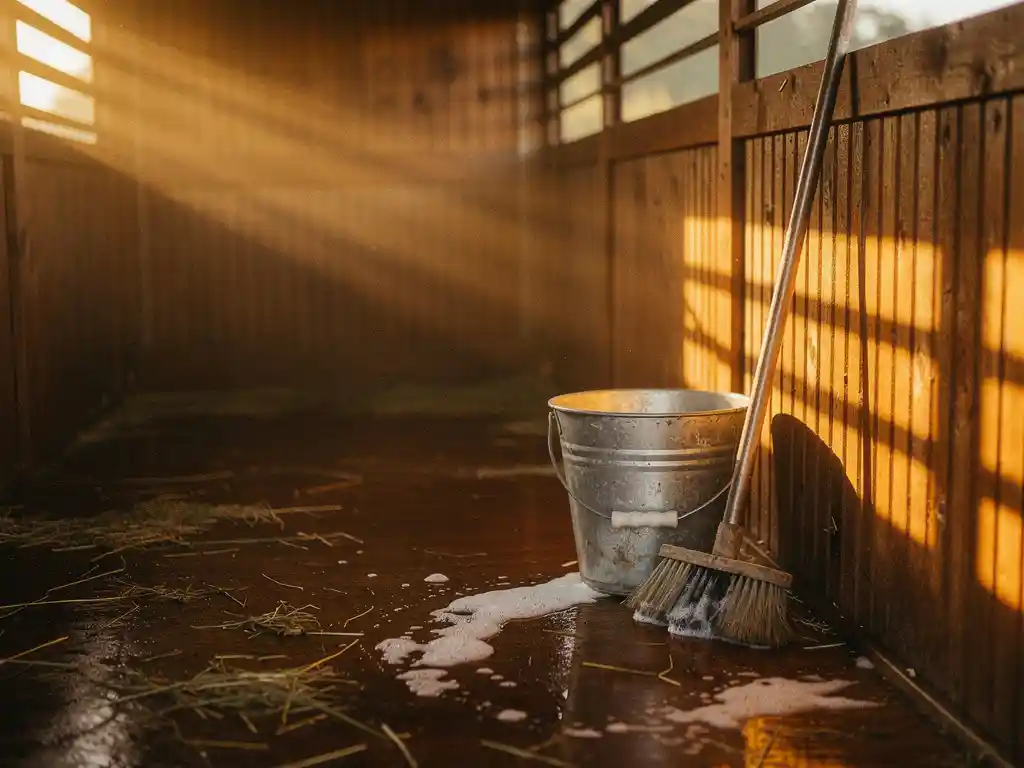
To clean a horse trailer floor, remove all bedding and waste, sweep or blow out loose debris, then scrub the floor with a stiff brush and a mild detergent or a horse-safe disinfectant. Rinse thoroughly, and allow everything to dry completely before adding fresh bedding or replacing the mats. Regular cleaning after every trip prevents ammonia buildup, odors, and floor damage over time.
Whether you use your trailer once a week or once a month, keeping the floor clean and well maintained protects both your horse and your investment. Horse trailer flooring takes a beating from hooves, urine, manure, and moisture, so a consistent cleaning routine makes a real difference. Here is everything you need to know to do it right.
Why is cleaning your horse trailer floor so important?
Cleaning your horse trailer floor regularly protects your horse’s health, prevents floor deterioration, and keeps the trailer safe to use. Urine and manure create ammonia gas, which irritates your horse’s respiratory system during transport. Moisture trapped beneath mats or in cracks breaks down flooring materials over time, leading to rot, rust, or structural damage that can become a serious safety hazard.
Horses are sensitive animals, and the stress of trailering already puts pressure on their bodies. A dirty, slippery, or ammonia-filled floor adds to that stress and increases the risk of slipping, stumbling, or respiratory irritation. Beyond animal welfare, a neglected trailer floor can become genuinely dangerous. Wood subfloors rot, metal floors corrode, and weakened flooring can fail under the weight of a horse in transit. Staying on top of cleaning is simply the most practical way to avoid expensive repairs and keep your horse comfortable on every journey.
How often should you clean a horse trailer floor?
You should clean your horse trailer floor after every use. Even a short trip produces urine, manure, and moisture that begin breaking down flooring materials almost immediately. A quick clean after each trip takes very little time and prevents the buildup that makes deep cleaning a much bigger job later.
Beyond the post-trip clean, a thorough deep clean is worth doing every one to three months, depending on how frequently you use the trailer. During a deep clean, you pull the mats out completely, scrub underneath them, inspect the subfloor for soft spots or rust, and allow everything to dry fully before reassembling. If you haul horses frequently, monthly deep cleans are a smart habit. For occasional users, a thorough clean at the start and end of the season covers most of what you need.
One thing many horse owners overlook is drying time. Putting mats back down over a damp floor traps moisture underneath and accelerates damage. Always give the floor enough time to air out completely, even if that means leaving the mats out overnight.
What’s the best way to clean a horse trailer floor step by step?
The best way to clean a horse trailer floor is to work from top to bottom: remove mats and bedding first, clear loose debris, scrub all surfaces with a safe cleaning solution, rinse thoroughly, and allow everything to dry completely before reassembling. Following this order prevents you from spreading contamination back onto surfaces you have already cleaned.
Step-by-step cleaning process
- Remove all mats and bedding. Pull out rubber mats and dispose of or compost used bedding. Set the mats aside where you can clean both sides.
- Sweep or blow out loose debris. Use a stiff broom or leaf blower to remove hay, shavings, and dried manure from the floor and walls.
- Pre-rinse the floor. Hosing it down loosens stuck-on waste and makes scrubbing more effective.
- Scrub with a cleaning solution. Use a stiff-bristled brush and a horse-safe disinfectant or mild detergent. Work the solution into corners, edges, and any grooved surfaces.
- Clean the mats separately. Scrub both sides of each mat, paying attention to the underside, where moisture and bacteria collect.
- Rinse everything thoroughly. Make sure no cleaning-product residue remains, as it can irritate your horse’s skin and hooves.
- Inspect the subfloor. While the floor is bare and wet, check for soft spots in wood, rust on metal, or any areas of concern.
- Allow full drying. Leave the mats out and the doors open until the floor is completely dry before replacing bedding and mats.
This process takes more time upfront but saves you from dealing with serious floor damage down the road. The drying step is the one most people rush, and it is the step that matters most for preventing moisture-related deterioration.
What cleaning products are safe to use on horse trailer floors?
Safe cleaning products for horse trailer floors include mild dish soap, white vinegar diluted with water, and purpose-made equine disinfectants. Avoid bleach in high concentrations, as the fumes can linger and irritate your horse’s airways. Harsh chemical degreasers and products with strong fragrances are also best avoided, especially if your horse will be loading shortly after cleaning.
For routine cleaning after a trip, a bucket of warm water with a squirt of mild dish soap and a stiff brush gets the job done without introducing anything harmful. For deeper disinfection, look for products specifically labeled as safe for use around horses and livestock. Many equine supply stores carry trailer-specific cleaners that are formulated to cut through ammonia and organic waste without leaving harmful residues.
If you prefer a natural option, a solution of one part white vinegar to two parts water works well as a mild disinfectant and is effective at neutralizing ammonia odors. It is safe for rubber mats, metal floors, and wooden subfloors alike. Whatever product you choose, always rinse thoroughly and allow the floor to dry before putting your horse back in the trailer.
How do you maintain rubber mats in a horse trailer?
To maintain rubber mats in a horse trailer, clean them after every use, allow them to dry fully before replacing them, and inspect them regularly for signs of cracking, curling, or compression. Proper maintenance extends the life of your mats significantly and keeps the trailer floor safe and comfortable for your horse.
Rubber mats are the workhorses of horse trailer flooring. They cushion impact, provide grip, and protect the subfloor from direct moisture contact. But they only do their job well when they are properly maintained. The biggest enemy of rubber mats is trapped moisture, so getting into the habit of pulling them out to dry after every trip is one of the most effective things you can do.
Practical tips for rubber mat maintenance
- Clean both sides of each mat, not just the top surface.
- Store mats upright or flat in a dry location when the trailer is not in use for extended periods.
- Avoid using petroleum-based products or solvents on rubber, as they degrade the material over time.
- Check that mats lie flat and do not shift during transport, as movement creates gaps where waste and moisture collect.
- Rotate mats periodically if certain areas receive more wear than others.
High-quality rubber mats are non-porous, which means they do not absorb moisture, odors, or bacteria the way wood or foam alternatives do. This makes them much easier to keep clean and hygienic. A quick scrub and rinse is usually all it takes to get them back to a clean, safe condition.
When should you replace your horse trailer floor mats?
You should replace your horse trailer floor mats when they show visible cracking, permanent compression, curling edges, or have become slippery even when clean. Mats that no longer lie flat or have lost their grip put your horse at risk of slipping during loading, travel, and unloading.
Even well-maintained mats have a lifespan. Over years of use, rubber can harden, lose its flexibility, and develop surface cracks that harbor bacteria and make cleaning less effective. If you notice your mats are no longer springing back after compression, or if the surface texture has worn smooth, it is time to think about replacements. A mat that looks intact but feels hard and rigid underfoot is no longer providing the cushioning your horse needs.
Curling edges are another sign to watch for. Mats that curl up at the corners create trip hazards for horses and gaps where waste collects underneath. No amount of cleaning fixes a mat that will not stay flat.
When it is time for new trailer mats, choosing the right fit matters. Mats that are cut precisely to your trailer dimensions eliminate gaps and reduce movement during transport. That is where our custom rubber matting solutions come in. At LRP Matting, we cut mats to your exact trailer dimensions, minimizing seams and giving your horse a stable, comfortable surface for the entire journey. Our mats are made from genuine, non-porous rubber that is easy to clean, resistant to moisture, and built to last through years of heavy use. If you are ready to upgrade your horse trailer flooring, we are happy to help you find the right fit.
Frequently Asked Questions
Can I use a pressure washer to clean my horse trailer floor?
Yes, a pressure washer can be effective for deep cleaning a horse trailer floor, but use it with caution. High-pressure water can force moisture into seams, cracks, and the edges of wooden subfloors, which can accelerate rot if the floor is not given adequate drying time afterward. If you use a pressure washer, keep the nozzle at a moderate distance, avoid directing the stream into joints or gaps, and make sure the floor and mats are completely dry before reassembling.
How do I get rid of stubborn ammonia smell in my horse trailer?
A diluted white vinegar solution (one part vinegar to two parts water) is one of the most effective and horse-safe ways to neutralize ammonia odors. Apply it generously to the floor, mats, and walls, let it sit for a few minutes, then scrub and rinse thoroughly. For persistent odors, purpose-made equine enzyme-based cleaners are an excellent option, as they break down the organic compounds causing the smell rather than just masking it. Ensuring the floor and mats dry completely after every clean is the best long-term prevention.
What's the best way to dry a horse trailer floor quickly after cleaning?
The most effective approach is to leave all doors and windows open to maximize airflow and allow the floor to air dry naturally. On sunny days, parking the trailer in direct sunlight significantly speeds up drying. If you need to dry the floor faster, a leaf blower or shop fan directed across the floor surface works well. Avoid the temptation to replace mats after just an hour or two — even if the surface feels dry to the touch, moisture can linger underneath, so overnight drying is always the safest choice.
How do I inspect a wooden horse trailer subfloor for rot, and what should I do if I find it?
With the mats removed and the floor wet from cleaning, press firmly on the wood with your foot or a screwdriver handle across the entire surface. Soft spots, spongy areas, or wood that gives under pressure are signs of rot. You may also notice discoloration, a musty smell, or visible deterioration around the edges and seams. If you find rot, do not ignore it — weakened flooring can fail under the weight of a horse in transit, which is a serious safety risk. Consult a horse trailer repair specialist to assess whether individual boards can be replaced or whether more extensive subfloor work is needed.
Is it safe to use the same cleaning products on the trailer walls and dividers as on the floor?
Generally yes, mild dish soap, diluted white vinegar, and horse-safe equine disinfectants are appropriate for walls, dividers, and other interior surfaces as well as the floor. However, pay attention to surface materials — some dividers have painted or powder-coated metal finishes that can be dulled or damaged by harsh chemicals or abrasive scrubbing. Always rinse all surfaces thoroughly after cleaning, since residue on walls and dividers can come into direct contact with your horse’s body and face during transport.
How do I keep my horse trailer floor cleaner between deep cleaning sessions?
A few simple habits make a big difference between deep cleans. Use an absorbent bedding material like shavings or pellets during trips to soak up urine and reduce direct moisture contact with the mats and floor. After every trip, remove waste and wet bedding promptly rather than leaving it to sit. Pulling the mats up briefly to air out the subfloor, even for a few hours after a short haul, goes a long way toward preventing moisture buildup between thorough cleans.
How do I know if my horse trailer mats are the right thickness and fit for my trailer?
Most horse trailer rubber mats are between 3/4 inch and 1 inch thick, which provides adequate cushioning and grip for horses during travel. Thickness alone is not enough, though — fit is equally important. Mats that are too small leave gaps where waste and moisture collect beneath them, while mats that are oversized buckle and shift, creating uneven footing. Having mats custom-cut to your trailer’s exact dimensions eliminates these issues, ensures full floor coverage, and reduces movement during transport, keeping your horse on a stable, safe surface throughout the journey.
Related Articles
- How do you evaluate environmentally friendly flooring?
- What role does drainage play in animal welfare?
- What factors increase floor wear in manufacturing environments?
- How can flooring materials be reused or recycled?
- What should be included in a floor safety checklist?
- How do uneven floors increase accident risk?
- What type of flooring is used in professional sports training facilities?
- How do you know if your factory floor is causing worker fatigue?
- How does stall flooring affect a horse's joint health?
- How do you choose the right rubber flooring for an indoor sports complex?