

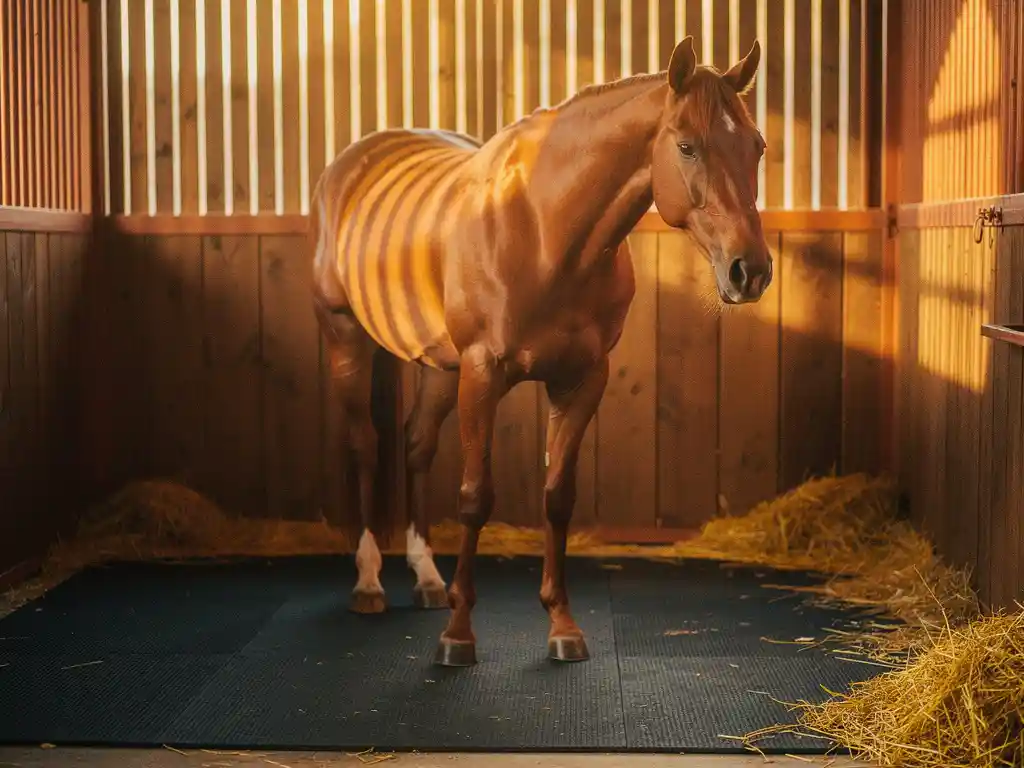
Reducing leg strain in a horse that spends a lot of time in a stall comes down to a few practical steps: make sure the stall floor is cushioned and non-slip, keep your horse moving as much as possible, and support circulation through regular grooming and appropriate leg care. The single biggest change most horse owners can make is upgrading the stall flooring. A quality rubber stall mat absorbs concussive force, reduces the effort a horse needs to stay balanced, and gives tired legs a real break.
Why do horses develop leg strain from standing in a stall?
Horses develop leg strain from stall confinement because their legs are designed for movement, not prolonged static loading. When a horse stands on a hard surface for hours at a time, the tendons, ligaments, and joints absorb constant low-level stress without the relief that natural movement provides. Over time, that continuous pressure leads to fatigue, stiffness, and, in some cases, more serious soft-tissue strain.
In the wild, horses move almost continuously, which keeps blood circulating through the lower limbs and prevents fluid from pooling around the joints. Stall life interrupts that cycle. Add a concrete or compacted dirt floor into the mix, and you have a surface that offers zero shock absorption, forcing the horse’s body to compensate with every small shift in weight. The result is a gradual buildup of strain that owners often notice only once the horse starts showing visible signs of discomfort.
What are the signs of leg strain in a stalled horse?
Common signs of leg strain in a stalled horse include stiffness when first leaving the stall, reluctance to bear weight evenly, heat or swelling in the lower limbs, and a shortened stride during exercise. In more advanced cases, you may notice the horse shifting its weight frequently while standing or resting a leg more than usual.
Morning stiffness that eases after a short warm-up is one of the earliest and most telling signs. If your horse consistently needs several minutes of walking before it moves freely, the stall environment is likely contributing to the problem. Swelling that appears overnight and reduces with movement, often called “stocking up,” is another red flag. While stocking up is not always serious on its own, when it happens regularly, it signals that circulation in the lower legs is being compromised by too much standing on a hard, unforgiving floor.
How does stall flooring affect a horse’s leg health?
Stall flooring directly affects a horse’s leg health by determining how much concussive force travels up through the hooves and into the joints with every step and weight shift. Hard surfaces like bare concrete transmit impact energy straight into the tendons and joints, while cushioned flooring absorbs a significant portion of that force before it reaches the horse’s body.
The problem with hard floors
Concrete and packed clay are the most common stall floor materials, and both are problematic for joint health. They are durable and easy to clean, but they offer no give. A horse standing on concrete for 16 to 20 hours a day is essentially putting its legs under constant, low-level mechanical stress. That is the equivalent of a person standing on a tile floor all day without ever sitting down or walking on grass.
How surface texture plays a role
Beyond cushioning, surface texture matters too. A slippery floor forces a horse to engage stabilizing muscles continuously just to stay balanced, which adds a layer of muscular fatigue on top of the joint stress. A non-slip surface allows the horse to stand and move naturally without bracing, which reduces the overall workload on the legs and encourages the horse to lie down and rest more often. More time lying down means less time bearing weight, which is one of the most direct ways to reduce cumulative leg strain.
What type of stall mat is best for reducing leg strain in horses?
The best stall mat for reducing leg strain in horses is a thick, dense rubber mat with a non-slip surface and enough cushioning to absorb impact without compressing completely underfoot. Rubber is the preferred material because it combines shock absorption with durability, stays non-porous so it does not retain moisture, and holds its shape under the sustained weight of a large animal.
A mat with a textured or studded surface gives the horse secure footing, which reduces the muscular effort needed to stay balanced and encourages natural movement and rest. For horses that spend extended time in their stalls, a mat that covers the full stall floor without gaps or raised edges is ideal, as uneven surfaces can create pressure points and tripping hazards. Options like a dedicated stall mat designed specifically for equine use, or a hammer-top mat with a textured surface for grip, are well suited to this purpose. For horses that travel, a trailer ramp mat can also play a useful role, reducing the stress of loading and unloading on already fatigued joints.
How thick should a horse stall mat be to protect against leg strain?
A horse stall mat should be at least three-quarters of an inch thick to provide meaningful protection against leg strain. Mats in the range of three-quarters to one inch thick offer a good balance of cushioning and stability, absorbing concussive force without creating an unstable surface that makes it harder for the horse to balance.
Thinner mats, typically around half an inch, can work in some applications but are better suited for lighter-duty use or situations where budget is a primary consideration. For a horse with existing joint issues or one that stands for particularly long periods, a thicker mat in the five-eighths to three-quarters inch range provides noticeably better support. It is also worth considering the weight of the mat: heavier mats tend to stay in place better, which prevents shifting and the creation of gaps that can catch a hoof or cause uneven footing. A mat weighing over 90 pounds in a standard 4-by-6-foot size is a reliable indicator of the density needed for real protective performance.
What else can you do to reduce leg strain in a stalled horse?
Beyond upgrading stall flooring, you can reduce leg strain in a stalled horse by increasing daily turnout time, adding regular hand-walking sessions, using supportive leg wraps overnight, and maintaining a consistent grooming routine that includes leg massage to stimulate circulation. Good nutrition and appropriate hoof care also play a supporting role in keeping joints healthy over the long term.
Even short periods of movement make a meaningful difference. A 20-minute hand-walk on days when full turnout is not possible keeps blood moving through the lower limbs and prevents the stiffness that builds up during long periods of standing. If your horse is recovering from an injury or is on stall rest at a vet’s instruction, gentle leg massage and cold hosing can help manage swelling and keep the tissues in better condition.
Bedding depth is another factor worth reviewing. A generous layer of shavings or straw on top of a rubber mat gives the horse an additional layer of cushioning and encourages it to lie down more readily. Horses that feel comfortable and secure on their floor surface rest more, and rest is one of the most effective ways to allow the legs to recover from the demands of the day.
Finally, regular farrier visits to maintain balanced hoof angles ensure that weight is distributed evenly across the foot and up through the leg. An unbalanced hoof puts asymmetrical stress on tendons and joints, which compounds the strain caused by a hard stall floor. Keeping all these elements in check together gives your horse the best chance of staying comfortable and sound even with a stall-heavy routine.
If you are ready to give your horse’s legs the support they deserve, we at LRP Matting offer custom rubber stall mats cut to the exact dimensions of your stall, made from high-quality rubber with the durability to handle years of daily use. No awkward gaps, no shifting panels—just a clean, cushioned floor that works as hard as you do for your horse’s well-being.
Frequently Asked Questions
Can rubber stall mats be used on top of an existing concrete floor, or does the concrete need to be removed first?
Rubber stall mats are designed to be placed directly on top of existing concrete floors — no removal or major renovation required. The mat sits on the concrete and acts as a cushioning layer between the hard surface and your horse’s hooves. Just make sure the concrete beneath is level and free of large cracks or raised edges that could cause the mat to shift or sit unevenly, as an unstable base undermines the mat’s protective benefit.
How do I keep stall mats from shifting or creating gaps over time?
The most effective way to prevent shifting is to choose mats that are dense and heavy enough to stay in place under a horse’s movement — mats weighing 90 pounds or more in a standard 4×6-foot size are significantly more stable than lighter alternatives. Fitting mats snugly against the stall walls and each other, with no room to migrate, also helps. For horses that are particularly active in their stalls, some owners use interlocking mat systems or add a thin layer of stall bedding on top to help hold everything in place and fill any minor gaps.
Is stocking up in horses always a sign of a serious problem, or can it resolve on its own?
Occasional stocking up after a long period of stall rest is common and often resolves once the horse gets moving and circulation is restored to the lower limbs. However, when it happens consistently — especially overnight on a regular basis — it is a reliable signal that the stall environment is compromising circulation and that changes like better flooring, more turnout, or leg wraps are worth implementing. If swelling is accompanied by heat, pain, or lameness, or does not reduce with light exercise, a veterinary evaluation is the right next step to rule out underlying injury or disease.
Are overnight leg wraps safe to use on a horse without veterinary guidance?
Supportive standing wraps can be used safely by experienced horse owners who are confident in their wrapping technique, but incorrect application is a real risk — a wrap that is too tight, unevenly tensioned, or applied over a pressure point can cause more harm than good. If you are new to wrapping or your horse has an existing leg condition, it is worth having a veterinarian or experienced trainer show you the correct method before making it part of your routine. For horses without specific issues, properly fitted commercial standing wraps or no-bow bandages are a more forgiving option for overnight use.
How often should stall mats be cleaned and inspected to maintain their effectiveness?
Stall mats should be swept or scraped clean as part of your daily stall maintenance routine, and fully lifted and cleaned underneath at least once or twice a month to prevent ammonia buildup from urine, which can degrade rubber over time and create an unhealthy environment for your horse’s hooves. During each deep clean, inspect the mat surface for cracks, significant compression, or worn patches that may have reduced its cushioning ability. A high-quality dense rubber mat can last many years with proper care, making routine maintenance a worthwhile investment in the mat’s long-term performance.
What is the best bedding to use on top of a rubber stall mat for maximum leg support?
Kiln-dried shavings and straw are the two most popular choices, and both work well on top of rubber mats — shavings tend to be more absorbent, while straw provides a deeper, softer nest that many horses find more encouraging for lying down. The key is depth: a bedding layer of at least four to six inches on top of the mat gives your horse meaningful additional cushioning and makes it more likely to rest fully, which directly reduces the time spent bearing weight on its legs. Whichever material you choose, maintaining consistent depth and replacing wet or soiled bedding promptly keeps the environment comfortable and hygienic.
At what point should I call a vet instead of managing leg strain at home?
You should contact a veterinarian if your horse shows lameness that does not improve after a brief warm-up, swelling that is hot to the touch or does not resolve with movement, any visible wound or injury near the affected area, or a sudden change in gait or willingness to bear weight. Home management strategies like better flooring, leg wraps, and increased movement are appropriate for mild, recurring stiffness or routine stocking up — but they are not substitutes for a professional diagnosis when there is any sign of acute injury or progressive deterioration. Early veterinary intervention almost always leads to better outcomes than waiting to see if a problem resolves on its own.
Related Articles
- How can preventative maintenance reduce unexpected floor repairs?
- How does floor design affect physical strain in the workplace?
- What factors increase floor wear in manufacturing environments?
- How do chemicals affect floor durability?
- How do professional stables manage bedding across a large number of stalls?
- What is the best flooring for a horse trailer?
- What is the best floor surface for a standing workstation?
- How do you make a workshop floor more comfortable to work on?
- How do you protect a newly installed floor in a busy facility?
- What type of flooring is best for a horse recovery stall?