
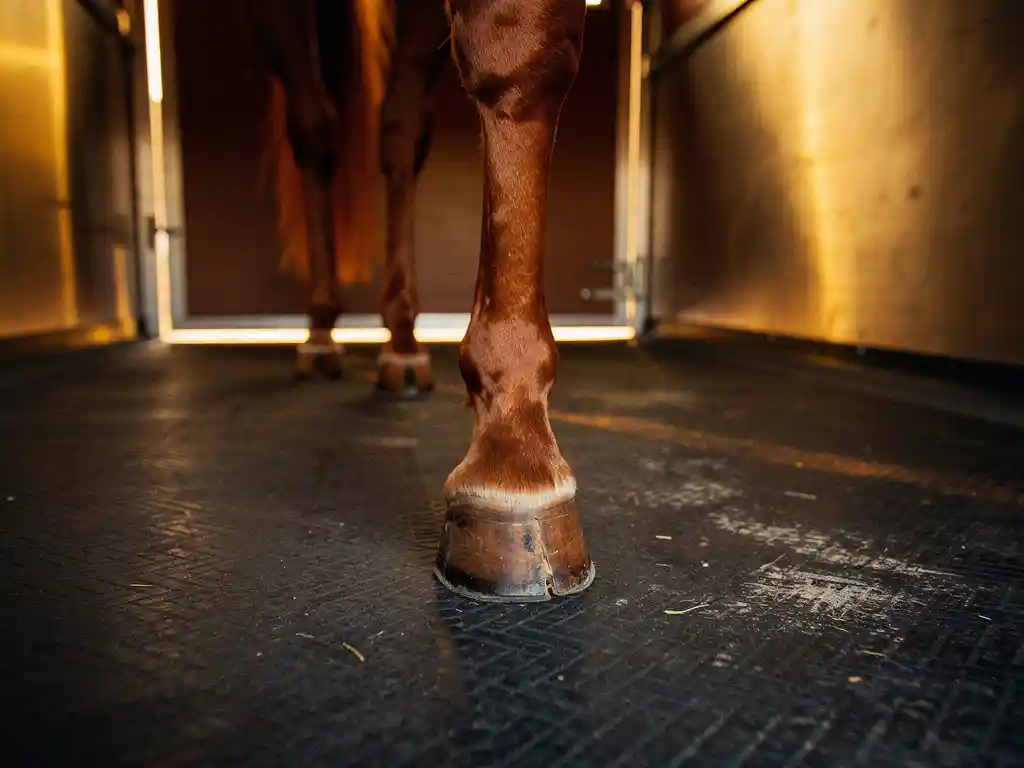
For most horse trailers, a 3/4-inch-thick rubber mat is the best choice for the floor. It gives your horse enough cushioning to stand comfortably during long trips, provides solid traction, and holds up well against urine, hooves, and heavy shifting loads. If you are hauling heavier horses or want extra insulation, a 1-inch mat is worth considering. For shorter trips with lighter horses, a 1/2-inch mat can work, but it offers less protection overall.
Why does rubber mat thickness matter in a horse trailer?
Rubber mat thickness directly affects how much protection, comfort, and traction your horse gets during transport. A mat that is too thin will compress under the weight of a horse, reducing its cushioning effect and putting more stress on joints and hooves from the vibrations of a moving trailer. A mat that is too thick can be heavy and difficult to manage, but it generally offers better performance.
Think about what a horse experiences inside a trailer. They are standing on a hard surface for anywhere from 30 minutes to several hours, constantly making small adjustments to balance themselves. Without adequate cushioning underfoot, that adds up to real physical stress, especially for older horses or those with joint issues. A properly thick rubber mat absorbs vibration, reduces fatigue, and keeps your horse more comfortable throughout the journey.
There is also a safety angle here. Thicker mats tend to grip the trailer floor more effectively, which reduces the chance of the mat itself shifting under your horse’s weight. The right thickness also provides better insulation against cold metal trailer floors in winter, which can cause horses to tense up and become more difficult to load.
What thickness of rubber mat is best for a horse trailer floor?
The best thickness for horse trailer flooring is 3/4 inch. This thickness strikes the right balance between cushioning, durability, and weight. It is heavy enough to stay in place, thick enough to absorb road vibration and provide genuine comfort, and durable enough to resist daily wear from hooves, urine, and cleaning.
Most horse owners and equine professionals settle on 3/4 inch as the go-to standard for good reason. It handles the weight of a full-grown horse without bottoming out, which is when a mat compresses so much that it effectively stops providing cushioning. It also resists curling at the edges, which can create a tripping hazard inside the trailer.
That said, the right thickness for your specific situation can depend on a few factors: the size and weight of your horses, how frequently you haul, the condition of your existing trailer floor, and whether you are looking for basic protection or premium comfort. Heavier breeds, such as draft horses, may benefit from a full 1-inch mat, while a lighter pony hauled occasionally might do fine with 3/4 inch as a minimum.
What’s the difference between 1/2 inch, 3/4 inch, and 1 inch horse trailer mats?
The key difference between these thicknesses is the level of cushioning, weight, and durability each one provides. A 1/2-inch mat is lighter and easier to handle but offers minimal padding. A 3/4-inch mat is the standard choice, balancing comfort and practicality. A 1-inch mat delivers maximum cushioning and insulation, ideal for heavier horses or long-distance hauling.
1/2 inch mats
A 1/2-inch mat is the lightest option, which makes it easier to lift, cut, and reposition. It works reasonably well for short trips and lighter horses, and it is a more affordable starting point. The downside is that it provides less protection against hard trailer floors, and it may compress more noticeably under heavy horses, reducing its effectiveness over time.
3/4 inch mats
Three-quarter-inch mats are the most widely used thickness for horse trailer flooring. They are heavy enough to resist shifting, thick enough to genuinely cushion a horse’s legs and joints, and durable enough to withstand years of use. They handle urine exposure well and are easier to clean thoroughly than thinner mats. For most horses and most hauling situations, this is the right call.
1 inch mats
One-inch mats offer the highest level of cushioning and insulation. They are noticeably heavier, which can make installation more of a workout, but they also stay firmly in place once laid down. If you regularly haul draft horses, older horses with arthritis, or horses recovering from leg injuries, the extra thickness makes a real difference in comfort. They also do a better job of insulating against extreme cold coming up through a metal trailer floor.
What type of rubber mat is best for a horse trailer?
The best rubber mat for a horse trailer is a solid, non-porous rubber mat with a textured or grooved surface for traction. It should be made from genuine rubber rather than recycled composite materials, be resistant to urine and moisture, and be easy to remove for cleaning. Avoid foam-based or vinyl mats, which break down quickly in a trailer environment.
Surface texture matters a great deal in a moving trailer. A smooth rubber surface can become slippery when wet, which is a serious safety risk. Look for mats with a diamond-plate pattern, a waffle back, or grooved channels that channel moisture away from the surface and give hooves something to grip. The underside texture also helps the mat grip the trailer floor and resist sliding.
Material quality is equally important. Genuine rubber is non-porous, so it does not absorb urine or moisture the way some lower-quality alternatives do. This keeps odors manageable and makes cleaning straightforward. Mats made from fiber-reinforced rubber compounds offer added strength and longevity, which means they hold their shape and performance characteristics over many years of use rather than flattening out or cracking.
Consider also how the mats are sized. Custom-cut mats that fit your specific trailer dimensions reduce the number of gaps and seams on the floor, which is where urine tends to pool and where horses can catch a hoof. Fewer seams means a cleaner, safer floor overall.
How do you measure and cut rubber mats to fit a horse trailer?
To measure a horse trailer floor, use a flexible tape measure and map out the full interior dimensions, including any wheel wells, ramps, or dividers. Transfer those measurements to your rubber mat, mark them with chalk or a marker, and cut with a sharp utility knife or a circular saw fitted with a masonry blade. Always cut on a flat, stable surface.
Here is a simple process to follow:
- Remove any existing flooring and clean the trailer floor thoroughly before measuring.
- Measure the full length and width of the trailer floor, noting any irregular shapes around wheel wells or tie-down hardware.
- Create a paper or cardboard template for complex shapes before cutting your rubber mat.
- Transfer your measurements to the mat using a chalk line or marker.
- Cut along the line using a sharp utility knife with a straightedge guide, or a circular saw with a fine-tooth blade for thicker mats.
- Test the fit before securing the mat in place, and trim any tight spots with the knife.
For 3/4-inch or 1-inch mats, a utility knife will require multiple passes rather than a single cut. Score the surface deeply first, then bend the mat back along the score line to snap it cleanly. A second pass with the knife finishes the cut. For very thick mats or complex shapes, a jigsaw with a coarse blade also works well.
If measuring and cutting sounds like more work than you want to take on, ordering custom-cut mats sized to your exact trailer dimensions is a practical alternative that saves time and eliminates guesswork.
How do you keep horse trailer mats from sliding or shifting?
The most effective way to keep horse trailer mats from sliding is to use mats that are heavy enough to stay in place on their own, combined with a textured underside that grips the trailer floor. For added security, rubber mat adhesive tape along the edges or purpose-built mat fasteners can lock mats in position without permanent installation.
Weight is your first line of defense. A 3/4-inch or 1-inch solid rubber mat is significantly heavier than a thinner mat, and that weight alone does a lot of the work. When a mat sits flat and has good contact with the floor surface, it tends to stay put even under the shifting weight of a horse in motion.
Beyond weight, consider these practical steps:
- Choose mats with a waffle or textured underside, which creates friction against the trailer floor.
- Use double-sided rubber tape or non-slip adhesive strips along the perimeter of each mat.
- Fit mats snugly against the walls and each other, leaving as little gap as possible so they cannot shift sideways.
- For multi-piece installations, use interlocking mat designs that connect to each other and prevent individual pieces from moving independently.
Avoid using permanent adhesives directly on your trailer floor if you want to be able to remove the mats for cleaning and inspection. Removable fastening solutions give you the best of both worlds: mats that stay in place during transport but can still be lifted out for maintenance.
How long do rubber mats last on a horse trailer floor?
High-quality rubber mats on a horse trailer floor typically last between 10 and 20 years with regular cleaning and proper care. The actual lifespan depends on the quality of the rubber, how often you haul, how well you maintain the mats, and whether the trailer floor underneath is kept dry and in good condition.
Genuine rubber is naturally resistant to the main causes of mat deterioration in a trailer environment: urine exposure, moisture, temperature swings, and mechanical wear from hooves. Because rubber is non-porous, it does not absorb liquids, which means it does not break down from the inside the way foam or composite materials do. This gives it a significant durability advantage over cheaper alternatives.
To get the most out of your mats, follow a few simple maintenance habits:
- Remove mats regularly to clean both the mat and the trailer floor beneath it.
- Allow mats to dry fully before reinstalling to prevent moisture from being trapped underneath.
- Inspect the trailer floor for rot or rust periodically, as a deteriorating floor can shorten mat life regardless of mat quality.
- Clean mats with mild detergent and water rather than harsh chemical solvents that can degrade rubber over time.
Mats that are allowed to sit in pooled urine for extended periods will degrade faster, even if they are made from quality rubber. Routine removal and cleaning is the single most effective thing you can do to extend the life of your horse trailer flooring.
When it is time to replace or upgrade your horse trailer floor mats, we at LRP Matting — the natural solution are here to help. We offer custom-cut rubber mats sized precisely to your trailer dimensions, so you get a clean, seamless fit with no awkward gaps or overlapping edges. Our mats are made from genuine, high-quality rubber and built to handle the demands of regular hauling, giving your horses the comfort and safety they deserve on every trip.
Frequently Asked Questions
Can I use stall mats instead of mats specifically designed for horse trailers?
Stall mats can work in a pinch, but they are not always the best fit for a trailer environment. Standard stall mats are typically designed for stationary use and may not account for the constant vibration, shifting loads, and moisture exposure unique to hauling. Horse trailer-specific mats or custom-cut rubber mats are engineered with surface textures, rubber compounds, and sizing options that better suit the demands of transport, making them a safer and more durable long-term investment.
How often should I remove and clean my horse trailer mats?
Ideally, you should remove and clean your horse trailer mats after every haul, or at minimum once a week if you haul frequently. Urine and moisture can become trapped beneath the mats and accelerate rot or rust in the trailer floor, even if the mats themselves look fine from above. A quick rinse, scrub with mild detergent, and thorough drying before reinstalling is all it takes to significantly extend both the life of your mats and the structural integrity of your trailer floor.
Do I need to put anything between the rubber mat and the trailer floor?
In most cases, no additional underlayer is needed if your trailer floor is in good condition and your mats have a textured underside. However, if your trailer floor has minor surface imperfections or you want extra moisture protection, a thin layer of rubber-safe sealant or a moisture barrier liner can help prevent water from pooling underneath. Avoid using materials that trap moisture, such as carpet padding or foam, as these can accelerate wood rot or metal corrosion beneath the mats.
What are the warning signs that my horse trailer mats need to be replaced?
Key signs it is time to replace your mats include visible cracking or crumbling along the surface or edges, a noticeable flattening that indicates the rubber has lost its cushioning ability, persistent strong odors that do not go away after thorough cleaning, and any areas where the mat has become slippery or the surface texture has worn smooth. You should also replace mats if you discover rot or rust on the trailer floor beneath them, since damaged flooring will compromise even a brand-new mat’s performance and your horse’s safety.
Is it safe to haul a horse on a trailer floor with no mats at all?
Hauling without mats is not recommended and poses real risks to your horse. Bare metal or wood trailer floors offer very little traction, especially when wet, which significantly increases the chance of a horse slipping and injuring itself during transport. Without cushioning, the constant vibration of the road transmits directly through your horse’s legs and joints, causing fatigue and discomfort, particularly on longer trips. Even a basic 1/2-inch rubber mat is a meaningful safety improvement over no mat at all.
Can rubber trailer mats help with temperature regulation in extreme weather?
Yes, rubber mats provide a meaningful layer of insulation between your horse’s hooves and the metal trailer floor, which can become extremely cold in winter or uncomfortably warm in summer. In cold weather especially, a cold metal floor causes horses to tense up, making loading more stressful and increasing the risk of muscle fatigue during the trip. A 3/4-inch or 1-inch mat acts as a thermal buffer, moderating the temperature your horse feels underfoot and helping them stay calmer and more relaxed throughout the haul.
How do I know if my existing trailer floor is strong enough to just add new mats, or if it needs repairs first?
Before installing new mats, always inspect the trailer floor carefully by removing existing mats and checking for soft spots, visible rot, rust, or areas where the floor flexes more than it should underfoot. Press firmly on different sections of a wood floor — any give or sponginess is a red flag that the wood is compromised and needs repair or replacement before mats go down. Installing new mats over a damaged floor is a safety hazard, as a horse’s hoof could break through weakened flooring during transport; structural repairs should always come first.
Related Articles
- What are the biggest flooring maintenance mistakes?
- What makes a standing workstation ergonomic?
- What makes a veterinary facility safer?
- How do you clean and maintain a horse trailer floor?
- What are the hidden costs of poor horse stall flooring?
- How do you prevent cross-contamination through flooring in an animal clinic?
- What is the best way to protect a loading dock floor?
- How do you reduce noise in a sports facility through flooring choice?
- How do you cover an irregularly shaped horse stall floor?
- What causes sports facility floors to deteriorate so quickly?