
Weather conditions affect outdoor floor safety significantly. Rain, ice, extreme heat, and even UV exposure can all transform ordinary surfaces into genuine slip and fall hazards. The risk depends on the surface type, the temperature, and how quickly conditions change. Below, we break down exactly how each weather pattern creates floor hazards and what you can do to reduce the risk.
How do rain and moisture create slip hazards on outdoor surfaces?
Rain and moisture reduce friction between a person’s foot and the ground surface, which is the primary driver of slip and fall incidents outdoors. When water sits on a hard surface, it acts as a lubricant. The wetter the surface and the smoother the texture, the less grip your footwear can find. This is especially true in the first few minutes of rainfall, before water has a chance to drain away.
There is also a compounding factor that many people overlook: organic matter. Leaves, algae, moss, and dirt become extremely slippery when wet. A paved path that feels safe in dry weather can become genuinely dangerous after a light rain if it has not been cleaned recently. Standing water that cannot drain quickly creates puddles, which hide uneven ground and make depth and surface texture difficult to judge.
Slip resistance drops sharply in wet conditions, which is why floor safety inspection routines should account for drainage quality, surface texture, and the presence of organic buildup. Addressing these factors before rain arrives is far more effective than reacting after someone falls.
What outdoor surfaces become most dangerous in wet weather?
Smooth, hard surfaces become the most dangerous outdoor flooring in wet weather. Polished concrete, painted surfaces, glazed tiles, and metal grating all lose significant grip when wet. These materials have low surface porosity, meaning water sits on top rather than draining through, creating a thin film that dramatically reduces traction.
Wooden decking is another high-risk surface in wet conditions. Even treated timber becomes slippery when wet, particularly if algae or mold has started to grow in the grain. Composite decking can perform better, but it is not immune. Similarly, asphalt and pavement with worn-down texture offer far less slip resistance than freshly laid surfaces.
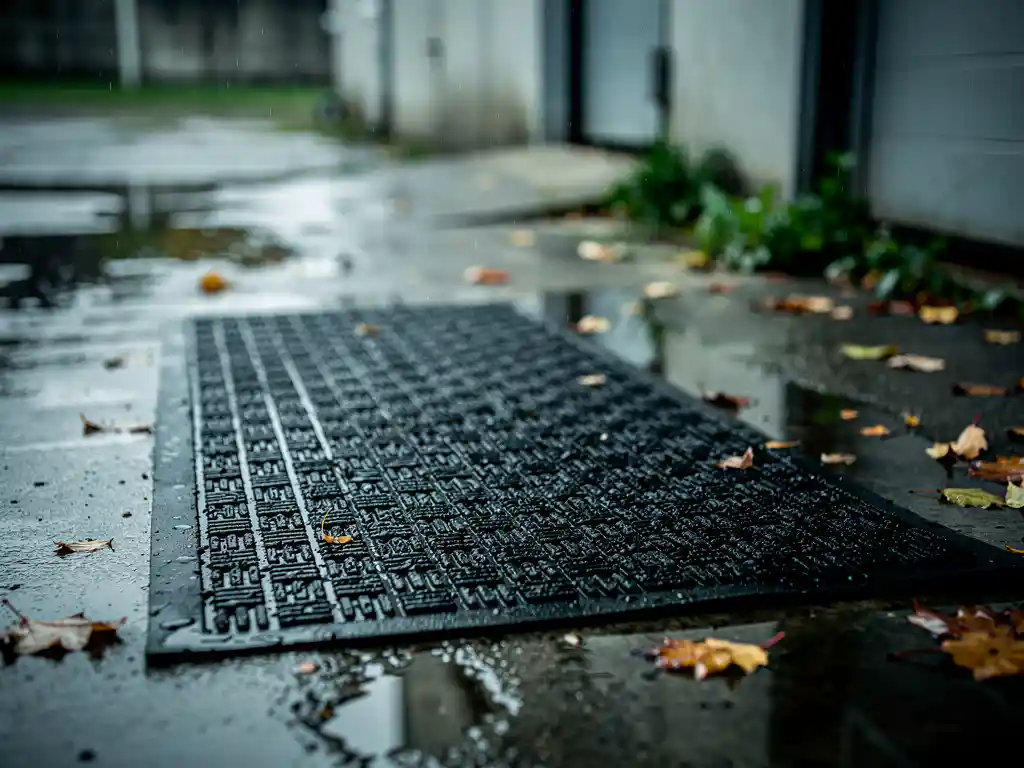
Surfaces with good drainage channels, open grid structures, or textured profiles handle moisture far better. These designs allow water to move away from the walking surface rather than pooling on top, which keeps friction levels more consistent even during heavy rain.
How does freezing temperature affect outdoor floor safety?
Freezing temperatures create ice, and ice is one of the most serious floor hazards in any outdoor setting. When moisture on a surface freezes, the resulting ice film can be nearly invisible, which is what makes black ice so dangerous. A surface that appears dry or slightly damp can already be frozen at temperatures close to zero degrees Celsius.
The risk increases further during freeze-thaw cycles, which are common in early spring and late autumn. Water seeps into cracks in concrete or asphalt, freezes, expands, and then thaws. Over time, this breaks down the surface structure and creates uneven patches, raised edges, and loose material. These surface defects become floor hazards in their own right, regardless of whether ice is present.
Effective slip and fall prevention in cold weather requires proactive surface management: clearing snow promptly, applying appropriate grit or de-icing materials, and conducting regular floor safety inspections to catch surface damage before it worsens.
Does extreme heat make outdoor flooring more hazardous?
Extreme heat does create floor hazards, though the mechanisms are different from rain or ice. High temperatures cause many hard surfaces, particularly asphalt and certain synthetic materials, to soften or become tacky. This can cause footwear to stick unexpectedly or create uneven texture as the surface deforms under load or foot traffic.
Heat also accelerates the degradation of surface coatings, sealants, and anti-slip treatments. A surface that passed a floor safety inspection in spring may have lost much of its protective layer by midsummer if it has been exposed to prolonged direct sunlight and high temperatures. UV exposure compounds this effect, breaking down polymer-based materials over time.
Thermal expansion is another consideration. Gaps between paving slabs, tiles, or panels can shift as materials expand and contract with temperature changes. These gaps create trip hazards and can cause edges to lift, particularly where installation tolerances were tight.
What mat properties best protect against weather-related floor hazards?
For outdoor use in changing weather conditions, the most important mat properties are slip resistance, drainage capability, UV stability, and resistance to temperature extremes. A mat that performs well in one season but degrades in another is not a reliable long-term solution for floor safety.
Rubber mats are well suited to outdoor environments because genuine rubber does not absorb moisture, does not crack in cold temperatures, and holds its structural integrity in heat. Textured or studded surface patterns channel water away from the walking area, maintaining grip even in wet conditions. Open-grid rubber designs go a step further by allowing water, mud, and debris to fall through rather than accumulate on the surface.
Durability matters just as much as surface performance. Mats used outdoors face constant UV exposure, foot traffic, and temperature cycling. Materials that crack, peel, or compress over time lose their anti-slip properties and can themselves become floor hazards. Choosing a mat built for heavy-duty, all-weather use reduces both safety risk and long-term replacement costs.
Where should outdoor rubber mats be placed for maximum safety?
Outdoor rubber mats deliver the greatest slip and fall prevention benefit when placed at transition points: areas where people move from one surface type to another, or where moisture is most likely to accumulate. These include building entrances, steps and ramps, loading docks, poolside areas, and any surface that regularly gets wet from rain, hose-down cleaning, or runoff.
Transition zones are particularly high-risk because people are often not paying attention to the floor when they are focused on entering a building, carrying something, or moving quickly. Placing a mat with a textured, high-grip surface at these points intercepts the hazard before it causes a fall.
Ramps and sloped surfaces deserve special attention. Even a gentle slope becomes significantly more dangerous when wet or icy, and a well-anchored rubber mat with a deeply textured surface profile can make a meaningful difference to traction. Mats should sit flat without curling edges, be secured against movement, and be checked regularly as part of any floor safety inspection routine.
At LRP Matting, we offer a wide range of rubber mats designed specifically for demanding outdoor and high-traffic environments. Our mats are made from 100% recycled rubber, built to handle all weather conditions, and available in custom sizes to fit any space. If you are looking for a practical, long-lasting solution for outdoor floor safety, explore our commercial matting solutions to find the right fit for your environment.
Frequently Asked Questions
How often should outdoor floor safety inspections be carried out in changing weather conditions?
Outdoor floor safety inspections should ideally be carried out at the start of each season, as well as after any significant weather event such as heavy rain, a hard frost, or a heatwave. High-traffic areas like building entrances, ramps, and steps may warrant weekly checks during autumn and winter when conditions change most rapidly. The goal is to catch surface degradation, drainage blockages, organic buildup, or mat deterioration before they contribute to a slip or fall incident.
What is the best way to remove algae and moss from outdoor surfaces to restore slip resistance?
The most effective approach is to use a specialist algae and moss treatment combined with pressure washing, followed by the application of a biocidal surface cleaner to slow regrowth. Avoid using plain water alone, as it can spread spores and worsen the problem over time. For long-term prevention, improving drainage and increasing sunlight exposure to shaded areas will reduce the damp conditions that algae and moss thrive in. Regular cleaning schedules — rather than reactive one-off treatments — are far more effective at maintaining consistent slip resistance.
Are there specific anti-slip treatments or coatings that can be applied to existing outdoor surfaces?
Yes, there are several anti-slip coating products available for outdoor surfaces, including textured paint additives, grip-enhancing sealants, and chemical etching treatments for concrete and stone. These can meaningfully improve traction on smooth surfaces like polished concrete or glazed tiles without requiring full resurfacing. However, it is important to note that these coatings degrade over time, particularly under UV exposure and heavy foot traffic, so they need to be reapplied periodically and included in your floor safety inspection routine to confirm they are still performing as intended.
Can rubber mats be left outdoors permanently, or should they be stored away in certain weather conditions?
High-quality rubber mats made from vulcanised or recycled rubber are designed to remain outdoors permanently and can withstand UV exposure, frost, rain, and high temperatures without significant degradation. Unlike foam or PVC alternatives, genuine rubber does not become brittle in cold weather or warp in heat, making it a reliable all-year-round solution. That said, it is still good practice to lift and clean beneath mats periodically to prevent moisture and debris from accumulating on the underlying surface, which could itself become a hazard or cause surface damage over time.
What is the difference between anti-fatigue mats and anti-slip mats, and which is better for outdoor use?
Anti-fatigue mats are primarily designed to reduce physical strain on workers who stand for long periods, using a cushioned or flexible core to encourage subtle muscle movement. Anti-slip mats, by contrast, are engineered specifically to maximise surface traction and resist movement underfoot, typically using a firmer, textured profile. For outdoor environments where weather conditions are the primary concern, anti-slip mats are the more appropriate choice. Some heavy-duty outdoor mats do combine both properties, but traction and drainage performance should always be the priority when selecting matting for external use.
How do I make sure an outdoor rubber mat stays securely in place and does not become a trip hazard itself?
Securing an outdoor mat starts with choosing one that has a bevelled or tapered edge profile, which reduces the risk of catching a foot on the border. Rubber mats with a heavy base weight and a non-slip underside pattern will resist shifting under foot traffic without the need for adhesives. For high-traffic areas or sloped surfaces, mat anchoring systems or recessed mat wells can be used to keep the mat flush with the surrounding floor. Regularly checking that edges have not lifted or curled — particularly after temperature changes — should be part of your routine floor safety inspection.
Are there any legal or compliance requirements around outdoor floor safety that businesses should be aware of?
In the UK, employers and premises owners have a legal duty of care under the Health and Safety at Work Act 1974 and the Occupiers’ Liability Act 1957 to ensure that outdoor areas accessible to employees or visitors are reasonably safe. This includes managing slip and trip risks caused by weather conditions, surface degradation, and poor drainage. While there is no single prescriptive standard that applies to every outdoor surface, the Health and Safety Executive (HSE) provides guidance on slip and trip risk assessment that businesses should follow. Documenting your inspection routines, maintenance records, and any corrective actions taken is essential for demonstrating compliance if an incident does occur.
Related Articles
- How do you reduce stress through facility design?
- What are the most common causes of slip and fall accidents?
- How do you protect a performance horse's legs during stabling?
- How do you keep a horse stall dry without using excessive bedding?
- How do you reduce noise in a sports facility through flooring choice?
- How do you reduce fatigue for workers who stand all day on a concrete floor?
- What is the most durable flooring for a professional athletic facility?
- What flooring do professional equestrian facilities use in their stalls?
- How do you choose the right floor protection for a construction site?
- What is the best flooring for a horse barn aisle?