
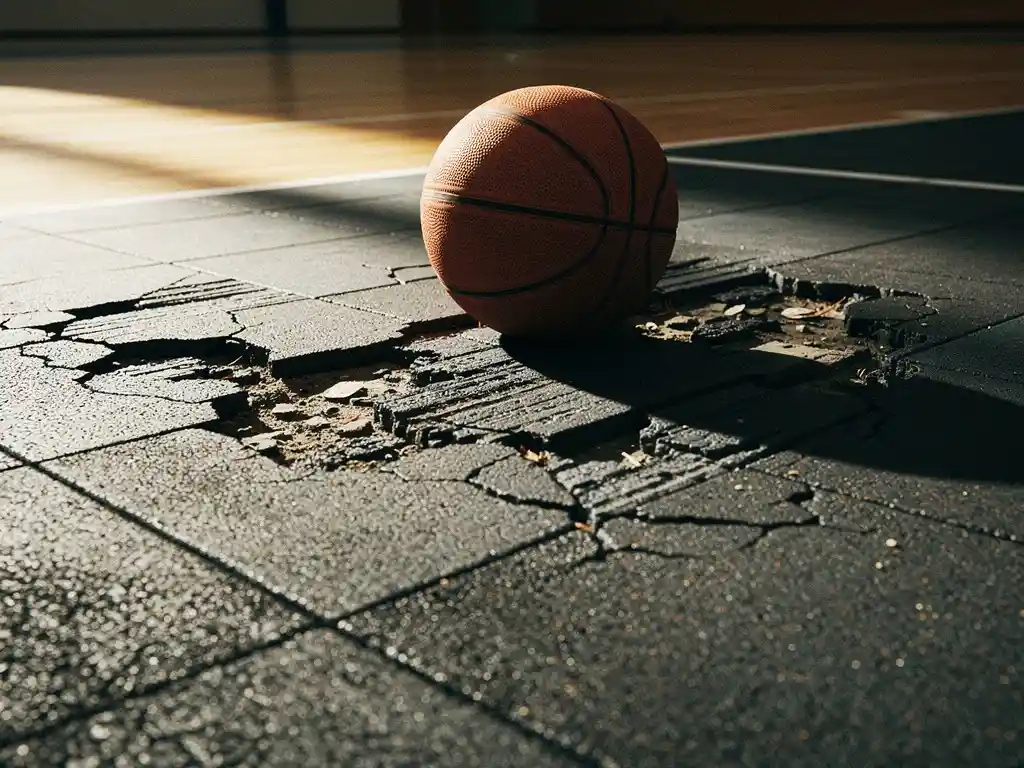
Sports facility floors wear out due to a combination of heavy foot traffic, moisture exposure, temperature swings, equipment damage, poor installation, and inadequate maintenance. No single factor is usually to blame. Instead, these causes tend to stack on top of each other over time, speeding up wear in ways that are often preventable. Here is a breakdown of the most common culprits and what you can do about them.
How does heavy foot traffic damage sports facility floors?
Heavy foot traffic damages sports facility floors by applying repeated compressive and abrasive forces that gradually break down the surface material. In athletic facilities, this wear is more intense than in most commercial spaces because athletes move with speed, change direction sharply, and land with significant impact force. Over time, even high-quality flooring materials lose their surface integrity under this kind of constant pressure.
The damage tends to show up first in high-concentration zones: entry points, sidelines, center court areas, and anywhere athletes pivot or sprint repeatedly. These spots receive far more stress than the surrounding floor, creating uneven wear patterns that can become both a visual and safety concern.
Footwear also plays a role. Cleats, hard-soled shoes, and street shoes tracked onto athletic surfaces all cause surface abrasion at different rates. Facilities that do not enforce footwear policies often see accelerated wear in their sports flooring, regardless of the material used.
What role does moisture play in floor deterioration?
Moisture is one of the most damaging forces in sports venue maintenance because it penetrates floor materials, weakens adhesive bonds, and creates conditions for mold and structural degradation. Sweat, spilled water, outdoor humidity, and poor drainage all introduce moisture into the flooring system. Left unchecked, this leads to warping, delamination, and surface breakdown.
For wood-based sports floors, moisture is particularly destructive. Wood expands when it absorbs water and contracts as it dries, and repeated cycles of this movement cause cupping, buckling, and cracking. Synthetic and rubber flooring materials are more resistant to moisture, which is one reason they are increasingly used in recreational facilities where wet conditions are common.
Subfloor moisture is another factor that often goes unnoticed until significant damage has already occurred. Even if the surface looks fine, moisture rising from a concrete subfloor can degrade adhesives and cause the flooring above to lift or shift.
Why do temperature fluctuations cause sports floors to crack?
Temperature fluctuations cause sports floors to crack because most flooring materials expand in heat and contract in cold. When a facility experiences significant temperature swings, whether seasonally or due to inconsistent climate control, the floor moves repeatedly. Over time, this movement creates stress fractures, gaps at seams, and surface cracking.
This is a particular issue in facilities that are not climate-controlled year-round, such as outdoor courts, unheated gyms, or storage areas that double as recreational spaces. Even indoor athletic facilities can experience localized temperature variation near exterior walls, large windows, or loading doors.
The material matters significantly here. Rigid materials like hardwood and certain synthetic tiles have less tolerance for thermal movement than flexible materials. Rubber flooring, for example, handles temperature variation more effectively because of its natural elasticity, making it a practical option for environments with inconsistent temperature control.
What types of equipment cause the most floor damage?
The equipment that causes the most floor damage in athletic facilities includes heavy gym machines, wheeled carts, forklifts used for setup and teardown, and portable bleacher systems. These items concentrate large amounts of weight onto small contact points, which dig into or compress the flooring surface in ways that foot traffic alone cannot replicate.
Gym equipment with metal feet or small rubber pads is a frequent offender. When machines are dragged rather than lifted during rearrangement, they gouge and scratch the floor surface. Even equipment that stays in one place can leave permanent indentations over months of use.
Wheeled equipment presents a different kind of problem. Hard wheels on carts or dollies can score the surface, while heavy loads on soft wheels can leave compression marks. Using protective mats under stationary equipment and ensuring wheeled items have appropriate floor-safe casters are two straightforward ways to reduce this type of damage in sports facility management.
How does poor installation shorten a sports floor’s lifespan?
Poor installation shortens a sports floor’s lifespan by creating weak points that fail under normal use. Common installation mistakes include inadequate subfloor preparation, improper adhesive application, skipping moisture barriers, and failing to leave expansion gaps at the edges of the floor. Any one of these errors can cause premature failure, even if the flooring material itself is high quality.
Subfloor preparation is where many installations go wrong. If the subfloor is not level, clean, and dry before installation begins, the flooring above it will reflect those flaws over time. Adhesive failures caused by contaminated or damp subfloors are a common reason sports floors need early replacement.
Expansion gaps are another frequently overlooked detail. Most flooring materials need room to expand slightly with temperature and humidity changes. When installers skip these gaps or fill them incorrectly, the floor has nowhere to go and buckles or cracks instead. Investing in professional installation with proper site preparation is one of the most effective ways to extend the life of any sports flooring system.
What maintenance mistakes accelerate sports floor wear?
The maintenance mistakes that most accelerate sports floor wear include using the wrong cleaning products, allowing moisture to sit on the surface, skipping regular inspections, and neglecting to address small damage before it spreads. These errors are common in busy recreational facilities where maintenance is reactive rather than proactive.
Harsh chemical cleaners are a frequent problem. Products that are too acidic or alkaline can strip protective coatings, dry out rubber or vinyl surfaces, and degrade adhesives over time. Most sports flooring manufacturers recommend mild, pH-neutral cleaners, and following those guidelines makes a measurable difference in how long a floor lasts.
Ignoring minor damage is another costly mistake. A small crack, a lifted edge, or a worn patch might seem cosmetic, but each one creates a point of entry for moisture and a stress concentration that grows under continued use. Regular inspections and prompt repairs are far less expensive than full floor replacement.
Protective matting at entry points and under heavy equipment is a practical and often underused maintenance tool. Placing rubber mats in high-traffic zones reduces the direct impact on the primary sports floor surface, extending its usable life without requiring any changes to how the facility operates. At LRP Matting, we offer durable rubber matting solutions designed specifically for athletic and recreational environments. Explore our sports and recreation matting options to find the right fit for your facility.
Frequently Asked Questions
How do I know when my sports facility floor needs to be replaced versus repaired?
If damage is isolated to specific zones, such as a cracked seam, a lifted edge, or a worn patch, targeted repairs are usually the more cost-effective choice. However, if you are seeing widespread cupping, buckling, delamination, or structural softness across a large portion of the floor, replacement is likely the smarter long-term investment. A professional floor inspector can help you assess whether the subfloor has also been compromised, which is often the deciding factor between repair and full replacement.
What is the best type of sports flooring for a facility that experiences high humidity or wet conditions?
Rubber and vinyl composite flooring tend to perform best in high-humidity or wet-prone environments because they are naturally moisture-resistant and do not expand and contract the way wood does. Rubber flooring, in particular, is a strong choice for recreational facilities, pool decks, and multipurpose gyms where wet conditions are routine. If wood flooring is preferred for aesthetic or performance reasons, a proper moisture barrier during installation and consistent climate control are essential to protecting it long-term.
How often should a sports facility floor be professionally inspected?
A professional inspection is generally recommended at least once a year, ideally before the start of your facility’s heaviest-use season. In addition to annual inspections, facility managers should conduct their own visual walkthroughs monthly to catch early signs of damage such as surface bubbling, edge lifting, discoloration, or soft spots. Catching issues early dramatically reduces repair costs and prevents minor problems from escalating into safety hazards.
What footwear policy should sports facilities enforce to protect their floors?
At a minimum, facilities should prohibit street shoes, cleats, and hard-soled footwear on athletic surfaces and post clear signage at entry points to communicate this to users. Requiring sport-specific athletic shoes with non-marking soles is the most effective standard for protecting hardwood and synthetic sports floors. Providing a designated area for shoe changes near the entrance, along with entry matting to trap debris and moisture, reinforces the policy and reduces the amount of abrasive material tracked onto the playing surface.
Are there specific cleaning products I should avoid using on sports facility floors?
Yes — avoid any cleaners that are highly acidic or alkaline, including bleach-based products, ammonia solutions, and oil-based soaps, as these can strip protective coatings, degrade adhesives, and dry out rubber or vinyl surfaces over time. Always use a pH-neutral cleaner recommended by your flooring manufacturer, and avoid saturating the floor with water during mopping, as excess moisture is one of the leading causes of long-term floor damage. When in doubt, check your flooring warranty, as using non-approved cleaning products can sometimes void manufacturer coverage.
How can protective matting extend the life of a sports facility floor?
Protective matting acts as a sacrificial layer in the areas that take the most abuse — entry points, weight room zones, sidelines, and under heavy equipment — absorbing impact and abrasion before it reaches the primary sports floor surface. High-quality rubber mats are especially effective because they are durable, easy to clean, and can be replaced individually when worn without any disruption to the main floor. Strategically placing matting in high-traffic corridors and under stationary gym equipment is one of the most cost-efficient ways to significantly extend the lifespan of your flooring investment.
What should facility managers do during the off-season to preserve floor condition?
The off-season is the ideal time to schedule a deep clean, apply any necessary resurfacing or recoating treatments, and address minor repairs before they worsen under the next season’s use. Maintaining a stable temperature and humidity level in the facility year-round — even when it is not in active use — is critical for preventing the thermal and moisture-related damage described throughout this post. Covering the floor or reducing foot traffic during renovation or event setup periods also helps protect the surface from incidental damage caused by tools, equipment, and non-athletic footwear.
Related Articles
- How do you evaluate environmentally friendly flooring?
- How do durable materials reduce waste?
- How do high traffic areas affect floor performance?
- What should be included in a commercial floor inspection?
- How do professional equine facilities improve horse welfare?
- How can flooring materials be reused or recycled?
- How do weather conditions affect outdoor sports surfaces?
- What flooring is best for a large animal veterinary wash area?
- What is the best flooring solution for a temporary work site?
- How do you keep a horse stall floor from getting slippery when wet?