
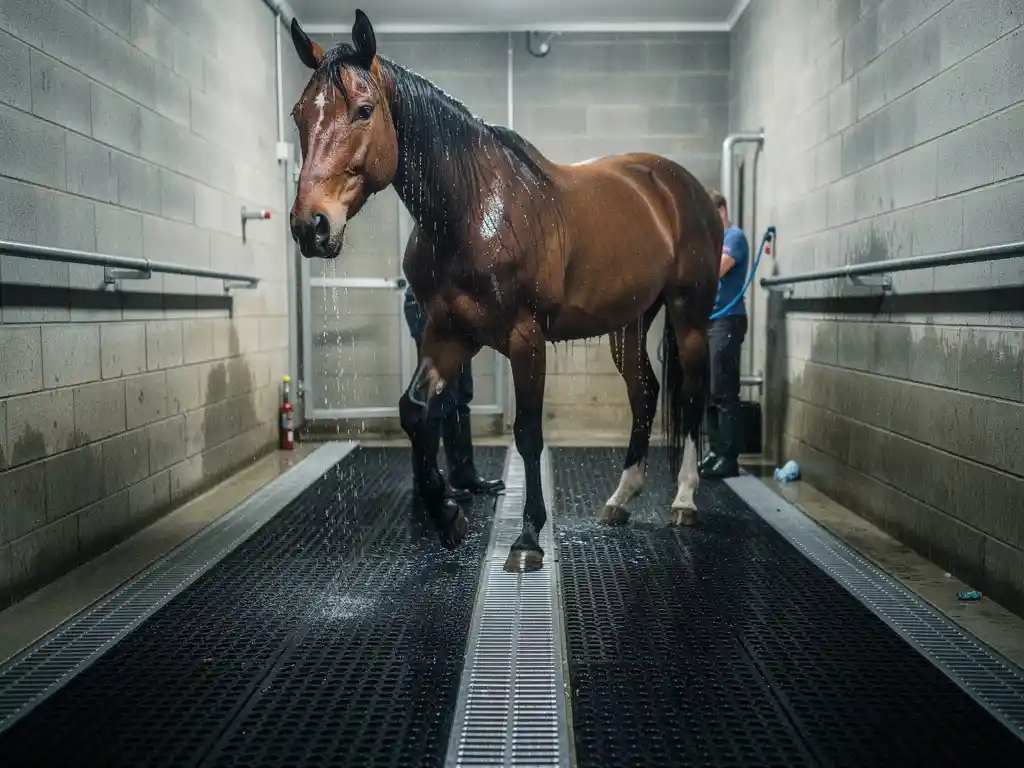
The best flooring for a large-animal veterinary wash area is rubber matting. Rubber provides the right combination of slip resistance, drainage, comfort, and hygiene—benefits that concrete alone simply cannot offer. It cushions animals during stressful procedures, keeps handlers safe on wet surfaces, and cleans up quickly between patients. For most large-animal facilities, a non-porous, perforated, or textured rubber mat installed over a sloped concrete base is the go-to solution.
If you are setting up or upgrading a wash area for horses, cattle, or other large animals, flooring is one of the most important decisions you will make. The wrong surface creates real risks: slip injuries, bacterial buildup, and animal stress that makes every visit harder for everyone involved. The right surface, on the other hand, makes your workflow smoother and safer. Here is everything you need to know about choosing the best veterinary clinic flooring for a large-animal wash area.
Why does flooring matter so much in a veterinary wash area?
Flooring in a veterinary wash area directly affects animal safety, handler safety, hygiene, and the overall efficiency of your facility. A wet, slippery surface is one of the most common causes of injury in large-animal settings. When an animal loses its footing, the consequences can be serious for both the animal and the person handling it.
Large animals like horses and cattle are already under stress in a clinical environment. Add a slick floor and running water, and that stress multiplies quickly. Animals that feel unstable become unpredictable, which makes examinations, treatments, and grooming sessions significantly harder to manage. A surface that gives them secure footing helps keep them calm and cooperative.
Beyond safety, wash areas accumulate water, soap residue, animal waste, and organic debris on a daily basis. If your flooring absorbs any of that material, you have a hygiene problem that no amount of scrubbing will fully solve. Flooring that resists absorption and dries quickly is not just more pleasant to work on; it actively reduces the risk of bacterial and fungal contamination spreading between animals.
What are the key features to look for in wash area flooring?
The most important features to look for in large-animal wash area flooring are slip resistance, drainage, non-porosity, durability, and comfort underfoot. These five qualities work together to create a surface that is safe for animals, practical for handlers, and easy to maintain over time.
Here is a closer look at each feature and why it matters:
- Slip resistance: Textured or perforated surfaces give animals traction even when wet. Look for mats with a waffle pattern, ring design, or similar surface profile that grips hooves reliably.
- Drainage: Standing water is a slip hazard and a hygiene risk. Perforated mats combined with a properly sloped base allow water to flow away quickly during and after washing.
- Non-porosity: A non-porous surface does not absorb water, bacteria, or organic matter. This makes cleaning faster and prevents the buildup of pathogens between uses.
- Durability: Wash areas take a beating. Heavy animals, metal equipment, and repeated cleaning with water and detergents—your flooring needs to handle all of it without cracking, peeling, or deteriorating.
- Comfort: Standing on a hard surface for extended periods is tiring for large animals. A mat with some cushioning reduces fatigue and stress, which makes animals easier to handle.
Size also matters more than people often realize. Large animals need a spacious, uninterrupted surface. Mats with fewer seams reduce trip hazards for both animals and handlers, and they are easier to keep clean because debris cannot collect in gaps.
How does rubber matting compare to concrete for animal wash areas?
Rubber matting outperforms bare concrete in a wash area setting in almost every practical category. Concrete is hard, cold, and becomes dangerously slippery when wet. Rubber provides traction, cushioning, and warmth that concrete simply cannot match, making it a far better choice for any facility that prioritizes animal welfare and handler safety.
That said, the two materials work well together rather than being true alternatives. Concrete is an excellent base because it is structurally solid and easy to slope for drainage. Rubber matting installed over that concrete base gives you the best of both worlds: the structural stability of concrete underneath, and the safety and comfort benefits of rubber on top.
Why concrete alone falls short
Bare concrete becomes extremely slippery when wet, which is a constant condition in any wash area. Even textured or brushed concrete loses much of its grip once soap and water are involved. Concrete is also unforgiving underfoot. Large animals that stand on hard surfaces for extended periods can develop hoof and joint discomfort, which adds to the stress of an already unfamiliar environment.
Where rubber gives you the advantage
Rubber mats maintain their grip even when wet and soapy. They absorb impact and reduce the fatigue that comes with standing on a hard surface. They also insulate against cold, which matters in facilities where animals are washed in cooler months. And because good-quality rubber is non-porous, it does not hold onto moisture or bacteria the way worn concrete can.
Is non-porous flooring important in a veterinary wash area?
Yes, non-porous flooring is very important in a veterinary wash area. A non-porous surface does not absorb water, urine, blood, soap, or organic material. This means contaminants sit on the surface rather than soaking in, so they can be fully removed with a straightforward cleaning routine. Porous flooring, by contrast, traps moisture and bacteria below the surface, where cleaning products cannot reach.
In a veterinary context, cross-contamination between animals is a real concern. If your flooring holds onto pathogens from one animal, the next animal that stands on the same surface is potentially exposed to them. Non-porous rubber eliminates that risk by keeping everything on the surface, where it can be washed away.
Genuine rubber is naturally non-porous, which is one of the reasons it performs so well in wash environments. It will not crack, peel, or crumble even under repeated exposure to water and cleaning agents. This also means it maintains its hygienic properties throughout its lifespan rather than degrading into a surface that becomes harder to clean over time.
How do you install rubber mats in a large-animal wash area?
Installing rubber mats in a large-animal wash area is straightforward when you plan the layout carefully before you start. The basic process involves preparing your base, selecting the right mat configuration, laying the mats, and securing them so they stay in place during use.
Follow these steps for a solid installation:
- Prepare the base: Make sure your concrete floor is clean, dry, and properly sloped toward a drain. Even a slight slope is enough to direct water away effectively. Fill any cracks or uneven areas before laying mats.
- Plan your layout: Measure the wash area accurately and plan where each mat will sit. Fewer seams mean fewer gaps for debris to collect and fewer edges for animals to catch a hoof on. Large-format mats or made-to-measure options help minimize seams significantly.
- Lay the mats: Place mats starting from one corner and work outward. If you are using interlocking mats, connect them as you go to ensure a tight, seamless fit.
- Secure the edges: Use edge ramps or beveled trim pieces around the perimeter to eliminate raised edges that could cause trips. In high-movement areas, adhesive or mat fasteners can keep mats from shifting under an animal’s weight.
- Check for gaps: Walk the entire surface and look for any gaps, lifted edges, or uneven sections before the area goes into use.
One practical tip: choose mats that are large enough to cover the wash area with minimal cutting. The more seams you have, the more maintenance the floor requires over time. If your wash area has an unusual shape or size, custom-cut mats are worth considering from the start rather than trying to make standard sizes work.
How do you clean and maintain rubber flooring in a wash area?
Rubber flooring in a veterinary wash area is easy to clean. A regular routine of rinsing with water and scrubbing with a mild detergent is all you need for day-to-day maintenance. Because rubber is non-porous, it does not trap contaminants below the surface, so thorough cleaning is achievable without specialist equipment or harsh chemicals.
Here is a simple maintenance routine that works well for large-animal wash areas:
- After each use: Rinse the surface with water to remove loose debris, hair, and organic material. A hose or pressure washer works well for this step.
- Daily or as needed: Scrub the surface with a mild detergent and a stiff brush, then rinse thoroughly. Pay attention to any seams or perforations where debris can accumulate.
- Periodically: Check the mats for signs of wear, movement, or lifted edges. Re-secure any mats that have shifted, and inspect the drain to make sure it is clear.
- As required: Use a veterinary-grade disinfectant when you need to decontaminate the area between animals with different health statuses. Always check that the disinfectant is compatible with rubber before using it regularly.
One of the real advantages of rubber flooring is that it holds up well to repeated cleaning without degrading. It will not crack, peel, or crumble even under frequent washing and temperature changes. This means your maintenance routine stays simple and consistent for the life of the flooring, rather than becoming more demanding as the surface ages.
If you want to make your wash area as easy to manage as possible, minimizing seams through large-format or custom-made rubber mats reduces the spots where debris and bacteria can hide, making every cleaning session faster and more effective. That is exactly the kind of practical, long-lasting solution we design at LRP Matting. With over five decades of experience in rubber flooring and a full range of agricultural and veterinary-grade mats made from 100% recycled materials, we can help you build a wash area that works hard every single day.
Frequently Asked Questions
What thickness of rubber mat is best for a large-animal wash area?
For large-animal wash areas, rubber mats between 17mm and 25mm thick are generally recommended. Thicker mats provide better cushioning for heavy animals like horses and cattle, reducing joint fatigue during longer procedures. If your wash area sees particularly heavy use or accommodates very large animals, erring on the side of a thicker mat is a worthwhile investment in both animal comfort and mat longevity.
Can I use the same rubber mats in my wash area as in my stable or stall?
While there is some overlap, wash area mats and stable mats have slightly different requirements. Wash area mats need to prioritize drainage and non-porosity above all else, so perforated or drainage-channel designs are preferable over solid stable mats. Solid stable mats can trap water on the surface, which defeats the purpose in a high-moisture wash environment. Always choose a mat specifically rated for wet, high-traffic conditions if it is going into a wash area.
Are there any disinfectants I should avoid using on rubber flooring?
Yes — strong oxidising agents, bleach-based disinfectants used at high concentrations, and solvent-based cleaners can degrade rubber over time, causing it to dry out, crack, or lose its surface texture. Always check the manufacturer’s compatibility guidelines before using a new disinfectant product regularly. Veterinary-grade, rubber-safe disinfectants are widely available and will keep your mats in good condition without compromising their hygiene performance.
How do I stop rubber mats from shifting when a large animal moves around?
The most effective way to prevent mat movement is a combination of mat weight, interlocking edges, and perimeter securing. Heavier, large-format mats are naturally more resistant to shifting than lighter, smaller tiles. Using interlocking mat systems, rubber adhesive along the perimeter, or purpose-made mat fasteners adds an extra layer of stability in high-movement zones. Beveled edge trim around the perimeter also prevents corners from lifting, which is one of the most common causes of mat displacement.
How long should rubber matting last in a veterinary wash area, and what are the signs it needs replacing?
High-quality rubber mats in a well-maintained wash area can last 10 years or more. The key signs that replacement is needed include visible cracking or crumbling of the surface, a noticeable reduction in surface texture and grip, persistent odours that do not clear after thorough cleaning, or mats that no longer lie flat despite re-securing. Catching these signs early is important — a degraded mat surface becomes porous and harder to disinfect, which reintroduces the hygiene risks you installed the mats to avoid.
Is it worth investing in custom-cut mats rather than standard sizes for an oddly shaped wash area?
In most cases, yes — especially in a veterinary setting where hygiene and safety standards are high. Standard-size mats cut on-site to fit irregular shapes often leave exposed edges and additional seams that collect debris and bacteria, and they can be more prone to lifting over time. Custom-made mats that fit your exact floor plan minimise seams, reduce maintenance demands, and present a cleaner, more professional finish that holds up better over the long term.
Can rubber wash area flooring be used outdoors or in partially covered areas?
Yes, quality rubber matting is well-suited to outdoor and semi-covered wash areas. Rubber is naturally resistant to UV exposure, temperature fluctuations, and moisture, which means it performs reliably in open or partially sheltered environments. For fully outdoor installations, look for mats specifically rated for exterior use and ensure your drainage slope is adequate, as outdoor areas are more exposed to heavy water flow from rain as well as washing. Regular debris clearance becomes especially important in outdoor settings to prevent organic buildup under and around the mats.
Related Articles
- How can preventative maintenance reduce unexpected floor repairs?
- What factors influence animal comfort in housing facilities?
- How do you reduce stress through facility design?
- What causes polished concrete to become slippery?
- How do you design a safe flooring layout for an equine hospital?
- What is the best flooring for an indoor training facility?
- How do large equestrian facilities keep stall maintenance costs down?
- What is the best flooring solution for a temporary work site?
- What is the best floor surface for a standing workstation?
- How do you calculate how much bedding a horse stall needs?