
When a horse wakes up from anesthesia, the floor beneath it can make the difference between a smooth, safe recovery and a serious injury. The ideal recovery surface is non-slip, cushioned, and free of hard edges—qualities that reduce the risk of falls, limb injuries, and panic-driven thrashing. Rubber flooring, particularly thick, textured rubber matting, is widely regarded as the best surface for equine anesthesia recovery because it combines grip, shock absorption, and easy sanitation in one durable material.
Why does floor surface matter during horse anesthesia recovery?
The floor surface in a horse anesthesia recovery stall directly affects the animal’s safety, stress levels, and physical outcome during one of the most vulnerable moments in veterinary care. As a horse regains consciousness, it has limited muscle control, impaired coordination, and little awareness of its surroundings—making the surface it lands on and pushes against critically important.
Horses recovering from general anesthesia typically go through a disoriented, sometimes violent waking phase. They may attempt to stand multiple times before succeeding, pushing off hard against the floor with their legs and rolling against the walls. A surface that provides no grip increases the chance of slipping and falling, which can cause fractures, soft-tissue injuries, or joint damage. A surface that is too hard amplifies the impact of each fall attempt, adding trauma to an already stressed body. The floor is not a passive element in recovery—it is an active part of the safety system.
Beyond physical safety, the surface also affects how quickly and calmly a horse recovers. A comfortable, cushioned floor can reduce the urgency a horse feels to stand immediately, which may lower stress hormones and allow for a more controlled, gradual return to full consciousness. Veterinary teams also benefit from a safer surface—a horse that slips less is easier and safer to assist.
What are the biggest risks horses face when waking up from anesthesia?
The biggest risks horses face during anesthesia recovery are traumatic injury from falls, myopathy from prolonged time on a hard surface, and post-anesthetic complications worsened by physical exertion during a chaotic wake-up. Each of these risks is directly influenced by the quality and properties of the floor surface.
Falls and limb injuries
A horse’s sheer size and weight—often between 900 and 1,200 pounds—means that every fall attempt carries significant force. Without adequate grip on the floor, hooves can slide outward, causing the horse to splay or collapse sideways. Fractures of the lower limbs, dislocations, and lacerations are all documented complications of poor recovery surfaces. Grip is the single most important property a recovery floor can offer.
Myopathy and pressure injuries
Horses that spend extended time lying on a hard, unpadded surface during and after surgery are at risk of post-anesthetic myopathy—muscle damage caused by sustained pressure that cuts off circulation to large muscle groups. A cushioned floor reduces this pressure and supports better blood flow during the recovery period, which can significantly reduce the severity of this complication.
Panic and exertion
When a horse feels unstable underfoot, it may panic, and panic can lead to thrashing, repeated attempts to stand, and extreme physical exertion. This creates a dangerous cycle that exhausts the animal, puts handlers at risk, and increases the chance of injury. A surface that gives the horse confidence—through grip and cushioning—helps interrupt this cycle before it escalates.
What properties should a horse recovery floor surface have?
A horse anesthesia recovery floor should have five key properties: strong slip resistance, adequate cushioning and shock absorption, durability under heavy repeated impact, easy cleanability to maintain hygiene between procedures, and temperature stability. Together, these properties create an environment where the horse can recover safely and the facility can maintain high standards of care.
- Slip resistance: Textured or studded surfaces give hooves traction, reducing the risk of sliding during attempts to stand.
- Cushioning: Sufficient thickness absorbs the impact of falls and reduces pressure on muscles and joints while the horse is lying down.
- Durability: Recovery rooms see repeated, heavy use—the surface must retain its properties over time without cracking, permanently compressing, or degrading.
- Hygiene: The surface must be non-porous so it does not absorb blood, urine, or other fluids, and it must be easy to disinfect thoroughly between patients.
- Temperature stability: A good recovery surface should not become dangerously cold or slippery in varying clinic temperatures and should offer some thermal insulation to help prevent heat loss.
Wall surfaces in the recovery stall also benefit from padding, since horses often push against or roll into walls during the waking process. A complete recovery environment addresses both floor and wall surfaces as part of an integrated safety approach.
How does rubber flooring compare to other recovery surface options?
Rubber flooring outperforms most alternative recovery surface options for horses because it naturally combines grip, cushioning, durability, and hygiene in a single material. Alternatives like sand, foam, or bare concrete each offer some benefits but fall short in at least one important area.
Rubber vs. bare concrete
Bare concrete is hard, cold, and offers very little grip when wet—which is almost guaranteed in a recovery environment. It provides no cushioning, increases the risk of myopathy, and can cause serious abrasions during thrashing. Concrete is simply not suitable as a standalone recovery surface for horses.
Rubber vs. sand or shavings
Sand and shavings are sometimes used because they provide some cushioning and grip. However, they are difficult to disinfect fully between patients, can be inhaled or ingested by a recovering horse, and can shift and compact unevenly under the animal’s weight. They also require significant labor to manage and replace. Rubber matting eliminates these issues while delivering comparable or better cushioning.
Rubber vs. foam padding
Foam padding can offer excellent cushioning but tends to degrade quickly under the repeated heavy impact of large animals, can tear and create hazardous loose pieces, and is harder to clean thoroughly. Rubber is far more durable and maintains its properties consistently over a long service life, making it the more practical and cost-effective choice for veterinary clinic flooring.
What thickness and texture of rubber mat is best for equine recovery?
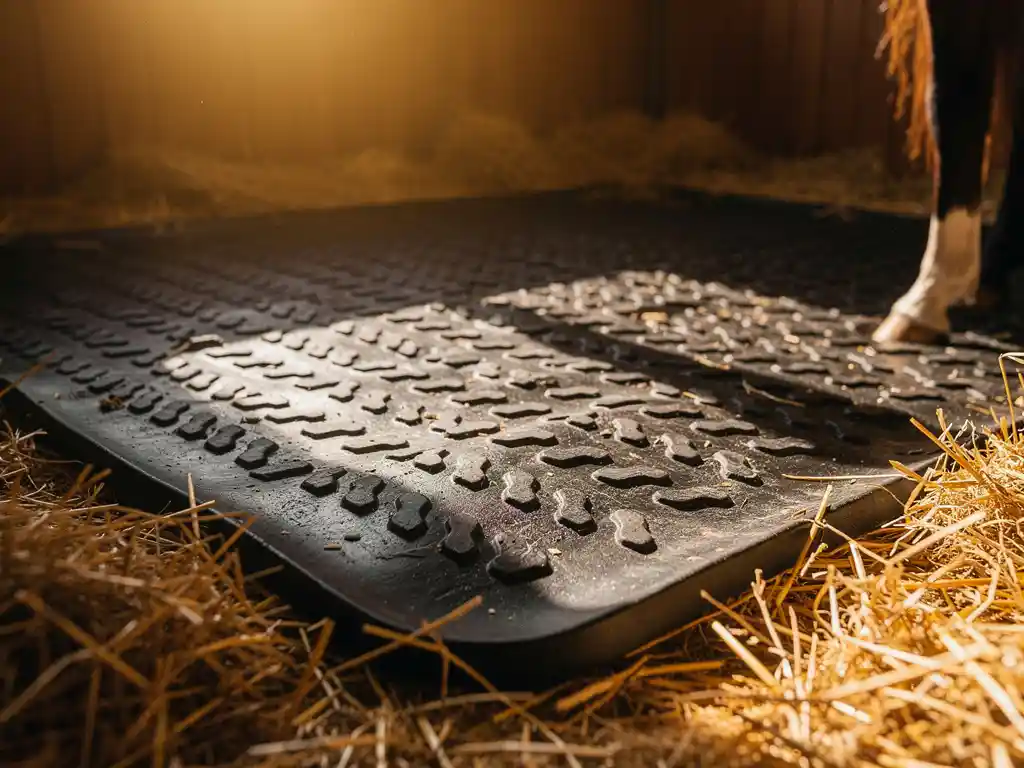
For equine anesthesia recovery, rubber mats should generally be at least three-quarters of an inch thick, with thicker options—around one inch—preferred for primary recovery stalls where the horse will spend the most time on the floor. Textured surfaces, such as hammer-top or studded patterns, provide the best grip for hooves during attempts to stand.
Thickness matters because it directly determines how much impact energy the mat absorbs. A thinner mat placed over hard concrete will compress under a horse’s weight and offer little effective cushioning. Thicker mats maintain their cushioning properties even under sustained load, which is important for a horse that may lie down for 30 minutes or more after surgery.
Texture is equally important. A smooth rubber surface can become slippery when wet, which defeats the purpose of using rubber in the first place. Hammer-top textures, raised studs, or waffle patterns create contact points that grip the hoof wall and sole, giving the horse purchase when pushing off the ground. For recovery stalls specifically, a consistent texture across the entire floor—with no smooth patches or gaps between mats—is the safest configuration.
Seams between mats are a point of weakness. Hooves can catch in gaps, and edges can curl over time, creating trip hazards. Larger mats that cover more floor area with fewer seams reduce this risk significantly, which is one reason large-format rubber matting is particularly well suited to equine recovery environments.
How should a horse anesthesia recovery stall be set up?
A horse anesthesia recovery stall should be fully padded on both the floor and the walls, sized to allow the horse to move freely without hitting hard structures, well lit for the veterinary team’s visibility, and equipped with anchor points or assist ropes to support the horse during the standing process. The floor surface is the foundation of the setup, but the overall environment matters.
Floor setup
Cover the entire floor with thick rubber matting, with no gaps or exposed concrete at the edges. Use large mats where possible to minimize seams. If interlocking mats are used, ensure the connections are tight and secure so hooves cannot catch between sections. The floor should extend slightly under any wall padding to eliminate the gap between the floor and the wall where a hoof could become trapped.
Wall padding
Walls should be padded to a height of at least five to six feet to protect a horse that rolls into them. Rubber wall panels or foam-backed rubber matting are both effective options. The padding should be firmly secured so it cannot be dislodged by impact and create a hazard in the stall.
Stall size and layout
A recovery stall should be large enough—typically at least 14 by 14 feet for an average-sized horse—to allow the animal to roll, stretch, and attempt to stand without immediately hitting a wall. Corners should be avoided or padded generously, as horses can become wedged in corners during recovery. Lighting should be bright enough for the veterinary team to monitor the horse clearly, but not so harsh that it adds to the animal’s disorientation.
Choosing the right matting for your facility
Every recovery stall is a different size and shape, which is why standard mat dimensions do not always work well for this application. At LRP Matting, we offer made-to-measure rubber matting cut to any size or shape, so you can cover your recovery stall floor completely without awkward gaps or excessive seams. Our mats are made from genuine, non-porous rubber that will not absorb fluids, will not crack under temperature extremes, and can be cleaned easily with mild detergent and water—everything a veterinary clinic flooring setup demands. If you want to talk through the right solution for your facility, we are happy to help you find the right fit.
Frequently Asked Questions
How often should rubber matting in a horse anesthesia recovery stall be replaced?
High-quality rubber matting in a recovery stall should be inspected regularly and replaced when it shows signs of permanent compression, surface cracking, curling edges, or significant loss of texture. Under heavy clinical use, this typically means evaluating mats every two to three years, though well-made, thick rubber matting can last considerably longer if properly maintained. A simple test is to press firmly on the mat—if it no longer springs back or the texture has worn smooth, it is time to replace it.
Can rubber matting be used in combination with other recovery aids, like padded head guards or assist ropes?
Absolutely—rubber flooring works best as part of a complete recovery protocol rather than as a standalone solution. Padded head guards protect the horse’s skull during thrashing, assist ropes or slings give the veterinary team a safe way to support the animal as it stands, and sedation protocols help manage the pace of recovery. The floor surface reduces the baseline risk of slipping and impact injury, while these additional tools address other specific vulnerabilities during the waking phase.
What is the best way to clean and disinfect rubber matting between equine procedures?
After each procedure, remove any solid material, then rinse the mats thoroughly with water before applying a veterinary-grade disinfectant appropriate for non-porous rubber surfaces. Allow adequate contact time as specified by the disinfectant manufacturer, then rinse again and allow the surface to dry fully before the next use. Avoid bleach-based products at high concentrations over the long term, as repeated exposure can gradually degrade rubber—check with your matting supplier for approved cleaning agents compatible with the specific rubber compound used.
Is there a risk of a horse's hooves getting caught under or between rubber mats during recovery?
Yes, this is one of the most important installation concerns for recovery stalls. Gaps between mats, curled edges, and raised seams can all catch a hoof during the uncoordinated movements of a waking horse, potentially causing a serious leg injury. To minimize this risk, use the largest mat format possible to reduce the number of seams, ensure interlocking connections are tight and flush, and run the floor matting slightly under any wall padding so there is no exposed gap at the perimeter.
How do I know if my current recovery stall floor is adequate, or if it needs to be upgraded?
Key warning signs that a recovery surface needs upgrading include visible smooth or worn patches where texture has been lost, mats that have permanently compressed and no longer provide meaningful cushioning, recurring slip incidents during recoveries, or difficulty achieving thorough disinfection due to surface porosity or cracks. If your current surface is bare concrete, thin matting under an inch, or a loose material like sand or shavings, upgrading to thick, textured rubber matting is a straightforward improvement that directly reduces procedural risk for both the horse and your team.
Does the same rubber matting used for the recovery stall floor work for the walls as well?
Rubber matting can be used on walls, but the installation approach and product format differ from floor applications. Wall matting needs to be firmly secured so it cannot be knocked loose by impact, and it should ideally have some backing or mounting system that keeps it flush against the wall surface. Some facilities use purpose-made rubber wall panels, while others mount the same style of floor matting vertically with appropriate fixings. The key requirement is that wall padding does not shift, sag, or detach during a recovery event.
Are there specific rubber matting standards or certifications veterinary clinics should look for when purchasing?
While there is no single universal certification specifically for equine recovery matting, veterinary facilities should look for mats made from virgin or high-grade recycled rubber with documented non-porosity, confirmed resistance to common veterinary disinfectants, and clear thickness and density specifications. Asking the supplier for product data sheets that confirm compressive strength, slip resistance ratings, and fluid impermeability will help you make an informed comparison. Working with a supplier experienced in veterinary or agricultural applications is also a strong indicator that the product has been tested in relevant real-world conditions.
Related Articles
- How can preventative maintenance reduce unexpected floor repairs?
- How do weather conditions affect outdoor sports surfaces?
- Why do wet floors become dangerous?
- What areas of a facility have the highest slip risk?
- What is the best flooring for a horse stall?
- What type of flooring is used in professional sports training facilities?
- How does stall flooring affect a horse's overall well-being?
- How do you reduce fatigue for workers who stand all day on a concrete floor?
- How do you protect a newly installed floor in a busy facility?
- What is the fastest way to muck out a horse stall?