
High traffic areas put serious stress on floors, and over time that stress shows up as surface wear, cracking, staining, and structural damage. The more foot traffic, vehicle movement, or heavy equipment a floor handles, the faster it deteriorates without proper protection. Materials like bare concrete are especially vulnerable because they are porous and absorb impact directly. Below, we answer the most common questions about floor performance in high traffic zones and what you can actually do about it.
What types of damage do high traffic areas cause to flooring?
High traffic areas cause several types of floor damage, including surface abrasion, cracking, indentation, staining, and moisture penetration. The damage builds gradually and often goes unnoticed until it becomes a safety or structural concern. Concrete floors are particularly prone to surface erosion from repeated friction, while softer materials like vinyl or foam tend to compress and lose shape over time.
Abrasion is the most common form of floor wear in busy environments. Foot traffic, wheeled equipment, and dragged loads all grind against the surface repeatedly, slowly stripping away the top layer. On concrete, this creates a dusty, pitted surface that is harder to clean and more likely to develop cracks.
Impact damage is another concern, especially in industrial settings where heavy objects are dropped or machinery vibrates against the floor. Over time, repeated impact weakens the structural integrity of the surface. Moisture compounds all of this by seeping into cracks and accelerating deterioration, particularly in areas where cleaning water or spills are common.
Which flooring materials hold up best under heavy use?
Concrete, rubber, and epoxy-coated surfaces are among the most durable flooring options for high traffic areas. Each has strengths depending on the environment. Concrete offers raw structural strength but needs surface protection to prevent wear. Epoxy coatings add a hard, chemical-resistant layer on top of concrete. Rubber flooring absorbs impact, resists moisture, and maintains surface integrity under sustained heavy use.
Polished or sealed concrete performs well in warehouses and manufacturing spaces where floor durability under heavy loads is the priority. However, untreated concrete chips and dusts under constant traffic, making surface treatments or protective overlays a practical necessity.
Rubber stands out for environments that combine heavy foot traffic with slip risk, noise, and physical fatigue. It does not crack, peel, or crumble under pressure, and it handles temperature extremes better than most alternatives. For commercial and industrial flooring, rubber is a strong long-term choice because it maintains its performance without frequent resurfacing.
How does rubber matting protect floors in high traffic zones?
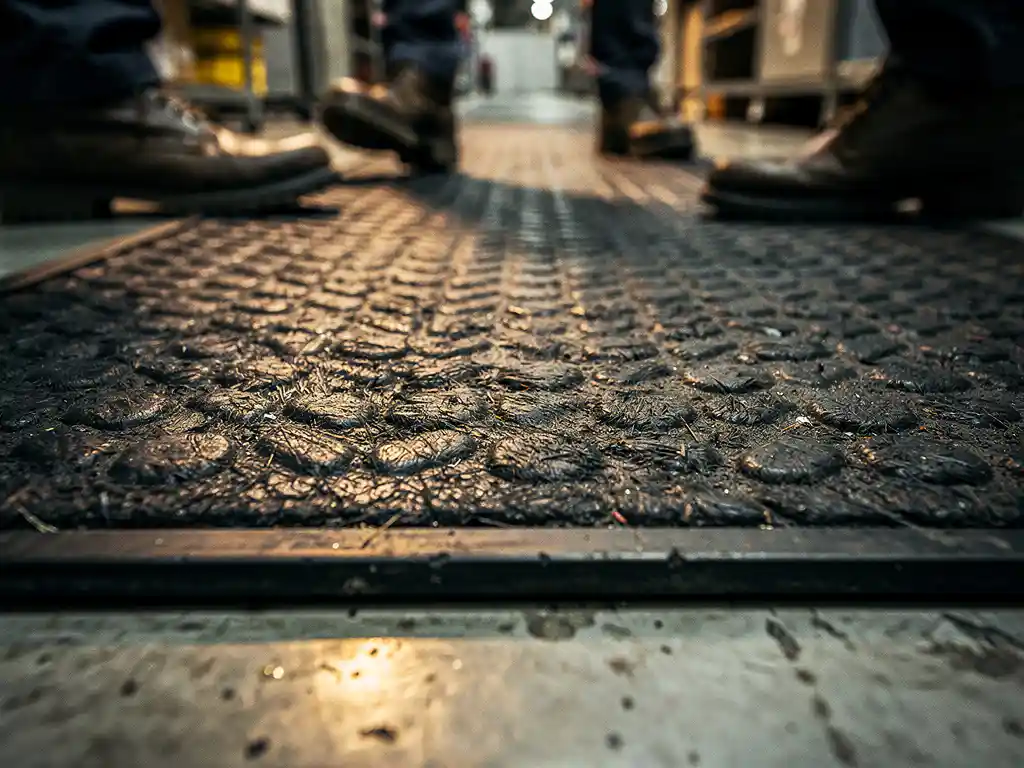
Rubber matting protects floors in high traffic zones by creating a durable buffer layer between the surface and the sources of damage. It absorbs impact, reduces friction-based abrasion, and prevents moisture from reaching the floor below. This protective layer extends the life of the underlying floor and reduces maintenance costs over time.
When heavy equipment moves across a facility or workers walk the same path repeatedly, the floor underneath takes the full force of that activity. A rubber mat distributes that load more evenly, reducing the point pressure that causes cracking or indentation. It also catches spills before they reach the concrete, which is important for concrete floor protection because moisture is one of the leading causes of long-term surface degradation.
From a practical standpoint, rubber mats are also easier to replace than a damaged floor. If a mat wears out, you swap it. If the floor underneath cracks or erodes, repair is significantly more disruptive and expensive. Rubber matting is a cost-effective way to preserve your floor investment in any high traffic environment.
What makes a rubber mat suitable for industrial or commercial traffic?
A rubber mat is suitable for industrial or commercial traffic when it combines high density, slip resistance, load-bearing capacity, and resistance to oils, chemicals, and moisture. Thickness and material composition matter most. Mats designed for industrial flooring applications are built to handle heavy machinery, wheeled vehicles, and sustained foot traffic without compressing, shifting, or degrading.
Density is a key factor. Thicker, denser rubber mats resist compression better and maintain their protective function longer under heavy use. Mats made from a fiber-reinforced rubber compound, like those built with FRC® technology, add structural strength that standard rubber cannot match. This makes them particularly well suited for demanding environments like assembly lines, warehouses, and manufacturing floors.
Surface texture also plays a role. Industrial and commercial mats typically feature raised patterns or textured surfaces that improve grip and channel away water or debris. This reduces slip risk even when the floor surface is wet. Edge design matters too. Beveled or tapered edges prevent trip hazards, which is a practical requirement in any busy commercial or industrial space.
How often should rubber mats be replaced in high traffic areas?
Rubber mats in high traffic areas typically need replacement every three to ten years, depending on traffic volume, mat quality, and the environment they operate in. High-quality rubber mats made from dense, reinforced compounds last significantly longer than lower-grade alternatives. Regular inspection helps you catch wear before it becomes a safety issue.
Signs that a rubber mat needs replacing include visible surface cracking, permanent compression, curling edges, loss of grip, or structural breakdown. If a mat no longer lies flat or has developed gaps or tears, it becomes a trip hazard rather than a protective surface, and replacement should happen promptly.
Maintenance also affects lifespan. Rubber mats cleaned regularly with mild detergent and water resist deterioration better than neglected ones. Genuine rubber is non-porous, so it does not absorb grime or moisture the way foam or fibrous materials do. This makes routine cleaning straightforward and helps extend the useful life of the mat considerably.
Can rubber matting reduce workplace injuries in busy areas?
Yes, rubber matting directly reduces the risk of common workplace injuries in high traffic areas. Slip-resistant surfaces lower the chance of falls on wet or slick floors. Anti-fatigue properties reduce musculoskeletal strain for workers who stand for long periods. Impact-absorbing rubber cushions the effect of dropped objects or stumbles, reducing injury severity when incidents do occur.
Slips, trips, and falls are among the most frequent causes of workplace injury across commercial and industrial settings. A textured rubber mat on a wet or smooth floor surface helps reduce slip risk by improving traction underfoot. This is especially relevant in areas near entrances, production lines, or anywhere spills are common.
Worker fatigue is another factor that contributes to accidents over the course of a shift. Standing on hard concrete for hours increases physical strain, which affects concentration and reaction time. Rubber mats with ergonomic properties absorb some of that stress and help workers stay more alert and comfortable throughout the day.
At LRP Matting, we design our rubber mats specifically for environments where surface performance and worker safety go hand in hand. Whether you need protection for a busy commercial floor or a demanding industrial workspace, our industrial rubber matting solutions are built to handle it. All of our mats are made from 100% recycled genuine rubber, including options with our proprietary FRC® fiber-reinforced compound for extra strength where it counts most.
Frequently Asked Questions
How do I know which rubber mat thickness is right for my specific high traffic environment?
The right thickness depends on the type and intensity of traffic your floor handles. For standard commercial foot traffic, mats between 6mm and 10mm typically provide adequate protection and comfort. For industrial environments involving heavy machinery, forklifts, or repeated impact loads, thicker mats of 12mm or more with a reinforced compound like FRC® are a better fit. When in doubt, assess the heaviest load the mat will regularly encounter and choose a product rated to exceed that threshold.
Can rubber mats be used on top of already damaged or cracked concrete floors?
Yes, rubber mats can be placed over mildly damaged concrete, and they will help prevent further deterioration by shielding the surface from additional wear, moisture, and impact. However, if the concrete has deep structural cracks, significant unevenness, or active moisture intrusion, those issues should be addressed before laying mats, as the underlying damage will continue to worsen beneath the covering. For minor surface wear or shallow cracking, rubber matting is an effective and cost-efficient interim or long-term protective solution.
What is the best way to clean and maintain rubber mats in a busy industrial or commercial setting?
Routine cleaning with a mild detergent and warm water is sufficient for most rubber mats, and it should be done regularly to prevent buildup of grime, oils, or debris that can degrade the surface over time. For industrial environments where chemical or oil exposure is common, check that your cleaning agent is compatible with the rubber compound to avoid surface breakdown. Because genuine rubber is non-porous, it does not trap contaminants the way foam or fibrous materials do, making maintenance straightforward even in demanding settings. Avoid high-pressure steam cleaning on a regular basis, as prolonged heat exposure can affect the mat’s structural properties.
Are there specific areas within a facility that benefit most from rubber matting?
The highest-value placements for rubber matting are typically building entrances, loading docks, production line stations, walkways between heavy equipment, and anywhere spills or wet conditions are common. These are the zones where slip risk, abrasion, and impact damage are most concentrated, making protective matting both a safety and a cost-saving measure. Anti-fatigue mats are especially beneficial at fixed workstations where employees stand for extended periods, while heavy-duty mats are better suited for vehicle or equipment traffic corridors.
Can rubber matting be cut or customized to fit irregular floor layouts or tight spaces?
Many rubber mats can be cut to size using standard utility tools, making them adaptable to irregular layouts, columns, machinery bases, or doorways. Some manufacturers also offer custom-cut or modular mat systems that allow you to build coverage across complex floor plans without gaps or overlaps. Before cutting, confirm with the manufacturer that trimming will not compromise the mat’s structural integrity or void any product warranty, particularly for reinforced compound mats.
What common mistakes should facility managers avoid when selecting flooring protection for high traffic areas?
One of the most frequent mistakes is choosing mats based on price alone without accounting for the specific load, chemical exposure, or slip requirements of the environment, which often leads to premature failure and higher long-term costs. Another common error is under-sizing coverage, leaving high-wear transition zones or entry points unprotected. Facility managers also sometimes overlook edge design, placing flat-edged mats in busy walkways where beveled or tapered edges are needed to eliminate trip hazards. Taking a full environmental assessment before purchasing ensures the right mat is matched to the right application.
Is rubber matting a sustainable or environmentally responsible flooring choice?
Rubber matting made from 100% recycled genuine rubber, like the mats produced by LRP Matting, is a highly sustainable flooring option. Using recycled rubber diverts material from landfill and reduces the demand for virgin raw materials, lowering the overall environmental footprint of the product. Additionally, the long service life of high-quality rubber mats means less frequent replacement and less material waste over time compared to lower-grade alternatives. Choosing recycled rubber matting is both a performance decision and an environmentally responsible one.
Related Articles
- How does regular maintenance extend the life of sports flooring?
- How do professional equine facilities improve horse welfare?
- How often should facility floors be inspected?
- How do you protect a performance horse's legs during stabling?
- How do large equestrian facilities keep stall maintenance costs down?
- What flooring works best in a high-moisture veterinary environment?
- How do you make a warehouse floor less slippery?
- How do you maintain anti-fatigue mats in a food production environment?
- What is the fastest way to muck out a horse stall?
- How do you stop horse stall mats from shifting?