
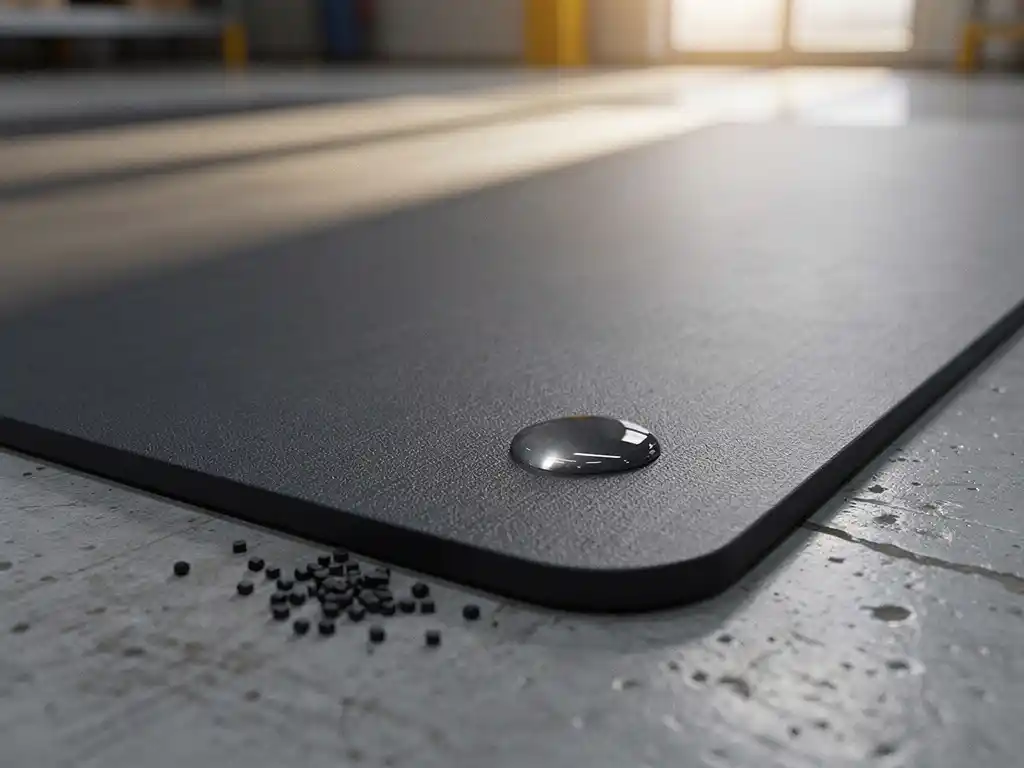
Sustainable materials reduce maintenance because they are built to resist wear, moisture, and damage over time, which means fewer repairs, replacements, and cleaning interventions. Materials like recycled rubber are non-porous, dimensionally stable, and tough enough to handle heavy use without breaking down. The result is lower upkeep costs and less disruption to your operations. Below, we unpack the specific reasons why sustainable flooring outperforms conventional options when it comes to long-term maintenance demands.
What makes a material truly low maintenance?
A material is truly low maintenance when it resists the conditions that cause flooring to degrade: moisture absorption, surface cracking, deformation under load, and chemical exposure. Low-maintenance materials hold their structure and appearance over time without requiring frequent intervention, specialized cleaning products, or early replacement. The fewer points of failure a material has, the lower the ongoing burden on the people responsible for maintaining it.
Several properties determine how much upkeep a flooring material actually demands in practice. A non-porous surface prevents liquids from soaking in, which eliminates the conditions that breed bacteria and cause subsurface damage. Flexibility under load means the material returns to its original shape rather than cracking or compressing permanently. Resistance to temperature extremes prevents the expansion and contraction cycles that cause conventional flooring to warp or split over time.
Sustainable flooring materials, particularly those made from recycled rubber, tend to score well across all of these criteria. That is not a coincidence. Rubber is a naturally resilient material, and the reprocessing methods used to create recycled rubber compounds often reinforce those properties rather than diminishing them.
How do sustainable rubber materials resist wear and damage?
Sustainable rubber materials resist wear and damage because rubber is inherently elastic and tough, and recycled rubber compounds are engineered to amplify those qualities. The material absorbs impact rather than cracking under it, rebounds from compression, and maintains its surface integrity even under repeated heavy use. This makes it effective in environments where conventional flooring would show visible wear within months.
One factor that sets high-quality recycled rubber apart is the use of fiber reinforcement. Fiber Reinforced Rubber Compound (FRC®) integrates structural fibers directly into the rubber matrix, which increases tensile strength and reduces the risk of tearing or deformation. The result is a mat that holds its shape and surface texture for significantly longer than standard rubber or vinyl alternatives.
Rubber also does not react poorly to moisture, cleaning chemicals, or temperature fluctuations. It will not peel, crack, or crumble under extreme heat or cold. This stability means the material maintains its performance characteristics across a wide range of real-world conditions, reducing the frequency with which you need to inspect, repair, or replace it.
Why does recycled rubber outperform conventional flooring materials?
Recycled rubber outperforms conventional flooring materials in long-term maintenance because it combines physical durability with practical surface properties that reduce the effort and cost of upkeep. Conventional materials like vinyl, carpet, or composite tiles absorb moisture, develop surface cracks, and degrade faster under heavy load. Recycled rubber does none of these things, which translates directly into lower lifecycle costs.
Lifecycle costing is a useful framework here. The upfront price of a flooring material tells you very little about what it actually costs to own over five or ten years. When you factor in cleaning labor, repair costs, replacement frequency, and operational downtime, recycled rubber consistently delivers better value than cheaper conventional alternatives. A material that lasts twice as long and requires half the maintenance attention has a fundamentally different cost profile, even if it costs more to install initially.
Circular rubber flooring adds another dimension to this comparison. Because recycled rubber is made from reprocessed material, it supports a circular economy model where the raw material retains value at the end of its service life. This reduces the environmental cost of disposal and creates a more sustainable supply chain overall, which is increasingly relevant for businesses managing their environmental footprint alongside their operational budgets.
What types of environments benefit most from low-maintenance sustainable mats?
Environments that benefit most from low-maintenance sustainable mats are those with high foot traffic, exposure to moisture or chemicals, heavy equipment use, or strict hygiene requirements. These conditions accelerate the degradation of conventional flooring and make frequent maintenance both costly and disruptive. Sustainable rubber mats handle these conditions without the same level of deterioration.
In industrial and manufacturing settings, floors face constant pressure from machinery, foot traffic, and spills. Rubber mats in these environments reduce slip risks, protect the underlying floor surface, and require only basic cleaning to stay functional. Agricultural environments, including dairy barns, cattle sheds, and equine facilities, present a different but equally demanding challenge: continuous exposure to moisture, animal waste, and heavy animal movement. Rubber mats in these spaces protect animals and workers while being easy to wash down without specialist products.
Commercial spaces like gyms, retail floors, and workshops also benefit significantly. These environments see varied use throughout the day and often cannot afford extended downtime for floor maintenance. A durable, non-porous surface that can be cleaned quickly and thoroughly is a practical asset in any high-traffic commercial setting.
How does mat size affect long-term maintenance needs?
Mat size directly affects long-term maintenance needs because larger mats mean fewer seams, and seams are where flooring systems typically fail first. Moisture, dirt, and debris accumulate in the gaps between smaller tiles or mats, creating hygiene problems and accelerating edge wear. Fewer seams reduce these failure points and make cleaning faster and more effective.
In practical terms, a floor covered with large-format mats is easier to clean, inspect, and maintain than one assembled from many smaller pieces. There are fewer edges to lift, fewer gaps to trap contaminants, and a more uniform surface that cleaning equipment can cover efficiently. Over time, this adds up to measurable savings in both labor and replacement costs.
Large mats also create a more stable installation overall. Smaller mats can shift, curl at the edges, or separate under heavy use, creating trip hazards and uneven surfaces that require frequent repositioning. A large, well-fitted mat stays in place and maintains a consistent surface profile, which reduces both safety risks and maintenance interventions.
How do you clean and maintain sustainable rubber mats?
Sustainable rubber mats are cleaned with mild detergent and water, using a mop, brush, or pressure washer depending on the environment and level of soiling. Because rubber is non-porous, liquids and contaminants sit on the surface rather than soaking in, which makes cleaning straightforward and effective. No specialist cleaning products are required for routine maintenance.
For most commercial and industrial applications, a regular sweep to remove loose debris followed by a wet clean with a mild cleaning solution is sufficient. In agricultural settings, a hose-down is typically enough for daily maintenance, with a more thorough scrub on a weekly or monthly schedule depending on the intensity of use. The key advantage is that rubber does not require sealing, waxing, or conditioning to maintain its surface properties.
Inspection is also simpler with rubber flooring. Because the material does not crack, peel, or absorb moisture, visual checks are straightforward and issues are easy to identify. There is no need to probe for subsurface moisture damage or check for delamination, as you would with composite or vinyl flooring. This makes routine maintenance faster and less technically demanding for the people responsible for it.
At LRP Matting, we manufacture rubber mats from 100% recycled materials, including FRC® fiber-reinforced compounds that deliver the durability and ease of maintenance described throughout this article. If you want to see how our products fit your specific environment, our industrial matting solutions cover a wide range of heavy-duty applications where sustainable flooring makes the biggest practical difference.
Frequently Asked Questions
How long do recycled rubber mats typically last compared to conventional flooring?
High-quality recycled rubber mats, especially those made with fiber-reinforced compounds like FRC®, can last 10–20 years in demanding environments, compared to 3–7 years for typical vinyl or composite tile flooring under similar conditions. The key driver of this longevity is rubber’s resistance to the main causes of flooring failure: moisture ingress, surface cracking, and deformation under load. When you factor this extended lifespan into your total cost of ownership, the investment in sustainable rubber flooring typically pays for itself well before replacement would be needed.
Can sustainable rubber mats be used outdoors or in environments with extreme temperatures?
Yes, recycled rubber mats are well-suited to outdoor and temperature-variable environments because rubber does not expand and contract significantly enough to cause warping, splitting, or surface cracking. Unlike vinyl or composite materials, rubber maintains its structural integrity in both freezing conditions and high-heat settings, making it a reliable choice for covered outdoor areas, loading bays, or facilities that experience seasonal temperature swings. Always check the manufacturer’s specified temperature range for the specific product you’re considering, as compound formulations can vary.
What's the best way to get started with switching to sustainable rubber flooring in an existing facility?
The most practical starting point is to identify the highest-maintenance zones in your facility — areas where you’re spending the most on cleaning labor, repairs, or replacements — and pilot a rubber mat solution there first. This gives you measurable, real-world data on maintenance reduction before committing to a full-facility rollout. From there, work with your supplier to match mat size, thickness, and compound type to the specific demands of each zone, since not all areas will have identical requirements.
Are there any cleaning products or methods that should be avoided with recycled rubber mats?
Avoid using harsh solvents, bleach-based cleaners, or oil-based products on recycled rubber mats, as these can degrade the rubber compound over time, causing surface discoloration or reduced flexibility. Stick to mild, pH-neutral detergents diluted in water for routine cleaning, and always rinse thoroughly to prevent residue buildup. In agricultural settings, standard agricultural disinfectants are generally safe, but it’s worth confirming compatibility with your mat supplier before use.
Do sustainable rubber mats require any special installation to stay in place and perform correctly?
Most large-format rubber mats are designed to stay in place through their own weight and surface friction, requiring no adhesive or mechanical fixing for standard applications. However, in environments with heavy lateral movement — such as areas with forklift traffic or high-speed machinery — edge trims or interlocking designs may be recommended to prevent any shifting. Proper surface preparation underneath the mat, including a clean, level substrate, is the most important installation factor for ensuring long-term stability and performance.
What happens to recycled rubber mats at the end of their service life?
One of the key advantages of recycled rubber flooring is that the material retains value at the end of its service life and can re-enter the recycling stream rather than going to landfill. Many manufacturers, including those operating within a circular economy model, can take back end-of-life mats for reprocessing into new rubber compounds. This closed-loop approach significantly reduces the environmental impact of flooring disposal and is increasingly relevant for businesses with sustainability reporting obligations or environmental targets.
How do I know which mat thickness is right for my application?
Mat thickness should be matched to the intensity and type of load your floor will experience: lighter foot-traffic areas typically perform well with mats in the 6–10mm range, while heavy machinery, livestock, or impact-heavy environments generally require 15mm or more for adequate protection and durability. Thicker mats also provide greater anti-fatigue benefits for workers standing for long periods, which can be a secondary but valuable consideration in industrial or workshop settings. When in doubt, consult your supplier with details about your specific use case — load type, frequency of use, and any hygiene requirements — to get a properly matched recommendation.
Related Articles
- How do different facility environments affect floor performance?
- How do you prevent seasonal floor hazards?
- How do you choose flooring for a professional sports locker room?
- What flooring works best in a high-moisture veterinary environment?
- What is the best flooring for a horse wash rack?
- What type of flooring holds up best in a high-traffic athletic venue?
- What flooring is used in equine surgery facilities?
- How do you make a horse feel more comfortable during long trailer rides?
- What type of flooring is best for a horse recovery stall?
- What is the fastest way to muck out a horse stall?