
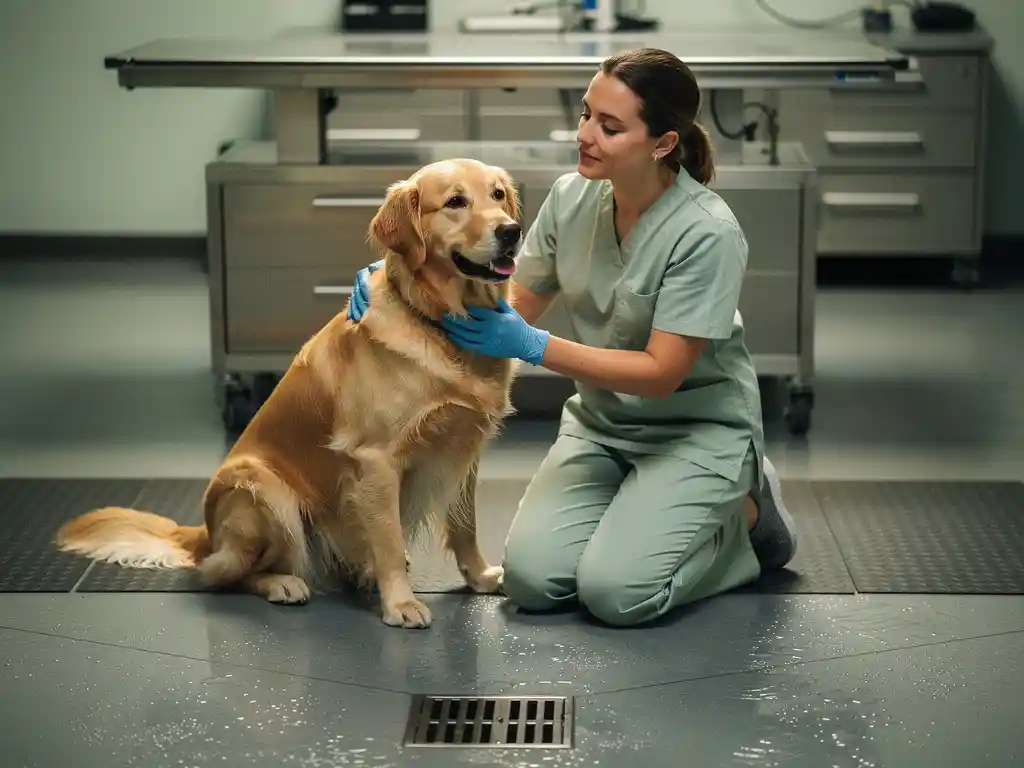
The best flooring for a high-moisture veterinary environment is rubber. It handles water, urine, blood, and heavy-duty disinfectants without degrading, warping, or becoming dangerously slippery. It also cushions animals during procedures and reduces fatigue for staff who stand for hours at a time. Whether you are outfitting a wet treatment room, a wash bay, or a recovery area, rubber flooring consistently outperforms the alternatives in real-world clinic conditions.
That said, not all rubber flooring is the same, and the details matter. Surface texture, thickness, chemical resistance, and whether you choose mats or permanent flooring all affect how well your floors hold up over time. Here is a straightforward breakdown of everything you need to know about veterinary clinic flooring in wet zones.
Why does flooring matter so much in a veterinary clinic?
Flooring in a veterinary clinic directly affects animal safety, staff well-being, and hygiene standards. A floor that becomes slippery when wet puts animals and handlers at serious risk of injury. A floor that absorbs moisture harbors bacteria and makes proper sanitation nearly impossible. Get the flooring wrong, and you are fighting an uphill battle every single day.
Veterinary staff spend long hours on their feet, often in physically demanding positions while restraining or treating animals. Hard, unforgiving surfaces like bare concrete increase fatigue and can contribute to musculoskeletal problems over time. At the same time, animals entering a clinic are often already stressed, and a slippery or uncomfortable floor only makes that worse. The right flooring reduces stress for everyone in the room.
There is also a compliance and liability dimension to consider. Clinics are expected to maintain surfaces that can be thoroughly disinfected between patients. Porous or cracked flooring traps pathogens and creates a hygiene risk that no amount of mopping will fully resolve. Investing in the right surface from the start saves money, reduces risk, and makes your facility easier to run.
What makes a floor ‘high-moisture’ in a veterinary setting?
A high-moisture veterinary environment is any area where water, urine, blood, or cleaning fluids are regularly present on the floor surface. This includes treatment rooms, surgical prep areas, wash bays, bathing stations, kennels, recovery rooms, and any space where animals are bathed, examined, or housed for extended periods.
The moisture challenge in a veterinary clinic goes beyond occasional spills. Wash bays and bathing areas deal with continuous water exposure during grooming sessions. Kennels and recovery areas face repeated urination throughout the day. Surgical and treatment rooms require frequent wet disinfection between patients, sometimes multiple times an hour in a busy clinic.
What makes these conditions particularly demanding is the combination of moisture and chemical exposure. Disinfectants, enzymatic cleaners, and surgical scrubs are applied repeatedly to the same surfaces. A floor that handles water well but degrades under chemical exposure is not truly suited to a veterinary environment. The two challenges have to be addressed together.
What flooring materials work best in wet veterinary areas?
Rubber flooring is the top choice for wet veterinary areas because it is non-porous, slip-resistant, chemically durable, and comfortable underfoot for both animals and staff. Other materials like vinyl, epoxy, and tile can work in lower-risk zones, but rubber consistently performs best where moisture and safety demands are highest.
Rubber
Rubber is non-porous by nature, which means it does not absorb water, urine, or cleaning fluids. Bacteria and pathogens have nowhere to hide, which makes sanitation straightforward. Rubber also maintains traction when wet, which is the single most important safety feature in any area where animals are moving. Its natural cushioning reduces the impact on joints, which matters for both recovering animals and staff standing for long shifts.
Epoxy coatings
Epoxy is a popular choice for veterinary clinic flooring because it creates a seamless, hard surface that resists moisture penetration. The downside is that epoxy can become extremely slippery when wet unless a textured additive is included. It is also prone to cracking under heavy impact or temperature fluctuations, and repairs can be costly and disruptive to clinic operations.
Vinyl and luxury vinyl tile
Vinyl flooring is relatively affordable and water-resistant, making it a reasonable option for lower-traffic areas like reception or staff rooms. In high-moisture zones, however, vinyl can lift at the seams over time, creating gaps where moisture and bacteria accumulate. It also offers less traction than rubber and minimal cushioning for animals or staff.
Ceramic and quarry tile
Tile is durable and easy to clean, but the grout lines between tiles are a significant hygiene liability in a veterinary setting. Grout absorbs moisture and bacteria even when sealed, and resealing is an ongoing maintenance task. Tile is also hard and cold underfoot, which can increase stress for animals and fatigue for staff.
How does rubber flooring hold up against disinfectants and chemicals?
High-quality rubber flooring holds up well against the disinfectants and cleaning chemicals typically used in veterinary clinics, including quaternary ammonium compounds, bleach-based solutions, and enzymatic cleaners. It does not absorb these chemicals, and its surface does not degrade with routine cleaning cycles the way softer or more porous materials do.
The key factor is rubber quality. Lower-grade rubber compounds can swell, soften, or discolor with repeated exposure to strong chemicals. High-quality vulcanized rubber, particularly products made with reinforced compounds, maintains its structure and surface integrity over years of heavy cleaning. This is why the grade of rubber matters as much as the material category itself.
It is worth noting that no flooring material is completely immune to every chemical. Highly concentrated solvents or specialty surgical chemicals may require specific resistance properties. When selecting rubber flooring for a veterinary clinic, check the manufacturer’s chemical resistance data for the specific disinfectants your clinic uses. Most standard veterinary disinfection protocols are well within the tolerance range of quality rubber matting.
What’s the difference between anti-slip flooring options for animal care?
Anti-slip flooring for animal care falls into two main categories: surface texture and drainage design. Textured rubber surfaces use raised patterns, ridges, or grid structures to create grip underfoot. Drainage-focused designs use perforations or channels to move water away from the surface quickly, reducing the pooling that causes slips in the first place.
Textured surface patterns
Raised surface patterns, such as coin tops, diamond grids, or ribbed designs, create friction between the floor and an animal’s paws or hooves. These work well in areas where water is present but not continuously flowing, like treatment rooms or recovery spaces. The texture also helps staff maintain footing during restraint or handling procedures.
Drainage and perforated designs
In wash bays and bathing areas where water is constantly running across the floor, drainage becomes the priority. Perforated rubber mats allow water to pass through the surface and drain away rather than pooling on top. This keeps the walking surface drier and significantly reduces slip risk. Ring mats and perforated rubber designs are particularly effective in these high-flow environments.
Combined approaches
The most effective anti-slip setups in veterinary clinics often combine both approaches. A textured surface mat with drainage holes or a raised grid pattern with open channels gives you grip and water management at the same time. For areas with sloped drainage floors, mats that conform to the surface without curling or shifting are also important for consistent safety.
Should veterinary clinics use mats or permanent flooring in wet zones?
Veterinary clinics benefit from using both mats and permanent flooring, depending on the specific zone. Permanent rubber flooring works best in high-traffic areas with consistent moisture exposure, like wash bays and surgical prep rooms. Removable rubber mats are more practical in treatment areas, kennels, and spaces where you need flexibility to clean underneath or reconfigure the layout.
Removable mats have a practical advantage in a clinical setting: you can lift them, clean underneath, and replace them if one section becomes damaged without disrupting the entire floor. This is useful in kennels where individual runs may need to be deep-cleaned or in treatment rooms where a mat might be soiled during a procedure. The ability to remove and replace sections keeps hygiene standards high without major disruption.
Permanent flooring, on the other hand, eliminates the gaps and seams that removable mats can create. Seamless or low-seam installations are easier to disinfect thoroughly and present fewer trip hazards for animals moving under their own power. For areas where the layout will not change and moisture exposure is constant, a permanent rubber floor is often the more hygienic and durable long-term choice.
The ideal approach for most veterinary clinics is a hybrid: permanent flooring in fixed wet zones and high-quality removable mats in flexible or variable-use areas. This gives you the hygiene benefits of a seamless surface where it matters most, with the adaptability of mats where the space needs to serve multiple functions.
How do you maintain rubber flooring in a veterinary environment?
Maintaining rubber flooring in a veterinary clinic is straightforward. Clean the surface with mild detergent and water for routine cleaning, and use your standard veterinary-grade disinfectant for sanitation between patients. Avoid prolonged exposure to highly concentrated solvents. Inspect mats regularly for signs of wear, curling, or damage, and replace sections as needed to maintain a safe, hygienic surface.
For daily maintenance, a mop or scrub brush with a diluted cleaning solution is all you need for most rubber surfaces. Because rubber is non-porous, it does not require special sealants or treatments to stay hygienic. Rinse thoroughly after using disinfectants to prevent residue buildup, which can make surfaces feel tacky over time.
Removable mats should be lifted periodically to clean the floor beneath them. Even with a non-porous mat surface, moisture can work its way under the edges in high-exposure areas, and the subfloor underneath needs to be kept clean and dry to prevent mold or bacterial growth at the base. A regular schedule for lifting and cleaning under mats is a simple habit that pays off in long-term hygiene.
For permanent rubber flooring, periodic deep cleaning with a floor scrubber keeps the surface in good condition. Avoid abrasive cleaning tools that can damage the surface texture over time, as that texture is what provides traction. If the surface does show signs of wear, a professional assessment can determine whether resurfacing or replacement is needed before safety is compromised.
If you are looking for rubber flooring that holds up to the demands of a wet veterinary environment, we can help. At LRP Matting, we offer custom rubber matting solutions cut to any size or shape, so your floors fit your space precisely with minimal seams and maximum performance. Built from high-quality, non-porous rubber and available in designs suited to wet, high-traffic environments, our mats are a practical, long-lasting choice for veterinary clinics that take hygiene and safety seriously.
Frequently Asked Questions
How thick should rubber flooring be for a veterinary clinic wet zone?
For wet veterinary areas, rubber flooring between 3/8 inch (9mm) and 3/4 inch (19mm) thick is generally recommended. Thicker mats offer more cushioning for animals during recovery or treatment and greater fatigue relief for staff, but they also add height transitions that can become trip hazards at entry points. A 1/2 inch thickness is a practical middle ground for most treatment rooms and wash bays, while surgical prep areas or kennels with heavy animal traffic may benefit from the added cushioning of a 3/4 inch option.
Can rubber flooring be used directly over existing concrete or tile floors?
Yes, rubber mats and flooring can be installed directly over concrete or existing tile, which is one of their biggest practical advantages during a clinic renovation or fit-out. The subfloor should be clean, level, and free of major cracks or raised edges before installation to prevent shifting or uneven wear. For permanent rubber flooring installations, a smooth, level concrete subfloor is ideal, and any significant surface imperfections should be patched beforehand to ensure the rubber lies flat and seams stay tight.
What is the best way to prevent rubber mats from shifting or curling in high-traffic wet areas?
The most effective approach is to choose mats with a beveled edge design and sufficient weight or thickness to stay flat under foot traffic and animal movement. In areas with constant water flow, like wash bays, interlocking rubber tiles or mats with drainage holes tend to stay in place better than flat-bottomed mats because water drains through rather than lifting the edges. For fixed installations, adhesive bonding or rubber-to-rubber interlocking systems can eliminate shifting entirely without requiring permanent installation.
Are there specific rubber flooring products to avoid in a veterinary setting?
Yes — recycled rubber products made from reclaimed tire rubber can contain residual oils and compounds that leach out under repeated chemical exposure, leading to surface degradation and potential odor issues in a clinical environment. Virgin rubber or high-quality vulcanized rubber compounds are more chemically stable and better suited to the disinfection demands of a veterinary clinic. It is also worth avoiding rubber flooring with deep, open-cell foam backing, as the backing can absorb moisture and become a breeding ground for bacteria even if the top surface is non-porous.
How do I choose the right surface texture for different areas of my clinic?
Match the texture to the specific moisture and traffic conditions of each zone. For treatment rooms and recovery areas with moderate moisture, a raised coin or diamond-pattern surface provides reliable grip without being abrasive on animal paws or skin. For wash bays and bathing stations with continuous water flow, prioritize perforated or ring-mat designs that actively drain water away from the surface. In kennel runs, a ribbed or drainage-grid design handles urine runoff well while remaining easy to scrub clean during daily sanitation routines.
How often should rubber flooring in a veterinary clinic be replaced?
High-quality rubber flooring in a well-maintained veterinary clinic can last 10 to 20 years for permanent installations, while removable mats typically have a lifespan of 3 to 7 years depending on traffic intensity and chemical exposure frequency. The key signs that replacement is needed include visible surface wear that has reduced traction, persistent odor that does not clear after deep cleaning, cracking or delamination that creates crevices for bacteria, and curling or warping that creates trip hazards. Catching these signs early and replacing worn sections promptly is safer and more cost-effective than waiting for a full-floor failure.
Is rubber flooring a good choice for veterinary reception areas and waiting rooms too, or is it only suited to wet zones?
Rubber flooring works well in reception and waiting areas, though the priorities shift slightly from wet-zone performance to aesthetics, comfort, and durability. Smooth or lightly textured rubber tiles in neutral colors can give a professional appearance while still providing the non-porous, easy-clean benefits that matter throughout a veterinary facility. If aesthetics are a top priority for client-facing areas, luxury vinyl or polished epoxy may be more visually appealing, but rubber remains a practical and hygienic choice even in dry zones where accidents and spills are still a regular reality.
Related Articles
- What causes leg fatigue at work?
- What makes a flooring material sustainable?
- How can you improve traction on existing floors?
- How do you design a safe flooring layout for an equine hospital?
- How do large equestrian facilities keep stall maintenance costs down?
- What is the most low-maintenance horse stall setup?
- What is the best flooring for a factory assembly line?
- How do you reduce re-injury risk in a horse recovery stall?
- How do you keep a horse stall floor from getting slippery when wet?
- Can a hard barn floor cause tendon damage in horses?