
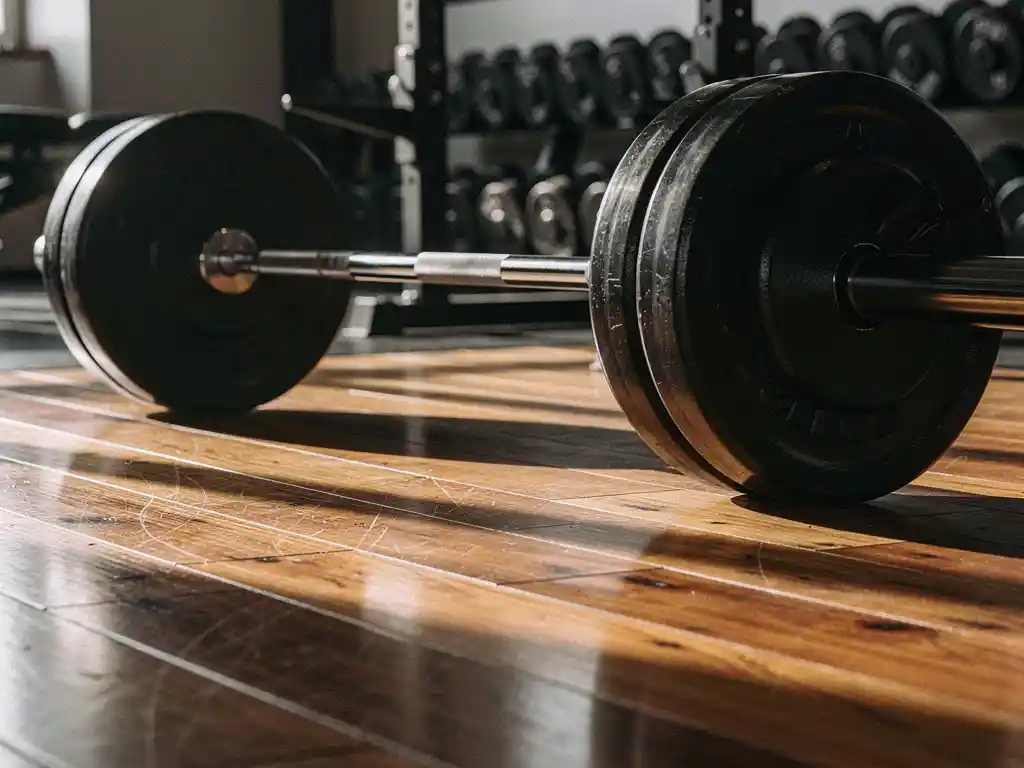
The best flooring under heavy sports equipment is thick rubber matting. Rubber absorbs impact, protects your subfloor, resists compression over time, and gives equipment a stable, non-slip base. A minimum thickness of half an inch works for lighter setups, but heavy commercial equipment benefits from three-quarters of an inch or more. Rubber consistently outperforms foam, vinyl, and carpet in durability and load-bearing performance.
Whether you are outfitting a commercial gym, a training facility, or a home workout space, the flooring you put under your equipment does a lot of heavy lifting. Get it right, and you protect your floors, your equipment, and the people using it. Get it wrong, and you will be dealing with cracked concrete, shifting machines, and unnecessary wear and tear. Here is everything you need to know to make a smart choice.
Why does flooring matter under gym equipment?
Flooring under gym equipment matters because heavy machines concentrate enormous weight and vibration onto a small surface area. Without the right base, that stress transfers directly to your subfloor, causing cracks, dents, and long-term structural damage. The right flooring absorbs impact, keeps equipment stable, reduces noise, and helps protect anyone working nearby from slips or falls.
Think about a loaded barbell rack or a commercial treadmill. These are not just heavy objects sitting still. They vibrate, shift under load, and sometimes take sudden impacts. A bare concrete or hardwood floor offers zero give, which means every rep, every footfall, and every dropped weight sends a shockwave straight into the structure beneath. Over time, that adds up to real damage and real repair costs.
Good sports facility flooring also plays a safety role that is easy to underestimate. Sweat, water, and general gym traffic make smooth floors genuinely dangerous. A textured rubber surface gives users confident footing, whether they are stepping onto a machine or moving around the space. Noise reduction is another practical benefit, especially in commercial facilities where equipment noise travels through walls and ceilings.
How thick should rubber flooring be under heavy equipment?
Rubber flooring under heavy sports equipment should be at least half an inch thick for general gym use, and three-quarters of an inch or more under the heaviest commercial machines. Thicker rubber provides better impact absorption, more effective vibration dampening, and greater protection for the subfloor beneath. For weightlifting platforms or areas where weights are dropped, even greater thickness is worth considering.
Thickness is not just about cushioning. It is directly related to how well the mat holds up over time. Thinner mats compress and flatten under sustained heavy loads, losing their protective properties faster. A thicker mat maintains its structure, keeps equipment level, and continues doing its job for years rather than months.
Half-inch rubber is a solid starting point for most gym environments. It handles cardio equipment, weight machines, and moderate free-weight areas well. If you are placing equipment that weighs several hundred pounds, or if you run a high-traffic commercial facility where machines are in constant use, going thicker is a straightforward investment that pays off in longevity and performance.
What’s the difference between rubber mats and foam tiles for gym equipment?
Rubber mats and foam tiles serve very different purposes under gym equipment. Rubber mats are dense, durable, and built to handle heavy loads, vibration, and long-term wear. Foam tiles are lightweight and comfortable underfoot, but they compress easily, degrade faster, and are not suited to supporting the weight of commercial sports equipment. For anything heavy, rubber is the practical choice.
Rubber mats: built for load and longevity
Rubber is a non-porous material, which means it does not absorb moisture, bacteria, or odors. It resists cracking and peeling even under extreme temperatures. Under a heavy treadmill or a loaded cable machine, rubber holds its shape and keeps the equipment stable. It also provides genuine traction, which matters when users are loading and adjusting equipment.
Foam tiles: comfortable but limited
Foam tiles have their place in yoga studios, stretching areas, and spaces where standing comfort is the priority. But place a 300-pound machine on foam, and you will see it compress and deform within weeks. Foam also tears more easily and tends to absorb moisture over time, which creates hygiene problems in a gym environment. For sports facility flooring under real equipment, foam simply does not hold up.
Can rubber flooring handle the weight of commercial gym equipment?
Yes, high-quality rubber flooring is fully capable of handling the weight of commercial gym equipment. Dense rubber mats distribute the load evenly across the surface, preventing concentrated pressure from damaging the subfloor. The key factors are mat thickness, rubber density, and whether the mat is sized correctly for the footprint of the equipment it supports.
Commercial gym equipment can range from a few hundred pounds to well over a thousand pounds when fully loaded. Rubber handles this comfortably because of how it distributes weight. Unlike foam or vinyl, rubber does not create pressure points that lead to dents or deformation. The load spreads across the mat surface, protecting both the equipment and the floor below.
It is also worth noting that commercial rubber matting is designed for continuous, heavy use. In a gym that operates all day, every day, the flooring needs to perform consistently without degrading. Rubber maintains its structural integrity under repeated stress in a way that softer materials simply cannot match. That reliability is why rubber is the standard choice for serious sports facility flooring.
How do you choose the right rubber mat size for sports equipment?
To choose the right rubber mat size for sports equipment, measure the full footprint of each machine and add at least 12 to 18 inches on each side. This extra coverage accounts for user movement, equipment vibration, and the practical reality that people step on and off machines constantly. For larger areas, using fewer, larger mats reduces seams and creates a more stable, professional-looking surface.
Seams are worth thinking about carefully. Every seam is a potential weak point where mats can shift, curl, or trap dirt. In a busy gym, those gaps become tripping hazards and cleaning headaches. Choosing larger mats that cover more ground in fewer pieces keeps the floor cleaner and safer. This is especially relevant in open training areas where multiple pieces of equipment sit close together.
For irregularly shaped spaces or rooms with fixed obstacles like pillars and built-in benches, standard sizes often leave awkward gaps. That is where custom sizing makes a real difference. A mat cut to the exact dimensions of your space fits cleanly, stays flat, and looks intentional rather than improvised.
What mistakes should you avoid when choosing gym equipment flooring?
The most common mistakes when choosing gym equipment flooring are going too thin, choosing the wrong material for the use case, ignoring seam placement, and underestimating the size needed. Each of these mistakes can lead to faster wear, safety issues, or costly replacements down the line. Getting the basics right from the start saves time, money, and frustration.
- Choosing mats that are too thin: Thin mats compress quickly under heavy equipment and stop providing meaningful protection. Always match thickness to the weight and type of equipment you are using.
- Using foam in heavy-load areas: Foam is comfortable but not durable enough for commercial gym equipment. It deforms, tears, and absorbs moisture. Stick to rubber for anything load-bearing.
- Ignoring seam placement: Seams placed under equipment legs or in high-traffic walkways can shift and create trip hazards. Plan your layout so seams fall in low-traffic zones.
- Buying mats that are too small: A mat that only covers the machine footprint leaves the surrounding area unprotected. Size up to cover the full zone of use, including where people stand and move.
- Skipping custom sizing for complex spaces: Standard sizes work in straightforward rooms, but unusual layouts need tailored solutions. Forcing standard mats into awkward spaces creates gaps and instability.
One more mistake worth mentioning is treating all rubber mats as interchangeable. Not all rubber flooring is made the same way. The density, compound, and construction method all affect how a mat performs under real conditions. For sports facility flooring that needs to last, it is worth looking closely at what the mat is actually made of before you buy.
If you want flooring that genuinely fits your space and holds up under serious use, we at LRP Matting offer made-to-measure rubber mats cut to any size or shape. Our mats are made from high-quality rubber and, where applicable, our proprietary Fiber Reinforced Rubber Compound (FRC®) for extra strength and durability. Whether you need coverage for a single machine or an entire training floor, we can help you get the right fit with fewer seams and a cleaner result.
Frequently Asked Questions
Can I use rubber flooring directly on hardwood or do I need an underlayer first?
In most cases, rubber matting can be placed directly on hardwood floors without a separate underlayer. However, you should ensure the hardwood surface is clean, dry, and level before laying mats down, as any debris or unevenness can cause the mat to rock or create pressure points over time. For particularly valuable hardwood floors, a thin moisture-barrier layer underneath the rubber can provide added protection against any residual off-gassing or trapped humidity.
How do I keep rubber mats from shifting or moving under heavy equipment?
The weight of heavy equipment itself usually does a good job of holding rubber mats in place, but edges and corners can still lift or creep over time. Using interlocking rubber tiles, double-sided tape rated for rubber surfaces, or mat anchors along the perimeter are all effective solutions. Choosing fewer, larger mats rather than many small ones also significantly reduces the chance of movement, since there are fewer independent pieces to shift.
How do I clean and maintain rubber gym flooring to make it last longer?
Regular sweeping or vacuuming to remove abrasive grit is the single most important maintenance step, as trapped debris acts like sandpaper under equipment feet. For deeper cleaning, a mild pH-neutral detergent diluted in water and applied with a mop or scrub brush works well — avoid harsh solvents, bleach, or oil-based cleaners, as these can degrade the rubber compound over time. Allow the surface to dry thoroughly before replacing equipment to prevent moisture from being trapped underneath.
Will rubber flooring damage or scratch my concrete subfloor?
No — rubber flooring is actually one of the best ways to protect a concrete subfloor from damage. Rather than scratching concrete, rubber mats act as a buffer that prevents equipment feet and dropped weights from chipping, cracking, or staining the surface below. The only caveat is that some rubber compounds can leave a slight residue on concrete over very long periods, which is easily cleaned with a standard concrete cleaner if needed.
Is there a meaningful difference between recycled rubber and virgin rubber mats for heavy equipment?
Yes, and it is worth understanding before you buy. Virgin rubber mats are made from new rubber compounds and tend to offer more consistent density, better structural integrity, and a cleaner smell straight out of the box. Recycled rubber mats are an eco-friendly and cost-effective option that performs well in many gym settings, but quality can vary depending on the source material and manufacturing process. For the heaviest commercial applications, prioritizing rubber density and compound quality — whether virgin or recycled — matters more than the source alone.
How do I know when it's time to replace my rubber gym mats?
The clearest signs that rubber mats need replacing are visible compression flattening (where the mat no longer springs back to its original thickness), surface cracking or crumbling, and equipment that has started to rock or feel unstable. A mat that has lost its structural integrity is no longer protecting your subfloor or providing a safe surface for users. As a general rule, high-quality rubber mats in commercial settings should be inspected annually, and mats showing significant wear under the heaviest equipment should be replaced proactively rather than reactively.
Can rubber flooring be used outdoors for sports equipment, or is it strictly an indoor product?
Rubber flooring can absolutely be used outdoors, but not all rubber mats are manufactured to handle prolonged UV exposure, temperature extremes, and rain. For outdoor sports equipment areas, look specifically for mats rated for exterior use — these are typically made with UV-stabilized rubber compounds that resist fading, cracking, and moisture absorption. Standard indoor rubber mats used outside will degrade faster and may become slippery or brittle when exposed to the elements over time.
Related Articles
- How do you evaluate environmentally friendly flooring?
- How does regular maintenance extend the life of sports flooring?
- What flooring improvements can increase workplace comfort?
- What are the warning signs of floor deterioration?
- What makes a floor safe?
- What is the best flooring for an outdoor athletic facility?
- How do you prevent cross-contamination through flooring in an animal clinic?
- How do rubber mats extend the life of a warehouse floor?
- What do you put on a horse trailer ramp to prevent slipping?
- What makes a floor surface safe for a horse coming out of anesthesia?