

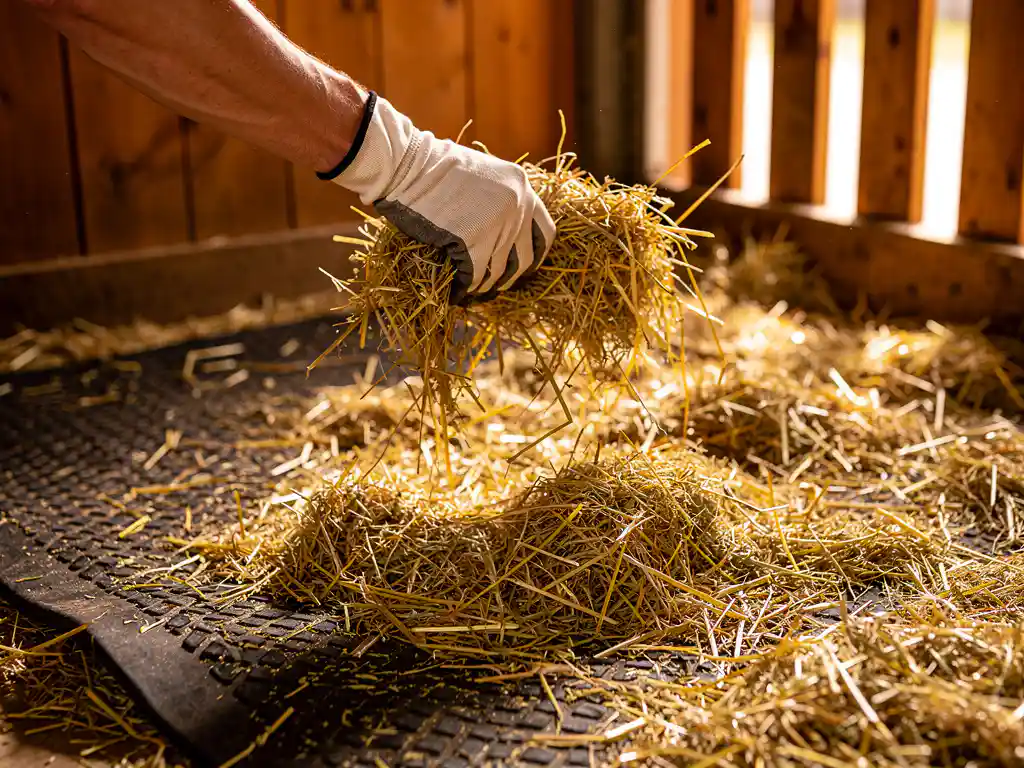
Most horse owners should replace stall bedding completely every one to two weeks, with daily spot-cleaning in between. The exact frequency depends on how much time your horse spends in the stall, the type of bedding you use, and how well the stall drains. A good rubber mat system underneath your bedding can significantly extend the time between full changes and cut down on how much bedding you need in the first place.
What is horse stall bedding and why does it matter?
Horse stall bedding is the absorbent material placed on the floor of a horse’s stall to provide cushioning, absorb urine and moisture, and keep the space clean and comfortable. Common options include straw, wood shavings, wood pellets, hemp, and paper bedding. The right bedding creates a safe, dry surface for your horse to stand and lie down on throughout the day and night.
Bedding matters more than many people realize. Horses can spend anywhere from 12 to 20 hours a day in their stalls, so the quality of that environment directly affects their physical health and mental well-being. Poor bedding management leads to wet, ammonia-rich conditions that damage hooves, irritate airways, and cause respiratory problems over time. On the flip side, a clean, well-bedded stall supports healthy hooves, encourages rest, and reduces the risk of injuries from slipping or lying on hard surfaces.
Beyond animal welfare, bedding is also one of the biggest ongoing costs in stable management. Understanding how to use it efficiently matters if you want to keep costs under control without compromising your horse’s comfort.
How often should you replace horse stall bedding?
You should spot-clean horse stall bedding daily by removing manure and wet patches, and perform a full bedding replacement every one to two weeks. Horses that spend more time stabled, or those with health conditions such as respiratory issues or hoof problems, may need more frequent full changes to maintain a hygienic environment.
Daily spot-cleaning is non-negotiable. Each morning, remove droppings and soiled bedding, fluff up the remaining dry material, and add fresh bedding where needed. This keeps ammonia levels low and extends the life of the remaining bedding. Skipping even a day or two of spot-cleaning accelerates moisture buildup and makes the stall smell much worse, much faster.
Full replacements involve stripping the stall completely, cleaning the floor underneath, and starting fresh. How often you need to do this depends on several factors: the size of the stall, how many hours per day your horse is inside, the absorbency of your chosen bedding material, and whether your stall floor drains well. A horse stabled for 20 hours a day on straw will need a full change far more often than one that spends most of the day turned out on pasture.
What are the signs that horse stall bedding needs changing?
The clearest signs that horse stall bedding needs changing are a strong ammonia smell, visible wet patches that won’t dry out, bedding that looks dark and compacted, and a general lack of dry, fluffy material for the horse to lie on. If you notice any of these, it is time for at least a partial or full replacement.
Here are the key warning signs to watch for:
- Strong ammonia odor: A sharp, eye-watering smell means urine has saturated the bedding and is breaking down. This is harmful to your horse’s lungs and sinuses.
- Wet or muddy patches: Bedding that stays wet even after spot-cleaning indicates the moisture has worked down to the base layer.
- Dark, compacted bedding: Old, compressed bedding loses its cushioning ability and stops absorbing effectively.
- Visible mold or fungal growth: Any signs of mold mean the bedding has been damp for too long and needs immediate removal.
- Your horse is reluctant to lie down: Horses are smart. If they are standing all night or seem restless, the bedding may simply be too wet or uncomfortable.
Trust your nose as much as your eyes. A stall that looks acceptable on the surface can still have deep layers of saturated bedding underneath. Lift the top layer occasionally to check what is going on below.
What type of bedding lasts the longest in a horse stall?
Wood pellets and hemp bedding generally last the longest in a horse stall because they are highly absorbent and break down slowly. Wood pellets, in particular, expand into a dense, moisture-locking material that stays drier for longer compared to straw or standard wood shavings, which means you need less of it and replace it less frequently.
Here is a quick comparison of common bedding types:
- Wood pellets: Very absorbent, long-lasting, and easy to spot-clean. They expand when wet, locking moisture in place rather than spreading it around. One of the most cost-effective options over time.
- Hemp bedding: Highly absorbent and dust-free, making it a great choice for horses with respiratory sensitivities. It breaks down slowly and composts well afterward.
- Wood shavings: The most widely used option. Moderately absorbent and comfortable, but requires more frequent topping up than pellets or hemp.
- Straw: Traditional and comfortable for horses to lie on, but it absorbs moisture less efficiently and tends to need more frequent full changes.
- Paper bedding: Very absorbent and dust-free, but can become heavy and soggy quickly. Usually more expensive per bag.
The bedding that lasts the longest for your specific setup also depends on your stall’s drainage, your horse’s habits, and your climate. In damp or cold conditions, even the most absorbent bedding will need more attention.
How do rubber stall mats affect bedding replacement frequency?
Rubber stall mats reduce how often you need to replace bedding by creating a non-porous, insulating base that prevents moisture from seeping into the floor and keeps the bedding on top drier for longer. Many horse owners find they can use significantly less bedding and go longer between full replacements when quality mats are installed underneath.
Without mats, urine soaks straight into a dirt, clay, or concrete floor. That moisture sits there and wicks back up into the bedding, accelerating decomposition and ammonia production. Rubber mats create a barrier that keeps moisture on the surface, where it can be removed during daily spot-cleaning, rather than absorbed into the ground below.
The practical benefits go beyond just bedding savings. Rubber mats provide cushioning that reduces joint stress, improve traction to prevent slips and falls, and insulate against cold concrete or hard ground. A horse that is more comfortable is more likely to lie down and rest properly, which supports overall health and recovery.
For horse owners looking at how to reduce horse bedding costs over the long term, rubber stall mats are one of the most effective investments you can make. The reduction in bedding volume needed, combined with less frequent full replacements, means the mats often pay for themselves within a couple of years.
What happens if you don’t replace horse stall bedding often enough?
Failing to replace horse stall bedding often enough leads to a buildup of ammonia, bacteria, and moisture that directly harms your horse’s health. The consequences range from hoof deterioration and respiratory irritation to skin conditions and chronic discomfort that affects behavior and performance.
Here is what poor bedding management can cause over time:
- Thrush: A bacterial infection of the hoof that thrives in wet, dirty conditions. It breaks down the frog of the hoof and causes lameness if left untreated.
- White line disease: Another hoof condition triggered by prolonged exposure to moisture and bacteria in soiled bedding.
- Respiratory problems: Ammonia from decomposing urine irritates the airways. Horses living in poorly managed stalls are more prone to heaves, coughing, and chronic lung inflammation.
- Skin conditions: Constant contact with wet bedding can cause rain rot, scratches, and other skin irritations, particularly on the lower legs.
- Behavioral changes: Horses that are uncomfortable in their stalls may become restless, develop stable vices, or show signs of stress and anxiety.
The cost of treating these conditions almost always exceeds the cost of maintaining clean bedding from the start. Vet bills, farrier work, and lost riding or competition time add up fast. Consistent bedding management is one of the simplest ways to protect your horse’s long-term health.
How do you deep clean a horse stall between bedding replacements?
To deep clean a horse stall between bedding replacements, strip all bedding completely, scrub the floor and walls with a disinfectant solution, rinse thoroughly, and allow the stall to dry fully before adding fresh bedding. Doing this every one to two weeks keeps bacteria and ammonia under control and gives you a clear view of the stall floor’s condition.
Follow these steps for an effective deep clean:
- Remove all bedding: Strip the stall down to the bare floor, including any material that looks clean on top but may be damp underneath.
- Scrape and sweep: Remove any remaining debris, manure residue, and dust from the floor and walls.
- Apply a disinfectant: Use a product safe for horses and appropriate for your floor type. Pay attention to corners, cracks, and wall edges where bacteria accumulate.
- Rinse and dry: Rinse away the disinfectant and let the stall air-dry completely. Putting fresh bedding on a damp floor defeats the purpose of the clean.
- Inspect the floor and mats: Check for cracks, damage, or areas where moisture might be pooling.
- Relay your rubber mats: If you use rubber stall mats, clean them separately before replacing them. Rubber mats are easy to scrub down with mild detergent and water, and their non-porous surface means they do not retain bacteria or odors.
- Add fresh bedding: Lay down a generous, even layer of your chosen bedding material before bringing your horse back in.
If you want to make deep cleaning easier and less frequent, the right floor setup makes a real difference. Our custom rubber stall mats are designed to fit your exact stall dimensions, eliminating gaps and seams where waste and moisture tend to collect. A seamless installation means fewer places for bacteria to hide and a much faster, more thorough clean each time. If you are looking at how to reduce horse bedding costs while improving hygiene, pairing a good bedding routine with quality rubber matting is the most practical approach you can take.
Frequently Asked Questions
How much bedding should I put down when setting up a stall from scratch?
For most bedding types, aim for a depth of 4 to 6 inches across the entire stall floor. If you are using wood pellets, you can start with a thinner layer of around 2 to 3 inches since they expand significantly when they absorb moisture. With rubber stall mats underneath, you can often get away with slightly less bedding overall since the mats themselves provide cushioning and insulation, reducing the amount of material needed purely for comfort.
Can I mix different types of bedding together to make it last longer or go further?
Yes, mixing bedding types is a practical strategy some horse owners use to balance cost, absorbency, and comfort. A common combination is using wood pellets as a base layer for superior moisture absorption and topping with straw for added comfort and cushioning. Just be aware that mixing materials can make spot-cleaning slightly trickier and may affect how well the bedding composts afterward if that is part of your waste management plan.
What is the best way to dispose of used horse stall bedding?
Composting is the most sustainable and cost-effective disposal method for most bedding types, including straw, wood shavings, and hemp. A well-managed compost pile breaks down manure and soiled bedding into valuable fertilizer within a few months. If composting is not an option on your property, check with local farms, mushroom growers, or garden centers, as many will accept horse manure compost. Wood pellet waste is particularly valued as a soil amendment due to its high carbon content.
My horse has heaves or a dust allergy — which bedding and cleaning routine should I follow?
For horses with respiratory conditions like heaves or dust allergies, hemp bedding or dust-extracted wood shavings are your best options since they produce significantly less airborne dust and mold spores than straw or standard shavings. Increase your spot-cleaning frequency to twice daily if possible, and always remove your horse from the stall while you are mucking out or adding fresh bedding to avoid stirring up particles around them. Ensuring good stall ventilation is equally important and works hand in hand with your bedding choices.
How do I stop bedding from being kicked into water buckets or feed areas?
Placing water buckets and feed containers in corner-mounted holders or raised off the ground helps keep them clear of loose bedding material. Banking bedding slightly higher along the walls and lower in the center of the stall also encourages horses to move and urinate toward the edges, keeping the middle cleaner and reducing scatter. Some owners use stall guards or low dividers around feeding areas as an added barrier, particularly with lighter bedding materials like straw that horses tend to toss around more.
Is it worth switching to a deep litter system instead of doing regular full replacements?
A deep litter system, where you continuously add fresh bedding on top rather than doing regular full strip-outs, can work in the right conditions but carries real risks if not managed carefully. It relies on the lower layers composting and generating heat to control bacteria, which requires good airflow, the right bedding material, and consistent top-dressing. For most horse owners, particularly those with horses prone to hoof or respiratory issues, a regular spot-clean and scheduled full replacement routine is safer, more hygienic, and easier to keep under control.
How do I keep stall bedding costs down without cutting corners on my horse's comfort?
The single most effective way to reduce bedding costs without compromising welfare is installing rubber stall mats, which reduce the volume of bedding needed and extend the time between full replacements. Beyond that, switching to a highly absorbent bedding like wood pellets means you use less material to achieve the same result compared to straw or standard shavings. Consistent daily spot-cleaning also stretches each bag of bedding further by removing only what is soiled and leaving dry material in place, rather than letting moisture spread and contaminate a larger area.
Related Articles
- How can flooring materials be reused or recycled?
- How do you prevent seasonal floor hazards?
- What role does floor maintenance play in safety?
- What flooring is best for a large animal veterinary wash area?
- How do you protect a concrete floor in a cold storage facility?
- How do you protect a performance horse's legs during stabling?
- How do professional stables manage bedding across a large number of stalls?
- What is the best flooring for a horse trailer?
- How do you keep a horse stall floor from getting slippery when wet?
- What are the pros of rubber mats in a horse stall?