
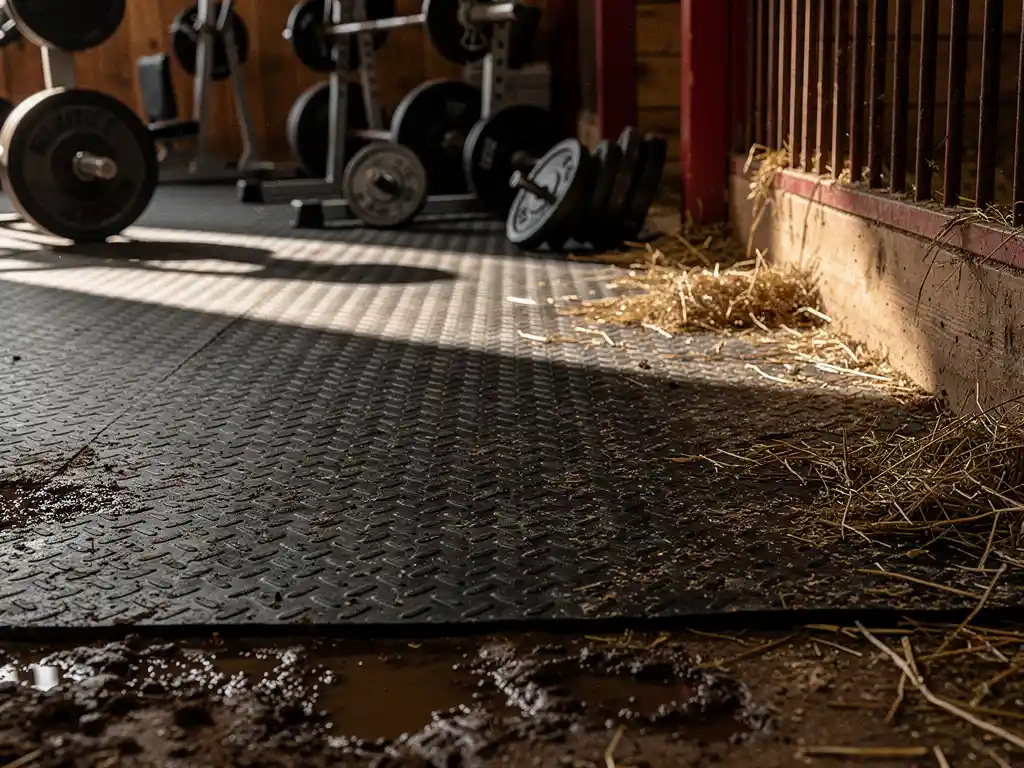
Different facility environments affect floor performance by exposing flooring to specific combinations of stress: physical load, moisture, chemicals, and temperature change. The harsher the environment, the faster standard flooring degrades. Facilities like food processing plants, gyms, livestock barns, and heavy manufacturing areas each create unique wear conditions that most generic flooring simply is not built to handle. Understanding those conditions helps you choose flooring that holds up rather than one that fails early and costs more in the long run.
What types of facility environments are hardest on flooring?
The hardest facility environments for flooring are those that combine heavy mechanical load with moisture, chemical exposure, or extreme temperatures. Industrial manufacturing floors, commercial kitchens, livestock housing, and wet processing areas consistently cause the most damage to standard flooring materials because they layer multiple stress factors at once rather than exposing flooring to just one.
In heavy manufacturing, constant forklift traffic and dropped equipment create compressive and impact stress that cracks or deforms many flooring types over time. Commercial kitchens add grease, cleaning chemicals, and steam to the mix. Livestock facilities introduce constant moisture, urine, and the concentrated weight of large animals. Each of these environments accelerates wear through a different mechanism, which is why facility maintenance planning needs to account for the specific combination of stressors present, not just general foot traffic.
The practical takeaway for facility management is this: the more stress factors a floor faces simultaneously, the more important it becomes to choose a material engineered for that specific combination rather than a general-purpose option.
How does moisture and chemical exposure affect floor materials?
Moisture and chemical exposure break down floor materials by penetrating their surface structure, weakening bonds, and causing swelling, corrosion, or surface degradation. Porous materials like wood, foam, and some composite tiles absorb moisture readily, which leads to warping, mold growth, and structural failure. Chemical cleaners and industrial solvents accelerate this process by stripping protective coatings or reacting directly with the material itself.
In commercial and industrial settings, floor maintenance becomes significantly more demanding when moisture is a regular factor. Wet floors also raise immediate safety concerns since standing water dramatically increases slip risk. For facilities where chemical spills are common, such as automotive workshops or food processing plants, the flooring material needs to resist not just water but also oils, acids, and alkaline cleaning agents without deteriorating.
Non-porous materials perform far better in these conditions. Rubber, for example, does not absorb or retain moisture, which means it resists mold, is easy to clean with mild detergent and water, and maintains its surface integrity even with regular exposure to cleaning chemicals.
Why do temperature extremes cause flooring to fail?
Temperature extremes cause flooring to fail because most materials expand when heated and contract when cooled. When this cycle repeats frequently, the material develops internal stress that leads to cracking, warping, or separation at seams. Flooring in facilities that experience large swings between hot and cold, such as cold storage warehouses, outdoor loading docks, or foundries, is especially vulnerable to this kind of thermal fatigue.
Vinyl and laminate flooring are particularly susceptible. They expand noticeably in heat and can buckle or lift at the edges, then contract in cold and become brittle. Epoxy coatings can crack when the substrate beneath them shifts due to temperature change. Even concrete, while durable, develops hairline fractures over time from repeated thermal cycling.
Preventive maintenance in temperature-variable facilities often includes selecting flooring materials with low thermal expansion coefficients and ensuring proper installation gaps where needed. The goal is to reduce the mechanical stress that temperature change places on the floor over its service life.
What’s the difference between standard rubber mats and fiber-reinforced rubber mats?
Standard rubber mats are made from conventional rubber compounds, while fiber-reinforced rubber mats incorporate a reinforcing fiber matrix within the rubber itself. This internal structure makes fiber-reinforced mats significantly stronger, more resistant to tearing, and more dimensionally stable under heavy load. The practical result is a mat that holds its shape and surface integrity far longer in demanding environments.
Standard rubber mats work well in moderate-use settings where load and impact are manageable. However, in heavy-duty industrial or agricultural environments, conventional rubber can compress over time, develop surface cracks, or deform under sustained weight. Fiber-reinforced rubber resists these failure modes because the fiber network distributes stress across the mat rather than concentrating it in one area.
We build many of our mats using Fiber Reinforced Rubber Compound (FRC®), a proprietary material developed in partnership with DRI Rubber, which has over 75 years of experience in reprocessed rubber technology. This gives our mats strength and durability that standard rubber matting simply cannot match, making them a practical choice for facilities where floor maintenance costs and downtime are real concerns.
How does floor performance affect worker safety and animal welfare?
Floor performance directly affects worker safety and animal welfare by determining how much traction, cushioning, and structural support a surface provides. A floor that has degraded, become slippery, or developed uneven surfaces increases the risk of slips, falls, joint stress, and fatigue for both people and animals. In facilities where these risks are present, floor maintenance is not just an operational concern but a welfare and liability issue.
For workers, ergonomic flooring reduces the physical strain of standing for long periods on hard surfaces. Anti-fatigue matting in assembly lines, commercial kitchens, and retail environments helps reduce musculoskeletal strain and improves concentration and productivity over a full shift. A floor that provides adequate grip also reduces slip incidents in wet or oily areas.
For livestock, floor surface quality has a measurable impact on hoof health, mobility, and stress levels. Hard concrete floors without adequate cushioning cause lameness and joint problems in dairy cows and horses over time. Rubber matting in stalls and walkways provides the grip and cushioning that animals need to move confidently and rest comfortably, which in turn supports their overall health and productivity.
When should a facility consider custom-sized matting over standard options?
A facility should consider custom-sized matting when standard dimensions leave gaps, require excessive cutting, or result in too many seams across the floor area. More seams mean more places for moisture, dirt, and bacteria to accumulate, more edges that can lift and create trip hazards, and a less stable overall surface. Custom sizing eliminates these problems and reduces the ongoing floor maintenance burden.
Standard mat sizes work well for straightforward rectangular spaces with typical dimensions. But many commercial and industrial facilities have irregular layouts, machinery footprints, or access points that standard sizes cannot accommodate cleanly. In livestock housing, for example, stall dimensions vary widely between facilities, and a mat that does not fit the stall properly shifts under animal weight and loses its protective function quickly.
Custom matting also simplifies installation. Fewer pieces mean faster setup, less labor, and a cleaner result. For facilities managing large floor areas, the ability to cover more ground with fewer, larger mats reduces both installation time and the number of seam-related maintenance issues that develop over time.
At LRP Matting, we offer made-to-measure matting solutions for exactly these situations, from heavy industrial floors to livestock stalls and commercial spaces. If you are evaluating your options, our commercial matting solutions page gives you a practical overview of what is available for your specific environment.
Frequently Asked Questions
How do I know when it's time to replace my facility's flooring rather than just repair it?
A good rule of thumb is to replace flooring when repair costs are recurring and cumulative rather than isolated. If you are patching the same areas repeatedly, dealing with persistent moisture intrusion, or noticing widespread surface degradation that affects traction and safety, repair is no longer cost-effective. At that point, the labor and materials spent on maintenance will quickly exceed the cost of a proper replacement with a more durable, environment-appropriate material.
What are the most common mistakes facilities make when choosing flooring for demanding environments?
The most common mistake is selecting flooring based on upfront cost alone without accounting for the specific stress factors the floor will face. A cheaper general-purpose mat or coating may look like a saving initially but will degrade far faster in environments with combined moisture, chemical, and load exposure. Another frequent error is underestimating the number of seams in a flooring layout, which creates maintenance hotspots for moisture, bacteria, and trip hazards over time.
Can rubber matting be used in temperature-variable environments like cold storage or outdoor loading docks?
Yes, rubber is one of the better-performing materials in temperature-variable environments because it has a naturally low thermal expansion coefficient compared to vinyl or laminate alternatives. It remains flexible in cold conditions rather than becoming brittle, and it does not buckle or lift at the edges in heat the way vinyl flooring can. For extreme cold storage applications, it is worth confirming the specific rubber compound is rated for the temperature range in your facility, as formulations vary.
How should I maintain rubber matting to extend its service life in a high-traffic facility?
Routine maintenance for rubber matting is straightforward: regular sweeping or vacuuming to remove abrasive debris, followed by mopping with a mild detergent and water solution. Avoid harsh solvents or bleach-based cleaners, as these can degrade the rubber compound over time. Periodically inspecting seams and edges for lifting and addressing them early prevents moisture from working its way underneath the mat, which is one of the primary causes of premature failure in high-traffic areas.
Is there a meaningful performance difference between new rubber matting and mats made from reprocessed rubber?
High-quality reprocessed rubber matting, particularly when fiber-reinforced, can match or exceed the performance of virgin rubber in most facility applications. The key variable is the manufacturing process and the compound formulation rather than whether the rubber is virgin or reprocessed. Reprocessed rubber products like those built with FRC® technology are engineered to meet specific load, impact, and chemical resistance requirements, making them a durable and more sustainable choice for demanding environments.
How do I get started with specifying the right matting for a facility I'm currently planning or renovating?
Start by mapping out the specific stress factors in each zone of your facility: expected load types, moisture or chemical exposure, temperature ranges, and whether animal or human welfare considerations apply. From there, match each zone’s requirements to a flooring material rated for that combination of stressors. If your facility has irregular layouts or non-standard dimensions, engage a supplier early about custom sizing options, as this decision affects both your installation timeline and your long-term maintenance workload.
Can the same matting solution work across multiple facility zones, or does each area need a different product?
It depends on how similar the stress profiles are across zones. In some facilities, a single high-performance rubber mat can serve multiple areas effectively, simplifying procurement and inventory. However, in facilities where one zone involves heavy forklift traffic and another is a wet processing area with chemical exposure, specifying zone-appropriate matting is the smarter approach. Using an overly robust product where it is not needed adds unnecessary cost, while using an under-specified product in a demanding zone accelerates failure.
Related Articles
- How do high traffic areas affect floor performance?
- How do modern animal facilities improve safety?
- What is the best flooring for an equine breeding facility?
- How do you stop floor damage in a high-traffic shipping and receiving area?
- How does stall flooring affect a horse's overall well-being?
- What is the best way to cover an uneven barn floor?
- What do you put under heavy equipment to protect a floor?
- What flooring do professional equestrian facilities use in their stalls?
- What is the best flooring for a horse stable grooming area?
- How do you keep a sports facility floor safe in wet conditions?