
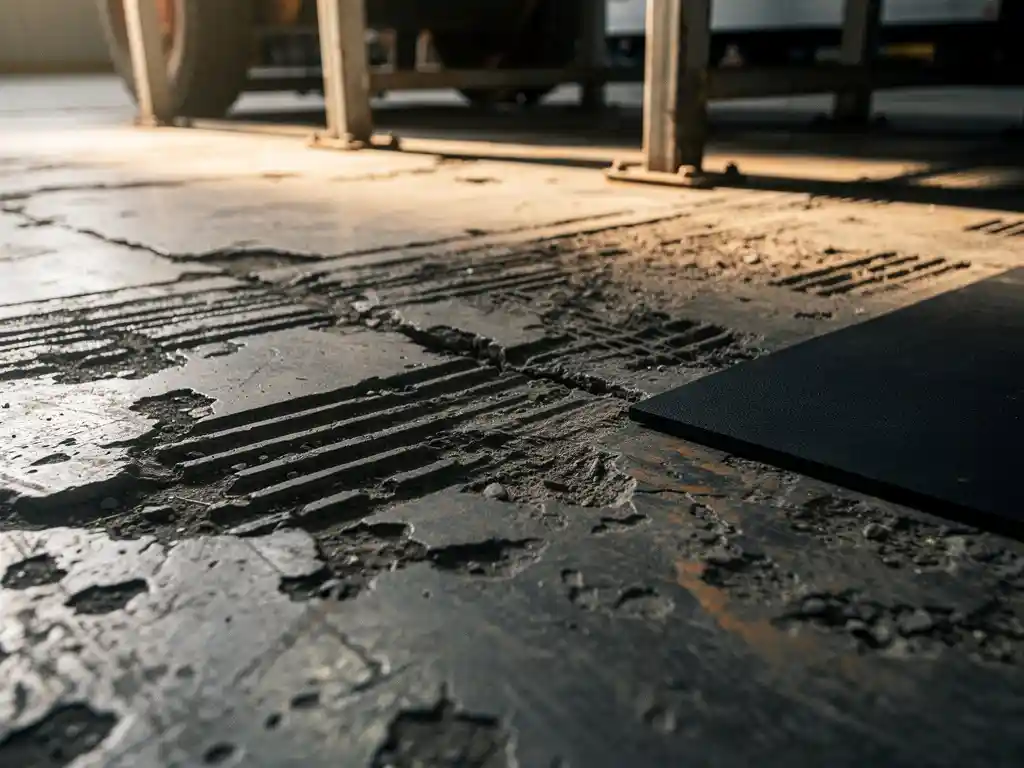
Floor wear in manufacturing environments is driven by a combination of heavy equipment traffic, chemical exposure, temperature fluctuations, and moisture. These forces work together over time to break down even the most robust industrial flooring materials. The specific mix of factors depends on your facility type, but most manufacturing floors face at least three or four of these at once. Below, we break down each cause and explain how to recognize and address it.
What types of damage cause the most floor wear in factories?
The most common types of floor wear in factories are abrasion, impact damage, chemical degradation, and thermal stress. Abrasion from foot traffic and wheeled equipment is the most widespread, but chemical spills and temperature cycling often cause damage that is harder to see and compounds faster. Together, these forces accelerate surface breakdown far more quickly than any single factor alone.
Abrasion wears down the surface layer gradually, exposing the floor’s base material to further damage. Impact damage, caused by dropped tools or heavy loads, creates cracks and chips that allow moisture and chemicals to penetrate deeper. Chemical degradation attacks the binder in concrete or the surface coating on epoxy floors, weakening structural integrity from the inside. Thermal stress causes materials to expand and contract repeatedly, opening micro-cracks over time. Understanding which combination applies to your facility is the first step toward managing long-term floor maintenance costs.
How does heavy equipment traffic accelerate floor deterioration?
Heavy equipment traffic accelerates floor deterioration by applying concentrated, repeated loads that compress and fracture the floor surface. Forklifts, pallet jacks, and heavy carts focus enormous weight onto small contact points, creating pressure that most industrial floors were not designed to absorb indefinitely. Over time, this leads to cracking, spalling, and surface fatigue.
The damage is not just about weight. It is also about movement. Turning and braking motions create lateral shear forces that grind the floor surface rather than simply pressing down on it. This is especially damaging at intersections, loading areas, and narrow aisles where equipment maneuvers frequently. Hard wheels on forklifts are particularly aggressive because they transfer force directly without any cushioning effect. Facilities that use pneumatic-tired equipment tend to see slower surface wear, though the underlying floor still experiences significant cumulative stress over years of operation.
Why do chemical spills degrade industrial floors faster than physical wear?
Chemical spills degrade industrial floors faster than physical wear because they attack the floor’s molecular structure rather than just its surface. Acids, oils, solvents, and cleaning agents can break down concrete binders, dissolve epoxy coatings, and weaken grout lines within hours of contact. Physical wear is gradual; chemical damage can begin immediately and continue long after the spill appears to be cleaned up.
Many chemicals penetrate porous flooring materials and continue reacting beneath the surface, causing internal weakening that is invisible until the floor begins to crumble or crack. Concrete, for example, is highly susceptible to acid attack because the calcium carbonate in the mix reacts directly with acidic substances. Even mildly acidic cleaning products, used repeatedly over time, can etch and weaken a concrete floor. Facilities that handle food processing, automotive fluids, or industrial solvents face particularly aggressive chemical environments and should prioritize flooring and matting solutions that resist absorption and chemical penetration.
What role does temperature play in manufacturing floor wear?
Temperature plays a significant role in manufacturing floor wear by causing flooring materials to expand and contract repeatedly. This thermal cycling creates internal stress that opens micro-cracks in concrete, weakens adhesive bonds in coated floors, and accelerates the breakdown of surface sealers. Facilities that experience large temperature swings between shifts or seasons are especially vulnerable.
Extreme heat adds another dimension. High temperatures near furnaces, welding stations, or autoclaves can soften adhesives, blister coatings, and cause surface delamination. Cold environments, such as refrigerated warehouses or facilities in northern climates, make concrete more brittle and susceptible to impact damage. The combination of heat during operation and cold during shutdown periods is particularly damaging because each cycle stresses the material in a different direction. Choosing flooring and protective matting rated for your facility’s actual temperature range is a practical way to reduce this type of wear.
How does moisture exposure contribute to long-term floor damage?
Moisture exposure contributes to long-term floor damage by penetrating surface cracks, weakening the substrate, and promoting the growth of mold and bacteria that further degrade flooring materials. In concrete floors, water infiltration triggers a cycle of freeze-thaw damage in cold climates and accelerates chemical reactions that break down the concrete matrix over time.
In manufacturing environments, moisture sources are often multiple and persistent. Condensation from machinery, wash-down water in food production areas, leaking pipes, and humidity from industrial processes all introduce water to the floor surface regularly. Standing water is particularly harmful because it gives moisture more time to penetrate. Wet floors also create significant warehouse safety risks, increasing the likelihood of slips and falls. Flooring systems and protective mats that are non-porous and moisture-resistant help break this cycle by preventing water from reaching the substrate in the first place.
What’s the difference between floor wear in heavy manufacturing versus light assembly areas?
The key difference between floor wear in heavy manufacturing and light assembly areas is the type and intensity of the forces involved. Heavy manufacturing generates impact loads, chemical exposure, and high equipment traffic that cause rapid, visible damage. Light assembly areas experience lower loads but are subject to sustained foot traffic, ergonomic matting compression, and fine particle abrasion that cause slower, more gradual surface wear.
Heavy manufacturing environments
In heavy manufacturing, floors face concentrated point loads from machinery, frequent forklift passes, and exposure to oils, coolants, and metal shavings. The floor damage here tends to be structural, meaning cracks, spalling, and deep surface erosion. Maintenance cycles are shorter, and floor repairs are more disruptive and expensive. Industrial facility maintenance in these areas often requires scheduled inspections and protective surface systems that can handle both mechanical and chemical attack.
Light assembly environments
In light assembly areas, the floor wear pattern is different. Foot traffic is the primary source of abrasion, and the loads are consistent rather than extreme. However, the cumulative effect of thousands of footsteps per day, combined with the vibration of smaller machinery and the drag of wheeled carts, still degrades surfaces over time. These areas also tend to have stricter cleanliness requirements, meaning cleaning agents are used more frequently, which introduces its own form of chemical wear. Anti-fatigue matting in these zones protects both the floor surface and the workers standing on it.
How can rubber matting reduce floor wear in manufacturing facilities?
Rubber matting reduces floor wear in manufacturing facilities by acting as a protective barrier between the floor surface and the forces that damage it. By absorbing impact, blocking moisture, and resisting chemical penetration, rubber mats extend the service life of the floor beneath them. They also improve warehouse safety by reducing slip risks and providing a stable, cushioned surface for workers.
Rubber mats are particularly effective in high-traffic zones, near loading docks, around machinery, and in wash-down areas where floors take the most punishment. A non-porous rubber mat prevents liquids from reaching the floor substrate, which directly reduces the moisture-related damage described above. Mats with textured surfaces also channel water and debris away from the walking area, keeping the floor cleaner and reducing abrasive particle contact.
At LRP Matting, we manufacture rubber mats from 100% recycled materials, including mats made with our proprietary Fiber Reinforced Rubber Compound (FRC®), which adds extra strength and durability for demanding industrial environments. Our mats are non-porous, easy to clean, and built to handle the full range of conditions that manufacturing floors face every day. If you are looking for practical floor protection that holds up over the long term, explore our industrial matting solutions to find the right fit for your facility.
Frequently Asked Questions
How do I know when my manufacturing floor has reached the point where repair is no longer enough and full replacement is needed?
If your floor shows widespread spalling, deep cracking that has penetrated beyond the surface layer, or structural delamination that keeps recurring after repairs, replacement is likely more cost-effective than continued patching. A good rule of thumb is the 30% rule: if more than 30% of the floor surface requires repair, a full resurfacing or replacement typically delivers better long-term value. Consulting a flooring specialist for a structural assessment can help you make a data-driven decision rather than reacting to visible damage alone.
What are the most common mistakes facility managers make when trying to slow down floor wear?
The most common mistake is addressing visible surface damage without identifying and eliminating the underlying cause — for example, patching cracks without fixing the drainage issue or chemical exposure that created them. Another frequent error is choosing flooring or matting based on upfront cost rather than compatibility with the facility’s specific chemical and mechanical environment. Finally, many facilities underestimate the damage caused by routine cleaning chemicals, using products that are too acidic or alkaline for their floor type and unknowingly accelerating the very wear they are trying to prevent.
Are there specific matting or flooring solutions designed for facilities that deal with both heavy equipment traffic and chemical exposure at the same time?
Yes — for environments that combine both threats, non-porous rubber mats with high chemical resistance ratings are the most practical first line of defense, as they block both mechanical impact and liquid penetration simultaneously. For the floor substrate itself, polymer-modified concrete coatings or polyurethane-based systems tend to outperform standard epoxy in chemically aggressive environments because they maintain flexibility under load while resisting degradation. Always verify that any matting or coating product is rated for the specific chemicals present in your facility, as resistance varies significantly between product formulations.
How often should manufacturing floors and protective matting be inspected to catch wear before it becomes a major problem?
For most manufacturing environments, a formal floor inspection every three to six months is a reasonable baseline, with more frequent visual checks in high-traffic or chemically exposed zones. Protective matting should be inspected monthly for signs of compression set, surface cracking, curling edges, or chemical saturation, all of which reduce its protective effectiveness. Creating a simple inspection checklist tied to your regular facility maintenance schedule is one of the most cost-effective ways to catch developing problems before they require expensive emergency repairs.
Can rubber matting be used effectively in temperature-extreme environments like areas near furnaces or in refrigerated sections?
Yes, but the key is selecting mats specifically rated for the temperature range your facility actually operates in, since standard rubber compounds can soften and deform under sustained high heat or become brittle in extreme cold. High-temperature rubber mats are typically formulated with compounds such as EPDM or silicone-based rubber that maintain structural integrity in heat-intensive zones near furnaces or welding stations. For cold storage or refrigerated areas, look for mats with low-temperature flexibility ratings to ensure they remain pliable and slip-resistant even when the environment drops well below freezing.
What is the best way to get started with a floor protection strategy if the facility has never had one in place?
Start by conducting a simple zone audit — walk the facility and categorize areas by the primary type of stress they experience, whether that is heavy equipment traffic, chemical exposure, moisture, or sustained foot traffic. This zoning approach lets you prioritize the highest-risk areas first and select targeted solutions rather than applying a one-size-fits-all product across the entire floor. From there, introducing protective matting in the most vulnerable zones, such as loading areas, machinery stations, and wash-down corridors, delivers immediate protection while you develop a longer-term floor maintenance and replacement plan.
Does using anti-fatigue matting in light assembly areas actually protect the floor, or is it primarily a worker comfort solution?
Anti-fatigue matting serves both purposes simultaneously — it reduces worker fatigue by providing cushioning during prolonged standing, while also acting as a physical barrier that protects the floor surface from abrasion, moisture, and the repetitive micro-impacts of foot traffic and rolling carts. In light assembly environments where cleanliness standards are high and cleaning agents are used frequently, matting also reduces the floor’s direct exposure to those chemicals. Choosing a non-porous, easy-to-clean anti-fatigue mat ensures that the mat itself does not become a source of contamination or moisture retention over time.
Related Articles
- How do sustainable materials reduce maintenance?
- How do sports facilities prevent slips?
- What creates a safe recovery environment for animals?
- How do professional equine facilities improve horse welfare?
- How do weather conditions affect outdoor floor safety?
- What is the best floor surface for a standing workstation?
- How do you reduce re-injury risk in a horse recovery stall?
- How do you maintain anti-fatigue mats in a food production environment?
- How do you reduce leg strain in a horse that spends a lot of time in a stall?
- What is the fastest way to muck out a horse stall?