
Sports facilities prevent slips through a combination of purpose-designed flooring materials, proper drainage, regular maintenance, and targeted matting in high-risk zones. The right flooring choice depends on the specific sport and environment, but the goal is always the same: reduce moisture, increase traction, and protect athletes and staff. Below, we cover the most common questions about slip prevention in sports venues.
What surfaces in sports facilities are most prone to slipping?
The highest-risk surfaces in sports facilities are those that combine smooth materials with regular exposure to water, sweat, or cleaning products. Locker rooms, pool surrounds, shower areas, and gym entrance zones top the list. Smooth concrete, polished wood, and sealed tile floors all lose traction quickly when wet, making them particularly hazardous in athletic environments.
Transition zones are another common problem area. These are the spots where one surface type meets another, such as where a rubber gym floor meets a tiled corridor, or where an outdoor court connects to an indoor hallway. Athletes moving quickly between surfaces often encounter unexpected changes in grip, which increases the chance of a fall.
Weight rooms and free-weight areas also carry risk. Dropped water bottles, sweat, and spilled chalk or powder all reduce surface traction. Without appropriate flooring, even a momentary loss of footing in these areas can lead to serious injury.
What types of flooring are used to prevent slips in sports facilities?
Sports facilities typically use rubber flooring, polyurethane sports surfaces, vinyl, and hardwood, depending on the activity. Each material offers a different balance of grip, shock absorption, and durability. Rubber is the most widely used option for multi-purpose athletic spaces because it provides consistent traction in dry and lightly damp conditions.
Polyurethane surfaces are common in indoor tracks and multipurpose halls because they offer controlled slip resistance alongside good energy return for athletes. Hardwood floors, used in basketball courts and gymnasiums, are finished with coatings that maintain grip while allowing the controlled slide needed for certain movements.
For wet zones specifically, such as pool decks and shower rooms, textured tiles or rubber matting with drainage channels are the standard approach. These materials are designed to channel water away from the surface and keep the top layer as dry as possible, which directly reduces slip risk.
How does rubber matting prevent slips in gyms and sports areas?
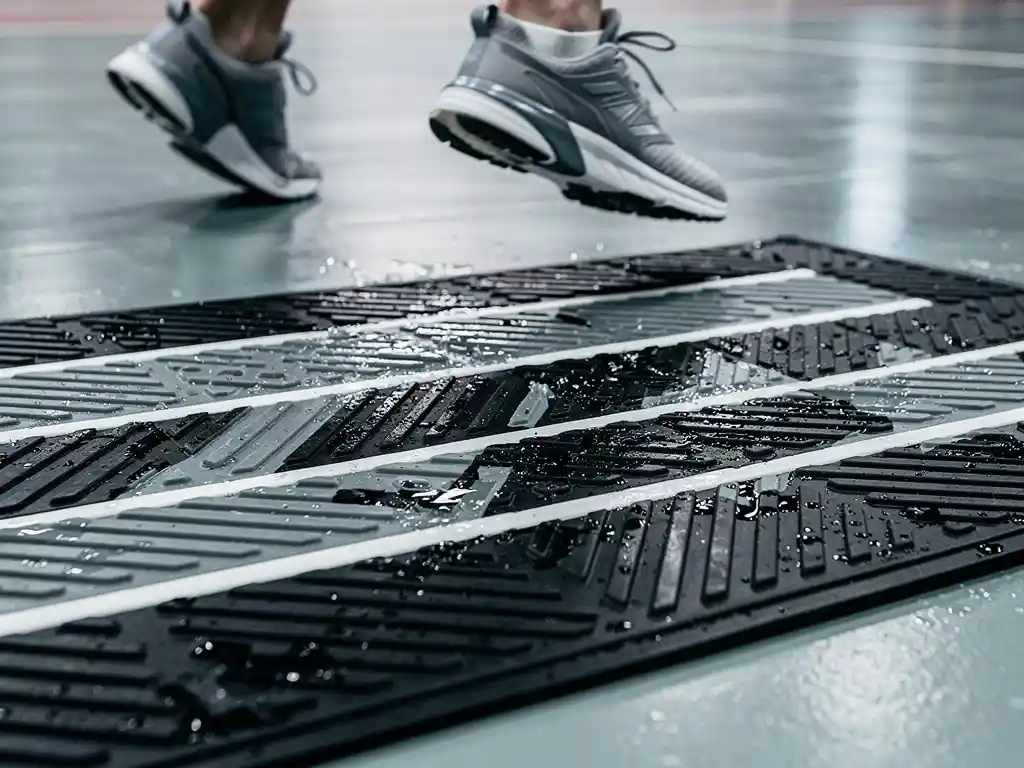
Rubber matting prevents slips by providing a textured, non-porous surface that maintains grip even when exposed to sweat, water, or cleaning fluids. Unlike smooth hard floors, rubber mats create friction between the foot or shoe and the surface, slowing the kind of sudden lateral movement that causes falls. The material also resists moisture absorption, so it does not become saturated or slippery over time.
Beyond traction, rubber matting adds a layer of cushioning that reduces impact on joints, which matters in environments where athletes spend long periods standing or training. Thicker mats are particularly useful in weight rooms and functional training areas, where heavy equipment is frequently moved or dropped.
Rubber mats are also practical from a maintenance standpoint. Because genuine rubber is non-porous, it does not absorb bacteria, odors, or liquids. A wipe-down with mild detergent and water is enough to keep the surface clean and safe. This ease of cleaning is a real advantage in busy sports venues where hygiene and turnaround time both matter.
Placement is just as important as material. Mats work best when positioned at entry points, in front of equipment, and in transition zones between wet and dry areas. A well-placed mat does not just protect the person standing on it; it also prevents water and dirt from being tracked onto surrounding surfaces.
What safety standards apply to flooring in sports facilities?
Sports facility flooring in the United States is guided by a combination of ASTM International standards, ADA (Americans with Disabilities Act) accessibility requirements, and sport-specific guidelines from governing bodies such as FIBA for basketball or USA Gymnastics for gymnastics halls. These standards set minimum requirements for slip resistance, shock absorption, surface regularity, and load-bearing capacity.
Slip resistance is measured using the coefficient of friction (COF). Most safety guidelines recommend a minimum static COF of 0.5 for dry surfaces and higher thresholds for areas regularly exposed to water. Wet areas like pool surrounds typically require surfaces that meet stricter COF values to account for the increased slip risk.
Beyond slip resistance, standards also address how much force a floor absorbs during impact, which affects both safety and athletic performance. Floors that are too hard increase injury risk, while floors that are too soft reduce stability. Facility managers should verify that any flooring product they install carries documentation confirming compliance with the relevant standards for their specific use case.
How often should sports facility mats and flooring be replaced?
The replacement interval for sports facility mats and flooring depends on traffic volume, material type, and the intensity of use. As a general guideline, high-traffic rubber mats in gyms and weight rooms should be inspected every six to twelve months, with replacement considered when visible wear, surface cracking, or loss of traction is detected. Flooring in lower-traffic zones may last considerably longer before showing signs of degradation.
Material quality plays a significant role in how long flooring lasts. Standard rubber mats made from lower-grade compounds tend to harden, crack, or compress over time, especially in environments with extreme temperature variation. Higher-quality rubber, particularly products made with fiber-reinforced compounds, maintains its structural integrity and surface texture for much longer under the same conditions.
Rather than replacing on a fixed schedule, the most practical approach is a condition-based assessment. Facility managers should look for these warning signs during regular inspections:
- Surface cracking, peeling, or crumbling
- Permanent compression or thinning in high-use areas
- Reduced traction or increased slip incidents reported by users
- Difficulty cleaning or persistent odors despite regular maintenance
- Visible separation at seams or edges lifting from the floor
Addressing these issues promptly is important for both safety and cost management. A mat that has lost its traction or structural integrity is no longer doing its job, and delaying replacement increases the risk of injury and potential liability for the facility.
At LRP Matting, we manufacture rubber mats built to handle the demands of active sports environments. Our mats are made from 100% recycled genuine rubber, including options using our proprietary Fiber Reinforced Rubber Compound (FRC®), which gives them extra strength and a longer service life. Whether you need standard sizes or custom-cut solutions for a specific layout, we can help you find the right fit. Explore our sports and recreation matting options to see what works for your facility.
Frequently Asked Questions
Can I install rubber matting over existing flooring, or does the old surface need to be removed first?
In most cases, rubber mats can be laid directly over existing hard surfaces like concrete, tile, or sealed wood, provided the base floor is clean, level, and structurally sound. Uneven or damaged subfloors can cause mats to shift, buckle, or create trip hazards at the edges, so any significant cracks or dips should be repaired before installation. For permanent installations, adhesive bonding or interlocking systems can help secure the mats and eliminate edge lift in high-traffic zones.
What is the best way to clean sports facility rubber mats without reducing their traction?
The safest approach is regular cleaning with a mild detergent diluted in warm water, applied with a mop or scrub brush and thoroughly rinsed. Avoid solvent-based cleaners, bleach at high concentrations, or wax-based products, as these can degrade the rubber compound over time and leave a residue that actually reduces grip. For heavily soiled mats, a wet vacuum or auto-scrubber with a soft-bristle pad is effective without causing surface damage.
How do I choose the right mat thickness for different areas of a sports facility?
Thickness selection depends primarily on the type of activity and the level of impact expected in that zone. Entrance areas and corridors typically do well with mats in the 3/8u0022 to 1/2u0022 range, which provide adequate traction without creating a significant trip edge. Weight rooms and functional training areas benefit from thicker mats — typically 3/4u0022 to 1u0022 or more — to absorb the impact of dropped equipment and protect both the floor and the athletes. Pool surrounds and wet zones prioritize drainage design over thickness, so a thinner mat with deep drainage channels is often more effective than a thicker solid mat.
Are there specific matting requirements for facilities that host organized competitions or certified events?
Yes — facilities hosting sanctioned competitions are often required to meet flooring standards set by the relevant sport’s governing body, such as FIBA for basketball, World Athletics for track events, or USA Gymnastics for gymnastics. These standards may specify minimum COF values, surface regularity tolerances, or approved product certifications that go beyond general safety guidelines. If your facility is pursuing certification or planning to host competitive events, it is worth reviewing the specific technical requirements of the governing body early in the flooring selection process to ensure compliance.
What are the most common mistakes facilities make when trying to prevent slips, and how can they be avoided?
One of the most frequent mistakes is treating slip prevention as a one-time purchase rather than an ongoing program — buying mats and then neglecting inspection, cleaning, and timely replacement. Another common error is placing mats only in obvious wet zones while overlooking transition areas between surfaces, which are statistically high-risk spots for falls. Facilities also sometimes choose flooring based on cost alone without verifying that the material meets the COF requirements for their specific environment, leaving them with surfaces that look appropriate but underperform on traction.
How can facility managers document and track flooring safety for liability purposes?
Maintaining a written inspection log is the most practical starting point — recording the date, inspector name, areas checked, and any issues identified or resolved. Photographs taken during routine inspections provide timestamped visual evidence of surface condition, which can be valuable if a slip incident ever leads to a legal claim. Facilities should also keep records of product specifications, installation dates, and any COF testing results for installed flooring, as this documentation demonstrates a proactive approach to safety management.
Is rubber matting suitable for outdoor sports areas, or is it only effective indoors?
High-quality rubber matting can perform well in outdoor sports environments, but the product needs to be specifically rated for exterior use. Outdoor-grade rubber mats are formulated to resist UV degradation, temperature extremes, and prolonged moisture exposure without cracking or hardening. Standard indoor mats are not designed for these conditions and will deteriorate significantly faster when exposed to direct sunlight and rain, so always confirm the product’s intended application before installing in an outdoor setting.
Related Articles
- What are the biggest flooring maintenance mistakes?
- How does flooring affect workplace comfort?
- What factors increase floor wear in manufacturing environments?
- What flooring improvements can increase workplace comfort?
- How does dirt affect slip resistance?
- What is the best rubber mat thickness for a horse stall?
- How do you protect a concrete floor in a cold storage facility?
- How does stall flooring affect a horse's overall well-being?
- What is the best flooring for a high-traffic horse barn?
- How do you know if your factory floor is causing worker fatigue?