
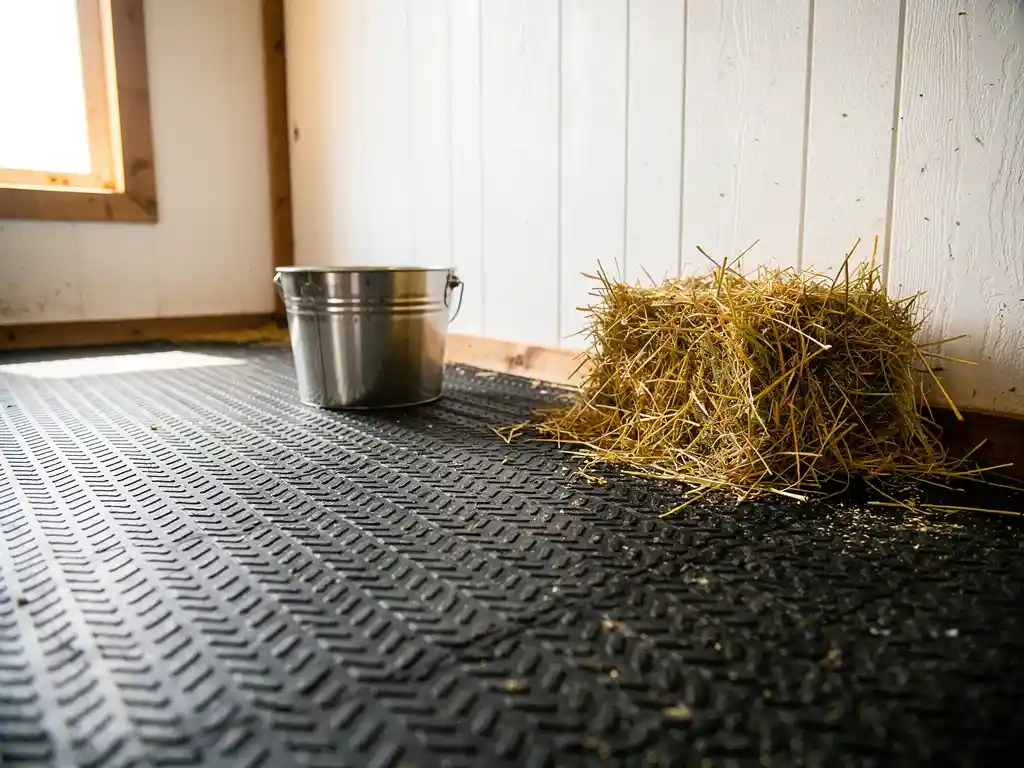
Preventing bacterial buildup on a veterinary stall floor comes down to three things: choosing a non-porous flooring material, maintaining a consistent cleaning routine, and eliminating gaps and seams where moisture and organic matter collect. Rubber mats are widely considered the most hygienic and practical option for veterinary stalls because they are non-porous, easy to disinfect, and resistant to the moisture bacteria need to survive. Pair the right flooring with a solid daily cleaning habit, and you will dramatically reduce the risk of infection for the animals in your care.
Why do bacteria thrive on veterinary stall floors?
Bacteria thrive on veterinary stall floors because of the constant combination of moisture, organic waste, and warmth. Urine, feces, blood, and other biological fluids create the perfect environment for pathogens to multiply quickly, especially when they seep into porous or cracked flooring surfaces that cleaning products cannot fully reach.
Concrete, for example, is a common stall flooring material, but it is highly porous. Over time, microscopic cracks form, and organic material works its way in, creating pockets of contamination that routine mopping simply cannot address. The same applies to wood and compacted dirt floors, which absorb moisture and harbor bacteria at levels that pose a real health risk to animals and veterinary staff alike.
Temperature also plays a role. Stalls are warm environments, and warmth accelerates bacterial growth. When moisture sits on a surface for even a short period, the conditions for rapid microbial multiplication are already in place. This is why flooring material and drainage design matter so much in a veterinary setting—not just cleaning frequency.
What types of stall flooring are most resistant to bacteria?
The most bacteria-resistant stall flooring options are non-porous materials that do not absorb moisture, do not crack under animal weight, and have smooth or textured surfaces that are easy to disinfect. Rubber matting is the top choice for veterinary clinic flooring, followed by sealed epoxy-coated concrete and certain interlocking composite tiles.
Why rubber matting leads the category
Genuine rubber is non-porous by nature, which means it does not absorb urine, blood, or cleaning fluids. Bacteria have nowhere to hide. The surface can be scrubbed and disinfected thoroughly, and rubber does not crack, peel, or crumble under the repeated stress of animal movement and exposure to harsh cleaning chemicals.
Rubber also provides insulation against cold and damp conditions, which matters in veterinary stalls where animals may be recovering from surgery or illness and are more vulnerable to environmental stressors. The combination of hygiene and comfort makes it a practical, long-term investment for any veterinary facility.
What to avoid
Bare, unsealed concrete is one of the worst choices for bacterial resistance in a stall environment. Wood absorbs moisture and is nearly impossible to disinfect completely. Straw or shavings bedding on any hard floor reduces slip risk but can trap moisture and organic matter close to the surface, creating ideal conditions for bacterial growth if it is not changed frequently enough.
How do rubber mats help prevent bacteria buildup in stalls?
Rubber mats help prevent bacterial buildup in stalls by creating a sealed, non-porous barrier between animals and the floor surface beneath. Because genuine rubber does not absorb moisture, biological fluids drain away or remain on the surface, where they can be cleaned off completely, rather than soaking into the material and feeding bacterial colonies below.
The surface of a rubber mat can be fully disinfected with mild detergent and water, and it will not degrade with repeated cleaning the way softer or porous materials do. This makes routine sanitation genuinely effective rather than merely cosmetic. You are removing pathogens rather than pushing them into a surface that retains them.
Rubber mats also reduce the amount of bedding needed in a stall. Less bedding means less organic material sitting on the floor, which directly reduces the food source bacteria depend on. Some veterinary and agricultural facilities report significant reductions in bedding costs alongside improved hygiene, making rubber matting a practical choice from both a health and an operational standpoint.
Drainage design is another important factor. Mats with textured or perforated surfaces allow liquids to move away from the area where the animal stands, reducing the amount of time moisture stays in contact with the floor. The faster fluids drain, the less opportunity bacteria have to establish themselves.
What cleaning routine best controls bacteria on stall floors?
The most effective cleaning routine for controlling bacteria on stall floors combines daily waste removal, regular disinfection with an appropriate veterinary-grade cleaner, and periodic deep cleaning of the entire floor surface, including any matting. Consistency matters more than intensity because bacteria multiply quickly, and gaps in routine allow populations to reestablish.
Daily steps
- Remove all solid waste and soiled bedding as early in the day as possible.
- Rinse the floor surface with water to remove residual organic material.
- Apply a veterinary-approved disinfectant and allow the appropriate dwell time before rinsing.
- Allow the floor to dry fully before returning animals to the stall.
Weekly and periodic steps
Once a week, lift rubber mats (if they are not permanently installed) and clean both the mat surface and the floor beneath. Moisture and organic matter can work their way under mats over time, especially around edges and seams, so cleaning underneath is just as important as cleaning the top surface.
Every few weeks, disinfect the walls, drainage channels, and any fixtures in the stall. Bacteria do not stay on the floor; they travel on boots, equipment, and animal hooves. A thorough approach to the entire environment helps prevent contamination from cycling back to the floor you just cleaned.
What mistakes allow bacteria to build up faster in stalls?
The most common mistakes that accelerate bacterial buildup in stalls are infrequent waste removal, using flooring with too many seams or gaps, skipping the step of cleaning underneath mats, and using cleaning products at incorrect dilutions. Each of these creates conditions in which bacteria can survive and multiply between cleaning sessions.
Leaving wet bedding in place is one of the fastest ways to create a bacterial problem. Wet organic material is essentially a growth medium, and the longer it stays in contact with the floor, the deeper contamination penetrates. Even on rubber, prolonged contact with soiled bedding creates surface-level bacterial populations that require more aggressive cleaning to address.
Too many seams in the floor covering are another common issue. Every gap between mats or tiles is a place where moisture and debris collect and where cleaning tools cannot reach effectively. Choosing larger mats that minimize the number of seams in an installation directly reduces the number of bacterial hiding spots in the stall.
Using disinfectants incorrectly is also surprisingly common. Applying a product at too low a concentration reduces its effectiveness, while using it at too high a concentration can damage flooring materials or leave residues that irritate animals. Always follow the manufacturer’s guidelines for veterinary environments specifically, as some general-purpose disinfectants are not appropriate for spaces where animals will be standing and lying down.
Finally, neglecting drainage is a mistake that compounds over time. If your stall floor does not drain well, moisture lingers, bacteria multiply faster, and cleaning becomes more difficult. Addressing drainage as part of your flooring setup, rather than as an afterthought, saves significant effort in the long run.
If you are looking for a flooring solution that makes all of the above easier to manage, we at LRP Matting offer custom rubber matting cut to the exact dimensions of your stall. Fewer seams, a fully non-porous surface, and mats built to handle the demands of veterinary clinic flooring day after day. Get in touch with us, and we will help you find the right fit for your facility.
Frequently Asked Questions
How often should rubber mats in veterinary stalls be fully replaced?
High-quality rubber mats used in veterinary stalls can last anywhere from 10 to 20 years when properly maintained, so full replacement is rarely needed on a fixed schedule. Instead, inspect mats regularly for signs of cracking, surface degradation, or permanent warping that prevents a flat, sealed fit against the floor. If a mat no longer lies flat or has developed surface breaks that trap moisture, it is time to replace it—regardless of age.
Can I use any disinfectant on rubber stall mats, or are some products harmful to the material?
Not all disinfectants are safe for rubber surfaces. Harsh oxidizing agents, bleach at high concentrations, and certain solvent-based cleaners can degrade rubber over time, causing it to dry out, crack, or lose its non-porous integrity. Always choose veterinary-approved, rubber-compatible disinfectants and check the product label for material compatibility. When in doubt, test a small inconspicuous area of the mat before applying a new product to the full surface.
What is the best way to handle the edges and seams between rubber mats to prevent bacteria from getting underneath?
The most effective approach is to minimize the number of seams in the first place by using custom-cut mats sized to fit your stall with as few joins as possible. Where seams do exist, press mats tightly together and consider using mat tape or edge trim designed for veterinary flooring to seal the gap. During weekly deep cleans, always lift the mats and clean the subfloor beneath, paying particular attention to the areas along edges where moisture is most likely to have migrated.
Is rubber matting safe for animals that are recovering from surgery or have open wounds?
Yes, rubber matting is generally considered one of the safest flooring options for post-surgical or injured animals precisely because it can be thoroughly disinfected between uses, leaving no residual contamination that could infect a wound. Its cushioned surface also reduces pressure on joints and incision sites compared to bare concrete. Just ensure the mat has been fully cleaned, disinfected, and allowed to dry before a recovering animal is placed on it, and use a veterinary-grade disinfectant that leaves no irritating residue.
How do I know if my current stall floor has a bacterial contamination problem I can't see?
Persistent odors that remain even after cleaning are one of the clearest signs of deep bacterial contamination, as surface cleaning alone will not eliminate colonies embedded in porous materials. You can also have environmental swab tests performed by a veterinary microbiologist to identify pathogen levels on your floor surfaces—this is particularly useful after a disease outbreak or when animals are repeatedly falling ill without a clear clinical cause. Visible staining, pitting, or crumbling on concrete or wood floors is another indicator that bacteria have penetrated beyond the surface.
What should I do if an animal with a contagious illness has been in a stall? Is standard cleaning enough?
Standard daily cleaning is not sufficient after a confirmed case of a contagious illness. The stall should be taken out of use, stripped of all bedding and organic material, and subjected to a full terminal disinfection protocol using a broad-spectrum, veterinary-grade disinfectant proven effective against the specific pathogen involved. Rubber mats should be removed, cleaned on both sides, and disinfected separately before being returned to a fully dried and disinfected subfloor. Consult your veterinary infection control guidelines or a veterinary microbiologist for pathogen-specific protocols.
Can rubber stall mats be used on top of existing concrete without any additional preparation?
In most cases, yes—rubber mats can be laid directly on existing concrete, which is one of the reasons they are such a practical retrofit solution for older veterinary facilities. However, the concrete subfloor should be as level and crack-free as possible before installation, since uneven surfaces can cause mats to rock or shift, creating gaps where moisture collects. If the existing concrete is heavily cracked or has poor drainage, addressing those issues before laying mats will significantly improve the long-term hygiene performance of your flooring.
Related Articles
- What makes a standing workstation ergonomic?
- How does floor design affect physical strain in the workplace?
- What affects the lifespan of sports flooring?
- What causes sports facility floors to wear out?
- How can you improve traction on existing floors?
- What thickness of rubber mat is best for a horse trailer floor?
- How do you protect a finished floor during a renovation project?
- Why is my horse stiff after being in the stall overnight?
- What flooring do professional equestrian facilities use in their stalls?
- Can a hard barn floor cause tendon damage in horses?