
A floor safety checklist should cover the identification of physical hazards, the condition of flooring surfaces, the adequacy of matting and drainage, signage, and maintenance schedules. It gives facilities a structured way to spot risks before they cause accidents. The checklist applies to any workplace where people walk, stand, or operate equipment. Below, we answer the most common questions about floor safety so you can build a practical inspection routine.
What are the most common floor hazards in the workplace?
The most common floor hazards in the workplace are wet or slippery surfaces, uneven flooring, poor drainage, inadequate lighting, and worn or damaged matting. These conditions increase the risk of slip and fall incidents, which remain one of the leading causes of workplace injuries across industries, including manufacturing, food processing, and retail.
Wet surfaces are the most frequent offender. Spills, condensation, cleaning residue, and water tracked in from outside can all make a floor dangerously slippery in seconds. Uneven surfaces, such as raised thresholds, cracked concrete, or buckled flooring, create tripping hazards that are easy to overlook during a busy workday.
Poor drainage is a related issue, particularly in industrial and agricultural settings where water, oils, or other liquids are regularly present. When liquids have nowhere to go, they pool and create persistent slip zones. Inadequate lighting compounds every other hazard by making it harder for workers to see what they are walking on. Worn matting is also worth calling out specifically: a mat that has lost its texture or grip can be more dangerous than no mat at all, because it gives a false sense of security while providing little actual slip resistance.
What should a floor safety checklist include?
A floor safety checklist should include an assessment of surface conditions, drainage and moisture management, matting placement and condition, signage, lighting, and a record of any maintenance actions taken. Each item should be checked systematically so nothing is overlooked during a floor safety inspection.
Here is a practical list of what to cover:
- Surface condition: Look for cracks, chips, uneven joints, or worn areas that could cause trips or falls.
- Slip resistance: Check whether flooring materials provide adequate grip, especially in wet or high-traffic zones.
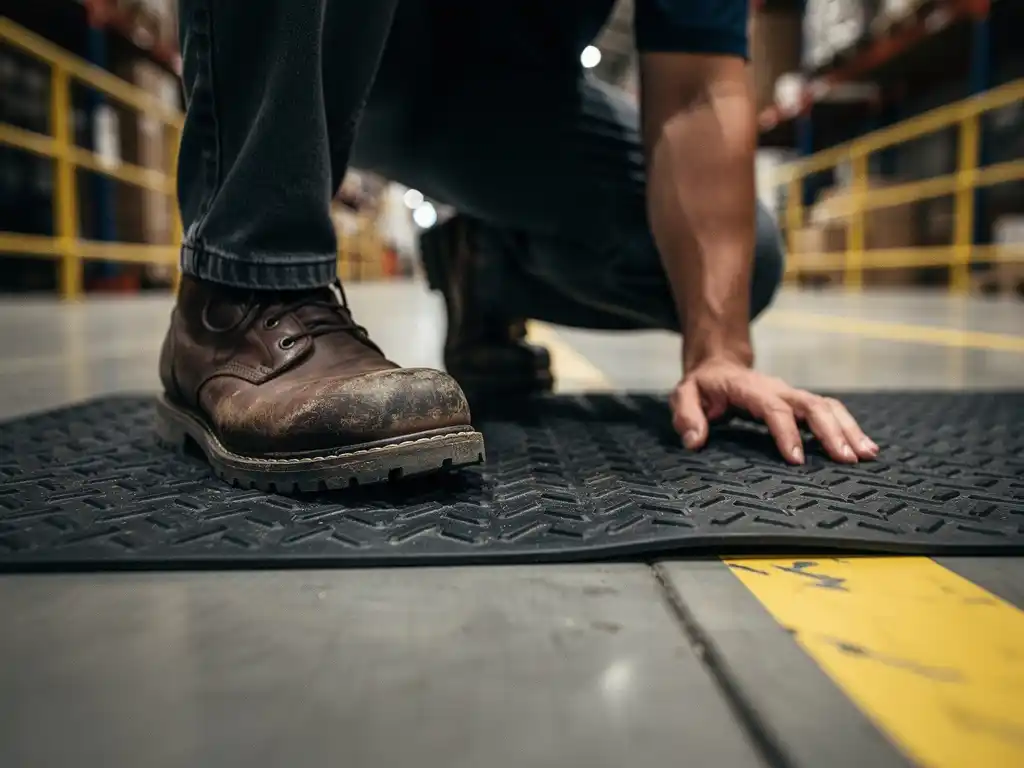
- Matting: Inspect mats for curled edges, tears, loss of texture, or displacement from their intended position.
- Drainage: Confirm that drains are clear and functioning, and that liquids are not pooling on the floor.
- Signage: Verify that wet floor signs, hazard markers, and directional indicators are in place and visible.
- Lighting: Ensure all floor-level areas are adequately lit, including transitions between rooms and stairwells.
- Housekeeping: Check that walkways are clear of cables, materials, or debris that could cause a trip.
- Maintenance log: Record the date, inspector name, findings, and any corrective actions taken.
The checklist should be specific enough to be actionable. Vague entries like “floor looks okay” are not useful. Each item should prompt a yes or no answer, with space to note the exact location and nature of any issue found.
How often should a floor safety inspection be conducted?
Floor safety inspections should be conducted at least once a month in most workplaces, with more frequent checks in high-risk environments such as commercial kitchens, manufacturing floors, or areas exposed to regular moisture. Some facilities benefit from daily visual walkthroughs in addition to formal monthly inspections.
The right frequency depends on the nature of the work being done. A dry office environment has different risks than a wet processing plant. In settings where liquids, oils, or heavy foot traffic are constant, a daily or even shift-by-shift check of high-traffic zones makes practical sense. Formal documented inspections, where findings are recorded and signed off, are typically done monthly or quarterly and form part of a broader workplace safety compliance program.
Seasonal changes are also worth factoring in. Rain, snow, and ice in winter months increase the amount of moisture tracked indoors, raising slip risks near entrances and transition areas. Adjusting your inspection frequency around these periods is a straightforward way to stay ahead of floor hazards before they cause harm.
What’s the difference between anti-fatigue and anti-slip matting?
Anti-fatigue matting is designed to reduce physical strain on workers who stand for long periods, while anti-slip matting is designed to prevent slipping by increasing surface grip. The two serve different purposes, though some mats are engineered to provide both benefits at once.
Anti-fatigue mats work by providing a slightly cushioned surface that encourages small, continuous muscle movements in the legs and feet. This reduces the discomfort and long-term health effects associated with prolonged standing, such as back pain, leg fatigue, and poor circulation. They are commonly used at assembly lines, checkout counters, and workstations where employees stand in one place for extended periods.
Anti-slip mats, on the other hand, focus on traction. They are made with textured surfaces or materials that grip both the floor beneath and the footwear above, reducing the chance of a slip and fall. They are particularly useful in wet areas, entranceways, and any zone where spills or moisture are a regular occurrence.
When choosing between the two, think about what the primary risk is in a given area. If the concern is worker comfort and fatigue, choose an anti-fatigue mat. If the concern is slip and fall prevention, choose a mat with strong slip resistance. In many industrial and commercial settings, the answer is a mat that addresses both.
When should rubber matting be replaced?
Rubber matting should be replaced when it shows visible signs of wear that reduce its effectiveness, including curled or lifted edges, loss of surface texture, cracks, thinning, or permanent deformation. A mat that no longer lies flat or grips the floor properly is a floor hazard rather than a solution to one.
There is no fixed lifespan that applies to every mat, because durability depends heavily on the quality of the material, the volume of traffic, and the conditions the mat is exposed to. High-quality rubber mats made from durable compounds will outlast cheaper alternatives significantly, especially in demanding environments. That said, even the best mats eventually wear out.
A few signs that replacement is overdue:
- Edges that curl up and create a tripping hazard
- Surface texture that has worn smooth, reducing slip resistance
- Cracks or tears in the mat body
- Permanent compression or deformation that prevents the mat from lying flat
- Visible thinning that reduces cushioning or drainage performance
Including mat condition as a standing item on your floor safety checklist makes it easy to catch these issues before they become a problem. Replacing a worn mat is far less costly than dealing with a preventable slip and fall.
Who is responsible for floor safety compliance in a facility?
Floor safety compliance is a shared responsibility. Facility managers and health and safety officers are typically accountable for setting up inspection systems and ensuring standards are met, while supervisors and workers on the floor play an active role in reporting hazards and following safe practices day to day.
In most organizations, the overall responsibility for workplace safety, including floor safety, sits with management. This means putting inspection schedules in place, providing the right matting and equipment, training staff on hazard reporting, and keeping records of inspections and corrective actions. In regulated industries, there may also be legal obligations under occupational health and safety legislation that define specific duties for employers.
That said, floor safety works best when everyone in a facility treats it as their concern. Workers who notice a spill, a damaged mat, or a drainage issue and report it promptly are just as important to a safe environment as the formal inspection process. Building a culture where floor hazards are taken seriously at every level is one of the most effective ways to reduce slip and fall incidents over time.
At LRP Matting, we understand that good flooring is one of the most practical investments a facility can make in its safety program. Our rubber mats are built to perform in demanding environments, from industrial production floors to commercial spaces, and are designed to stay in place, maintain their grip, and hold up over time. If you are looking for matting that supports your floor safety goals, explore our industrial matting solutions to find the right fit for your facility.
Frequently Asked Questions
How do I get started building a floor safety inspection program from scratch?
Start by walking your facility and identifying all areas where people walk, stand, or operate equipment, then categorize them by risk level (e.g., wet zones, high-traffic corridors, entranceways). Use those findings to build a checklist tailored to your specific environment, assign a responsible person for each inspection, and establish a documentation system — even a simple paper log or spreadsheet works to start. Once the basics are running consistently, you can layer in more formal processes like digital inspection tools or scheduled safety reviews.
What's the best way to document floor safety inspections so they hold up for compliance purposes?
Each inspection record should include the date, the name of the inspector, a checklist of items reviewed, the specific location and description of any hazard found, and the corrective action taken along with a follow-up date. Avoid vague notes — entries like ‘mat near loading dock has curled edges, replaced on [date]’ are far more defensible than ‘mats checked.’ Keeping a running log, whether on paper or digitally, creates an audit trail that demonstrates due diligence if an incident ever occurs.
Can the wrong type of matting actually make a floor more dangerous?
Yes — and this is one of the most common matting mistakes facilities make. A mat with curled or raised edges creates a trip hazard, a mat that has lost its surface texture provides a false sense of grip, and a mat that is not rated for wet conditions can become as slippery as the bare floor beneath it. Choosing the right mat for the specific conditions in each area is just as important as having a mat in place at all.
What should workers do when they spot a floor hazard but can't fix it immediately?
The immediate priority is to make the hazard visible to others — place a wet floor sign, a cone, or a physical barrier around the area to alert anyone approaching. Then report it through whatever hazard reporting system your facility uses, whether that’s a supervisor, a digital form, or a physical log, so it can be addressed and documented. Workers should never assume someone else has already reported it; a quick report takes seconds and can prevent a serious injury.
Are there specific industries or environments where floor safety requirements are stricter?
Yes — industries such as food processing, commercial kitchens, healthcare, manufacturing, and construction are subject to more stringent floor safety expectations due to the constant presence of liquids, oils, heavy equipment, or vulnerable populations. In these settings, occupational health and safety regulations may specify requirements around slip resistance ratings, drainage design, matting materials, and inspection frequency. It is worth reviewing the relevant legislation or standards for your industry, as non-compliance can carry significant legal and financial consequences beyond the human cost of an injury.
How do seasonal changes like winter weather affect floor safety, and what steps should facilities take?
Winter months significantly increase indoor floor hazards because rain, snow, slush, and ice are tracked in through entranceways, creating wet and slippery conditions near doors and transition zones. Facilities should increase inspection frequency at these entry points, add or upgrade absorbent entrance matting to capture moisture before it spreads, and ensure wet floor signage is readily available for quick deployment. Reviewing your matting layout and drainage performance at the start of each wet season is a simple but effective way to stay ahead of seasonal slip risks.
What's the most overlooked item on most floor safety checklists?
Lighting is consistently underestimated as a floor safety factor. Poor or uneven lighting doesn’t create a physical hazard on its own, but it makes every other hazard — a cracked tile, a mat edge, a wet patch — significantly harder to see and avoid. Transition areas like doorways, stairwells, and the boundaries between indoor and outdoor spaces are particularly prone to lighting gaps and deserve specific attention during any floor safety inspection.
Related Articles
- How do you reduce stress through facility design?
- What flooring improvements can increase workplace comfort?
- How do chemicals affect floor durability?
- How do you design a safe flooring layout for an equine hospital?
- What is the easiest floor to disinfect in an animal clinic?
- What is the best flooring solution for a temporary work site?
- What is the best flooring for a factory assembly line?
- Why does my horse paw at the stall floor?
- What flooring works best in an outdoor or covered sports venue?
- Is concrete a good floor for a horse stall?