
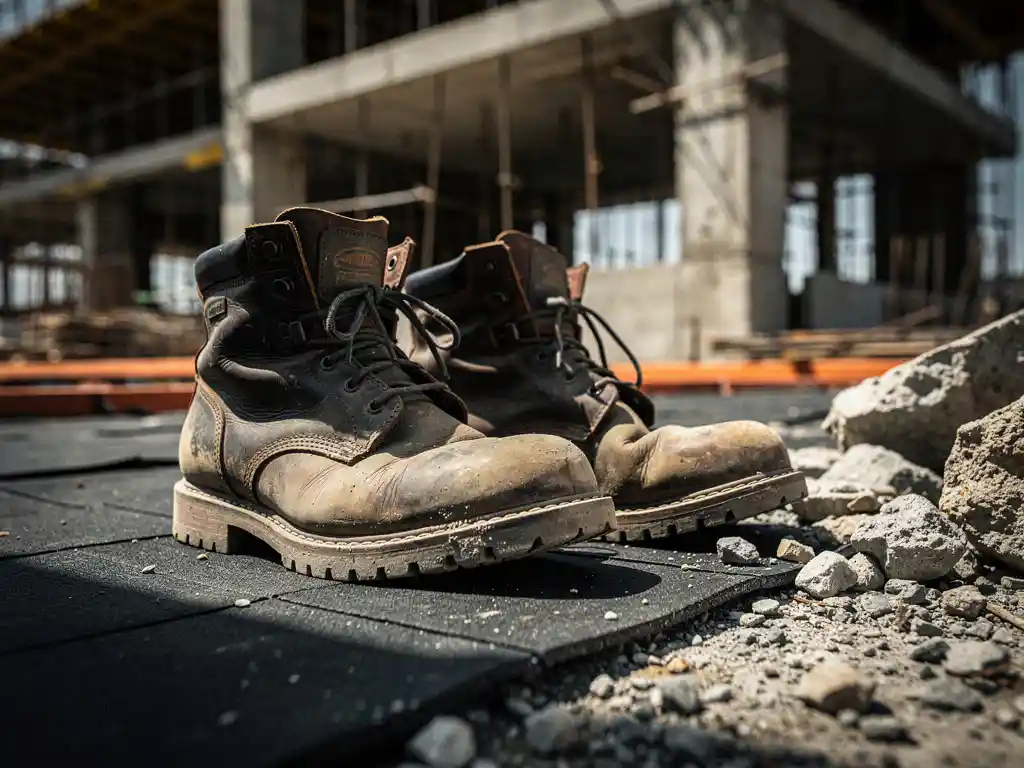
The best flooring solution for a temporary work site is interlocking rubber matting. It installs quickly without adhesives, handles heavy loads, protects the surface underneath, and comes up just as easily when the job is done. For most sites, rubber ground protection mats hit the sweet spot between durability, safety, and ease of use. Here is everything you need to know to choose the right option for your situation.
What is temporary work site flooring?
Temporary work site flooring is any surface covering installed to protect the ground, improve safety, and support operations during a project, then removed once the work is complete. Unlike permanent flooring, it requires no adhesives, no curing time, and no specialist installation. The goal is simple: give workers a stable, safe surface to stand and move on, and protect whatever lies underneath.
Temporary flooring comes in many forms, from interlocking rubber mats and composite panels to wooden boards and plastic tiles. What makes it “temporary” is not the material itself, but how it is used. A rubber mat that sits in a warehouse for six months and is pulled up at the end of a contract is temporary flooring. The same mat installed as a permanent fixture in a factory is not. The defining feature is portability and reusability.
Why does flooring matter on a temporary work site?
Flooring on a temporary work site directly affects worker safety, surface protection, and operational efficiency. Without proper ground cover, workers face slip-and-trip hazards, especially on wet or uneven terrain. The ground itself, whether it is grass, concrete, or a finished floor, can suffer serious damage from heavy foot traffic, machinery, and equipment.
Beyond safety, the right flooring keeps a site running smoothly. Unstable ground slows workers down, increases fatigue, and raises the risk of accidents. Warehouse floor protection, in particular, is a real concern when forklifts, pallet jacks, or heavy carts are moving across surfaces that were not designed for that kind of load. Damaged floors mean costly repairs after the project ends, which nobody wants to deal with.
There is also a comfort factor that is easy to underestimate. Workers who stand for long periods on hard, uneven surfaces tire faster and are more prone to injury. Good temporary flooring reduces physical strain, which keeps productivity up and sick days down.
What types of flooring are used on temporary work sites?
The most common types of temporary work site flooring are rubber mats, composite ground protection panels, wooden boards or plywood sheets, plastic interlocking tiles, and foam or anti-fatigue matting. Each works better in some situations than others, and the right choice depends on the load, the surface, and how long the site will be active.
- Rubber mats: Durable, slip-resistant, and available in large sizes. Ideal for industrial and commercial temporary setups, including warehouse floor protection during fit-outs or events.
- Composite ground protection panels: Heavy-duty plastic or composite boards designed for outdoor use, often used where vehicles and machinery need to cross soft ground.
- Plywood or wooden boards: A low-cost option for light-duty applications, but they absorb moisture, warp over time, and offer limited slip resistance.
- Plastic interlocking tiles: Lightweight and modular, suitable for indoor use in dry environments. Less effective for heavy loads or wet conditions.
- Anti-fatigue matting: Designed specifically for comfort in areas where workers stand for extended periods, such as assembly lines or temporary service counters.
For most serious work sites, rubber and composite options outperform the alternatives in durability, load-bearing capacity, and longevity.
What’s the difference between rubber mats and other temporary flooring options?
The key difference between rubber mats and other temporary flooring options is their durability combined with surface versatility. Rubber mats handle heavy loads, resist moisture, and provide consistent grip on almost any surface. Plastic tiles crack under heavy equipment. Wood warps and splinters when wet. Foam compresses over time and loses its protective properties. Rubber holds up under conditions that quickly degrade other materials.
Rubber vs. plastic interlocking tiles
Plastic tiles are lighter and cheaper upfront, but they are not built for heavy-duty environments. Under repeated forklift traffic or the weight of industrial equipment, they crack and deform. Rubber mats absorb impact rather than breaking under it, which makes them a far more reliable choice for demanding temporary work sites.
Rubber vs. wooden boards
Wood is a common improvised solution on construction sites, but it comes with real drawbacks. It absorbs water, which leads to warping, swelling, and rot. It can also become a serious slip hazard when wet. Rubber is non-porous, so it does not absorb moisture at all. It stays flat, stays grippy, and does not deteriorate when exposed to rain, cleaning products, or temperature swings.
Rubber vs. composite panels
Composite panels are a strong option for outdoor ground protection where vehicles need to cross soft terrain. For indoor or semi-indoor applications, however, rubber mats are generally easier to handle, quieter underfoot, and better suited for anti-fatigue and warehouse floor protection purposes. Composite panels also tend to be heavier and bulkier to transport and store.
How do you choose the best flooring for a temporary work site?
To choose the best flooring for a temporary work site, start by answering four questions: What loads will the floor carry? What is the existing surface? How long will the installation be in place? And what are the safety requirements? Your answers will point you toward the right material, thickness, and format.
- Load capacity: If forklifts or heavy machinery will be moving across the floor, you need thick, dense rubber mats or heavy-duty composite panels. Light foot traffic allows for lighter, more affordable options.
- Surface type: On concrete or hard floors, almost any mat works. On grass or soft ground, you need something rigid enough to spread the load and prevent sinking.
- Duration: A one-day event needs something that goes down and comes up in minutes. A three-month construction project needs something that stays stable over time without shifting or degrading.
- Safety requirements: Wet environments need high-grip, slip-resistant surfaces. Areas where workers stand need anti-fatigue properties. Outdoor sites need UV and weather resistance.
Size matters, too. Fewer seams mean fewer trip hazards and a more stable surface. Larger mats cover more ground with fewer joins, which is particularly useful in open warehouse or industrial spaces.
How do you install and remove temporary rubber matting on a work site?
Installing temporary rubber matting on a work site is straightforward. Clean the surface, lay the mats starting from one corner or edge, connect interlocking sections as you go, and check that the edges are flush and stable. No adhesives or tools are required for most interlocking rubber mat systems. Removal is just as simple: disconnect the sections, roll or stack them, and transport them to the next location.
For larger areas, it helps to plan the layout before you start. Work out how many mats you need, which direction the interlocking pattern runs, and where the edges will fall. This avoids awkward cuts or gaps at the perimeter. If the site has irregular dimensions, made-to-measure mats can be cut to fit the exact space, which reduces the number of seams and speeds up installation significantly.
When removing the mats, inspect each one for damage before storing or transporting. Rubber mats are built to last, but heavy machinery can cause cuts or compression damage over time. Catching issues early means you can address them before the next deployment rather than arriving on a new site with compromised flooring.
What should you look for in a temporary work site rubber mat?
When choosing a rubber mat for a temporary work site, prioritize slip resistance, load capacity, ease of connection, mat size, and material quality. These five factors determine whether a mat will perform safely and hold up across multiple deployments.
- Slip resistance: Look for a textured or patterned surface that maintains grip even when wet. This is non-negotiable for any site where spills, rain, or condensation are a factor.
- Load capacity: The mat needs to handle the heaviest thing that will move across it, whether that is a loaded pallet jack, a forklift, or heavy foot traffic from multiple workers at once.
- Interlocking design: Mats that connect securely stay in place under movement and do not create trip hazards at the joins. Quick-connect systems also speed up installation and removal.
- Mat size: Larger mats mean fewer seams. Fewer seams mean fewer potential trip points and a more stable overall surface. This is especially useful in open areas like warehouses or event spaces.
- Material quality: Genuine rubber, particularly fiber-reinforced rubber, outlasts cheaper alternatives. It does not crack, peel, or absorb moisture, which means it holds its shape and performance across many uses.
For sites with unusual dimensions or specific layout requirements, our custom rubber matting solutions are worth considering. We cut mats to any size or shape, which reduces seams and simplifies installation in spaces where standard sizes simply do not fit. At LRP Matting, we have been helping teams find the right flooring solution since 1971, and we are happy to help you determine exactly what your site needs.
Frequently Asked Questions
How many rubber mats do I actually need for my work site, and how do I calculate coverage?
Start by measuring the total square footage of the area you need to cover, then factor in about 5–10% extra to account for edge trimming, irregular layouts, or gaps around obstacles like pillars or equipment. If you are using standard interlocking mats, divide your total area by the coverage of a single mat to get your baseline number. For sites with unusual shapes or dimensions, opting for custom-cut mats can reduce offcuts and give you a more accurate coverage estimate without overspending.
Can temporary rubber mats be used outdoors in all weather conditions?
High-quality rubber mats are designed to handle outdoor conditions, including rain, UV exposure, and temperature fluctuations, without warping, cracking, or losing grip. However, not all rubber mats are created equal — look specifically for UV-stabilised, weather-resistant rubber if the installation will be exposed to direct sunlight or prolonged moisture. In freezing conditions, check the manufacturer’s temperature rating, as some lower-grade rubber compounds can stiffen or become brittle in extreme cold.
What is the best way to prevent rubber mats from shifting or moving on a smooth floor surface?
The most effective approach is to use mats with a secure interlocking connection system, which locks adjacent mats together and prevents lateral movement across the entire surface. For perimeter mats or areas with heavy directional traffic, rubber-to-rubber friction is usually sufficient on smooth concrete, but you can also use bevelled edge ramps around the perimeter to anchor the layout and eliminate any tendency for the mats to creep. Avoid adhesives unless the installation is semi-permanent, as they complicate removal and can damage the surface underneath.
How do I clean and maintain temporary rubber matting between deployments?
After each deployment, brush off loose debris, then wash the mats with a mild detergent and water using a stiff brush or pressure washer at a low setting. Allow them to dry fully before stacking or rolling for storage, as trapped moisture between stacked mats can lead to mould or surface degradation over time. Inspect each mat for cuts, deep compression marks, or damaged interlocking tabs before storing — minor surface wear is normal, but structural damage to the locking system should be addressed before the next use.
Are there any surfaces where temporary rubber matting should not be used?
Rubber mats are not ideal on very uneven or heavily contoured ground, such as deeply rutted terrain or surfaces with significant level changes, because the mats will not lie flat and can create their own trip hazards. On highly polished or delicate finished floors, always confirm that the rubber compound is non-marking and free of plasticisers that could stain or react with the surface coating. For soft outdoor ground like mud or waterlogged soil, composite ground protection panels are a better choice since they are rigid enough to bridge soft spots and distribute load more effectively.
What are the most common mistakes people make when setting up temporary work site flooring?
The most frequent mistake is underestimating the load requirements — choosing mats rated for foot traffic when forklifts or heavy equipment will actually be using the space. Another common error is failing to plan the layout in advance, which results in awkward seams, exposed edges, or gaps that become trip hazards. Finally, many teams skip the pre-installation surface check: laying mats over wet, dirty, or debris-covered floors reduces grip and can cause the mats to shift, undermining both safety and surface protection.
Can the same rubber mats be reused across multiple projects, and how long do they typically last?
Yes — reusability is one of the core advantages of quality rubber matting, and well-maintained mats can be deployed across dozens of projects over many years. The lifespan depends largely on the intensity of use, the loads they carry, and how well they are cleaned and stored between jobs. Fibre-reinforced rubber mats in particular are built for long-term, multi-deployment use; investing in a higher-quality mat upfront typically delivers a lower cost-per-use over time compared to cheaper alternatives that degrade after a handful of deployments.
Related Articles
- Why do floor surfaces wear unevenly?
- How do you reduce stress through facility design?
- How do you choose flooring for a multi-sport facility?
- What flooring is used in equine surgery facilities?
- How do you set up a new horse stall from scratch?
- How do you make a workshop floor more comfortable to work on?
- What is the best flooring for a factory assembly line?
- What should you put on a concrete barn floor to protect your horse?
- How do you know if your factory floor is causing worker fatigue?
- Can a hard barn floor cause tendon damage in horses?