
You reduce stress through facility design by addressing the physical environment directly: flooring, layout, lighting, and noise all affect how people and animals feel in a space. The right surfaces underfoot make a measurable difference in physical fatigue, anxiety, and overall comfort. This article walks through the most practical design choices, from flooring materials to matting solutions, and explains how each one contributes to a calmer, safer facility.
What facility design elements have the biggest impact on stress?
The facility design elements with the biggest impact on stress are flooring, acoustics, lighting, and spatial flow. Of these, flooring is often the most overlooked. People and animals spend hours standing, walking, or lying on surfaces, and a hard, slippery, or uneven floor creates constant low-level physical stress that compounds over time.
Noise is another major factor. Hard surfaces reflect sound, which raises ambient noise levels and increases tension in both workers and animals. Acoustic panels, soft wall coverings, and even cushioned flooring can help absorb sound and bring noise levels down.
Lighting matters too. Natural light reduces cortisol levels and improves mood, while harsh fluorescent lighting can cause eye strain and agitation. In stables and livestock facilities, consistent, calm lighting also helps regulate animal behavior and sleep cycles.
Finally, spatial flow affects stress in a practical way. Cluttered pathways, bottlenecks, and poorly organized workstations force people to move awkwardly and inefficiently, which adds physical and mental load. A well-designed facility removes friction from everyday movement, and that reduction in friction directly reduces stress.
How does flooring choice affect physical fatigue and discomfort?
Flooring choice affects physical fatigue by determining how much energy the body expends to stabilize itself and absorb impact with every step. Hard surfaces like concrete transfer force directly into joints and muscles, which causes fatigue more quickly than cushioned or resilient surfaces. Over a full workday, that difference becomes significant.
When people stand on rigid flooring for extended periods, the muscles in the legs, lower back, and feet work constantly just to maintain posture. This is sometimes called static muscle loading, and it is a well-recognized cause of workplace fatigue and musculoskeletal discomfort. Resilient flooring materials, including rubber, reduce that load by providing a degree of give underfoot.
Slip resistance is another dimension of this. A floor that feels uncertain underfoot forces people to tense their muscles and shorten their stride as a protective response. That constant guardedness is tiring. Flooring with consistent, reliable grip allows workers to move naturally and confidently, which reduces both physical and mental effort.
What types of environments benefit most from stress-reducing flooring?
The environments that benefit most from stress-reducing flooring are those where people or animals spend long periods on their feet, where slip hazards are present, or where hygiene and cleanliness are important. This includes manufacturing floors, commercial kitchens, gyms, veterinary clinics, stables, and livestock facilities.
Industrial and commercial spaces
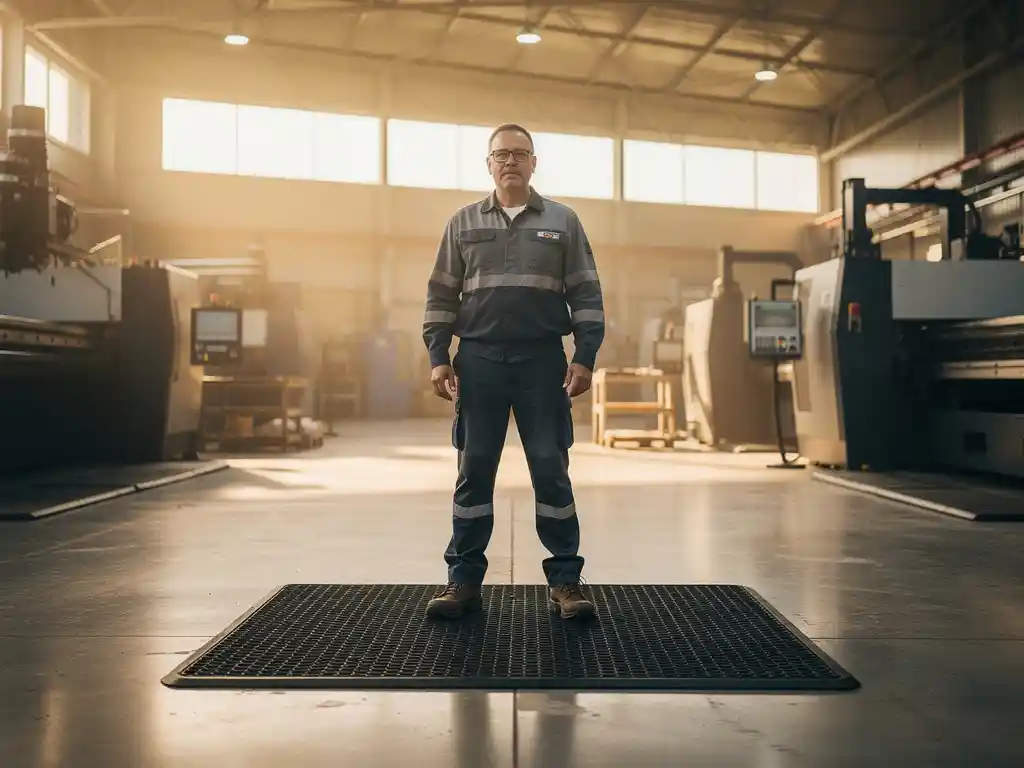
In manufacturing and assembly environments, workers often stand at the same station for hours. Anti-fatigue flooring in these areas reduces physical strain and supports better concentration. In commercial kitchens and food processing areas, the combination of wet floors and long shifts makes slip-resistant, cushioned flooring both a safety and a comfort priority.
Equine and veterinary facilities
In equine facility design and veterinary facility design, flooring plays a direct role in animal welfare. Horses are sensitive to their footing, and a slippery or hard stable floor increases anxiety and the risk of injury. Cushioned, non-slip surfaces help horses feel secure, which reduces stress-related behaviors like pawing, pacing, and reluctance to lie down. For veterinary facilities, flooring that is easy to clean and gentle on animals recovering from procedures is a practical priority.
How do rubber mats improve safety and reduce anxiety in high-risk areas?
Rubber mats improve safety in high-risk areas by providing consistent traction, cushioning impact, and creating a defined, stable surface in environments where floors are often wet, uneven, or heavily trafficked. The reduction in slip risk is direct and practical, and it also reduces the low-level anxiety that comes from working or moving on uncertain footing.
In areas like loading docks, wash bays, and animal handling zones, wet floors are a constant reality. Rubber is naturally non-porous, which means it does not absorb moisture or harbor bacteria the way porous materials can. This makes it easier to keep clean and reduces the risk of contamination, which matters both for hygiene and for the comfort of workers and animals in the space.
For animals specifically, the texture and give of rubber matting signals safety. A horse or cow that has secure footing is less likely to panic or resist handling, which makes the environment safer for both the animal and the handler. This connection between physical security and reduced anxiety is well recognized in stable design and livestock facility design.
What should you look for in stress-reducing matting for a facility?
When choosing stress-reducing matting for a facility, look for four main qualities: adequate cushioning, reliable slip resistance, durability under heavy use, and ease of cleaning. The right balance of these qualities depends on the specific environment, but all four matter regardless of the application.
- Cushioning: The mat should provide enough give to reduce joint and muscle fatigue without being so soft that it creates instability. This is particularly important in anti-fatigue applications for standing workers.
- Slip resistance: Look for a textured surface that maintains grip when wet. This is non-negotiable in kitchens, wash areas, and animal handling zones.
- Durability: A mat that compresses, cracks, or deteriorates quickly stops providing cushioning and can become a trip hazard. Heavy-duty environments require materials built to handle constant load and movement.
- Ease of cleaning: Non-porous materials that can be cleaned with mild detergent and water are far more practical in high-hygiene environments than porous alternatives that trap moisture and bacteria.
Size and seaming also matter. Fewer seams mean fewer edges to catch on, fewer places for debris to accumulate, and a cleaner overall appearance. In large facilities, larger mat formats simplify installation and reduce long-term maintenance.
How does matting contribute to animal welfare in agricultural facilities?
Matting contributes to animal welfare in agricultural facilities by reducing physical stress on joints, improving traction, and providing a warmer, more comfortable resting surface. In dairy, beef, and equine operations, the floor is where animals spend the majority of their time, and its quality directly affects their health, behavior, and productivity.
Hard concrete floors are common in agricultural buildings because they are durable and easy to hose down. But for animals, concrete offers no cushioning and limited grip, especially when wet. This leads to joint stress, hoof problems, reluctance to move, and increased injury risk. Rubber matting over concrete addresses all of these issues without requiring structural changes to the facility.
In livestock facility design and stable design, well-chosen matting also reduces the amount of bedding needed, since the mat itself provides insulation and comfort. This has practical cost benefits as well as welfare benefits. Animals that rest comfortably, move confidently, and experience less physical discomfort show better overall health outcomes, which is the foundation of any serious approach to animal welfare.
At LRP Matting, our agricultural rubber mats are made from 100% recycled materials and designed specifically for the demands of dairy, beef, and equine environments. Our livestock matting solutions are built to handle the weight, moisture, and daily wear of agricultural facilities while keeping animals comfortable and safe year-round.
Frequently Asked Questions
How do I know if my current facility flooring is contributing to stress or fatigue problems?
Start by observing behavior: if workers frequently shift weight, take unnecessary breaks, or report lower back and foot pain, hard or unsupportive flooring is likely a contributing factor. For animals, signs like reluctance to lie down, pacing, or uneven hoof wear can indicate poor footing. A simple walk-through with attention to surface hardness, grip consistency, and noise levels will reveal the most obvious problem areas. Consulting a flooring or facility design specialist can help you prioritize upgrades based on the highest-impact zones.
Can rubber matting be installed over existing concrete floors without major renovation?
Yes, one of the biggest practical advantages of rubber matting is that it can be laid directly over existing concrete without structural modifications. Most agricultural, commercial, and industrial rubber mats are designed to sit flat and stay in place through their own weight and friction, especially in larger formats. This makes it a cost-effective upgrade path for facilities that cannot afford full floor replacement. Just ensure the concrete surface is clean, level, and free of major cracks before installation to get the best fit and longevity from the matting.
What is the difference between anti-fatigue matting and standard rubber matting, and which one do I need?
Anti-fatigue matting is specifically engineered with a softer, more compressible core designed to reduce static muscle loading for people who stand in one place for extended periods, making it ideal for workstations, assembly lines, and commercial kitchens. Standard rubber matting prioritizes durability, traction, and impact resistance over cushioning softness, which makes it better suited for high-traffic areas, animal housing, and environments where heavy loads or movement are constant. In many facilities, both types are used in different zones depending on the activity. Identifying whether the primary need is worker comfort at a fixed station or general safety and surface protection across a larger area will guide the right choice.
How often should facility matting be replaced, and what are the signs it needs to be?
The lifespan of matting depends heavily on material quality and the intensity of use, but a general rule is to inspect mats every six months and replace them when they show visible compression, surface cracking, curling edges, or loss of grip texture. A mat that has permanently flattened no longer provides meaningful cushioning, and one with lifting edges becomes a trip hazard, which defeats its safety purpose entirely. In high-hygiene environments, also watch for discoloration or persistent odor that does not clear after cleaning, as these can indicate material breakdown or bacterial retention. Investing in heavier-duty mats upfront typically extends replacement intervals significantly.
Are there specific matting solutions recommended for both animal and worker safety in shared handling areas?
Yes, shared handling areas like wash bays, loading zones, and veterinary treatment spaces benefit most from heavy-duty rubber matting that combines firm grip, drainage capability, and easy sanitation. Look for mats with a raised stud or diamond-pattern surface that provides traction for both hooves and footwear, and choose non-porous rubber that can be pressure-washed without absorbing moisture or chemicals. Beveled or tapered edges are important in these shared zones to prevent tripping for handlers moving quickly. Seamless or large-format mat configurations are also preferable in these areas to minimize edges and simplify cleaning routines.
Does facility flooring really affect animal productivity, or is that an overstatement?
The link between flooring quality and animal productivity is well-supported in agricultural research, particularly in dairy operations. Cows housed on cushioned, non-slip surfaces spend more time lying down, which directly increases milk production because resting promotes blood flow to the udder. Poor flooring that causes hoof problems or joint discomfort also leads to lameness, which is one of the most costly welfare and productivity issues in livestock farming. In equine settings, a horse that is uncomfortable or anxious due to its environment will perform and recover less effectively, making flooring a legitimate performance and welfare variable, not just a comfort consideration.
What common mistakes should I avoid when selecting matting for a new or renovated facility?
The most common mistake is choosing matting based on upfront cost alone without accounting for durability, which often leads to frequent replacements that cost more over time than a higher-quality initial investment. Another frequent error is selecting a mat thickness or softness that is inappropriate for the application, such as using overly soft anti-fatigue matting in an area with heavy rolling equipment, which can cause instability and accelerated wear. Ignoring drainage requirements in wet environments is also a critical oversight, as solid-surface mats in wash areas can pool water and create slip hazards. Finally, underestimating the coverage area and using too many small mats with multiple seams increases maintenance burden and trip risk compared to fewer, larger mat sections.
Related Articles
- What factors influence animal comfort in housing facilities?
- What affects the lifespan of sports flooring?
- What makes an animal housing facility safe?
- What role does floor maintenance play in safety?
- How can you reduce fall risk in busy facilities?
- How do you know when a horse trailer floor needs replacing?
- How do you set up a new horse stall from scratch?
- How do you choose the right floor protection for a construction site?
- What is the best flooring for a horse barn aisle?
- How do you keep a sports facility floor safe in wet conditions?