
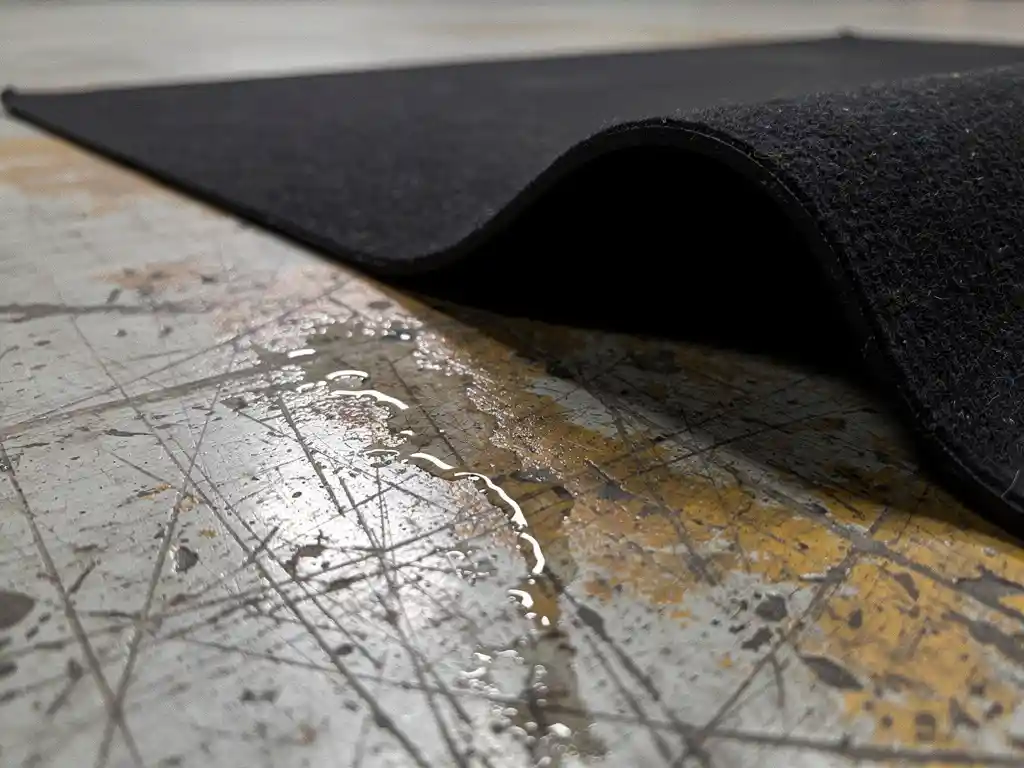
Floors become slippery over time mainly because their surface texture gradually wears down, and because substances like oils, moisture, dust, and cleaning product residue build up and reduce traction. This happens on almost every type of flooring material, from concrete and tile to wood and vinyl. The good news is that once you understand what causes it, floor safety becomes a lot easier to manage. Below, we answer the most common questions about floor slipperiness and what you can actually do about it.
What makes a floor more slippery as it ages?
As a floor ages, its surface texture wears down through repeated foot traffic, equipment movement, and general use. This smoothing effect reduces the microscopic grip that gives a floor its traction. Over time, even floors that started with strong slip resistance can become genuinely hazardous simply because the surface has been worn flat.
Different materials wear at different rates. Hard surfaces like polished concrete or ceramic tile lose their texture relatively quickly under heavy use. Softer materials may hold their texture longer but can develop cracks or surface degradation that creates uneven, unpredictable footing. In both cases, the result is the same: a floor that was once safe gradually becomes a slip and fall risk.
Age also affects the structural integrity of floor coatings and finishes. Anti-slip coatings applied during installation break down over time, especially in areas exposed to chemicals, UV light, or temperature fluctuations. Once the coating is gone, the underlying material is often far more slippery than the original surface ever was.
What substances cause floors to lose traction?
The most common substances that cause floors to lose traction are oils, fats, water, cleaning product residue, and fine dust or powder. Each of these acts as a lubricant between the sole of a shoe and the floor surface, dramatically reducing friction and increasing the risk of a slip and fall.
In commercial kitchens and food processing environments, animal fats and cooking oils are the primary culprits. In industrial settings, machine lubricants and hydraulic fluids are frequent offenders. Even in ordinary office or retail spaces, something as simple as tracked-in rainwater or a thin layer of dust can make a smooth floor dangerously slick.
Cleaning product residue is one of the most overlooked floor hazards. If a floor is mopped with a detergent that is not fully rinsed away, a thin film remains on the surface. This film may be invisible, but it significantly reduces slip resistance. The same applies to wax or polish that has been applied too thickly or has started to degrade.
How does cleaning frequency affect floor slipperiness?
Cleaning frequency has a direct impact on floor slipperiness. Floors that are cleaned too infrequently allow contaminants to build up and bond to the surface, making them harder to remove and more likely to cause slipping. However, cleaning too aggressively or with the wrong products can also strip away protective coatings and accelerate surface wear.
The goal is consistent, appropriate cleaning. Regular removal of surface contaminants prevents buildup without over-exposing the floor to harsh chemicals. Using the right cleaning products for the specific floor material matters just as much as how often you clean. A pH-neutral cleaner that lifts grease without degrading the surface finish is far more effective for long-term floor safety than a strong chemical applied less frequently.
It is also worth noting that cleaning schedules should reflect actual usage patterns. A high-traffic entrance area may need attention multiple times a day, while a low-traffic storage room may only need weekly maintenance. Matching cleaning frequency to foot traffic is a practical way to maintain consistent slip resistance without wasting resources.
Why are wet environments especially prone to slippery floors?
Wet environments are especially prone to slippery floors because water reduces the friction between shoe soles and floor surfaces almost immediately on contact. In areas where water is constantly present, such as commercial kitchens, bathrooms, pool decks, or livestock facilities, the floor surface rarely has a chance to dry out, which means the slip risk is persistent rather than occasional.
The problem is compounded when water mixes with other substances. Water combined with soap, oils, or biological matter creates a far more slippery surface than water alone. In agricultural settings, for example, a wet concrete floor covered in manure presents a serious floor hazard for both workers and animals.
Surface drainage also plays a major role. Floors that do not drain efficiently allow water to pool, which increases both the depth of the liquid layer and the duration of the hazard. Floors designed with drainage channels, textured surfaces, or slight gradients handle wet conditions far better than flat, smooth surfaces that allow standing water to accumulate.
What types of flooring materials resist becoming slippery over time?
Flooring materials that resist becoming slippery over time tend to share a few characteristics: they maintain surface texture under heavy use, they do not absorb contaminants, and they hold up well in wet or chemically active environments. Rubber, textured vinyl, and certain coated concrete options are among the most reliable choices for long-term slip resistance.
Rubber flooring is particularly effective because its natural texture provides grip even when wet, and it does not rely on a surface coating to deliver that grip. Unlike polished tile or smooth concrete, rubber maintains its traction properties as it ages. It is also non-porous, meaning it does not absorb oils, moisture, or bacteria, which makes it easier to keep clean and reduces the buildup of slippery residue.
Textured vinyl and rubber-backed matting work well in transitional areas like entrances, locker rooms, and wet processing zones. Coated concrete can be effective, but the coating itself requires regular maintenance and reapplication to stay functional. The most durable long-term option is a material that does not depend on a surface treatment to stay safe.
How can you tell if a floor surface has become dangerously slippery?
A floor surface has become dangerously slippery when it no longer provides adequate resistance underfoot, especially when wet or contaminated. Practical indicators include visible surface wear, a glossy or polished appearance where there was once texture, or a history of near-misses and actual slips in the area. A floor safety inspection can confirm what visual checks suggest.
One of the most reliable ways to assess slip resistance is through a formal floor safety inspection using a slip meter or tribometer. These tools measure the coefficient of friction on a floor surface and compare it against accepted safety thresholds. Many workplace safety standards define minimum friction values for different environments, so a measurement below those thresholds is a clear signal that action is needed.
Outside of formal testing, there are practical signs to watch for during routine checks:
- Visible smoothing or polishing of the surface in high-traffic zones
- Floors that feel slick underfoot even when dry
- Discoloration or residue buildup that does not come off with regular cleaning
- Cracks, peeling, or surface degradation that creates uneven footing
- Reports from staff or visitors of near-slip incidents
Any of these signs warrants a closer look. Waiting for an actual fall before taking action is not a reasonable approach to floor safety.
What are the most effective ways to prevent floors from becoming slippery?
The most effective ways to prevent floors from becoming slippery are using appropriate flooring materials from the start, maintaining a consistent and correct cleaning routine, managing contaminants at the source, and placing slip-resistant matting in high-risk areas. A combination of these approaches provides far better protection than any single measure on its own.
Addressing the source of contamination is often the most overlooked step. If oil, water, or dust is consistently reaching a floor surface, the most effective fix is to reduce or contain that source rather than simply cleaning more often. Drainage improvements, equipment maintenance, and entrance matting systems all help reduce the amount of contamination that reaches the main floor area.
For areas where wet conditions or heavy use are unavoidable, placing rubber matting directly on the floor surface is one of the most practical solutions available. Rubber mats provide immediate traction improvement, protect the underlying floor from wear, and can be replaced when they reach the end of their service life without the cost of resurfacing the entire floor.
Regular floor safety inspections should also be part of any prevention strategy. Scheduling periodic checks, especially in high-traffic or wet zones, allows you to identify deterioration before it becomes a hazard. Combining visual checks with friction measurements gives you a clear, objective picture of where your floors stand.
At LRP Matting, we offer a wide range of rubber matting solutions designed specifically for environments where slip and fall prevention matters most. Whether you need coverage for an industrial facility, a commercial space, or an agricultural setting, our mats are built to maintain their grip and durability over time. If you want to explore options that match your specific environment, take a look at our commercial matting solutions to find the right fit.
Frequently Asked Questions
How often should rubber matting be replaced to maintain effective slip resistance?
Rubber matting should be inspected regularly and replaced when it shows visible signs of wear such as surface smoothing, thinning edges, curling corners, or a noticeable reduction in grip underfoot. In high-traffic environments like commercial kitchens or industrial facilities, this may mean replacement every one to three years, while lower-traffic areas may see mats last considerably longer. The key indicator is whether the mat still provides adequate traction under the conditions it was placed in — if it slides, compresses flat, or no longer grips footwear reliably, it has reached the end of its useful life.
Can anti-slip treatments or coatings be applied to an existing slippery floor, and do they actually work?
Yes, anti-slip treatments and coatings can be applied to existing floors and can meaningfully improve traction when used correctly. These products typically work by etching the floor surface at a microscopic level or by adding a textured coating that increases friction. However, their effectiveness depends heavily on proper surface preparation, correct application, and ongoing maintenance — a coating applied to a contaminated or poorly prepared surface will not bond properly and will fail quickly. For long-term reliability, coatings should be seen as a temporary or supplementary measure rather than a permanent fix, especially in wet or chemically active environments.
What is the safest type of flooring for a commercial kitchen where oil and water are constantly present?
In commercial kitchens, the safest flooring combines a base surface with strong drainage capability and a top layer of slip-resistant rubber matting designed specifically for wet, greasy conditions. Anti-fatigue rubber mats with open drainage patterns allow liquids to pass through rather than pool on the surface, keeping the working area drier and safer. The base floor should ideally be textured quarry tile or coated concrete with adequate drainage gradients, as flat, smooth surfaces allow standing liquid to accumulate and dramatically increase slip risk. Whichever combination you choose, regular cleaning with a degreasing agent appropriate for the floor material is essential to prevent fat and oil buildup from negating the surface texture.
Are there specific floor safety standards or friction thresholds I should be aware of for my workplace?
Yes, most countries have occupational health and safety regulations that set minimum slip resistance requirements for workplace floors, typically expressed as a coefficient of friction (COF) value. In the United States, the Americans with Disabilities Act (ADA) recommends a minimum COF of 0.6 for accessible routes, while OSHA guidelines address slip and fall hazards more broadly under general duty requirements. In the UK, the Health and Safety Executive (HSE) uses the Pendulum Test Value (PTV) scale, with a score below 24 considered high risk and above 36 considered low risk. It is worth consulting your local regulatory standards and, if needed, engaging a certified floor safety assessor to measure your floors against those thresholds.
What mistakes do facility managers most commonly make when trying to fix a slippery floor?
One of the most common mistakes is applying more floor polish or wax in an attempt to ‘protect’ a worn surface, which actually makes it significantly more slippery rather than safer. Another frequent error is using the wrong cleaning product — harsh alkaline or acidic cleaners can strip protective coatings and degrade surface texture over time, accelerating the very problem they are meant to address. Many facility managers also focus exclusively on reactive measures, such as placing wet floor signs after a spill, rather than addressing the root cause of contamination or surface wear. A proactive approach that combines the right materials, correct cleaning protocols, and scheduled safety inspections is far more effective than responding to hazards after they appear.
How can I make a floor safer for animals, such as in a barn or livestock facility?
For livestock facilities, the priority is providing a floor surface that gives animals confident, stable footing even when wet and contaminated with manure or urine. Rubber matting specifically designed for agricultural use is one of the most effective solutions, as it provides natural grip, cushions joints, and can be cleaned without degrading the surface texture. Concrete floors in these environments should ideally be brushed or grooved during installation to create drainage channels and surface texture, rather than left smooth. Regular removal of waste and standing liquid is also critical, as the combination of moisture and organic matter on a smooth surface creates some of the most hazardous underfoot conditions found in any environment.
Is there a way to test my floor's slip resistance without hiring a professional?
While a formal tribometer or pendulum test performed by a certified assessor gives the most accurate and legally defensible results, there are practical field methods you can use for routine monitoring. One common approach is the wet barefoot test or the heel-strike drag test, where you assess how much resistance you feel when dragging your foot across the wet surface — though these are subjective and should not replace formal measurement. Some facilities use portable slip meters that are available for purchase and can provide consistent comparative readings over time, which is useful for tracking surface deterioration between professional inspections. For most workplaces, a combination of regular visual checks against known warning signs and at least an annual professional friction measurement is a practical and cost-effective approach to floor safety monitoring.
Related Articles
- How do you evaluate environmentally friendly flooring?
- What factors influence animal comfort in housing facilities?
- How does flooring lifespan affect total cost of ownership?
- How do weather conditions affect outdoor sports surfaces?
- How do you identify floor safety hazards?
- How do you prevent seasonal floor hazards?
- How does stall flooring affect a horse's overall well-being?
- How do you make a horse trailer safer for loading and unloading?
- What is the most durable flooring for a professional athletic facility?
- What is the most comfortable floor surface for a horse to stand on?