
Animal comfort in housing facilities depends on several interconnected factors: flooring quality, stall design, temperature regulation, ventilation, and the prevention of slips and injuries. No single element works in isolation. When any one of these factors falls short, it can affect an animal’s rest, movement, feeding behavior, and long-term physical health. The sections below break down each factor and explain what to look for when evaluating or improving a facility.
How does flooring affect animal comfort and health?
Flooring directly affects how animals stand, move, rest, and recover. Poor flooring causes physical stress on hooves and joints, discourages animals from lying down, and increases the risk of injury. Good flooring, on the other hand, provides grip, cushioning, and a dry surface that supports natural behavior and reduces fatigue over time.
Concrete is the most common flooring material in livestock and equine facilities because it is durable and easy to clean. However, bare concrete is hard, cold, and slippery when wet. These properties put significant strain on joints and hooves, and animals standing or walking on hard surfaces for long periods are more prone to lameness and discomfort.
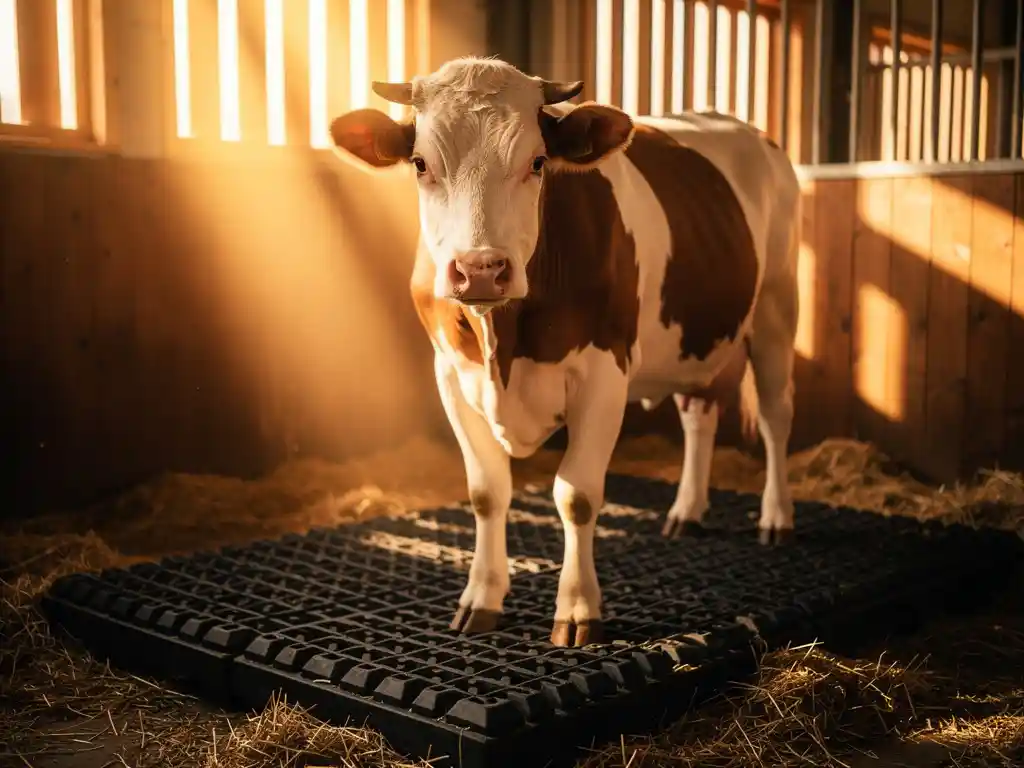
Rubber matting is one of the most practical ways to address these problems. Placed over concrete or other hard substrates, rubber mats add cushioning, improve grip, and reduce the physical impact on an animal’s legs and feet. In dairy operations, for example, cows housed on rubber-matted flooring tend to lie down more often and for longer periods, which supports milk production and overall health.
Beyond comfort, flooring also affects hygiene. Non-porous surfaces that resist moisture absorption are easier to clean and less likely to harbor bacteria, which matters for both animal welfare and disease prevention.
What role does stall design play in animal rest quality?
Stall design has a direct impact on how well an animal can rest. A stall that is too small, poorly dimensioned, or badly positioned will prevent an animal from lying down comfortably, getting up safely, or moving without stress. Animals that cannot rest properly show signs of fatigue, reduced appetite, and lower productivity over time.
For cattle, stall width, length, and the placement of neck rails all influence whether a cow can perform the natural lunge and bob motion required to lie down and stand up. If the stall geometry restricts this movement, cows will spend less time lying down, which increases standing time and the associated leg and hoof stress.
For horses, stall size is the primary concern. A horse needs enough room to lie flat, roll, and stand without risk of becoming cast (trapped against a wall). Bedding type and depth also play a significant role in how comfortable and safe the stall feels. Deep, clean bedding absorbs moisture, reduces odor, and provides a softer resting surface.
In both cases, the design of the stall floor matters as much as the structure around it. A well-designed stall with poor flooring will still result in discomfort. The two elements work together.
How does temperature and ventilation impact livestock well-being?
Temperature and ventilation affect animal well-being by regulating body temperature, air quality, and moisture levels inside a facility. When animals are too hot, too cold, or breathing poor-quality air, their immune systems are under pressure, their feed intake changes, and their overall performance declines.
Livestock have specific thermal comfort zones that vary by species, age, and production stage. Dairy cows, for instance, are particularly sensitive to heat stress. When temperatures rise above their comfort threshold, milk production drops, reproduction rates fall, and animals show signs of behavioral distress. Proper ventilation, shade, and in some climates, active cooling systems are practical tools for managing this.
Ventilation does more than manage temperature. It removes moisture, ammonia, and airborne pathogens from the building. High humidity and poor air exchange create conditions where respiratory disease spreads quickly and where flooring stays wet longer, increasing slip risks and hoof problems. A well-ventilated building dries out faster and stays cleaner.
Natural ventilation through ridge vents, sidewall openings, and strategic building orientation works well in many climates. In more extreme environments, mechanical ventilation systems give operators greater control over airflow and temperature year-round.
What causes slips and falls in animal housing, and how can they be prevented?
Slips and falls in animal housing are most commonly caused by wet or smooth flooring surfaces, inadequate drainage, and flooring that has become worn over time. These conditions reduce traction, and when an animal loses its footing, the consequences range from minor stress to serious injury including fractures, torn ligaments, and chronic lameness.
Wet floors are the leading risk factor. Water from drinking, washing, and waste accumulates quickly in housing environments, and smooth concrete provides very little grip when wet. Animals that slip repeatedly become anxious and reluctant to move, which affects feeding behavior and social interaction.
Prevention starts with surface texture. Grooved or textured concrete improves grip significantly compared to smooth finishes, though grooves can fill with waste and lose effectiveness if not cleaned regularly. Rubber matting provides a consistently grippy surface regardless of moisture, and because rubber compresses slightly underfoot, it also reduces the force of impact if an animal does stumble.
Drainage design is equally important. Floors should slope gently toward drainage channels so water and waste move away from standing and walking areas quickly. Flat floors that allow pooling are a consistent source of slip hazards no matter how good the surface texture is.
How does flooring material choice affect hoof and joint health long-term?
Flooring material has a significant long-term effect on hoof and joint health because animals spend the majority of their lives standing and moving on the surfaces you provide. Hard, unyielding surfaces increase the mechanical load on joints and hooves with every step, and this cumulative stress builds up over months and years.
On bare concrete, hooves tend to wear unevenly and can become overgrown or cracked. The constant hard impact also contributes to joint inflammation and degenerative conditions in older animals. These problems are not always visible early on, but they become apparent in reduced mobility, reluctance to bear weight, and changes in gait.
Softer flooring materials reduce the peak forces transmitted through the leg with each step. Rubber mats, for example, absorb some of that impact and distribute it more evenly across the hoof. Over time, this can reduce the incidence of lameness and extend the productive life of the animal.
The surface texture of the flooring also matters for hoof health. Surfaces that are too abrasive wear hooves down too quickly, while surfaces that are too smooth allow hooves to slide and strain tendons. A balance between grip and gentleness is what supports healthy hoof wear and confident movement.
What are the best flooring options for different types of livestock housing?
The best flooring option depends on the species, the type of housing, and the specific demands of the environment. There is no single solution that works equally well for every situation, but some materials perform consistently better than others across a range of livestock applications.
- Dairy and beef cattle housing: Rubber mats over concrete are widely regarded as one of the most effective combinations. The concrete provides structural support and durability, while the rubber layer adds cushioning and grip. In freestall barns, rubber-matted stalls encourage longer lying times and reduce leg injuries. Slatted flooring with rubber inserts is also used in some operations to improve drainage while maintaining comfort.
- Equine stalls and barns: Deep bedding on a well-drained base remains a standard approach in horse stabling. Rubber stable mats placed beneath bedding reduce the amount of bedding needed, provide a firm and hygienic base, and make cleaning easier. In high-traffic areas like aisles and wash bays, rubber matting improves traction and reduces fatigue for both horses and handlers.
- Pig and poultry housing: Concrete slatted floors are common in pig production because they allow waste to pass through and keep the living area cleaner. Rubber-coated slats or solid rubber sections in resting areas improve comfort and reduce leg injuries. In poultry housing, the focus is more on litter management and flooring hygiene than on cushioning, though the base surface still matters for structural integrity and ease of cleaning.
- Sheep and goat housing: These animals are generally less demanding in terms of flooring than cattle or horses, but they still benefit from dry, non-slip surfaces. Slatted wooden or plastic floors are common for their drainage properties, and rubber matting can be added in resting areas to improve warmth and comfort.
Across all livestock housing types, the shared priorities are grip, drainage, durability, and ease of cleaning. At LRP Matting, our livestock rubber mats are made from 100% recycled rubber and many are reinforced with our proprietary FRC® compound, giving them the durability to hold up in demanding agricultural environments while providing the cushioning and traction that animals need every day. We offer standard sizes and custom solutions, so whatever your facility looks like, we can help you find a fit that works.
Frequently Asked Questions
How do I know if my current flooring is negatively affecting my animals?
Watch for behavioral and physical signs such as animals being reluctant to move, spending less time lying down, showing an uneven gait, or developing recurring hoof problems. If you notice increased instances of slipping, animals hesitating at transitions between surfaces, or a rise in lameness cases, your flooring is likely a contributing factor. A practical first step is to assess your floors after washing — if water pools rather than drains and surfaces feel slick underfoot, those are clear warning signs that need addressing.
Can rubber matting be used on top of existing concrete without major renovation?
Yes, in most cases rubber mats can be laid directly over existing concrete without the need for structural changes, making them one of the most cost-effective upgrades you can make to an existing facility. The key requirement is that the concrete base is reasonably level and has adequate drainage so moisture doesn’t become trapped beneath the mat. Some operations use interlocking or loose-lay mat systems that require no adhesive at all, allowing for easy installation, removal, and cleaning.
What's the most common mistake facility managers make when designing or upgrading animal housing?
One of the most common mistakes is focusing on a single element — such as flooring or ventilation — while overlooking how all the factors interact with each other. For example, installing high-quality rubber mats in stalls won’t deliver full benefits if drainage is poor and moisture constantly accumulates beneath them, or if stall dimensions still prevent animals from lying down naturally. Effective animal housing requires a systems-level approach where flooring, stall geometry, drainage, ventilation, and temperature management are all evaluated together.
How often should rubber mats and flooring surfaces be inspected and replaced?
Rubber mats should be inspected at least every six months for signs of wear, cracking, curling edges, or surface smoothing that reduces grip. In high-traffic areas such as feed alleys or barn aisles, more frequent checks are advisable. Most quality agricultural rubber mats last many years under normal use, but a mat that has lost its surface texture or structural integrity should be replaced promptly — a worn mat can be just as hazardous as bare concrete. Keeping a simple inspection log helps track wear patterns and plan replacements before problems arise.
Does the type of bedding used in stalls matter if rubber mats are already installed?
Yes, bedding still plays an important role even when rubber mats are in place. While rubber mats reduce the amount of bedding needed by providing a firm, cushioned base, a layer of clean bedding on top continues to absorb moisture, add warmth, and improve the overall comfort of the resting surface. In horse stalls especially, bedding also provides a degree of grip and softness that encourages animals to lie down fully and rest deeply. The combination of rubber mats and appropriate bedding generally outperforms either element used alone.
Are there flooring considerations specific to younger or older animals that differ from the general guidelines?
Absolutely — young animals and senior animals both have heightened flooring needs compared to healthy adults in their prime. Newborns and young livestock are especially vulnerable to cold, hard surfaces and benefit greatly from deep bedding and insulated flooring in their early weeks. Older animals with existing joint conditions or a history of lameness need softer, more forgiving surfaces to reduce pain and maintain mobility. If your facility houses animals across different life stages, consider designating specific areas with enhanced flooring setups tailored to those more vulnerable groups.
How can I prioritize flooring and housing improvements if I'm working with a limited budget?
Start by identifying the highest-risk areas in your facility — typically the zones where animals spend the most time standing, such as feed alleys, milking parlor approaches, and primary stall areas — and address those first. Rubber matting in these key locations delivers the most immediate return on investment in terms of injury reduction and animal comfort. Improving drainage and surface texture through grooved concrete or targeted resurfacing are also relatively low-cost interventions with meaningful impact. Phasing improvements over time rather than attempting a full facility overhaul at once allows you to manage costs while still making measurable progress.
Related Articles
- What factors increase floor wear in manufacturing environments?
- What makes a floor safe?
- What is the best flooring for an indoor training facility?
- How do large equestrian facilities keep stall maintenance costs down?
- How do you level a horse stall floor before laying mats?
- How do large boarding facilities manage bedding costs across many stalls?
- What is the best way to cover an uneven barn floor?
- What causes concrete floors to crack and chip in industrial facilities?
- How do you calculate how much bedding a horse stall needs?
- How do you keep a sports facility floor safe in wet conditions?