
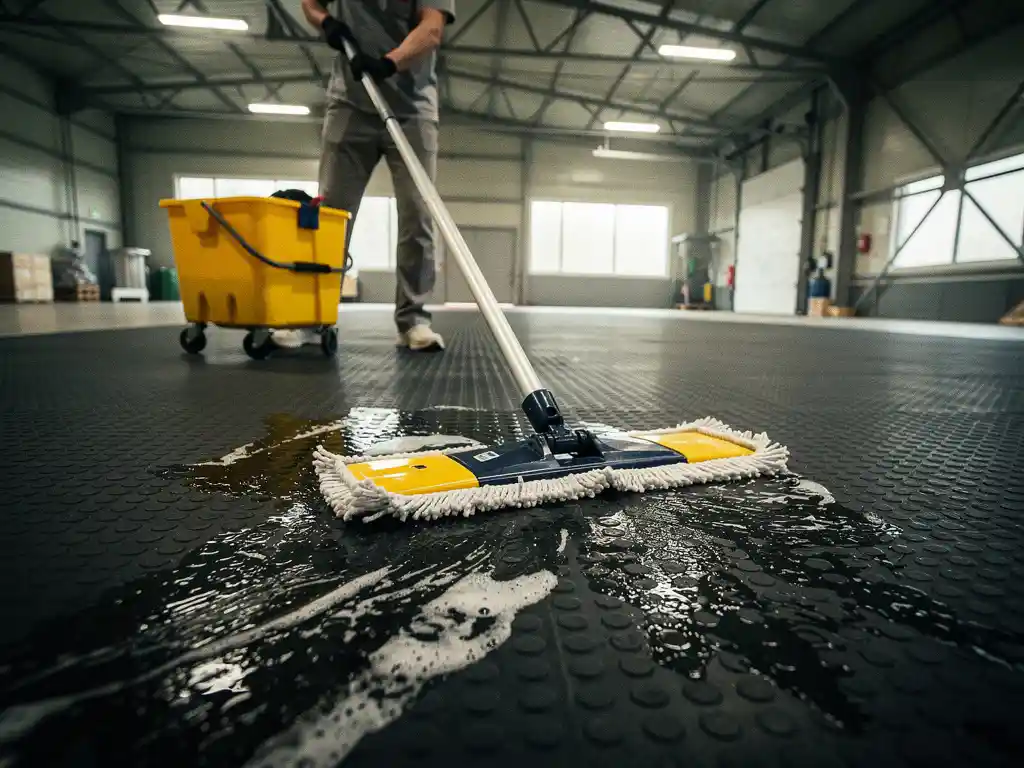
Most commercial floors need some form of maintenance every single day, but the full picture is a bit more nuanced than that. Daily cleaning handles surface-level dirt and moisture, while deeper maintenance tasks like scrubbing, stripping, or resealing happen weekly, monthly, or quarterly, depending on how much foot traffic your space sees and what kind of flooring you have. The right maintenance schedule protects your floors, keeps your space safe, and saves money in the long run. Below, we break down the key questions that shape a smart floor maintenance plan.
What factors determine how often commercial floors need maintenance?
The frequency of commercial floor maintenance depends on foot traffic volume, the type of flooring material, the nature of your business, and environmental conditions like moisture or chemical exposure. A high-traffic retail store and a low-traffic back office have very different needs, even if they have identical flooring. Getting the frequency right means looking at these variables together rather than applying a one-size-fits-all schedule.
Here are the main factors that influence how often you should maintain your commercial floors:
- Foot traffic volume: The more people walking through, the faster dirt, grit, and moisture accumulate. High-traffic areas wear down faster and need more frequent attention.
- Business type: Food service, healthcare, and manufacturing environments introduce contaminants like grease, liquids, and chemicals that demand more aggressive and frequent cleaning routines.
- Floor material: Porous materials like unsealed concrete or natural stone trap debris and moisture more readily than non-porous surfaces like rubber or sealed vinyl.
- Seasonal conditions: Wet or snowy seasons bring in more moisture and debris, which can accelerate wear and increase slip risks if cleaning frequency isn’t adjusted.
- Occupancy hours: Facilities that operate around the clock have fewer windows for cleaning and need scheduled maintenance built into shift changes or low-activity periods.
Understanding these factors helps facility managers build a preventive maintenance schedule that is realistic, cost-effective, and tailored to the actual demands of the space.
How often should high-traffic commercial floors be cleaned?
High-traffic commercial floors should be cleaned at least once daily, and in some environments, multiple times per day. Entryways, hallways, restrooms, and production floors in busy facilities accumulate dirt and moisture quickly. Leaving these surfaces unattended for even a full day can create safety hazards and accelerate surface wear.
For most high-traffic commercial spaces, a practical cleaning rhythm looks something like this:
- Multiple times per day: Spot cleaning, spill response, and sweeping in active zones like entrances, cafeterias, or production floors
- Daily: Full sweep or vacuum, mopping of hard surfaces, and inspection for damage or wet spots
- Weekly: More thorough scrubbing, attention to corners and edges, and cleaning of matting systems
- Monthly or quarterly: Deep cleaning, stripping and resealing where applicable, and a full assessment of floor condition
The goal of daily cleaning in high-traffic areas is not just appearance. It directly reduces slip risks, prevents grit from grinding into the floor surface, and keeps your facility compliant with health and safety standards. Skipping even a few days in a busy space can set back the condition of your floors noticeably.
Does floor material affect how frequently it needs to be maintained?
Yes, floor material has a significant impact on how often maintenance is needed. Different materials have different levels of porosity, durability, and resistance to staining or moisture. A floor that absorbs liquids will need more frequent attention than one that repels them. Choosing the right material for your environment is one of the most effective preventive maintenance decisions you can make.
Porous flooring materials
Materials like unsealed concrete, natural stone, and some types of tile absorb moisture, oils, and contaminants. These surfaces need more frequent cleaning to prevent buildup, staining, and bacterial growth. They also typically require periodic resealing to protect the surface, which adds to the overall maintenance workload.
Non-porous flooring materials
Non-porous surfaces like rubber, sealed vinyl, and epoxy coatings do not absorb liquids. This makes them easier to clean and means they can go longer between deep maintenance sessions without degrading. Rubber flooring in particular is resistant to moisture, does not crack or peel under temperature extremes, and can be cleaned effectively with mild detergent and water. This makes it a practical choice for environments where maintenance time and labor costs matter.
What happens if commercial floors aren’t maintained regularly?
Neglecting regular floor maintenance leads to accelerated surface wear, increased safety risks, and higher long-term costs. Dirt and grit act like sandpaper underfoot, gradually breaking down floor surfaces. Moisture that is not removed creates slip hazards and can cause structural damage over time. What starts as a skipped cleaning session can compound into expensive repairs or premature floor replacement.
The practical consequences of poor floor maintenance include:
- Slip and fall incidents: Wet or dirty floors are a leading cause of workplace injuries. Consistent floor maintenance directly reduces this risk.
- Surface degradation: Abrasive debris grinds into flooring materials with every footstep. Over time, this causes visible wear, scratches, and surface breakdown.
- Bacterial and mold growth: In environments with moisture or organic material, unmaintained floors can become a hygiene risk, particularly in food service or healthcare settings.
- Increased replacement costs: Floors that are not maintained regularly reach the end of their usable life much faster, meaning more frequent and costly replacements.
- Compliance issues: Many industries have regulatory requirements around floor cleanliness and safety. Inconsistent maintenance can put a facility out of compliance.
Preventive maintenance is always more cost-effective than reactive repairs. Keeping a consistent schedule protects both the people in your facility and the long-term value of your flooring investment.
What’s the difference between daily cleaning and deep maintenance for commercial floors?
Daily cleaning addresses surface-level dirt, moisture, and debris to keep floors safe and presentable on a day-to-day basis. Deep maintenance goes further, targeting buildup, wear, and structural issues that routine cleaning cannot address. Both are necessary parts of a complete floor maintenance strategy, and neither replaces the other.
Daily cleaning
Daily cleaning typically includes sweeping or vacuuming to remove loose debris, mopping or wiping down hard surfaces, and responding to spills immediately. The focus is on removing what has accumulated since the last clean. This type of cleaning is fast, relatively low-effort, and prevents the kind of buildup that makes deeper maintenance harder and more expensive.
Deep maintenance
Deep maintenance involves more intensive processes such as machine scrubbing, stripping and reapplying floor sealants or coatings, grout cleaning, and a thorough inspection of the floor’s condition. Depending on the material and traffic level, deep maintenance might happen weekly, monthly, or quarterly. It addresses what daily cleaning misses and extends the overall lifespan of the floor. Facility management teams often schedule deep maintenance during off-hours or low-activity periods to minimize disruption.
Should commercial floor mats be replaced or just maintained?
Commercial floor mats should be maintained regularly, but they also need to be replaced when they no longer perform their intended function. Mats that are worn, torn, curled at the edges, or saturated with embedded dirt become safety hazards rather than safety solutions. Regular maintenance extends the life of a mat, but no amount of cleaning can restore a mat that has lost its structural integrity.
For day-to-day upkeep, mats should be shaken out, vacuumed, or hosed down depending on the material, and allowed to dry fully before being returned to service. Rubber mats are particularly easy to maintain because they are non-porous and can be cleaned quickly with water and mild detergent. This makes them a practical and low-maintenance option for commercial environments.
Signs that a mat needs replacement rather than cleaning include:
- Curled or lifted edges that create a trip hazard
- Surface wear that has eliminated the anti-slip texture
- Tears, cracks, or breakdown of the material
- Persistent odor that does not clear after thorough cleaning
- Visible compression in areas where cushioning or anti-fatigue properties were part of the mat’s function
A good rule of thumb is to inspect mats as part of your regular facility maintenance routine and replace them proactively rather than waiting for a visible failure. Investing in high-quality, durable mats from the start reduces how often replacement is needed. At LRP Matting, we make our mats from genuine rubber and, in many cases, a fiber-reinforced rubber compound (FRC®), which gives them the strength and longevity to hold up in demanding commercial environments. If you are looking for matting built to last with minimal maintenance overhead, take a look at our commercial matting solutions.
Frequently Asked Questions
How do I build a floor maintenance schedule if I'm starting from scratch?
Start by auditing your space: identify your floor materials, map out high- vs. low-traffic zones, and note any areas exposed to moisture, grease, or chemicals. From there, assign cleaning tasks to daily, weekly, and monthly intervals based on the demands of each zone. Many facility managers find it helpful to create a simple checklist for each frequency tier and assign clear ownership to staff or a contracted cleaning service to ensure nothing gets skipped.
What are the most common mistakes facility managers make with commercial floor maintenance?
The most common mistake is using a one-size-fits-all schedule that doesn't account for differences in traffic volume, floor material, or business type. Another frequent error is using the wrong cleaning products — harsh chemicals can strip sealants, degrade rubber, or leave residues that attract more dirt. Finally, many facilities react to visible damage rather than maintaining a preventive schedule, which almost always leads to higher costs and shorter floor lifespans.
Can the wrong cleaning products damage commercial floors?
Yes, using incompatible cleaning products is one of the fastest ways to shorten a floor's lifespan. Acidic cleaners can etch natural stone or unsealed concrete, while solvent-based products can break down vinyl coatings or rubber flooring. Always check the flooring manufacturer's recommendations before introducing a new cleaning product, and when in doubt, a pH-neutral cleaner is the safest default for most commercial floor types.
How do floor mats actually reduce the overall maintenance burden on commercial floors?
Quality floor mats act as the first line of defense by capturing dirt, moisture, and debris before it reaches your main floor surface. Studies suggest that a well-placed entrance mat can trap up to 80% of the dirt that would otherwise be tracked in. This directly reduces how often your floors need deep cleaning, slows surface wear in high-traffic zones, and lowers the risk of slip incidents — making mats one of the most cost-effective elements of any commercial floor maintenance strategy.
How do I know when it's time to reseal or recoat a commercial floor?
Common signs that a floor needs resealing include visible dullness or uneven sheen, water that absorbs into the surface rather than beading up, increased difficulty removing stains, or noticeable scratches and scuff marks that don't clean away. The frequency of resealing varies widely by material and traffic — sealed concrete or vinyl in a busy retail environment may need attention annually, while lower-traffic areas might go two to three years between coats. Scheduling a periodic floor condition assessment makes it easier to catch these signs before the surface is compromised.
Is it worth outsourcing commercial floor maintenance, or is it better to handle it in-house?
The right answer depends on the size of your facility, the complexity of your flooring, and your internal resources. Daily surface cleaning is often manageable in-house with trained staff and the right equipment. However, deep maintenance tasks like machine scrubbing, stripping, and resealing typically benefit from professional expertise and commercial-grade equipment that most facilities don't own. A hybrid approach — in-house daily cleaning paired with periodic contracted deep maintenance — tends to offer the best balance of cost control and floor longevity.
Do different areas within the same facility need separate maintenance plans?
Absolutely. A single facility often contains zones with very different demands — a customer-facing lobby, a back-of-house production area, restrooms, and a break room all have distinct traffic patterns, contamination risks, and flooring materials. Treating them with a uniform schedule will either over-maintain low-demand areas (wasting resources) or under-maintain high-demand ones (creating safety and compliance risks). Zone-specific maintenance plans are a best practice for any facility larger than a single open space.
Related Articles
- How do you build a floor maintenance plan?
- What areas of a facility have the highest slip risk?
- How do you protect a sports facility floor from moisture and heavy use?
- What is the easiest floor to disinfect in an animal clinic?
- How do you level a horse stall floor before laying mats?
- What type of matting is best for a wet industrial work environment?
- How do you make a warehouse floor less slippery?
- What flooring do professional equestrian facilities use in their stalls?
- How do you make a veterinary recovery stall safer for horses?
- What is the best flooring for a horse stable grooming area?