

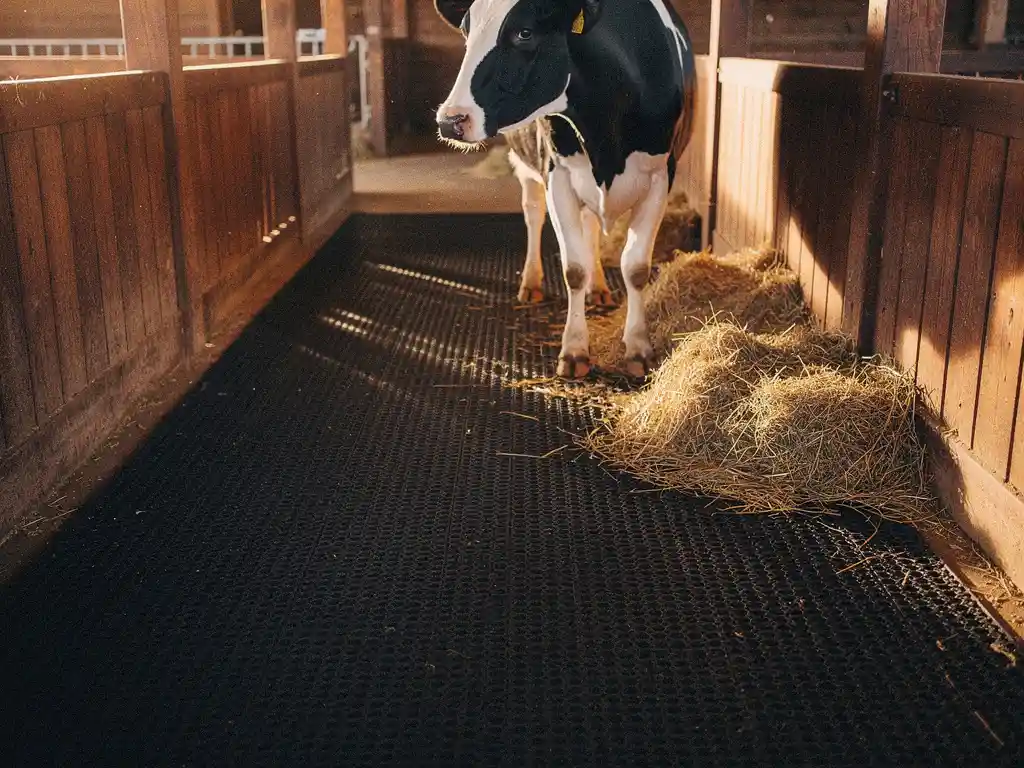
Designing a safer livestock facility starts with identifying where injuries and stress occur most often, then making targeted changes to the environment. The most impactful areas are flooring, lighting, ventilation, and traffic flow. For most farms, flooring is the single biggest factor affecting both animal welfare and handler safety. The sections below walk through the key questions you need to answer when planning or improving your setup.
What are the biggest safety hazards in a livestock facility?
The most common safety hazards in a livestock facility are slippery floors, poor lighting, inadequate ventilation, and poorly designed traffic flow. These hazards affect both animals and the people working around them. Slippery surfaces cause falls and joint injuries in livestock, while tight or confusing layouts put handlers in dangerous positions during animal movement.
Beyond flooring and layout, overcrowding is a significant risk factor. When animals are stressed or unable to move freely, aggressive behavior increases, raising the chance of injury for both livestock and workers. Poor drainage compounds this problem by creating wet, slick surfaces that are difficult to keep clean and safe.
Ventilation is another area that often gets overlooked. Ammonia buildup from waste not only affects animal respiratory health but also reduces air quality for farm workers. Proper airflow, combined with regular cleaning routines, keeps the environment healthier for everyone in the facility.
How does flooring affect animal health and injury risk?
Flooring directly affects animal health by influencing joint stress, hoof condition, and the risk of slipping and falling. Hard, bare concrete floors offer no cushioning, which puts constant pressure on joints and hooves over time. Wet or soiled concrete becomes extremely slippery, making falls more likely, especially for cattle and horses that carry significant body weight.
Chronic lameness is one of the most costly health issues in livestock facilities, and flooring is a major contributing factor. Animals that stand on unforgiving surfaces for extended periods develop hoof problems, joint inflammation, and reduced mobility. This affects their ability to eat, drink, and move to shelter, which in turn impacts their overall condition and productivity.
The texture and grip of a floor surface also influence how animals behave. When animals feel secure underfoot, they move more confidently and are less likely to panic, which reduces the risk of injury during routine handling. Stable, non-slip footing is a practical foundation for good animal welfare and equine facility design.
What type of flooring is safest for livestock facilities?
The safest flooring for livestock facilities combines firm support with a non-slip, cushioned surface. Bare concrete is durable but lacks grip and comfort. Grooved or textured concrete improves traction but still offers no cushioning. Rubber matting is widely regarded as one of the most effective flooring options because it provides both grip and shock absorption in a single surface.
Other options include compacted dirt or clay, which offers natural cushioning but is difficult to keep clean and can become muddy and uneven over time. Rubber-crumb infill systems and interlocking rubber tiles are also used in some facilities, though large-format mats tend to minimize seam gaps where bacteria and moisture can collect.
The right choice depends on your specific setup, the species you house, and how the space is used. High-traffic areas like milking parlors, feeding lanes, and alleyways benefit most from surfaces that stay grippy even when wet. Stall areas benefit from cushioning to reduce fatigue during long rest periods.
How do rubber mats improve safety in barns and stalls?
Rubber mats improve safety in barns and stalls by providing a non-slip, shock-absorbing surface that reduces the risk of falls and joint stress. Unlike bare concrete, rubber gives animals secure footing even when the surface is wet. The cushioning effect also reduces the physical strain of standing for long periods, which is particularly important for dairy cattle and horses.
From a handler safety perspective, rubber flooring also reduces fatigue for farm workers who spend hours on their feet. The anti-fatigue properties of rubber surfaces lower the physical toll of daily tasks, making the working environment more comfortable and sustainable long-term.
Rubber mats are also easy to clean. Genuine rubber is non-porous, meaning it does not absorb moisture or harbor bacteria the way softer, porous materials can. A simple rinse with mild detergent and water keeps the surface hygienic without damaging the mat. This makes rubber matting a practical choice for maintaining cleanliness standards in any livestock or stable design.
What should you look for when choosing livestock mats?
When choosing livestock mats, look for durability, grip, cushioning, ease of cleaning, and the right size for your space. A mat that wears down quickly or shifts underfoot defeats the purpose. The material, thickness, and surface texture all play a role in how well the mat performs over time in a demanding agricultural environment.
- Grip and texture: The surface should remain non-slip even when wet or soiled. Raised patterns or textured finishes help maintain traction under real-world conditions.
- Cushioning and thickness: Thicker mats provide more shock absorption, which is important for reducing joint stress in heavy animals like cattle and horses.
- Material quality: Genuine rubber outperforms synthetic alternatives in durability and resistance to temperature extremes. Look for mats that will not crack, peel, or crumble over time.
- Size and seam reduction: Larger mats mean fewer seams, which reduces the number of gaps where waste and moisture can accumulate. This simplifies cleaning and improves hygiene.
- Ease of installation: Mats that are straightforward to lay and replace reduce downtime and labor costs when maintenance is needed.
If you are designing a new facility or retrofitting an existing one, consider getting mats cut to fit your specific dimensions. Custom sizing reduces waste, improves coverage, and gives you a cleaner, more professional finish.
How do you maintain a safe livestock facility long-term?
Maintaining a safe livestock facility long-term requires consistent routines for cleaning, inspection, and repair across all areas of the building. Safety is not a one-time fix. It is the result of ongoing attention to flooring condition, ventilation, drainage, and animal behavior patterns. Regular walkthroughs help you catch problems early before they become costly or dangerous.
For flooring specifically, inspect mats and concrete surfaces regularly for wear, shifting, or damage. A mat that has moved out of position or developed a tear creates a trip hazard and reduces the protection it provides. Replace worn mats promptly, and check that drainage channels remain clear so water does not pool on walking surfaces.
Cleaning schedules matter just as much as the materials you choose. Even the best flooring becomes a hygiene risk without regular removal of waste and buildup. Establish a daily routine for high-traffic areas and a deeper cleaning schedule for stalls and resting areas.
Training is also part of long-term safety. Make sure everyone working in the facility understands the layout, knows how to handle animals calmly, and is aware of the areas that carry the most risk. A well-designed environment is only as safe as the people operating within it.
At LRP Matting, we manufacture rubber mats specifically designed for the demands of agricultural and livestock environments. Our mats are made from 100% recycled genuine rubber, are non-porous, and are built to last through years of heavy use. If you are looking for matting that supports both animal welfare and long-term facility safety, explore our livestock matting solutions to find the right fit for your setup.
Frequently Asked Questions
How thick should rubber mats be for cattle versus horses?
For cattle, a mat thickness of at least 17mm is generally recommended to provide adequate cushioning for their heavier body weight and reduce joint stress during long periods of standing. Horses, particularly in stall environments, benefit from mats that are 17–20mm thick to absorb impact and support hoof health. Thicker mats are especially worthwhile in high-use areas like milking parlors or wash bays where animals spend extended time on their feet.
Can rubber mats be used outdoors or in areas exposed to the elements?
Yes, high-quality genuine rubber mats are well-suited for outdoor and semi-exposed environments because rubber is naturally resistant to UV exposure, temperature fluctuations, and moisture. Unlike synthetic alternatives, genuine rubber does not crack or become brittle in cold weather or degrade quickly under direct sunlight. That said, it is worth confirming with your supplier that the mats are rated for outdoor use, as some composite or recycled-blend products may perform differently under prolonged exposure.
What is the best way to keep rubber mats from shifting in a busy stall or alleyway?
The most effective ways to prevent mat movement are choosing mats that are heavy enough to stay in place on their own, using interlocking edges where available, or securing perimeter mats against fixed structures like walls and stall dividers. In high-traffic alleyways, the weight and size of large-format mats typically provide enough stability without additional fastening. If shifting is still an issue, a non-slip underlay or rubber adhesive tape along the edges can help keep mats firmly in position.
How do I know when it is time to replace my livestock mats?
Key signs that a mat needs replacing include visible surface wear that has reduced grip, tears or cracks that create trip hazards or allow moisture to collect underneath, and mats that have compressed so much they no longer provide meaningful cushioning. A simple test is to press firmly on the mat surface — if it feels hard and unyielding rather than slightly springy, it has likely lost its shock-absorbing properties. Regular inspections every few months make it easier to catch deterioration early and replace mats before they become a safety risk.
Can I install rubber mats over existing concrete without resurfacing the floor first?
In most cases, yes — rubber mats can be laid directly over existing concrete as long as the surface is structurally sound, reasonably level, and free of large cracks or raised edges that could cause the mat to sit unevenly. Uneven spots beneath a mat can create pressure points that accelerate wear and may cause the mat to rock or shift. If your concrete has significant damage or drainage issues, addressing those first will extend the life of your mats and ensure a safer, more stable surface overall.
Are there specific flooring considerations for facilities that house multiple species?
Yes — when a facility houses multiple species, it is important to account for the different weight, hoof shape, and behavioral needs of each animal. For example, goats and sheep are lighter and more agile than cattle, so they may not require the same mat thickness, but they do benefit from textured grip surfaces to prevent slipping. Zoning your facility so that each species has flooring appropriate to its needs, and using mats that are easy to reconfigure or replace, gives you the flexibility to adapt your setup as your operation evolves.
What common mistakes should I avoid when retrofitting flooring in an existing livestock facility?
One of the most common mistakes is choosing mats based on upfront cost alone, which often leads to thinner or synthetic options that wear out quickly and need replacing sooner — ultimately costing more over time. Another frequent error is failing to address underlying drainage problems before laying new matting, which traps moisture beneath the surface and creates hygiene and odor issues. Finally, many facility owners underestimate the importance of proper sizing and leave large gaps between mats or walls, which collect waste and reduce the effectiveness of the flooring system.
Related Articles
- How do sustainable materials reduce maintenance?
- How does flooring affect productivity?
- Why do wet floors become dangerous?
- What is the best way to protect a sports facility floor from heavy equipment?
- What type of matting is best for a wet industrial work environment?
- How do you make a horse feel more comfortable during long trailer rides?
- What is the best way to protect a warehouse floor during construction?
- What causes back pain in workers who stand on hard floors all day?
- How do you choose the right floor protection for a construction site?
- Can anti-fatigue matting improve worker productivity?