
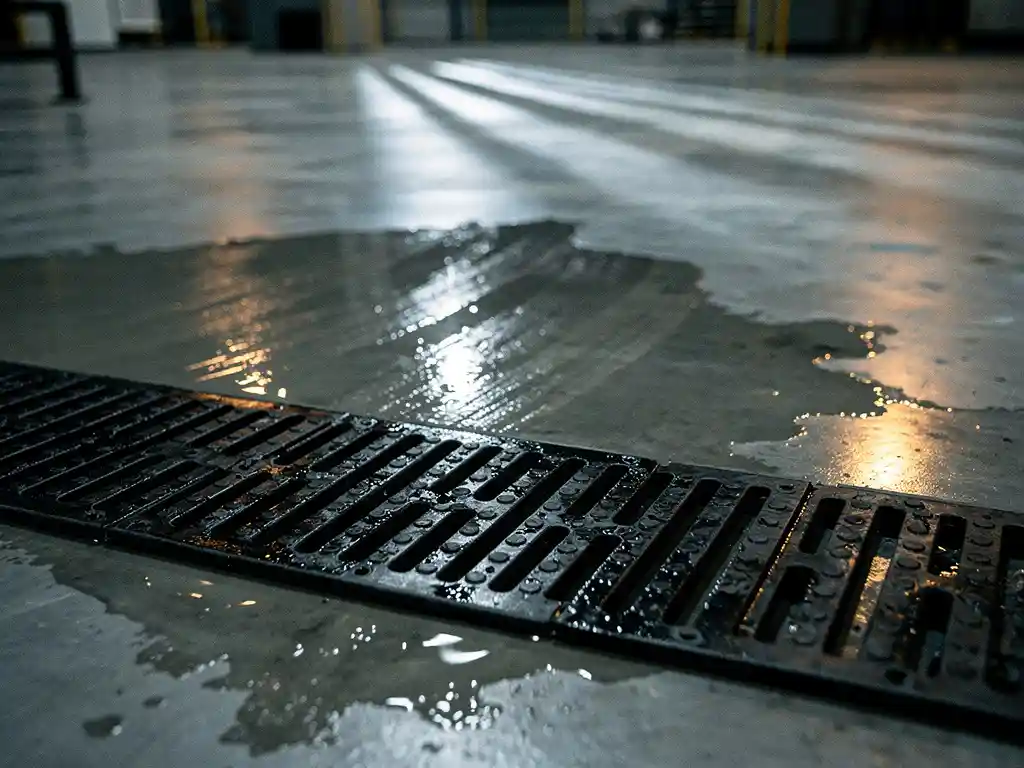
Wet floors become dangerous because water reduces the friction between your shoes and the floor surface, making it much easier to slip. When friction drops below a safe threshold, even a small step or shift in weight can send someone off balance. This risk increases depending on the type of flooring, the environment, and footwear. Below, we break down the key questions around wet floor hazards and what you can do about them.
How does water on floors cause slip-and-fall accidents?
Water on floors causes slip-and-fall accidents by reducing the coefficient of friction between a person’s footwear and the floor surface. Friction is what keeps your feet grounded when you walk. When water forms a thin film between your shoe sole and the floor, that grip disappears quickly, and your foot can slide out from under you before you have time to react.
The physics behind this are straightforward. On a dry surface, the microscopic texture of both the shoe and the floor interlock slightly, creating resistance. Water fills in those tiny gaps and acts as a lubricant, smoothing out the contact between the two surfaces. The result is a dramatic reduction in traction, particularly during the heel-strike phase of walking, when the foot first makes contact with the ground.
Other liquids, such as oils, cleaning solutions, or food spills, can make this effect even worse. Unlike plain water, these substances are often more viscous and harder to detect visually, which means people are less likely to notice the hazard before they step into it.
What types of floors are most dangerous when wet?
Smooth, non-porous floor surfaces are the most dangerous when wet. Polished concrete, ceramic tile, vinyl, marble, and hardwood floors all become significantly more slippery when exposed to moisture because their surfaces offer very little natural texture to maintain grip. The smoother the surface, the less friction it provides under wet conditions.
Polished concrete is particularly problematic in industrial and commercial settings because it is widely used, easy to clean, and visually appealing, but it offers almost no slip resistance once wet. Ceramic and porcelain tiles present a similar challenge in kitchens, bathrooms, and food service environments. Even tiles rated for slip resistance when dry can become hazardous when wet if their surface texture is not deep enough to channel water away from the contact point.
Painted or coated floors are another concern. Coatings applied over concrete or wood can wear unevenly over time, creating patches where the surface becomes glassy and slick. Epoxy floors, common in warehouses and garages, can also become slippery when wet if they do not include an anti-slip aggregate in the finish.
Where do wet floor injuries most commonly happen?
Wet floor injuries most commonly happen in commercial kitchens, restrooms, entranceways, and industrial production areas. These locations share a common characteristic: they regularly experience moisture, whether from cleaning routines, food preparation, plumbing, or people tracking in rain and snow from outside.
In commercial and hospitality settings, kitchens are a consistent high-risk zone. Water, grease, and cleaning agents are constantly present on the floor, and workers move quickly through the space. Restrooms and locker rooms are another frequent location for slip-and-fall incidents due to splashing water and condensation.
Building entrances are often overlooked as a hazard point. When it rains or snows, people carry moisture in on their shoes and deposit it on lobby floors, often made of polished stone or smooth tile. Without proper matting at the entry point, that moisture spreads quickly across the floor.
In industrial environments, production floors near washing stations, cooling systems, or liquid handling equipment are common accident sites. Warehouses and loading docks are also vulnerable, especially during wet weather when outdoor conditions are tracked inside by workers and vehicles.
What are the most serious injuries caused by slipping on wet floors?
The most serious injuries caused by slipping on wet floors include traumatic brain injuries, spinal cord damage, hip fractures, and broken wrists. These injuries occur because a slip-and-fall happens suddenly and without warning, giving the body no time to brace properly. The impact of falling onto a hard floor surface can be severe, particularly for older adults.
Hip fractures are among the most medically significant outcomes of slip-and-fall accidents, especially for elderly individuals. Recovery is lengthy, complications are common, and the injury can significantly reduce long-term mobility. For younger workers, wrist fractures are frequent because the natural reflex is to reach out and catch yourself during a fall, concentrating the impact force on the wrist joint.
Head injuries, including concussions and more severe traumatic brain injuries, are a serious concern when someone falls backward or sideways onto a hard floor. These injuries are not always immediately obvious, which makes them particularly dangerous. Spinal injuries, while less common, can result from falls where the person lands awkwardly or twists during the fall.
Beyond physical harm, wet floor accidents also carry significant consequences for businesses, including lost productivity, workers’ compensation claims, and potential legal liability. Floor safety is not just a health issue; it is an operational one as well.
How can rubber matting reduce wet floor dangers?
Rubber matting reduces wet floor dangers by providing a high-friction, slip-resistant surface that maintains grip even when wet. Unlike smooth flooring materials, rubber has a naturally textured surface that channels water away from the contact point and maintains traction between the foot and the floor. This makes rubber mats an effective and practical tool for managing wet floor hazards in both commercial and industrial environments.
Rubber mats work in two main ways. First, they physically cover the hazardous surface, replacing a slippery floor with a grippy one. Second, many rubber mats are designed with drainage patterns, raised ridges, or open-grid structures that allow water to pass through or accumulate below the walking surface, keeping the top layer drier and safer.
At entry points, rubber mats help scrape and absorb moisture from footwear before people walk further into a building. In kitchens and food service areas, anti-fatigue rubber mats with drainage holes are widely used to manage spills and standing water. In industrial settings, rubber mats placed near washing stations or liquid handling equipment provide a consistent, slip-resistant surface where wet conditions are unavoidable.
The material itself matters too. High-quality rubber is non-porous, meaning it does not absorb moisture, and it retains its surface texture even under heavy use. This makes it a durable, long-term solution for floor safety rather than a temporary fix.
What other measures help prevent wet floor accidents?
Beyond matting, several practical measures help prevent wet floor accidents. These include proper signage, regular floor safety inspections, improved drainage, appropriate footwear policies, and prompt spill response procedures. A layered approach that combines multiple strategies is the most effective way to reduce slip-and-fall risk in any environment.
- Wet floor signage: Placing visible warning signs immediately after a spill or cleaning is one of the simplest and most effective short-term measures. Signs alert people to the hazard before they enter the area.
- Floor safety inspections: Regular floor safety inspection routines help identify areas where surfaces have worn down, where drainage is inadequate, or where existing matting has become damaged or displaced. Catching these issues early prevents accidents.
- Improved drainage: In areas where water is consistently present, installing proper drainage channels or floor drains reduces the volume of standing water and limits how far moisture can spread.
- Anti-slip coatings and treatments: Applying anti-slip treatments to existing smooth floors can increase surface friction without replacing the flooring entirely. These treatments are particularly useful in areas like bathrooms, ramps, and stairways.
- Footwear policies: Requiring workers to wear slip-resistant footwear in high-risk areas is a straightforward and effective control measure, particularly in food service, healthcare, and industrial settings.
- Spill response protocols: Having a clear, fast response process for spills, including designated cleaning supplies and assigned responsibility, reduces the time a hazardous wet area remains unaddressed.
The most effective floor hazard prevention programs combine physical controls, like matting and drainage, with behavioral ones, like training and inspections. No single measure eliminates all risk on its own, but together they create a much safer environment for everyone who uses the space. At LRP Matting, we design rubber matting solutions specifically for environments where wet floors are a real, ongoing challenge. If you are looking for practical, durable options to improve floor safety in your space, explore our commercial matting solutions to find the right fit for your needs.
Frequently Asked Questions
How do I know if my current rubber mats are still providing adequate slip resistance?
Inspect your mats regularly for signs of wear such as flattened surface texture, cracking, curling edges, or a smooth, glazed appearance on the top surface. A simple test is to press your shoe onto the wet mat and try to slide it — if it moves with little resistance, the mat has likely lost its grip and needs replacing. High-traffic areas should be checked more frequently, as mats in those zones degrade faster and may need replacement every 12–18 months depending on use.
What is the best way to get started with a floor safety program if we currently have none in place?
Start by conducting a walk-through of your facility to identify the highest-risk zones — areas with consistent moisture, smooth flooring, or a history of near-misses or incidents. Prioritize those locations first with immediate controls like matting, signage, and a basic spill response procedure. From there, build out a more formal program that includes regular inspections, footwear policies, and staff training, so floor safety becomes an ongoing habit rather than a one-time fix.
Can anti-slip coatings replace the need for rubber mats, or should both be used together?
Anti-slip coatings and rubber mats serve different purposes and work best when used strategically rather than as direct replacements for each other. Coatings are a good option for fixed surfaces like tiled ramps, stairways, or restroom floors where placing a mat is impractical. Rubber mats, however, provide superior traction, drainage, and anti-fatigue benefits in high-moisture areas like kitchens, entry points, and industrial workstations. In many environments, using both in their respective appropriate zones gives you the most comprehensive coverage.
Are wet floor risks different in outdoor versus indoor environments, and should prevention strategies change accordingly?
Yes, outdoor wet floor risks differ significantly because you are dealing with uncontrolled weather conditions, temperature changes that cause frost or ice, and surfaces that cannot easily be covered with indoor matting solutions. Outdoor prevention strategies should focus on textured or grooved surface materials, adequate drainage grading, prompt ice and snow removal, and the use of outdoor-rated slip-resistant mats or grating at transition points like loading docks and building entrances. Indoor strategies can be more targeted and controlled, but the two environments must be managed separately.
What common mistakes do businesses make when trying to address wet floor hazards?
One of the most common mistakes is treating wet floor safety as a reactive issue — only placing a sign after a spill rather than addressing the underlying cause. Another frequent error is purchasing mats based on cost alone without considering drainage design, surface texture, or whether the mat is appropriate for the specific environment. Businesses also often overlook mat maintenance, allowing worn or damaged mats to remain in place long after they have stopped providing meaningful slip resistance. A proactive, layered approach that combines the right products with consistent inspection and staff training is far more effective than any single quick fix.
How does footwear choice affect slip-and-fall risk on wet floors, and what should employers look for in slip-resistant shoes?
Footwear plays a significant role in wet floor safety because the outsole material, tread pattern, and overall fit all affect how well a shoe maintains contact with a slippery surface. Employers should look for shoes with outsoles made from rubber or polyurethane compounds specifically rated for slip resistance, ideally tested to standards such as ASTM F2913 or EN ISO 20347. Deep, multi-directional tread patterns help channel water away from the contact zone, similar to how drainage mats work. Requiring slip-resistant footwear in high-risk areas is one of the most cost-effective individual-level controls available.
Is there a legal or regulatory obligation for businesses to address wet floor hazards?
Yes, in most jurisdictions businesses have a legal duty of care to maintain safe floor conditions for both employees and visitors. In the United States, OSHA’s General Duty Clause requires employers to provide a workplace free from recognized hazards, which includes wet and slippery floors, and specific standards such as OSHA 1910.22 address walking and working surface safety directly. Beyond employee safety regulations, businesses can also face premises liability claims from customers or visitors injured on wet floors. Implementing a documented floor safety program not only reduces accident risk but also demonstrates due diligence in the event of a legal dispute.
Related Articles
- How can preventative maintenance reduce unexpected floor repairs?
- How do professional equine facilities improve horse welfare?
- What affects the lifespan of sports flooring?
- How do weather conditions affect outdoor sports surfaces?
- How often should facility floors be inspected?
- What areas of a facility have the highest slip risk?
- What causes polished concrete to become slippery?
- What flooring is best for a large animal veterinary wash area?
- What is the best flooring for an indoor training facility?
- How does the type of stall floor affect how much bedding you need?