
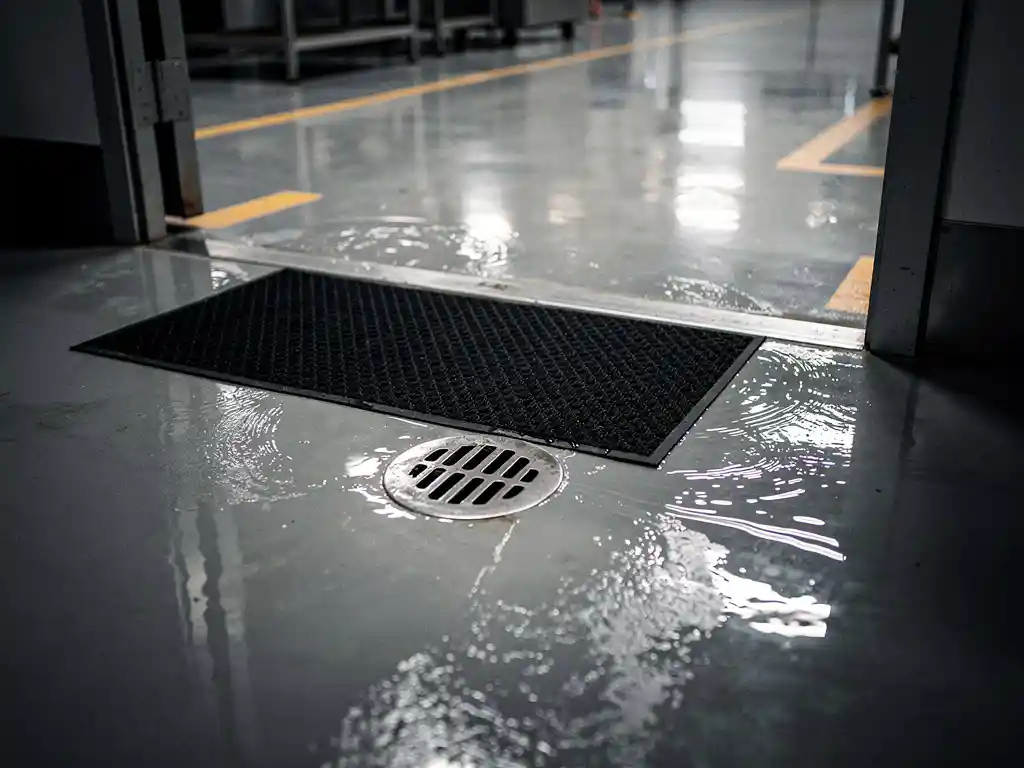
The highest slip risk areas in a facility are typically wet zones, transition areas, and surfaces exposed to oils, grease, or other contaminants. Kitchens, loading docks, entryways, and production floors consistently top the list because they combine heavy foot traffic with surfaces that lose traction quickly when wet or soiled. Understanding which zones pose the greatest danger is the first step toward effective slip and fall prevention.
Which facility zones cause the most slip-and-fall injuries?
The zones with the highest slip-and-fall injury rates in most facilities are wet processing areas, building entryways, loading docks, commercial kitchens, and restrooms. These spaces share two common factors: surfaces that become slippery under specific conditions and high volumes of foot traffic that increase the chance of an incident.
Entryways and lobbies are particularly problematic because people track in rain, snow, and mud from outside, leaving smooth floors wet and unpredictable. Loading docks face a different challenge: workers move quickly between indoor and outdoor environments, often carrying loads that limit their visibility and balance. Commercial kitchens deal with a near-constant presence of water, grease, and food particles on the floor, making floor safety a round-the-clock concern rather than an occasional one.
In industrial settings, the picture shifts slightly. Production floors, chemical handling areas, and assembly lines all carry significant slip risk, especially when liquids or fine particulates accumulate between cleaning cycles. Stairways and ramps add another layer of danger because a slip there rarely ends with just a stumble.
What makes a floor surface high-risk for slipping?
A floor surface becomes high-risk for slipping when its coefficient of friction drops below a safe threshold, meaning there is not enough grip between the floor and a person’s footwear to prevent sliding. Smooth, hard surfaces like polished concrete, ceramic tile, and sealed wood are the most common offenders, especially when they are clean and dry but become dramatically more dangerous when wet or contaminated.
Surface texture plays a large role in floor safety. A floor with a rough or patterned finish creates more contact points between the shoe and the ground, which slows down any sliding motion. A perfectly smooth surface offers almost no resistance once a liquid layer forms between the two. The angle of a surface matters too: even a gentle slope can turn a manageable floor into a genuine floor hazard if the material underfoot offers little grip.
Worn flooring compounds the problem. A surface that once had adequate texture can lose it over time through heavy use, cleaning, or chemical exposure. Regular floor safety inspections help identify areas where surface quality has degraded before an incident occurs.
How does wet flooring increase the risk of slips?
Wet flooring increases slip risk by acting as a lubricant between the shoe sole and the floor surface, drastically reducing friction. Even a thin film of water is enough to cause a person’s foot to slide forward unexpectedly, and the faster someone is moving, the more force that slip generates. This is why wet floors in high-traffic corridors are especially dangerous.
The type of liquid matters as well. Water reduces friction, but oils, cleaning solutions, and food residues reduce it even further and are often harder to spot visually. A wet floor sign alerts people to water, but a thin layer of cooking oil or a cleaning product residue can be nearly invisible and far more slippery than standing water.
Condensation is another underappreciated source of wet flooring. In facilities that move between temperature zones, such as cold storage areas or facilities with outdoor access, moisture can form on floor surfaces without any spill or cleaning activity. This kind of wet flooring can catch workers completely off guard because there is no visible cause to prompt caution.
What are the most dangerous slip hazards in industrial facilities?
The most dangerous slip hazards in industrial facilities are oil and grease contamination, water from cooling or cleaning systems, fine dust or powder accumulation, and transition zones between different floor surfaces. These hazards are particularly serious because industrial environments often involve workers moving at pace, carrying heavy loads, or operating machinery, all of which raise the consequences of a slip significantly.
Oil and grease are especially difficult to manage because they spread easily, are hard to detect visually, and require specific cleaning agents to remove properly. A floor that looks clean after a standard mop may still carry a slippery residue if the right degreaser was not used.
Transition zones, where one floor type meets another, such as concrete meeting tile or a ramp joining a flat surface, create sudden changes in grip that workers may not anticipate. Floor safety inspections should pay particular attention to these boundaries, as they are frequently overlooked during routine maintenance. Drainage is another factor: industrial floors without adequate drainage channels allow liquids to pool, creating persistent wet zones that standard cleaning cannot fully address.
How can rubber matting reduce slip risks in high-risk areas?
Rubber matting reduces slip risks by adding a textured, high-friction surface layer over floors that would otherwise offer poor grip. The rubber material itself provides natural slip resistance, and most rubber mats include surface patterns, such as raised studs or ridges, that channel liquids away from the walking surface and create consistent traction underfoot.
Beyond surface grip, rubber mats add a practical layer of floor hazard management in areas that are difficult to keep dry or clean at all times. Rather than relying solely on mopping schedules or drainage systems, placing matting in high-risk zones creates a consistent, reliable surface that performs well even when conditions are less than ideal.
Rubber matting also helps in entryways and transition zones by giving workers a clear, grippy surface to step onto when moving between environments. In industrial settings, anti-fatigue mats serve a dual purpose: they reduce physical strain on workers standing for long periods while also providing the slip resistance needed on production floors. Ergonomic benefits and floor safety, in this case, go hand in hand.
What type of matting works best for wet or oily floors?
For wet or oily floors, the most effective matting options are drainage mats and grease-resistant rubber mats. Drainage mats feature an open-grid or perforated design that allows liquids to pass through and collect beneath the mat, keeping the walking surface dry. Grease-resistant rubber mats are made from compounds specifically formulated to resist degradation from oils and chemicals while maintaining their surface grip.
In commercial kitchens and food processing environments, drainage mats are generally the preferred choice because they handle both water and food residues effectively. The open structure means liquids do not pool on top of the mat, which is where most slip-and-fall incidents happen. These mats also make cleaning easier, since the liquid collects in a contained area beneath the mat rather than spreading across the floor.
For industrial floors dealing with oils and lubricants, a solid rubber mat with a nitrile or neoprene compound offers better chemical resistance than standard natural rubber. These materials hold up under prolonged exposure to petroleum-based products without swelling or losing their structural integrity. When choosing matting for a specific environment, it is worth considering not just the slip resistance of the surface but also how the mat will hold up to the specific substances it will encounter over time.
At LRP Matting, we offer a range of rubber matting solutions designed specifically for high-risk environments, from wet processing areas to heavy industrial floors. All of our mats are made from genuine, non-porous rubber that resists moisture and is easy to clean, and many are built with our proprietary FRC® fiber-reinforced compound for added durability. If you are looking to improve floor safety in your facility, our industrial matting solutions are a practical starting point.
Frequently Asked Questions
How do I know if my current flooring has a safe coefficient of friction?
You can assess your floor’s coefficient of friction (COF) using a portable slip resistance tester, also known as a tribometer, which measures the friction between a standardized test foot and your floor surface. A COF of 0.5 or higher is generally considered safe for level walking surfaces, while ramps and slopes require a higher threshold. If you do not have access to testing equipment, a professional floor safety assessment or a consultation with a matting and flooring specialist can help you identify which areas fall below safe levels and need immediate attention.
How often should high-risk floor areas be inspected for slip hazards?
High-risk zones such as commercial kitchens, loading docks, and wet processing areas should be inspected at least once per shift, not just once a day, because conditions in these environments can change rapidly. A spill, a worn mat, or a drainage blockage can create a hazard within minutes of a previous check. Formal floor safety audits, conducted monthly or quarterly by a designated safety officer, should complement these routine checks and document surface conditions, mat integrity, and any areas showing wear or degradation.
What are the most common mistakes facilities make when trying to prevent slips and falls?
One of the most frequent mistakes is relying solely on wet floor signs and mopping schedules rather than addressing the root cause of the hazard, such as inadequate drainage, worn flooring, or the wrong type of matting for the environment. Another common error is choosing matting based on price alone without considering whether the material is chemically compatible with the substances it will be exposed to, which can lead to mats that degrade quickly and lose their grip. Facilities also frequently overlook transition zones between different floor types, which are among the highest-risk areas in any building.
Can rubber mats themselves become a slip hazard if not maintained properly?
Yes, rubber mats can become a hazard if they are not maintained correctly. Mats that are saturated with grease or debris, have curled or lifted edges, or have worn down their surface texture over time can actually increase slip and trip risk rather than reduce it. Regular cleaning according to the manufacturer’s guidelines, along with periodic checks for mat integrity, is essential. Any mat showing significant surface wear, deformation, or damage should be replaced promptly, as a compromised mat provides a false sense of security.
Are there specific matting solutions recommended for entryways that deal with both rain and mud?
For building entryways exposed to rain, mud, and tracked-in debris, a multi-zone matting system works best. This typically involves a coarse-bristle or scraper mat at the exterior entrance to remove heavy debris from footwear, followed by an absorbent mat inside the doorway to capture residual moisture. Rubber-backed mats with a high-pile or textured surface are ideal for the interior zone because they stay in place on smooth lobby floors and continue to absorb moisture even under heavy foot traffic. Sizing matters too: a mat that is too small will be bypassed in just a few steps, leaving the floor wet beyond the mat’s coverage area.
How do I get started with improving floor safety across a large facility with multiple risk zones?
Start by conducting a full facility walkthrough to map out your highest-risk zones, prioritizing areas that combine wet or contaminated surfaces with high foot traffic or fast-paced work. Rank these zones by severity and address the most critical areas first, whether that means installing drainage matting in a kitchen, adding anti-fatigue mats on a production floor, or improving drainage in a loading dock. From there, work with a matting specialist to match the right product to each specific environment, taking into account the substances present, the volume of traffic, and any ergonomic needs. Building a phased implementation plan makes the process manageable without leaving any area unaddressed for long.
Do anti-fatigue mats provide the same level of slip resistance as standard safety mats?
Anti-fatigue mats are primarily engineered to reduce physical strain on workers who stand for extended periods, but many are also designed with slip-resistant surfaces, making them a practical dual-purpose solution for production floors and assembly lines. However, not all anti-fatigue mats offer the same level of slip resistance, and some lighter-duty foam-based options may not perform well in wet or contaminated environments. When selecting anti-fatigue matting for a high-risk area, look specifically for products made from solid rubber with a textured or studded surface, and confirm that the compound is compatible with any oils, chemicals, or cleaning agents present in that zone.
Related Articles
- How do you reduce stress through facility design?
- What factors increase floor wear in manufacturing environments?
- How do you build a floor maintenance plan?
- What are the most common causes of slip and fall accidents?
- How do you prevent seasonal floor hazards?
- What makes a floor safe?
- How do rubber mats extend the life of a warehouse floor?
- How do you protect a newly installed floor in a busy facility?
- How do you calculate how much bedding a horse stall needs?
- What causes sports facility floors to deteriorate so quickly?