
A veterinary facility becomes safer through a combination of slip-resistant flooring, clear animal handling protocols, good lighting, and hygienic surfaces that are easy to clean. Flooring plays a particularly important role because both animals and staff are constantly moving through wet, high-traffic areas where falls and injuries are a real risk. The sections below walk through the most common hazards, the best flooring options, and the practical measures that make the biggest difference.
What are the biggest safety hazards in a veterinary facility?
The biggest safety hazards in a veterinary facility include wet and slippery floors, unpredictable animal behavior, sharp equipment, and poor ergonomics for staff. These risks affect both the animals being treated and the people caring for them, and they often occur at the same time, which makes managing them a priority in any veterinary facility design.
Wet floors are one of the most consistent hazards. Bathing, cleaning, and treatment procedures all introduce water and other fluids onto the floor surface, creating slip risks for staff and animals alike. An animal that loses its footing can panic, injure itself, or injure the person handling it.
Animal behavior adds another layer of complexity. Even calm animals can become unpredictable when stressed or in pain. This means staff need secure footing at all times, and animals need surfaces that help them feel stable and supported. A frightened animal that cannot get traction underfoot will struggle harder, increasing the risk of injury for everyone involved.
Ergonomic strain is often overlooked but is a genuine concern in veterinary work. Staff spend long hours on their feet, frequently bending, lifting, and restraining animals. Hard concrete floors with no cushioning contribute to fatigue, joint pain, and long-term musculoskeletal issues. Livestock facility design and equine facility design need to account for this just as much as small animal clinics do.
How does flooring affect safety in a vet clinic?
Flooring directly affects safety in a vet clinic by determining how much traction animals and staff have underfoot, how easily the surface can be cleaned, and how much physical stress is placed on the body over a long shift. The wrong flooring choice can quietly contribute to accidents, infections, and staff fatigue on a daily basis.
Traction is the most immediate concern. A smooth, hard floor becomes dangerously slippery when wet, and veterinary environments are frequently wet. Animals that slip lose confidence quickly, which makes them harder to handle and more prone to injury. Staff who slip risk serious falls, especially when they are in the middle of restraining or treating an animal.
Hygiene is closely tied to flooring material. Porous surfaces absorb fluids, bacteria, and odors, making thorough cleaning very difficult. Over time, this creates a hygiene problem that no amount of scrubbing can fully resolve. Non-porous flooring, by contrast, does not retain moisture or bacteria and can be cleaned effectively with standard detergents.
Comfort and fatigue are longer-term factors. Flooring that offers some cushioning reduces the physical toll on staff who are on their feet all day. In livestock and equine settings, cushioned flooring also supports animal welfare by reducing joint stress and encouraging animals to lie down and rest properly.
What type of flooring is best for a veterinary clinic?
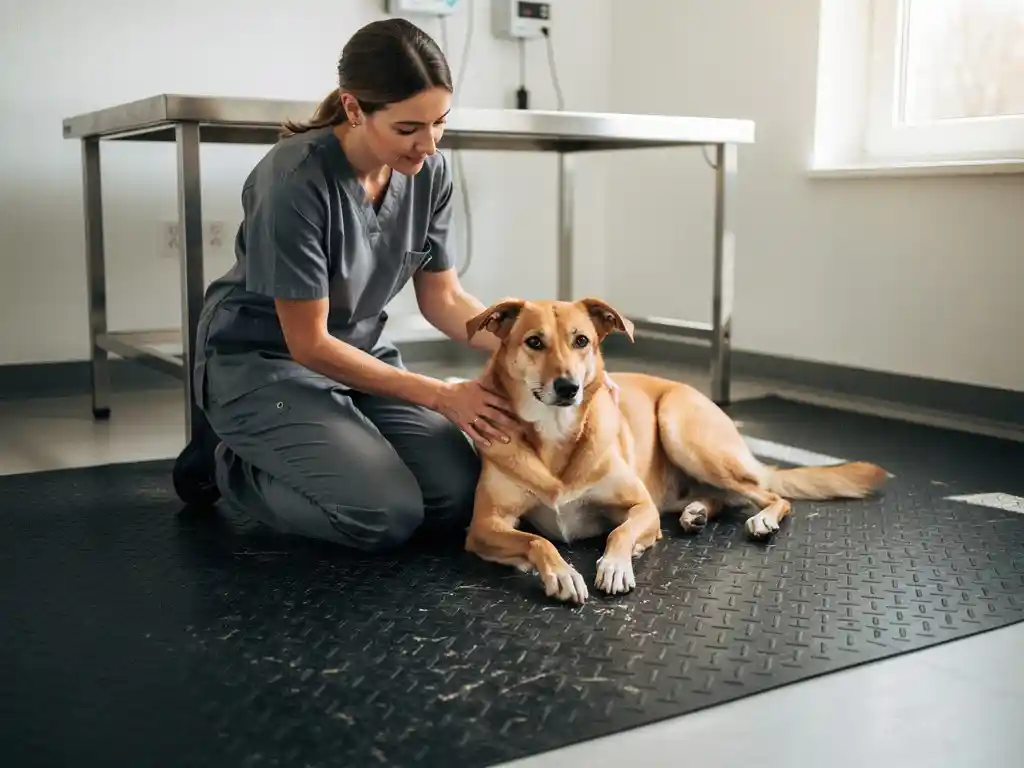
The best flooring for a veterinary clinic is non-porous, slip-resistant, easy to clean, and durable enough to handle heavy use and frequent wet conditions. Rubber flooring consistently meets all of these criteria and is widely used across small animal clinics, large animal facilities, and equine settings.
Rubber flooring provides natural grip even when wet, which reduces slip risks for both animals and staff. It is non-porous, so it does not absorb fluids or harbor bacteria, making it straightforward to clean and maintain. It also offers a degree of cushioning that hard surfaces like concrete or ceramic tile cannot match, which supports animal welfare and reduces staff fatigue.
For livestock and equine facility design, thick rubber mats are particularly effective. They provide the kind of firm but forgiving surface that large animals need to feel secure, especially when standing for extended periods or recovering from treatment. The surface texture can be selected to match the specific demands of the environment, from finer profiles for treatment areas to more aggressive textures for high-traffic walkways.
Epoxy coatings are another option sometimes used in veterinary spaces. They create a seamless, non-porous surface that is relatively easy to clean. However, they can become slippery when wet unless a non-slip aggregate is added, and they can crack or chip over time under heavy use. Rubber flooring generally offers better long-term performance in demanding veterinary environments.
Are rubber mats safe for animals in veterinary settings?
Yes, rubber mats are safe for animals in veterinary settings and are widely regarded as one of the most animal-friendly flooring options available. They provide traction, cushioning, and warmth underfoot, all of which contribute to animal welfare and help reduce stress during veterinary visits or recovery periods.
For large animals like horses and cattle, rubber mats are particularly valuable. Hard concrete floors can cause joint pain, pressure sores, and reluctance to lie down, which affects recovery and overall well-being. A rubber mat surface gives animals the confidence to move, stand, and rest without discomfort, which is directly relevant to livestock facility design and stable design.
Rubber mats made from genuine, non-porous rubber are also hygienic for animals. They do not absorb urine, blood, or other fluids, and they can be cleaned thoroughly without the surface degrading. This matters in veterinary settings where infection control is a priority.
One practical consideration is the quality of the rubber itself. Mats made from high-quality rubber compounds hold their shape, resist cracking, and maintain their surface texture over time. Lower-quality alternatives may degrade faster, develop cracks that harbor bacteria, or lose their grip properties, which undermines both safety and hygiene.
How do you keep veterinary floor mats clean and hygienic?
You keep veterinary floor mats clean and hygienic by rinsing them regularly with water, scrubbing with a mild detergent, and allowing them to dry thoroughly. Non-porous rubber mats are straightforward to maintain because they do not absorb fluids or odors, so routine cleaning is generally enough to keep them in good condition.
A consistent cleaning routine is more effective than occasional deep cleans. In high-use areas, daily rinsing and wiping down prevents the buildup of organic material that bacteria thrive on. In treatment rooms or recovery stalls, cleaning between each animal reduces the risk of cross-contamination.
For disinfection, most rubber mats are compatible with standard veterinary-grade disinfectants. It is worth checking the manufacturer’s recommendations, as some strong chemical agents can degrade rubber over time if used frequently. Mild detergent and water are sufficient for routine cleaning, with periodic disinfection using an appropriate product.
Proper drainage in the facility also supports mat hygiene. If water and fluids pool under or around mats, they create conditions for bacterial growth and unpleasant odors. Mats should be positioned to allow drainage, and in some settings, lifted and cleaned underneath periodically to prevent buildup.
What other safety measures complement good flooring in a vet clinic?
Good flooring is a strong foundation, but veterinary facility safety also depends on adequate lighting, well-designed handling areas, clear signage, proper staff training, and good workflow layout. These elements work together to reduce risk for both animals and the people caring for them.
Lighting is often underestimated. Poor visibility in treatment areas, corridors, or outdoor holding spaces increases the chance of missteps and missed hazards. Bright, even lighting helps staff see what they are doing clearly and helps animals feel less disoriented in unfamiliar environments.
Handling area design matters significantly in equine facility design and livestock facility design. Chutes, gates, and restraint systems that are well-positioned and easy to operate reduce the physical strain on staff and the stress on animals. Rounded corners and smooth wall surfaces minimize injury risks when animals move unpredictably.
Staff training ties everything together. Even the best-designed facility creates risks if the people working in it are not trained in safe animal handling, proper lifting techniques, and emergency procedures. Regular refreshers keep safety practices current and reinforce a culture where hazards are identified and addressed proactively.
At LRP Matting, we offer rubber matting solutions specifically designed for veterinary, livestock, and equine environments. Our mats are made from genuine, non-porous rubber and many are built with our proprietary Fiber Reinforced Rubber Compound (FRC®) for added strength and durability. If you are thinking about flooring for your facility, our livestock matting solutions are a practical starting point.
Frequently Asked Questions
How do I know if my current veterinary flooring needs to be replaced or if it can be improved with mats?
If your existing floor is structurally sound but lacks grip or cushioning, adding rubber mats over the top is often a cost-effective solution that avoids a full renovation. However, if the surface is cracked, porous, or impossible to clean thoroughly, replacement is the better long-term investment. Signs that flooring needs replacing include persistent odors that survive cleaning, visible surface degradation, and recurring slip incidents despite added precautions. A flooring supplier experienced in veterinary environments can assess your space and recommend whether matting, resurfacing, or full replacement makes the most sense.
What thickness of rubber mat is recommended for large animal and equine facilities?
For large animal and equine settings, rubber mats of at least 17mm to 25mm thick are generally recommended to provide adequate cushioning and durability under the weight and movement of horses and cattle. Thicker mats offer better joint support for animals standing for long periods and are more resistant to shifting underfoot, which improves stability. In high-traffic walkways or areas where heavy equipment is used, opting for the thicker end of the range adds longevity. Always check the manufacturer’s load-bearing specifications to ensure the mat is rated for the animals and conditions in your facility.
Can rubber flooring handle the chemicals and disinfectants commonly used in veterinary clinics?
High-quality rubber flooring is generally resistant to the mild detergents and veterinary-grade disinfectants used in routine cleaning, but not all rubber compounds are equal. Harsh chemicals such as strong bleach solutions or solvent-based products can degrade lower-quality rubber over time, causing surface cracking and loss of grip. It is important to check the chemical compatibility specifications provided by the manufacturer before committing to a cleaning protocol. When in doubt, opt for pH-neutral detergents for daily cleaning and reserve stronger disinfectants for periodic use only.
Are there specific flooring considerations for veterinary recovery areas versus treatment rooms?
Yes, recovery areas and treatment rooms have different demands and benefit from slightly different flooring approaches. Recovery areas, particularly for post-surgical or sedated animals, prioritize maximum cushioning, warmth, and a non-slip surface that supports an animal regaining its footing safely. Treatment rooms, on the other hand, need surfaces that are quick to clean between patients and resistant to heavy fluid exposure. In both cases, non-porous rubber is a strong choice, but the texture profile and mat thickness may differ — finer, denser surfaces suit treatment rooms, while thicker, more cushioned mats are better suited to recovery stalls.
How can I make a veterinary facility safer for animals that are already anxious or in pain?
Beyond flooring, reducing sensory overload is one of the most effective ways to help anxious or painful animals feel safer. This includes minimizing loud noises, using calm and consistent handling techniques, and ensuring that surfaces underfoot give the animal a sense of stability and control. Non-slip rubber flooring plays a direct role here — an animal that can feel secure footing is less likely to panic and struggle. Separating species in waiting and treatment areas, using visual barriers, and keeping handling areas calm and uncluttered all contribute to a lower-stress environment that is safer for both the animal and the handler.
What common mistakes should I avoid when choosing flooring for a new veterinary build or renovation?
One of the most common mistakes is prioritizing aesthetics or upfront cost over long-term performance and hygiene. Smooth tiles or polished concrete may look professional but become dangerously slippery when wet and are difficult to retrofit with adequate grip. Another frequent error is choosing flooring without considering drainage — even the best mat will create hygiene problems if fluids cannot drain away properly. Finally, failing to account for the specific needs of different zones within the facility (reception versus treatment versus recovery versus large animal areas) often leads to a one-size-fits-all solution that underperforms in critical areas.
Is rubber flooring a practical option for outdoor or semi-outdoor veterinary areas such as wash bays and paddocks?
Yes, rubber matting is well-suited to outdoor and semi-outdoor veterinary areas, including wash bays, loading areas, and paddock entries, provided the product is specifically rated for exterior use. Outdoor-grade rubber mats are formulated to withstand UV exposure, temperature fluctuations, and prolonged moisture without cracking or warping. In wash bays, interlocking rubber mats with drainage-friendly profiles are particularly effective, allowing water to flow away while maintaining grip underfoot. Always confirm with the manufacturer that the product is suitable for outdoor conditions, as not all rubber compounds perform equally well when exposed to the elements over time.
Related Articles
- How does flooring affect productivity?
- What makes a flooring material sustainable?
- How can flooring materials be reused or recycled?
- How do entrances create floor safety risks?
- What is the easiest floor to disinfect in an animal clinic?
- How does stall flooring affect a horse's overall well-being?
- How do you fit stall mats to a non-standard stall size?
- How do you make a horse feel more comfortable during long trailer rides?
- How do you protect a newly installed floor in a busy facility?
- Can a hard barn floor cause tendon damage in horses?